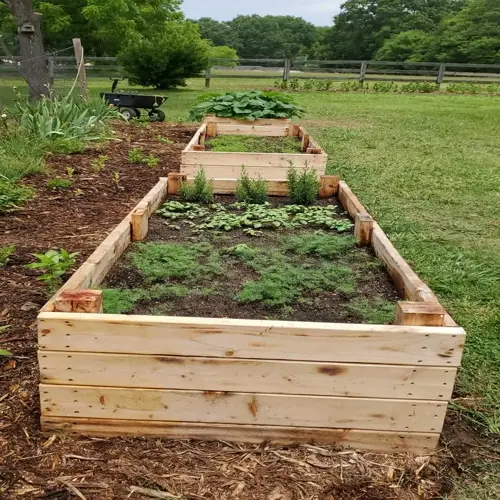

"Just pour vinegar on it," my neighbor said over the back fence. "The acid soil sorts itself out." I doused a patch of my sandy-loam bed. Then I pushed a meter in an hour later. The reading sat right where it started, like nothing had touched it at all.
Vinegar does lower pH, but only for a moment. The whole vinegar soil pH story is short-lived because vinegar is acidic, so the number dips the second you pour it on. That dip is not a real amendment. Within a day or two the soil drifts back to where it was, and your roots are no better off.
The science behind this is simple once you see it. Vinegar is mostly water. It holds only about 5% acetic acid, and that acid is weak. It breaks down fast. Soil microbes eat it within days. Rain or watering then flushes what is left straight past the root zone. So any drop in pH is fleeting and uneven, showing up in one spot and missing the next.
There is another catch most people miss. Soil has its own buffer, made of clay and organic matter that pushes back against any quick change. That buffer is the reason my meter barely twitched. You can pour gallons on, and the soil still drags the number back to its set point. The buffer simply holds more acid-fighting power than a splash of vinegar ever could. This is why no kitchen trick beats it.
Strong doses do more harm than good. Pour enough to move the number for real and you scorch fine root hairs and kill the bacteria and fungi your plants lean on. Those microbes release nutrients and feed your roots all season long. Wipe them out and even healthy-looking soil goes flat and slow. A patch of dead, sour ground is a steep price for a reading that fades by the weekend.
Vinegar does have one honest job in the garden. A vinegar chalk test tells you if your soil holds free lime. Drip a little plain vinegar on a dry pinch of soil and watch. If it fizzes and foams, you have chalk or lime in there, which points to alkaline ground. No fizz means little to no free lime. This is a diagnostic check, not a cure, and it answers a question rather than fixing one.
Vinegar is a chalk detector, not a soil fix. If it fizzes on your soil, that signals free lime. To genuinely lower pH, use elemental sulfur guided by a test.
When you truly need to lower soil pH, reach for elemental sulfur. Soil bacteria turn sulfur into mild acid over several weeks, so the change is slow, steady, and lasting. It feeds the soil life instead of frying it, and the effect holds for a season or more rather than an afternoon. That patience is exactly why it works where vinegar cannot. Spread it, water it in, and give the microbes time to do the job.
Start with a soil test before you add anything. A test gives you a real number and a target, so you know how much sulfur to spread and whether you need any at all. Guessing wastes money and can swing your soil too far the wrong way.
So keep the vinegar bottle for the fizz test and nothing more. The whole vinegar soil pH shortcut just does not last in the ground. Use vinegar to spot free lime, then lower soil pH the proven way with sulfur and a soil test to guide you. Your plants want a slow, stable shift, not a splash of acid that vanishes by morning.
Read the full article: Soil pH Testing: A Clear, Accurate Guide