
Introduction
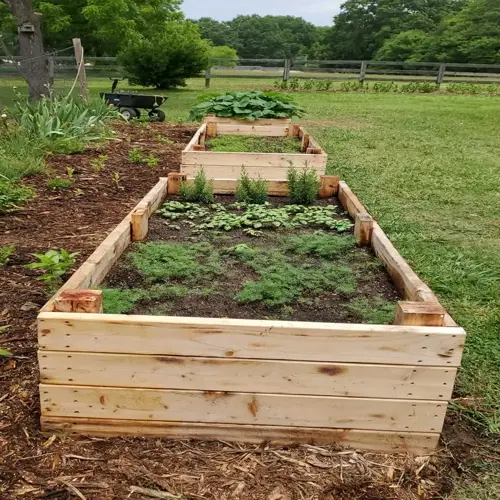
No till gardening means you build and feed your beds without ever digging, flipping, or turning the soil underneath. You stack compost and mulch on top instead, which is why people also call it no-dig gardening or sheet mulching. This guide walks you through what happens below the surface, how to build your first bed, what tools you can use in place of a spade, and what it really costs you.
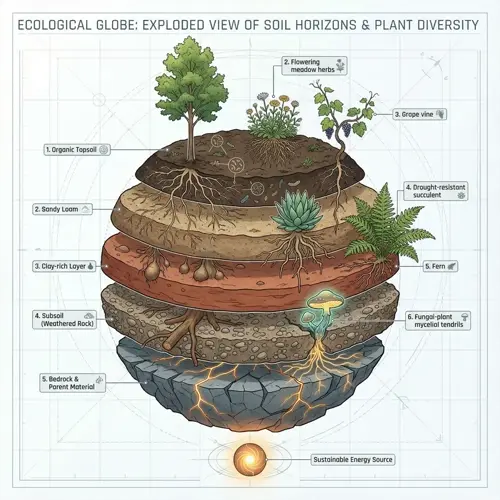
The reason it works comes down to what soil actually is. USDA NRCS data shows that healthy soil is about 45% mineral, 5% organic matter, 25% water, and 25% air. That air and water live inside tiny pore spaces between soil particles. When you till, you crush those pores and break apart the structure that holds them open. So the ground that felt loose and fluffy right after digging turns hard and crusty within weeks.
Most guides on this topic hand you a tidy benefits list and stop there. This one goes further. You get the soil science backed by real USDA and university research. You get a full step-by-step build method and the tool options that loosen ground without a tiller. And you get an honest look at the upfront cost and the trade-offs. You will know what to expect in spring, not just the sunny version.
The whole idea is to work with the undisturbed soil and its own life rather than against it. Earthworms, fungi, and microbes build structure for you when you leave them alone. None of this is a one-time weekend project or a no-work shortcut. It is a slow habit that improves your soil health season after season, and the payoff grows the longer you stick with it. Farmers have studied no-till for decades in crops like wheat and corn. Home gardeners now put those same lessons to work in backyard beds and raised beds.
How No-Till Gardening Works
After two seasons of cardboard and arborist woodchips, the patch behind the back kitchen window turned loose, dark, and full of worms. I never put a spade in it once. That same ground used to be rock-hard clay, and for years I tried to dig it open in spring. The fork would bounce off it, and by July the surface baked into a gray crust that cracked. So I gave up digging and just covered it. Life loosened that clay far better than any tool I owned.
Here is what was happening under the mulch. Plant roots leak sugars into the ground, and beneficial microorganisms crowd in to feed on them. Fungi run thin threads out from the roots to reach water and food the plant could never touch alone. Worms eat their way through and leave open channels behind. This whole living system is the soil food web, and it is the engine that makes no-till gardening work.
When you till, you wreck that engine. The USDA NRCS says tilling removes pore spaces. It also breaks the glues that hold soil aggregates together, so water no longer soaks in well. Dig every year and you burn through organic matter too. Chopping the soil just speeds up how fast it rots away. But leave the soil alone for 20-plus years with mixed crops, and the NRCS finds you get healthy, well-built soil instead.
Here is one more piece most gardeners miss. Tilled soil stays rich in bacteria but thin on fungi. Undisturbed soil builds a web of fungal threads. We call these threads mycorrhizae. UNH Extension says they help plants take up food and grow better. You feed this same system over winter, too. Cut spent plants at the soil line and leave the roots in the ground to rot and feed the next crop.
Soil Aggregates and Pore Space
- What it is: Soil particles glued into crumbs by microbial secretions, leaving pores that hold both water and air for roots.
- Why no-till helps: Leaving soil undisturbed preserves these crumbs, while tilling shatters them and collapses the pore space that stores moisture.
- What you notice: Over a couple of seasons the surface stays crumbly and dark instead of crusting hard after rain.
The Fungal Network
- What it is: Threadlike mycorrhizal fungi that connect to plant roots and extend their reach for water and nutrients.
- Why no-till helps: Digging slices these fragile threads apart, so undisturbed beds build a far larger, more useful fungal web over time.
- What you notice: Plants in established no-till beds often shrug off short dry spells better than the same plants in dug ground.
Earthworms and Soil Life
- What it is: Worms, beetles, and billions of microbes that feed on organic matter and move through the soil profile.
- Why no-till helps: Their channels become permanent paths for water and roots, and keeping soil covered protects them from drying out.
- What you notice: Pull back the mulch in an established bed and you find worm casts and a network of fine channels.
The Permanent Cover Layer
- What it is: A continuous blanket of compost and mulch kept on the surface at all times, mimicking a forest floor.
- Why no-till helps: It feeds soil life as it breaks down, shades out weed seeds, and slows evaporation so beds dry out less quickly.
- What you notice: Bare ground is the exception in a no-till garden; every bed and path stays covered year-round.
All of this happens because you stop fighting the soil and let it sort itself out. Once the soil structure rebuilds, you spend less time watering and weeding. Your plants also pull food from a wider, deeper network than they ever could in dug ground.
Benefits Backed by Real Data
Most guides hand you a tidy list of the benefits of no-till gardening and leave it there. The trouble is that every list reads the same, and almost none of them attach a single number you can check. So here are the benefits with the data behind them, drawn from USDA and university research, so you can judge them for yourself.
First, an honest note about scope. The hardest figures below come from farm-scale studies on big fields, not backyard beds. They translate to your garden in direction, not in exact percentage. A covered bed acts like healthy farm soil, just at a smaller size. So treat these numbers as the science of why no-till works. They are not a promise for your tomatoes.
Each benefit traces back to one thing from the last section. When you stop digging, the soil keeps its structure and pore spaces. Better structure means water soaks in instead of running off, and that single change drives most of what you see below.
Look at the soil erosion prevention numbers first. No-till can cut erosion by more than 80%, and full soil-health systems push that to about 90% while dropping sediment loss near 75%. The reason is simple. Your bare, churned dirt washes away in a hard rain, while a covered bed holds firm and lets your water sink in.
Water retention follows the same logic. In one NRCS study, runoff dropped from 35 to 37% under conventional tillage all the way down to 6% under no-till. Tilled fallow ground loses 65 to 80% of its rainfall to evaporation, so that bare soil is wasting most of what falls on it. A mulched no-till bed keeps that moisture where your roots can reach it.
The slower wins matter too. Undisturbed soil builds more organic matter year after year. That steady gain feeds carbon retention instead of releasing it the way fresh tilling does. You also get real weed reduction, since you stop dragging buried weed seeds up to the light where they sprout. None of these arrive overnight, but they compound, and the numbers below from large farms hint at how big the payoff gets at scale.
Assume an average off-road diesel fuel price of $2.05 per gallon. If a farmer with 1,000 acres of crops switches from continuous conventional till to continuous no-till, they could save 4,160 gallons of diesel fuel - more than $8,500 worth - each year.
How to Build a No-Till Bed
One early fall I knelt on the lawn behind my back kitchen window. I flattened cardboard over a 20-foot by 4-foot (6 m by 1.2 m) patch of grass. I overlapped each box edge and soaked it all with the hose. Then I piled compost and woodchips on top until the grass was gone. By spring my trowel slid through soft, dark soil. The tomato starts dropped right in.
That is the heart of how to start a no-till garden: you build up instead of digging down. The method goes by a few names, like sheet mulching or lasagna gardening, but the idea stays the same. You smother whatever is growing with cardboard, feed the soil with compost, and let the worms and fungi do the tilling for you.
You have two paths here. The full smother method turns lawn or tough weeds into a clean bed, but it asks for patience. The quick start method layers compost and mulch over cardboard and lets you plant the same day. Both share the same simple build below.
Cut existing grass or weeds low and water the area so the soil and any roots are moist before you cover them.
Cover the whole bed with cardboard or 5 to 10 sheets of newspaper, overlapping every edge by about one-third so no light reaches the weeds below.
Spread 4 to 6 inches (10 to 15 cm) of compost over the cardboard to feed soil life and give seeds and roots something rich to grow into.
Add 4 to 6 inches (10 to 15 cm) of mulch such as straw or shredded leaves to lock in moisture, shade out weeds, and protect the soil surface.
Pull the mulch back to set plants or sow seeds into the compost, then water daily the first week before tapering to every 3 to 5 days.
Timing depends on what is under your cardboard. A freshly layered compost layer over fresh cardboard can take plants right away, since roots grow in the rich compost and never touch the smothered turf. That is the quick start method, and it works great for beds going over bare ground or thin weeds.
Tough turf and aggressive weeds need real burial time. To kill them off, cover the ground with cardboard or a tarp for a full year if you can, or several months at the very least. Skip this step on a stubborn lawn and the grass pushes back up through your new bed by midsummer.
Build your beds in fall if you garden in a cold or wet climate. The cardboard and mulch settle and break down over winter, so the layers knit into soft, plantable soil by spring. That single trick is why my fall lawn became a working garden in just one season.
Best Mulch and Materials
Compost and mulch do two different jobs, and mixing them up is where new no-till gardens go wrong. Compost feeds the soil and acts as the layer you plant straight into, rich in organic matter that worms and fungi pull down for you. Mulch sits on top to shade the surface, hold water, and smother weeds before they ever sprout.
The right mulch depends on the bed. Annual vegetable beds want something light you can pull back for planting, like straw or shredded leaves. Paths and the ground around trees, shrubs, and perennials can take heavier cover such as woodchips that last far longer between top-ups.
Watch the carbon load on your seed beds. Fresh woodchips and sawdust are carbon-heavy, so they can tie up nitrogen at the soil surface for a while. Keep them on paths and around perennials, and save the lighter materials and a thin shot of grass clippings for the rows where you grow food.
Much of this stuff is free if you look. Tree crews drop off arborist chips, fall leaves pile up at the curb, and your own mower hands you nitrogen-rich clippings all season. Cheap materials are a big reason the running cost of a no-till garden stays low year after year.
Straw
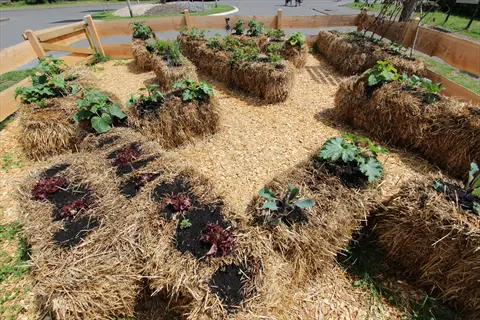
- Best for: Annual vegetable beds, where it breaks down quickly and is easy to pull back for planting.
- Benefit: Lightweight and clean to handle, it shades the soil surface and keeps moisture in during hot weather.
- Watch out: Use straw rather than hay where possible, since hay can carry weed and grass seeds into the bed.
- Breakdown: Decomposes over a single season, so plan to top it up each year to keep the cover intact.
- Soil effect: Adds organic matter as it rots and protects soil structure from pounding rain and crusting.
- Cost: Inexpensive by the bale and often available locally from farms and garden suppliers.
Arborist Woodchips
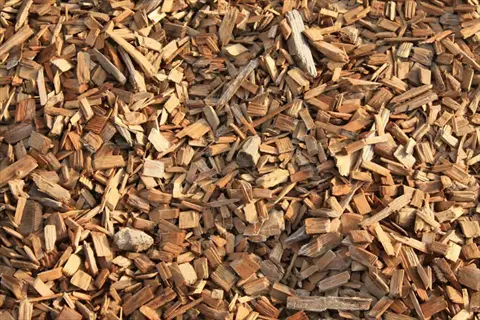
- Best for: Garden paths and beds around trees, shrubs, and perennials rather than seed beds.
- Benefit: Long-lasting cover that suppresses weeds for months and builds a rich fungal layer underneath.
- Watch out: Fresh chips can temporarily tie up nitrogen at the surface, so keep them off vegetable seed rows.
- Breakdown: Decomposes slowly over one to two years, meaning fewer top-ups than straw or leaves.
- Soil effect: Feeds fungi and earthworms as it breaks down, gradually deepening the dark soil layer below.
- Cost: Often free from local tree crews, which makes them one of the cheapest deep mulches available.
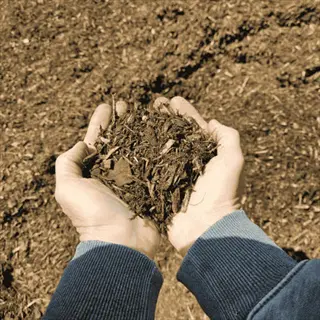
Shredded Leaves
- Best for: Both vegetable beds and perennials, especially in fall when leaves are free and plentiful.
- Benefit: Mimics a natural forest floor and breaks down into crumbly, dark leaf mold that soil life loves.
- Watch out: Shred whole leaves first, since thick unshredded layers can mat down and block water and air.
- Breakdown: Rots over a season or two, steadily adding organic matter to the surface.
- Soil effect: Improves structure and moisture holding while feeding worms through the cooler months.
- Cost: Free in autumn from your own yard or collected bagged from the curb.
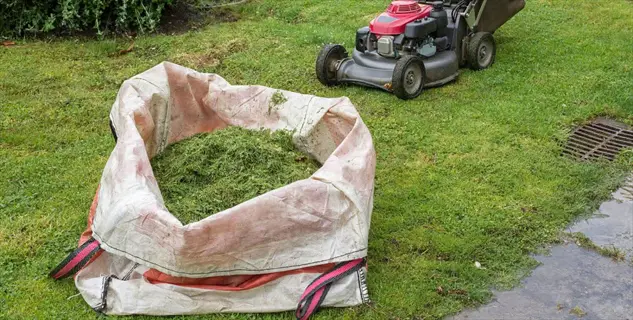
Grass Clippings
- Best for: A thin feeding layer on vegetable beds when you need a quick shot of nitrogen-rich material.
- Benefit: Free from regular mowing and rich in nitrogen, so it greens up the soil as it breaks down fast.
- Watch out: Apply only in thin layers, because thick wet clippings turn slimy and can smell as they rot.
- Breakdown: Decomposes very quickly, so it works more like a light feed than a long-term cover.
- Soil effect: Adds nitrogen and organic matter and helps balance carbon-heavy mulches like woodchips.
- Cost: Free, as long as the lawn has not been treated with herbicides that could harm your plants.
Living cover crops cover and feed the soil between plantings. Oats add plenty of carbon and hold the surface against erosion. Buckwheat saves moisture and smothers annual weeds in summer. Winter rye builds a lot of biomass over the cold months. Tillage radish is a good carbon source too, as its roots break down right in place.
Pick your materials by the job and the bed, and the rest sorts itself out. Feed the ground with compost, protect it with the right mulch on top, and let free local materials do the heavy lifting on your wallet.
Tools Instead of a Tiller
A tiller seems like the obvious way to break up hard ground, but it chops the soil life and brings buried weed seeds up to sprout. The good alternatives to a tiller do the same job without that damage, and most of them outlast the machine you would have rented.
The trick is to match the tool to the problem in front of you. A broadfork lifts and cracks packed soil. A silage tarp kills weeds and grass before you build. And cover crops rebuild structure from the inside over one season.
Wondering how to loosen soil without tilling at all? You let roots and worms do it. Penn State Extension notes that deep cover-crop roots and tillage radish break up hard layers on their own. Surface residue then soaks up more water and softens the ground for you.
Broadfork
- The job: Loosening and aerating compacted soil before planting in a new or heavy bed.
- How it works: You step the wide tines into the ground and rock back to lift and crack the soil without flipping it over.
- Why it fits no-till: It opens up the soil and improves drainage while leaving aggregates, worm channels, and layers in place.
Silage Tarp
- The job: Killing existing grass and weeds before you build a bed, with no digging at all.
- How it works: A heavy light-blocking tarp pinned over the ground smothers plants and weed seeds over several weeks to months.
- Why it fits no-till: It clears ground without disturbing the soil, leaving a clean surface ready to layer compost and mulch onto.
Cover Crops
- The job: Building structure and breaking compaction biologically over a season rather than mechanically.
- How it works: Deep-rooted crops like tillage radish and winter rye drive roots through hard layers, then are cut down and left as mulch.
- Why it fits no-till: The roots aerate the soil from within and feed soil life as they decompose, with no tilling required.
Deep Mulch
- The job: Keeping soil soft and workable over the long term so it rarely needs loosening again.
- How it works: A steady 4 to 6 inch (10 to 15 cm) layer of organic mulch feeds worms whose channels keep the soil open.
- Why it fits no-till: Year-round cover means the soil stays loose on its own, reducing the need for any tool at all.
One good broadfork lasts for years of seasons, so a single purchase often replaces tiller rentals you would pay for again and again. Pair it with a tarp and a packet of cover-crop seed, and you have every tool a no-till bed really needs.
A broadfork loosens soil; it is not a tiller. Lift and crack the ground, but never flip or stir it, or you undo the structure no-till is meant to protect.
Honest Drawbacks and Costs
No-till has real upsides, but it is not magic and it is not free. The honest answer to the biggest problem with no-till gardening is that the soil warms slower in spring and the first season can cost you real money. You should know both before you cover a single bed.
My direct-sown beans and squash came up thin and slow that first cold, wet spring after I converted the clay patch behind the back kitchen window. Slugs chewed through the lettuce seedlings faster than I could replant them. The beds caught up fine once the soil warmed, but I lost weeks to ground that stayed soggy long after the calendar said go.
That slow start is not bad luck. No-till soils run cooler and wetter in spring, which leads to uneven emergence, thinner stands, and more early slug and insect pressure. On heavy ground with drainage trouble, that is exactly when tilling may help, at least once, to break the soil up before you switch to keeping it covered.
Then there is the cost of compost. Covering beds with enough compost and mulch to start is a genuine expense, not a freebie. One home gardener with a large plot tracked roughly $2,070 a year just on compost. Your savings show up in saved labor and easier years down the road, and not always on the receipt.
- Established beds that build richer, looser soil year after year.
- Gardens where less digging and weeding over time is the goal.
- Sloped or erosion-prone ground that benefits from permanent cover.
- Warm-season planting once the soil has warmed up.
- Cold, wet climates where spring soil warms slowly and stays soggy.
- Breaking brand-new, severely compacted ground for the first time.
- Heavy clay with drainage problems that mulch alone will not fix.
- Tight budgets, since covering large beds with compost costs real money upfront.
In a cold or wet climate, hold off direct-sowing heat-loving crops until the no-till soil truly warms, and set out transplants instead to dodge the slow, uneven spring start.
Plenty of experienced gardeners land on a minimal till middle ground, and you can too. They reach for a broadfork or one careful pass with a tiller to fix drainage or break new ground, then keep the soil covered the rest of the time. That blend handles bad soil compaction up front while you still gain the long-term perks of leaving the ground alone.
5 Common Myths
No-till gardening means no work at all, so you can build a bed once and then ignore it for years.
No-till lowers digging and weeding over time, but you still add compost and mulch, manage slugs, and keep the soil covered every season.
You must let a new no-till bed sit empty for months or even a year before you can plant anything in it.
You can plant directly into a freshly layered bed of compost and mulch right away; the smothering wait only applies to killing existing turf or weeds.
Soil has to be tilled or dug every season or it will become hard, compacted, and impossible for roots to grow in.
Undisturbed soil stays loose through worm channels, old root paths, and stable aggregates; tilling actually breaks these structures down over time.
No-till gardening is always cheaper than conventional gardening because you stop buying fuel and renting a tiller.
Long-term work drops, but the upfront cost of enough compost and mulch to cover beds can be significant, especially for large gardens.
Tilling is the only reliable way to get rid of weeds, so skipping it means your garden will be overrun with them.
Tilling buries some weeds but brings dormant seeds to the surface to sprout; keeping soil covered suppresses far more weeds over time.
Conclusion
The whole case for no till gardening comes down to one idea. Leave the ground alone and keep it covered, and the soil does the hard work for you. Worm channels stay open. Fungal threads spread and feed your plants. The soil structure you would have shredded with a shovel builds itself year after year. That is why you dig less and pull fewer weeds the longer you stick with it.
The payoff shows up underground first. Roots and worms carve the channels that let water soak in instead of running off your beds. Healthy ground holds those gains, and one cited fact makes the point with hard numbers. USDA data shows no-till can cut soil erosion by more than 80% compared to tilled ground. That same protected soil health is what keeps your beds productive when a heavy rain would wash a bare plot flat.
Here is the plain takeaway as a fact, not a sales pitch. Treat no-till as your default, but the honest version is a minimal till mindset. When you break new ground or fix a drainage problem, a broadfork loosens the soil without flipping it. A rare pass with a tiller has its place too. The goal is simple. Keep a layer of mulch on top the rest of the time and let the soil rebuild between those moments.
Looking forward, you do not have to convert the whole yard at once. Pick one bed this season and watch how it changes. Fall is the easiest time to start, because beds settle and break down over winter. Lay your cardboard, compost, and mulch now, and by spring you have a ready-to-plant bed that needs no digging. Start small, let the ground improve a little each year, and the soil pays you back for a long time.
Glossary
- Broadfork
- A wide, two-handled fork that loosens and aerates soil by lifting and cracking it without flipping or inverting the layers.
- Cover crop
- A crop grown to protect and improve soil, then cut down and left in place rather than harvested.
- Mycorrhizae
- Beneficial fungi that attach to plant roots and extend their reach, helping the plant take up more water and nutrients.
- No-till gardening
- A method of building and maintaining garden beds without digging or turning the soil, keeping it covered with organic matter instead.
- Sheet mulching
- Layering cardboard or newspaper, compost, and mulch directly on the ground to build a planting bed without digging.
- Silage tarp
- A heavy light-blocking tarp laid over the ground to smother grass and weeds before building a bed, with no digging.
- Soil aggregates
- Small crumbs of soil particles bound together by microbial glues, creating the pore spaces that hold water and air.
- Soil food web
- The community of roots, fungi, worms, and microbes in the soil that feed each other and make nutrients available to plants.
External Sources
Frequently Asked Questions
Can I grow a garden without tilling the soil?
Yes. You build beds by layering organic matter on top of undisturbed soil, and roots, worms, and microbes loosen it naturally over time.
How do you make a no-till garden bed?
Cover the ground with cardboard or newspaper, add 4 to 6 inches of compost, top with 4 to 6 inches of mulch, then plant.
Is no-till gardening better than tilling?
For most home gardens it builds healthier soil with less long-term work, but tilling still helps for breaking new compacted ground or fixing drainage.
What is the best mulch for a no-till garden?
It depends on the bed. Straw and shredded leaves suit annual vegetable beds, while arborist woodchips work best on paths and perennials.
What can I use instead of a tiller?
A broadfork loosens soil without flipping it, while silage tarps, cover crops, and deep mulch prepare and soften ground without digging.
What tools are needed for no-till gardening?
A broadfork, a sturdy garden rake, a dibber or trowel, a wheelbarrow, and pruners to cut spent plants at the soil line cover most jobs.
Is October too late to start a no-till garden?
No. Fall is one of the best times to build a no-till bed, because the layers settle and break down over winter and are ready to plant in spring.
Can no-till be used in organic farming?
Yes. Organic no-till relies on mulch, cover crops, and tarps for weed control instead of herbicides, which is the main hurdle at larger scales.
Do coffee grounds add nitrogen to garden soil?
Yes, a small amount. Coffee grounds add some nitrogen and organic matter, but they work best composted first or used as a thin top layer.
Will grass seed grow if I just spread it on top?
Some seed will sprout, but most needs good contact with the soil surface and light cover to stay moist, so scattering alone gives patchy results.