
Introduction
The fiddle leaf fig has a reputation for being a diva. Most of that drama comes from bad tips online. I tested ficus lyrata in three homes over the past decade. The plant rewards steady habits with glossy violin-shaped leaves year after year. You just need to know what it wants.
In the wild forests of West Africa, this tropical evergreen shoots up to 40 to 100 feet (12 to 30 m) tall. That number comes straight from NC State Extension records. As an indoor houseplant it stays a much friendlier 2 to 10 feet (0.6 to 3 m) tall. That gap is why people get confused about its care.
This guide pulls from NC State Extension, the New York Botanical Garden, and Penn State Master Gardener research. I skipped the recycled blog tips. You will get clear numbers for light, water, soil, and humidity that match what science says works. I will also flag the small choices that matter most for long-term health.
By the end you will have a steady routine for bright indirect light, watering, feeding, and spotting trouble early. No more guesswork or panic over a dropped leaf. Let us start with a quick care profile that fits on a single screen.
Quick Care Profile
Before you read through the deeper care steps, scan this fiddle leaf fig care card. The numbers below come from NC State Extension and the New York Botanical Garden. These ranges may look strict but they match how the plant grows in its native rainforest.
Outdoors this plant thrives in USDA Zones 10a to 12b with steady warmth and high humidity. Indoors you copy those conditions with stable room temperature and bright filtered light. I keep my plants at a steady 70 °F (21 °C) with humidity near 50%. They push new leaves every month.
Notice that the temperature range from NYBG is tighter than what most blogs list. That precision matters because the plant drops leaves when room temps swing more than 10 degrees in a day. Steady beats warm every single time for this species.
Treat this table as your weekly check-in for watering schedule and light requirements. If any factor falls outside the green zone for more than a few days, expect stress signs to show up on the leaves soon after.
Light and Placement
Light is the single biggest factor in fiddle leaf fig placement. NC State Extension lists this plant as wanting partial shade with no more than 2 to 6 hours of direct sun. The rest of its day should be bright indirect light filtered through a window or curtain.
I rotate my plant a quarter turn each week so every side gets even light over time. Skip that step and the plant leans hard toward the window. The trunk grows crooked and you cannot fix it later. Each leaf also faces the brightest source, so rotation keeps the canopy balanced.
East-facing window
- Light quality: Soft morning sun for 2 to 4 hours followed by bright ambient light through the afternoon balances exposure safely.
- Distance from glass: Position the plant within 1 to 3 ft (0.3 to 0.9 m) of the window so leaves catch direct rays without overheating.
- Best for: New plants still acclimating to indoor conditions or owners whose home has primarily north and east exposures.
- Watch for: Cold air drafts during winter mornings if the window is older or single-paned, which can drop nearby air below 55 °F (13 °C).
South-facing window with sheer curtain
- Light quality: Strongest daily light hours filtered through a sheer panel to remove the harshest midday intensity that scorches leaves.
- Distance from glass: Set the pot 3 to 6 ft (0.9 to 1.8 m) back so light remains bright but indirect through peak hours.
- Best for: Mature plants over 4 ft (1.2 m) tall that need higher cumulative light to support large leaves and new growth.
- Watch for: Sun-angle shifts between seasons that can move the burn zone closer to leaves during summer afternoons.
West-facing window with diffusion
- Light quality: Intense late-afternoon sun that can scorch fiddle leaf fig foliage without a filtering curtain or set-back placement.
- Distance from glass: Keep at least 4 ft (1.2 m) of distance and use sheer curtains to soften the warm afternoon rays.
- Best for: Homes lacking east or south exposure that still need a primary bright location.
- Watch for: Rapid soil drying because western light increases evaporation and may require more frequent moisture checks.
Bright interior corner with grow light
- Light quality: A full-spectrum LED grow light replaces inadequate window light and provides steady 8-hour daily exposure.
- Distance from light: Hang the fixture 18 to 24 in (45 to 60 cm) above the top canopy to mimic mid-canopy rainforest light.
- Best for: Apartments or basements where natural light never reaches 200 foot-candles even at midday.
- Watch for: Forgetting to put the grow light on a timer, which leads to inconsistent day length and slowed growth.
An east-facing window is my top pick for most homes because morning sun is gentle and ambient light fills the rest of the day. A southern window works well too but needs a sheer curtain to cut the harsh midday rays. A north window almost never gives enough light, even right against the glass.
Watch the sun angle shift through the year so you can dodge sunburn in summer and low light in winter. I move my plant about a foot closer to the glass from November through February. That small shift keeps leaf rotation balanced and prevents new growth from stretching toward the light source.
Watering Strategy
Forget the calendar. Fiddle leaf fig watering runs on soil moisture, not days. Push a finger 2 in (5 cm) into the soil. If it feels dry at that depth, water deeply. If you feel any cool damp soil, wait two more days and check again.
Penn State Master Gardener notes that most reported leaf drop comes from a swinging water rhythm, not the wrong amount. Overwatering shows up as brown spots in the leaf center with a yellow halo. Underwatering shows up as crispy brown edges on the leaf tip. Match the symptom to the cause and you fix the problem fast.
Standard top watering
- When to use: Soil is loose, drains evenly, and the top 2 in (5 cm) feel dry when you push a finger into the surface.
- Water amount: Pour slowly until water flows freely from drainage holes, then empty the saucer within 30 minutes.
- Frequency target: Roughly once every 7 to 10 days indoors, adjusted by season, humidity, and pot material.
- Why it works: Even moisture penetration encourages roots to spread through the full pot rather than clustering near the surface.
Bottom watering for hydrophobic soil
- When to use: Soil pulls away from the pot edges, water runs straight through without soaking in, or leaves droop despite recent watering.
- Setup: Place the pot in a deep tray or sink filled with 2 to 3 in (5 to 8 cm) of room-temperature water.
- Soaking time: Leave the plant submerged for 30 to 45 minutes or until air bubbles stop rising from the soil surface.
- Recovery step: Lift the pot, let it drain completely for at least 20 minutes, then return it to its normal saucer.
Resting tap water to remove chlorine
- When to use: Municipal tap water with strong chlorine smell or treatment by chloramine in your local water system.
- Method: Fill an uncovered jug or bucket and leave it on the counter for a minimum of 24 hours before watering.
- Why it matters: Penn State Extension notes that chlorine and other treatment chemicals dissipate into the air over a day at room temperature.
- Alternative source: Collected rainwater or distilled water also works well and avoids dissolved mineral buildup over time.
Seasonal frequency adjustment
- Spring and summer: Active growth plus higher light increases water demand, so check soil every 5 to 7 days during these months.
- Fall and winter: Lower light slows water uptake, so extend checks to every 10 to 14 days while keeping temperature steady.
- Humidity correction: Heated indoor air below 40% humidity dries soil faster and may need a humidifier rather than extra water.
- Pot material: Terra cotta wicks moisture out faster than plastic or glazed ceramic, so terra cotta pots often need watering 1 to 2 days sooner.
I learned the bottom watering trick the hard way after one of my plants kept wilting despite top watering. The soil had gone hydrophobic and water ran straight down the gaps without soaking in. A 30-minute soak in a sink full of room-temp water saved the plant.
Chlorinated tap water can stress this plant over time, so I fill a watering can the night before. By morning the chlorine has gassed off and the water sits at room temp. That two-step habit alone prevents the mineral spots that show up on leaf tips after months of straight tap water use.
Root rot is the worst-case outcome and usually starts after weeks of soggy soil. If you smell anything sour from the pot, tip the plant out, trim mushy roots with clean scissors, and repot in fresh dry mix. Hold off water for a full week to let the roots heal.
Soil, Pots, and Feeding
Good fiddle leaf fig soil copies the West African rainforest floor. You want a loose, slightly acidic blend that drains fast but still holds even moisture. NC State Extension lists the target soil pH below 6.0, which most indoor tropical mixes already hit out of the bag.
Penn State Extension picks a 3-1-2 NPK ratio liquid fertilizer for this plant. Mix 1 tablespoon per gallon (15 mL per 3.8 L) of water. That mild blend feeds the plant with each watering in spring and summer. Skip strong monthly doses because they cause salt buildup and burn the roots.
Here is a surprise that trips up most new owners. NYBG notes that ficus lyrata prefers to be root-bound rather than swimming in fresh soil. Only bump up one container size when roots start to poke out the drainage holes at the base. Spring is the right time for that move.
I use a simple potting mix recipe of 4 parts indoor tropical blend with 1 part chunky perlite. That mix drains in under 30 seconds when I pour water on top. Plastic nursery pots with 4 to 6 holes at the base work better than fancy ceramic without drainage.
Skip fertilizer in fall and winter because the plant slows its growth pace. Resume your weekly mild dose in March when you see fresh leaf buds form at the top. Repotting also belongs in spring, not winter, because warm soil helps roots settle into the new mix.
Leaf Problem Diagnosis
Leaves tell you what is wrong long before a plant gives up. Fiddle leaf fig brown spots, yellow patches, and leaf drop each point to a specific cause. Once you read the pattern, the fix becomes clear and you can act before damage spreads through the canopy.
Leaf drop is the loudest stress signal this species uses. The plant pulls resources back from older leaves to save the newer ones at the top. I learned to watch for soft, droopy lower leaves as my early warning sign, weeks before any leaves hit the floor.
Notice the lithocysts row in the table. Those tiny white raised dots send new owners into a panic over bacterial infection or pests. NYBG confirms they are natural mineral cells that form on healthy leaves. Do not try to wipe them off, because that scratches the leaf surface and creates real damage.
Yellow leaves with a soft base mean chronic root rot from too much water. Brown spots with a fuzzy or wet feel mean active fungal pressure. Crisp brown edges that crumble to the touch point to dry air or skipped watering. Each pattern needs a different fix, so look closely before you change your routine.
Sunburn and leaf scorch show up as pale or bleached patches on the top leaves closest to the window. Pull the plant back 2 ft (60 cm) from the glass or add a sheer curtain. Burned tissue will not heal, but the leaf can stay attached and keep working as long as the green parts cover the bulk of the surface.
Cultivars and Propagation
Not every home has room for a 6 ft (1.8 m) tree. NC State Extension lists four named fiddle leaf fig cultivars that range from dwarf table plants to variegated statement pieces. Knowing the size and growth pace of each one helps you pick a plant that fits your space.
Dwarf options like Bambino and Little Sunshine took off after 2020 as apartment buyers wanted the look without the height. The Compacta offers a fuller silhouette at mid-height while the Variegata brings cream and green patterns for collectors. I keep one Bambino on a side table and a standard tree in the corner.
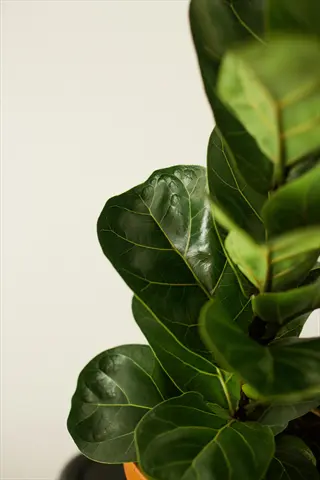
Bambino dwarf cultivar
- Mature size: Compact at only 2 to 3 ft (0.6 to 0.9 m) tall, ideal for small apartments or tabletop placements.
- Leaf appearance: Smaller, rounder leaves at roughly 4 to 6 in (10 to 15 cm) long, denser than the standard variety.
- Best for: Beginners or anyone with limited vertical space who still wants the classic violin-shaped leaf look.
- Light needs: Same bright indirect light requirement as the standard, but easier to fit near east-facing windows.
- Growth rate: Slow to moderate growth, gaining about 6 to 8 in (15 to 20 cm) per year under good conditions.
- Care difficulty: Considered the most forgiving of the four cultivars due to its smaller leaf surface area.
Compacta dense cultivar
- Mature size: Reaches 4 to 6 ft (1.2 to 1.8 m) indoors, with closely spaced leaves for a fuller silhouette.
- Leaf appearance: Smaller leaves around 6 to 8 in (15 to 20 cm) packed tightly along the stem.
- Best for: Owners who want a fuller-looking plant without waiting years for a standard tree to fill in.
- Light needs: Tolerates slightly lower light than the standard cultivar because of its compact leaf density.
- Growth rate: Moderate, gaining about 10 to 12 in (25 to 30 cm) per year with proper feeding.
- Care difficulty: Slightly more humidity-sensitive because more leaves means more transpiration surface area.
Little Sunshine miniature cultivar
- Mature size: Stays under 2 ft (0.6 m) tall, making it the most space-efficient cultivar available today.
- Leaf appearance: Narrow, lyre-shaped leaves about 3 to 5 in (8 to 13 cm) long with a slightly wavy edge.
- Best for: Desk plants, shelf placements, and bathroom displays with appropriate light and humidity.
- Light needs: Requires bright indirect light but tolerates eastern exposures very well year-round.
- Growth rate: Slow, gaining only 4 to 6 in (10 to 15 cm) per year, which suits limited indoor footprints.
- Care difficulty: Less prone to dramatic leaf drop than the standard because of its smaller resource footprint.
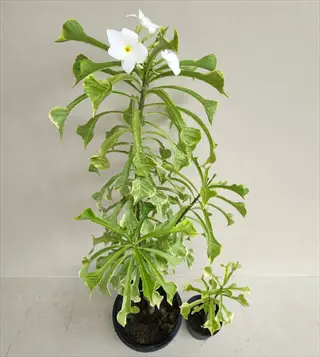
Variegata variegated cultivar
- Mature size: Grows to 4 to 8 ft (1.2 to 2.4 m) indoors with slower upward progress than green cultivars.
- Leaf appearance: Striking cream and green leaf patterns with irregular variegation along the margins.
- Best for: Collectors and designers seeking a statement plant with high visual contrast against neutral interiors.
- Light needs: Demands more bright indirect light because variegated cells lack chlorophyll for photosynthesis.
- Growth rate: Slow growth at roughly 6 to 10 in (15 to 25 cm) per year due to reduced chlorophyll surface.
- Care difficulty: Hardest of the four cultivars to maintain because variegation increases scorch and rot risk.
Pruning keeps any cultivar in shape and pushes branching from the cut node. NYBG advises you keep at least two-thirds of the leaves on the plant during any pruning session. Cut just above a node with clean scissors so the new branch sprouts at the right spot.
Propagation through a stem cutting works best in late spring when growth is active. Take a 6 in (15 cm) tip cutting with 2 to 3 leaves. Place it in a clean glass of water in bright indirect light and change the water weekly. Water rooting takes 4 to 8 weeks before roots reach 2 in (5 cm) long.
Pot the rooted cutting into a small 4 in (10 cm) container with the same tropical mix you use for adult plants. Keep humidity high for the first month while the roots adjust to soil. My success rate sits near 80% when I take cuttings between May and July, so timing matters more than any other step.
Toxicity and Pet Safety
Yes, the fiddle leaf fig toxic to cats warning is very real. ASPCA also lists it as fiddle leaf fig toxic to dogs, horses, and humans. The risk stays mild but real, so know the warning signs before a curious pet takes a bite. Pet safety starts with smart placement and ends with a phone number on the fridge.
The toxic punch comes from insoluble calcium oxalates packed in the leaves, stems, and milky sap. These tiny crystals work like fiberglass on soft tissue. Contact triggers fast pain in the mouth and throat. That is why drooling is one of the first signs of trouble.
What makes it toxic
- Toxic compound: Insoluble calcium oxalate crystals embedded throughout leaves, stems, and the milky latex sap.
- Affected species: Cats, dogs, horses, humans, and children if ingested or if sap contacts skin or eyes.
- Severity rating: Low to mild per ASPCA, meaning unpleasant symptoms but rarely life-threatening in healthy adults.
- Mechanism: Calcium oxalate crystals physically irritate mucous membranes on contact, similar to handling fiberglass.
Symptoms of ingestion
- Immediate signs: Excessive drooling, pawing at the mouth, and visible oral irritation within minutes of chewing.
- Gastrointestinal signs: Vomiting, difficulty swallowing, and reduced appetite that can last several hours.
- Skin contact: Redness, mild burning sensation, or itching when sap touches bare skin, particularly with sensitive individuals.
- Severe cases: Swelling of lips, tongue, or throat that interferes with breathing requires immediate emergency care.
Prevention strategies
- Placement choices: Set the plant on a high plant stand or shelf out of reach for cats, dogs, and young children.
- Pruning precautions: Wear gloves during pruning to avoid latex sap contact and wash hands thoroughly afterward.
- Dropped leaves: Pick up fallen leaves promptly because curious pets often investigate items at floor level.
- Training and supervision: Discourage pets from chewing houseplants through consistent redirection and use of pet-safe deterrent sprays.
Emergency response
- Veterinary contact: Call your veterinarian immediately if a pet ingests any plant material, even if symptoms appear mild.
- ASPCA Poison Control: The hotline at 888-426-4435 offers 24-hour expert guidance for a small consultation fee.
- Information to share: Identify the plant as Ficus lyrata, estimate amount eaten, and note time of ingestion.
- Human exposure: For child ingestion or eye sap contact, rinse mouth or flush eyes and contact poison control without delay.
In my experience, plant toxicity rarely kills a healthy adult pet but the symptoms turn rough fast. My neighbor's cat chewed a single leaf and spent two hours drooling and refusing food. The vet confirmed the cat would heal on its own. Still, the scare pushed her to move the plant onto a high shelf.
The same crystal-based reaction triggers in any mammal. Save the ASPCA Poison Control number at 888-426-4435 in your phone right now. The hotline runs 24 hours and the small consult fee buys peace of mind when a pet swallows part of any plant in the house.
Children and this plant make for a tricky mix because curious toddlers will mouth dropped leaves. I keep my trees on stands above 4 ft (1.2 m) and sweep up any fallen leaves within minutes. Wear gloves when you prune because the sap can sting bare skin for hours after contact.
5 Common Myths
White raised dots on fiddle leaf fig leaves mean the plant has a disease or pest infestation.
Those raised white spots are natural mineral deposits called lithocysts and do not indicate disease, pests, or damage.
Fiddle leaf figs need a brand new larger pot every single year to keep growing properly.
These plants prefer being slightly root-bound and only need a one-size-up pot in spring when roots emerge through drainage holes.
Fiddle leaf figs go dormant during winter so you should stop watering and feeding completely.
Ficus lyrata does not go dormant indoors and continues needing water when the top 2 inches dry, though fertilizer should pause.
Misting your fiddle leaf fig daily is the best way to keep its humidity levels happy.
Stable room humidity above 40 percent from a humidifier or pebble tray works better than misting, which can promote leaf fungal issues.
Applying leaf shine products keeps your fiddle leaf fig looking glossy and healthy long-term.
Leaf polishes and oils block light absorption needed for photosynthesis, so wiping with a damp cloth is the recommended cleaning method.
Conclusion
Good fiddle leaf fig care comes down to four steady habits, not one secret trick. Hold the room at 65 to 75 °F (18 to 24 °C). Keep humidity above 40%. Water only when the top 2 in (5 cm) of soil feel dry. Give the plant bright indirect light for 8 hours daily. Hit those four pillars and the plant rewards you with growth.
Skip the panic moves when you see one odd leaf. Those white raised dots are lithocysts, not disease, so leave them alone. Small brown spots often clear up once your watering rhythm steadies out. Trust the soil moisture test more than any calendar app you might download for plant reminders.
Consistent watering and steady light beat any fancy feed or grow gear you can buy. Ficus lyrata maintenance is just the same weekly check done for years. A healthy plant with proper indoor care can live 25 to 50 years. That makes this hobby a long-term bond worth doing right from day one.
Keep the ASPCA Poison Control number at 888-426-4435 saved in your phone for any pet or child concerns. You now have everything you need to grow this indoor houseplant with confidence. Watch your plant push healthy leaves through every season and enjoy the slow, steady payoff of doing the basics right.
External Sources
Frequently Asked Questions
Why are fiddle leaf figs so hard to take care of?
They react strongly to environmental swings such as drafts, temperature changes, and irregular watering.
Is fiddle leaf fig a good indoor plant?
Yes, when given steady light, warmth, and consistent watering they thrive as sculptural indoor plants.
How to keep a fiddle leaf fig happy?
Provide stable conditions with these essentials:
- Bright indirect light for 8 hours daily
- Steady temperature between 65 and 75 degrees Fahrenheit
- Humidity above 40 percent year round
- Water only when top 2 inches of soil dry out
Where is the best place to put a fiddle leaf fig?
Near an east-facing window or a few feet from a bright south-facing window behind a sheer curtain.
How often should I water a fiddle leaf fig?
Roughly once every 7 to 10 days when the top 2 inches of soil have dried out.
What is the lifespan of a fiddle leaf fig?
With proper indoor care, a healthy fiddle leaf fig can live 25 to 50 years.
Do fiddle leaf figs like showers?
Occasional lukewarm showers help clean dust and hydrate leaves, but allow complete drainage afterward.
Do fiddle figs like big pots?
No, they prefer slightly root-bound conditions and only need one pot size up in spring.
Do coffee grounds help fiddle leaf figs?
Used grounds add mild acidity and nitrogen, but use sparingly to avoid fungal or pest issues.
What not to do with a fiddle leaf fig?
Avoid these common mistakes:
- Moving the plant frequently between locations
- Watering on a strict schedule instead of by soil dryness
- Placing it near AC vents, heaters, or cold drafts
- Applying leaf shine products that block light absorption