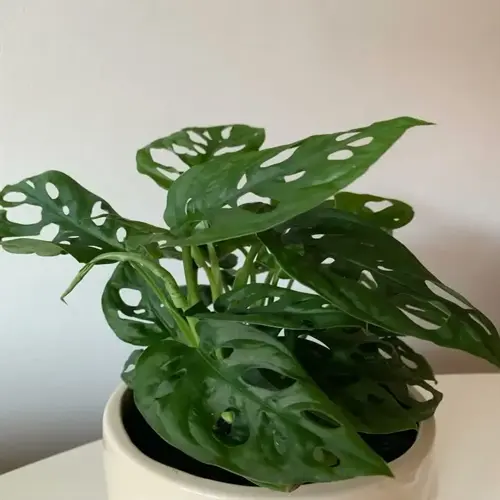

The dolphin leaves on my kitchen windowsill looked faintly creased one morning. I noticed it as I filled the kettle, so I pressed one with a fingertip. It gave softly instead of pushing back firm. I watered the pot, and by the next afternoon the little dolphins had plumped right back up. Those are the two succulent thirsty signs that matter most: soft, wrinkled leaves and bone-dry soil.
Wrinkled leaves are your first clue. A succulent stores its water inside its leaves, so a plump, firm leaf means the plant still has plenty in the tank. When that water runs low, the leaf goes soft, starts to crease, and may flatten or fade to a duller color. The touch test beats the eye test here. Pinch a lower leaf between two fingers. If it feels squishy or wrinkled rather than tight, your plant is asking for a drink. If it still feels firm and full, leave it alone.
Leaf signs on their own are not enough though. Soft leaves can also point to overwatering and root rot, and those look almost the same from above. That is why a quick soil moisture check has to back up what the leaves are telling you. Push a finger an inch into the soil near the base of the plant. If it comes out clean and dry that deep, the roots have nothing left to drink. If the soil feels cool or damp on your fingertip, your succulent has water down there and can wait.
Two more checks make this even easier on you. Lift the whole pot and feel its weight in your hand. A dry pot feels light and almost empty, while a freshly watered one feels heavy and solid. After a couple of weeks you will know your plant's dry weight by feel alone. A cheap moisture meter helps too if you want a number. Push the probe into the middle of the root zone and wait for the needle to settle. A reading down in the dry zone is your green light to water.
Color and posture round out the picture for you. These quieter succulent thirsty signs are easy to miss, since a deflated plant loses only a little of its usual shine. The lower leaves may angle down or pucker at the tips before they ever feel soft. None of these clues are dramatic, so you want to check your plants every few days instead of waiting for a crisis. I checked my own collection on a loose three-day loop, and catching that first wrinkle early kept every plant from getting stressed.
When both the leaves and the soil agree on dry, water with the soak and dry method. Pour water through until it runs out the drainage hole, then let the soil dry out fully before the next round. Do not water a firm, plump succulent just because a calendar says it is time. Watering on a fixed schedule, while the leaves are still tight and the soil is still damp, is the fastest route to overwatering and rot. More plants die from too much water than from too little.
Trust the plant over the clock. Let the leaves and the soil make the call together, and your succulent will tell you exactly when it is thirsty. A firm leaf with damp soil means you wait. A soft leaf with dry soil means you water. That one pair of checks keeps a succulent healthy far longer than any fixed watering routine ever will. Read the plant first, fill the can second, and you will rarely get the timing wrong on a healthy succulent.
Read the full article: String of Dolphins Care Guide