
Introduction
I planted a full packet of lettuce on one warm spring weekend, and every head matured in the same week. I ended up with 12 heads I couldn't eat fast enough. Half went bitter, the rest hit the compost, and the bed sat bare for a month. Succession planting fixes that, and it works just as well in one small raised bed as it does on a half-acre plot. You don't need a spreadsheet or years of practice to start.
The idea is simple. Instead of one giant harvest, you spread your sowings out so a little is always ready. Think of the bed as a slow conveyor belt. As one crop comes out, the next is already going in, so the soil is never idle. The University of Maryland Extension finds that this rhythm can give you 2 to 3 crops from a single bed across spring, summer, and fall.
For fast crops, the common cadence is a new batch every 2 weeks, or roughly 7 to 14 days apart. That short planting interval is what turns a one-time glut into a continuous harvest of greens and roots. Get the timing right and you pull fresh food from the same square footage for months, which is the simplest way to maximize space in a tight garden.
A short definition of successive sowing is easy to find, but the hard numbers you need to plan a real season are not. This guide pairs the why with the how. You'll get concrete replant intervals, a crop-by-crop chart, and soil care between rounds. You'll also get the frost-date math. That part tells you when your last sowing still has time to finish before the cold.
How Succession Planting Works
My south-fence raised bed gave me three clean harvests last year off the same patch of soil. Spring lettuce came out, bush beans went in, and fall spinach finished the run before the first hard frost. Each crop came in steady and on time, and I never once stood there with more than I could eat.
The year before that, the same bed was a mess. I dropped a full packet of lettuce seed all at once in April. It all came up together. It all matured together. By mid-June it had bolted into a bitter glut, and I dumped most of it on the compost pile. One huge wave, then bare dirt for the rest of summer.
That swap is the whole idea behind succession planting. You time your crops so one finishes as the next begins. The bed keeps working instead of sitting empty. WVU Extension breaks the practice into four methods of succession planting. Most garden blogs only explain one or two. Here are all four in one place so you can pick what fits your space.
Speed is what makes this work, and short crops give you the most room to play. Radishes mature in as little as 25 days, so a single cool season has time for several back-to-back rounds. The faster a crop finishes, the more turns you get out of one bed before the weather shuts you down.
Seasonal Crop Rotation In One Bed
- How it works: Grow a cool-season crop in spring, a warm-season crop in summer, then a cool-season crop or cover crop in fall, all in the same bed.
- Best for: Gardeners with limited beds who want two to three different crops from one space across the year.
- Example: University of Maryland Extension lists sequences such as lettuce in spring, green beans in summer, then broccoli sown in early August.
- Watch for: Each new crop draws on the same soil, so plan to refresh nutrients before the next round goes in.
Staggered Same-Variety Sowings
- How it works: Plant small batches of the same crop at fixed intervals instead of all at once, so harvests arrive in a steady stream.
- Best for: Fast cut-and-come crops like lettuce, radishes, spinach, and bush beans that you eat continuously.
- Interval: WVU Extension recommends sowing the same variety 7 to 14 days apart for a continuous supply.
- Watch for: Stop summer sowings before peak heat for cool crops, since lettuce and spinach bolt in hot weather.
Multiple Varieties, Different Maturity Dates
- How it works: Plant several varieties of one crop at the same time, choosing types that mature on different days so the harvest spreads out.
- Best for: Crops that are slow to mature or awkward to replant often, such as sweet corn, tomatoes, and cabbage.
- Why it helps: One planting day still gives weeks of harvest because early, mid, and late varieties ripen in sequence.
- Watch for: Read the days-to-maturity on each seed packet so the spread is wide enough to matter.
The Blended Strategy
- How it works: Combine seasonal rotation, staggered sowings, and mixed maturity varieties into one flexible plan for the whole garden.
- Best for: Experienced gardeners or anyone ready to keep every bed working from the first thaw to the first frost.
- Why it helps: Different methods cover different crops, so fast greens, slow fruiting crops, and fall crops all stay on schedule.
- Watch for: A simple garden journal or calendar keeps a blended plan from becoming confusing as the season fills up.
These four cover every job in the garden. Sequential crop rotation keeps one bed busy from spring through fall. Staggered planting of the same variety gives you a steady trickle of greens. Pick varieties with different maturity dates and one sowing feeds you for weeks. The blended plan ties all three together.
One thing to clear up first. Penn State Extension treats relay planting as its own thing. Same with interplanting and companion planting. Succession is about timing, not crowding. You are not stuffing more plants into one bed at once. You run them through the bed one after another. The soil never sits idle, and the harvest never stops.
How Often To Replant Crops
The honest answer to how often to replant is simple. Sow a fresh batch every 2 weeks and you will rarely go wrong. WVU and UGA Extension both point to that same window, with WVU naming a 7 to 14 day range for staggered sowings of the same crop.
But a flat 2-week rule ignores how fast each crop actually grows. A radish races to harvest while a bean takes its time. So the best succession planting interval leans on one number you can look up. It is the days to maturity printed right on the seed packet.
Think of it like restocking your fridge. You don't buy 2 weeks of salad in one trip and watch half of it wilt. You grab a little at a time so something fresh is always ready. Staggered sowings work the exact same way, and the chart below turns that idea into a planting schedule you can follow crop by crop.
Treat these numbers as commonly recommended starting points, not fixed law. The quick crops near the top handle the tightest gaps, so radishes can go in every week or so for round after round. Slower crops like beans want a bit more breathing room, which is why green beans mature in 50 to 60 days and reseed best every 2 to 3 weeks.
Your own weather shifts these dates too. A cool spring stretches maturity out, while a warm spell speeds it up and may push lettuce to bolt. Keep a short note of when you sow and when you pick, and within one season you will have a planting schedule tuned to your exact garden.
Penn State Extension advises adding one to two weeks to the days-to-maturity figure for fall crops, because shorter days slow plant growth as the season winds down.
Best Crops And Flowers To Sow
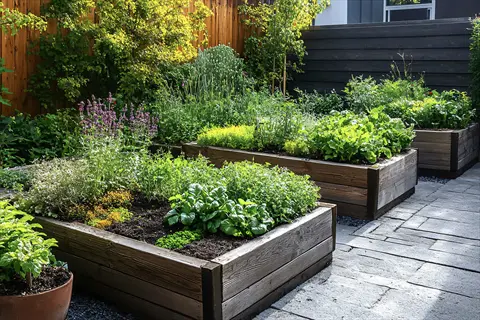
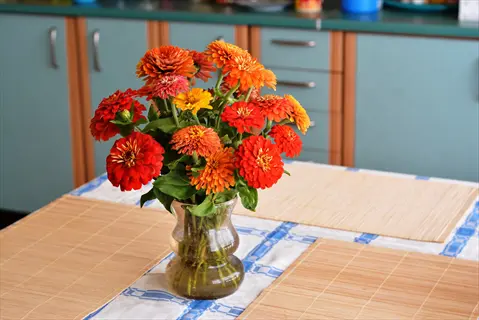
In my south-fence raised bed, a row of cut-and-come-again lettuce stands crisp and full beside a single zinnia patch I sowed three seasons ago. The more I cut that patch for the vase, the more it throws fresh blooms. The same staggered habit feeds both the kitchen and the vase off one small bed.
The best crops for succession planting share one trait. These quick-maturing varieties are ready before the last sowing gives out, so a small fresh batch always waits in the wings. My list leans on leafy greens and bush beans for the plate, then adds cut flowers for the table. Each one pays you back for the steady two-week effort of replanting.
Leaf Lettuce
- Why it works: Quick to mature at 35 to 65 days, so small staggered sowings give a constant supply of fresh leaves.
- Sow: A short row or small batch every two weeks during cool weather for steady cutting.
- Harvest: Pick outer leaves and let the plant keep producing, or cut whole young heads.
- Heat note: Lettuce bolts and turns bitter in summer heat, so pause sowings through the hottest weeks.
- Space: Fits raised beds, containers, and gaps between slower crops without crowding them.
- Best method: Staggered same-variety sowings keep the salad bowl full all spring and fall.
Radishes
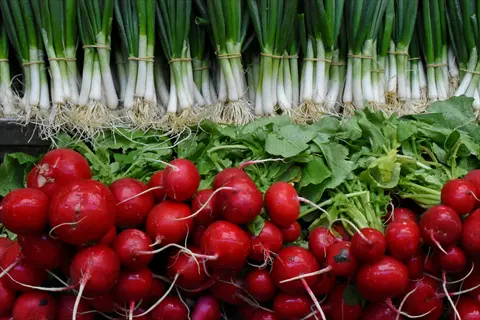
- Why it works: Among the fastest crops, maturing in as little as 25 days, so several rounds fit into one cool season.
- Sow: Direct sow a small batch every 7 to 10 days for a continuous supply of crisp roots.
- Harvest: Pull promptly once roots size up, since radishes turn woody and sharp if left too long.
- Space: Excellent gap-filler between slower crops because they finish before bigger plants need the room.
- Soil: Loose, stone-free soil lets roots form cleanly and evenly.
- Best method: Tight staggered sowings make radishes the classic beginner succession crop.
Bush Beans
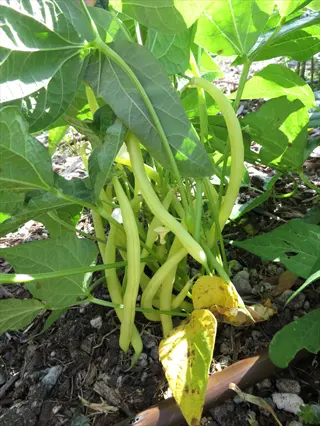
- Why it works: Mature in roughly 50 to 75 days and crop heavily over a short window, so replanting extends the supply.
- Sow: Plant a new batch every two to three weeks until midsummer for beans into fall.
- Harvest: Pick young and often to keep the plants producing more pods.
- Double win: Workable in both spring and fall in many zones, making them a flexible succession crop.
- Soil: As a legume, beans are gentle on nitrogen and can precede a hungry leafy crop.
- Best method: Staggered sowings paired with a spring and fall planting window stretch the harvest.
Zinnias And Other Cut Flowers
- Why it works: Fast cut-and-come-again flowers bloom more the more you cut, rewarding small repeat sowings.
- Sow: Floret recommends small batches about every three weeks because flowers run on longer bloom cycles than fast greens.
- Harvest: Cut stems regularly to push the plants into producing fresh blooms.
- Varieties: Zinnias, cosmos, and sunflowers are forgiving, productive choices for a succession of bouquets.
- Space: A short flower row or a corner of a bed keeps fresh blooms coming alongside the vegetables.
- Best method: Staggered sowings on a three-week rhythm keep the vase full from early summer to frost.
Notice that warm-season fruiting crops like tomatoes are missing from this list. Long-season plants do not reward tight replanting, so you stagger them with the mixed-maturity method instead. You pick early, mid, and late varieties of one tomato and let the different days to harvest spread your crop over weeks.
Soil And Nitrogen Between Rounds
My third round of lettuce in the south-fence raised bed came up pale and slow, with thin leaves that just sat there for two weeks. Two earlier crops had pulled out of that same spot fine, so the weak start caught me off guard. I worked a few inches of compost into the bed before the next sowing, and within ten days the new lettuce greened up and took off.
That weak third crop pointed straight at nitrogen replenishment. K-State Research and Extension says nitrogen is the first nutrient to resupply between rounds. Each crop pulls it out fast. Phosphorus and potassium drop much slower, so you rarely chase those. Compost fills the gap, and you skip the bag of fertilizer.
Keeping one bed productive across two or three crops a year comes down to a quick routine in the gap between clearing one plant and sowing the next. Good soil health is what lets a bed carry a spring, summer, and fall crop without losing steam. Here is the exact between-rounds routine I run.
Pull or cut out the finished plants as soon as they stop producing so the spot is open for replanting instead of sitting bare and weedy.
Work a layer of compost into the planting spot to resupply nitrogen, the macronutrient that continuous cropping drains first and the main cause of nutrient depletion between rounds.
Dig only where the new plants will go. This no-till replanting approach follows K-State Extension advice to minimize tilling and protect soil structure and the life within it.
Set the next crop into the refreshed spot and water it in so the new seeds or seedlings settle into even moisture.
The whole routine takes maybe ten minutes per spot, and it keeps a bed feeding crop after crop. Skip the compost step and you get my pale lettuce. Add it and you protect both your yield and your soil health for the next round.
Do not leave a harvested bed bare for weeks. Bare soil loses structure and nutrients, so replant or add compost and a cover crop to keep it working.
Planning Around Frost And Zones
Most gardeners lose their last round of crops the same way. They sow in late summer, the plants look fine, then frost lands before a single head fills out. The fix is simple math, and it starts with knowing your frost dates. These are the two days that bookend your growing year in your area.
A fall crop grows slower than the same seed sown in spring because the days keep getting shorter. Penn State Extension puts a real number on it. You add a one to two week buffer to the days-to-maturity printed on the packet, since less daylight means slower growth. Skip that buffer and your math runs short right when the cold arrives.
Think of timing a fall crop like setting an alarm before a deadline. You count back from your first frost date, not forward from today. Take that frost day, subtract the days-to-maturity for your crop, then subtract the days-to-maturity buffer of one to two more weeks. That tells you the last safe day to get seed in the ground.
Early Spring
Sow cool season crops like lettuce, spinach, and radishes as soon as the soil can be worked, and stagger small batches a week or two apart.
Late Spring To Summer
Pull the finished cool crops and replace them with warm-season picks like beans, once frost has passed and the soil has warmed up.
Late Summer
Re-sow spinach, kale, and broccoli for the fall garden, following University of Maryland Extension timing so the plants size up before the cold.
Fall
Count back from your first frost using days-to-maturity plus a one to two week buffer, then close the bed with a cover crop.
This same count-back method works in every zone. Your cutoff just shifts with your USDA hardiness zone. A warmer zone keeps sowing later into fall, while a cold zone like 4b shuts the door weeks sooner. Look up your own first frost date, do the subtraction, and you will stop running out of season.
To be safe and ensure time for harvest, it is suggested that you add a week or two to the days-to-maturity time frame for your fall garden crops.
5 Common Myths
Succession planting is complicated and only works for experienced gardeners with large plots and detailed spreadsheets.
It can be as simple as sowing a short row of lettuce every two weeks. Beginners and small raised beds benefit just as much.
You should plant your entire packet of seeds at once so the whole bed is full and nothing goes to waste.
Sowing everything at once gives one huge harvest that spoils fast. Small staggered batches give a steady, usable supply instead.
Once a bed is harvested in spring, it should rest empty for the summer to let the soil recover.
Bare soil loses structure and nutrients. Replanting or adding compost and a cover crop keeps the soil healthier than leaving it idle.
You can replant the same spot with the same crop endlessly without ever feeding or amending the soil.
Continuous cropping drains nitrogen first. Add compost between rounds, since phosphorus and potassium deplete more slowly than nitrogen does.
Fall crops grow at the same speed as spring crops, so you can sow them right up to frost.
Shorter fall days slow growth, so add one to two weeks to the days-to-maturity figure when timing fall sowings.
Conclusion
You don't have to rebuild your whole garden to make succession planting pay off. A single raised bed can hand off from one crop to the next all season, like a slow conveyor belt that never sits empty. Pull one crop out, and the next is already going in.
Keep the load-bearing numbers close. Most beds can carry 2 to 3 crops a year across spring, summer, and fall. Sow your fast crops on a 2-week interval to keep the harvest rolling. Work compost in between rounds to replace the nitrogen each crop pulls out. And give fall plantings a 1 to 2 week buffer, because shorter days slow things down before frost.
Start small so the plan sticks. Pick one quick crop you already eat, like radishes or lettuce, and sow a small batch every two weeks. That alone gives you a steady supply instead of one big glut you can't use. Once that rhythm feels easy, add a second crop and let it maximize space you used to leave bare.
One habit turns a lucky season into a system you repeat every year. Keep a quick garden journal and jot down each sow date as you go. Those few notes become your real planting schedule, and next year you'll know exactly when to drop the next round in. That's how a single bed turns into a continuous harvest you can count on.
Glossary
- Cool-season crops
- Vegetables like lettuce and spinach that grow best in cooler spring and fall weather.
- Cover crop
- A plant such as oats or clover grown to protect and improve soil rather than for harvest.
- Days to maturity
- The number of days a crop typically needs from sowing to harvest, used to plan replant timing.
- First frost date
- The average date of the first fall freeze in your area, used to count back and time final sowings.
- Relay planting
- Starting a new crop at intervals so it is ready to take over a bed as an earlier crop finishes.
- Staggered sowing
- Planting small batches of the same crop at fixed intervals instead of all at once for a steady supply.
- Succession planting
- A strategy of staggering when and where you plant so one crop replaces another and harvests keep coming all season.
- Warm-season crops
- Vegetables like beans and tomatoes that need warm soil and frost-free summer weather to thrive.
External Sources
Frequently Asked Questions
What does succession planting mean in the garden?
Succession planting means staggering when and where you plant so one crop replaces another and harvests keep coming all season instead of arriving all at once.
How do you start succession planting step by step?
Pick a fast crop, sow a small batch, then sow another batch every two weeks and replant each spot as soon as it clears.
How often should you succession plant vegetables?
Replant most fast crops every two weeks (7 to 14 days). Slower crops like green beans do well every two to three weeks.
What vegetables are best for succession planting?
Lettuce, radishes, spinach, arugula, beets, carrots, bush beans, and peas are top picks because they mature quickly and replant easily.
Can tomatoes be succession planted?
Tomatoes are too slow for tight replant intervals, but planting several varieties with different maturity dates spreads the harvest out.
How does succession planting work for cut flowers?
Sow fast cut flowers in small batches every three weeks so fresh blooms keep replacing finished ones throughout summer.
How do you plan succession planting around frost dates?
Count back from your first fall frost using each crop's days-to-maturity, then add one to two weeks because fall growth slows.
What is an example of a succession planting plan?
One classic plan grows lettuce in early spring, then a warm-season crop in summer, then spinach in fall in the same bed.
Why is succession planting important for your garden?
It maximizes limited space, gives a steady supply instead of gluts, extends your season, and keeps beds working all year.
Is October too late to start planting?
Often not. In many zones October still suits hardy greens, garlic, and cover crops that establish before deep cold arrives.