
I spotted a fresh aerial root poking out of the moss pole by my east window one Tuesday in June. A week later I watched a tight new leaf unfurl right above it. All summer that pole handed me a new root and a new leaf almost every week. I rubbed my thumb over each stubby root as it firmed up against the moss, and I stopped trying to keep count of them by July.
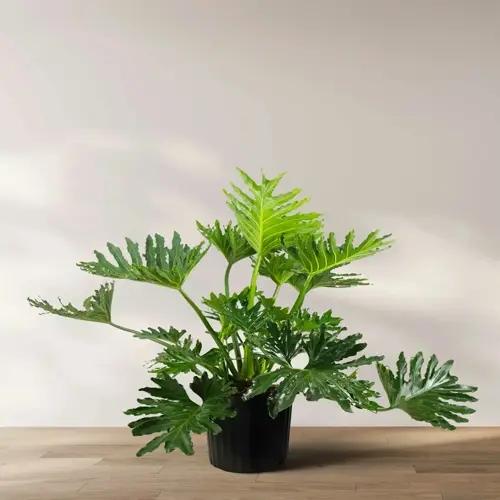
The rhaphidophora tetrasperma growth rate is fast. This plant is a rapid grower that sits near the top for any vine you can keep at home. In warm months you get a true fast growing houseplant on your hands. You will see new leaves and aerial roots so often that the plant looks different week to week. That speed is the main reason people fall for it.
Three things drive that pace, and the first is light. NC State Extension lists this plant's growth as rapid, and it climbs fastest in bright indirect light near a window. Give it a spot that stays bright all day but never bakes in harsh sun. A dim corner will slow your plant down fast, so move it closer to the glass if the new leaves shrink or the gaps between them stretch out.
Warmth is the second driver. This vine wants a room that holds between 65 and 80°F (18 to 27°C), which keeps the roots active and the stem pushing upward. Cold drafts near a door or a leaky window will stall it, so keep the pot away from those spots. The third piece is food, and a monthly feeding through spring and summer gives your plant the fuel it needs to keep stacking leaves on the pole.
Put light, warmth, and food together and the numbers get fun. In good conditions the vine can add roughly a foot (30 cm) or more of growth in a single month during spring and summer. That is a lot of green for one window. Your plant will not hold this pace forever, though, and the change of season tells it when to ease off.
Once fall and winter arrive the mini monstera growth slows to a crawl. Shorter days and cooler rooms tell the plant to rest, so new leaves come weeks apart instead of every few days. This is normal, and you should not panic or pour on extra fertilizer to force it. Let your plant idle, cut back on water a touch, and wait for the longer days to return in spring. The pace picks right back up on its own.
Because the vine shoots up so fast, give it a moss pole early, before it starts to flop over the side of the pot. A young plant looks like it has room to spare, but a climbing vine wants something to grip within its first few months. Sink the pole deep so it stays steady once the top gets heavy with leaves. The aerial roots will latch on, and each new leaf will get bigger as the plant climbs higher up the pole.
Plan to repot every year or so, since these roots fill a pot far faster than they would on a slow plant. When you see roots circling the bottom, move up one pot size and refresh the soil. You will also feed it more often than a slow plant. A balanced liquid fertilizer at half strength once a month suits this vine well. Match your care to its speed, and you will have a wall of split leaves within a year or two. Few houseplants pay you back this fast, and that is what makes the chase worth it.
Read the full article: Rhaphidophora Tetrasperma Care Guide