
There is no single official number for the types of pothos you can grow at home. Most published lists land between 8 and 24, and that wide spread is the honest answer on its own. No one count is correct. What gets called a pothos depends on who counts and where they draw the line. Treat any firm number you see as a rough guide, not a hard fact you can trust.
The gap shows up the moment you compare two plant shops side by side. One store page lists eight common pothos and stops there. Another counts two dozen and adds plants from a whole separate genus. Both feel right to the person who wrote them. The number you read is really a choice. It is not a fixed total that every grower would agree on, so do not lose sleep over the exact figure.
The count moves around for a simple reason. Pothos is not one tidy species at all. The one most of us grow at home is the plain green pothos, known to science as Epipremnum aureum. Two close cousins of it muddy the water, and shops add a whole different genus on top. New named plants keep arriving each year, so any list goes stale fast. That churn is why your search turns up so many different answers to the very same plain question.
One of the two close cousins is the blue one, sold as Epipremnum pinnatum. The other is a big-leaf type with the long name Epipremnum amplissimum. Both grow longer, bluer leaves that tend to split as the vine climbs up a wall. Shops then sell Scindapsus plants as pothos too, even though that one sits in its own genus. So a single store rack can hold three or four genera all under one label. No wonder the head count keeps shifting from one page to the next.
It helps to sort the whole mess into a few clear buckets. The classics cover the plants most people picture, like Golden and Marble Queen. The premium group holds newer, often patented plants such as Pearls and Jade and Manjula. A third group brings in the blue, large-leaf vines like Cebu Blue. The last group is the look-alikes, led by the satin pothos. These broad pothos varieties make a long list feel far less scary.
Classic Cultivars
- Species: Mostly Epipremnum aureum, the everyday pothos.
- Examples: Golden, Marble Queen, Neon, Jade, and N'Joy.
- Why grouped: These are the most widely sold and beginner-friendly types.
Patented Cultivars
- Origin: Documented breeding or mutation programs, often patented.
- Examples: Pearls and Jade, Manjula, Jessenia, and Global Green.
- Why grouped: Newer, premium selections with recorded origins.
Blue and Large-Leaf
- Species: Epipremnum pinnatum and Epipremnum amplissimum.
- Examples: Cebu Blue, Baltic Blue, and Silver Streak.
- Why grouped: Different leaf shapes that can fenestrate when climbing.
Look-Alikes
- Species: Scindapsus pictus, a separate genus.
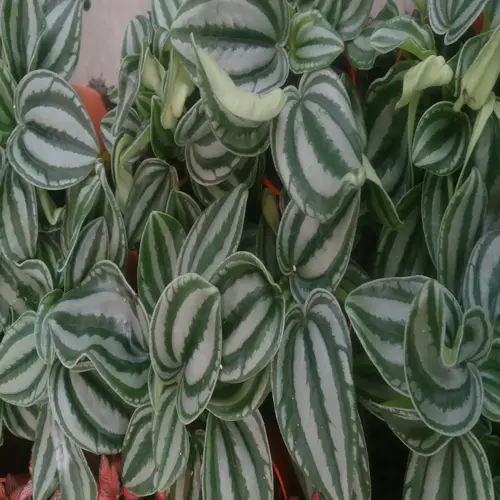
- Examples: Satin pothos and Silvery Ann.
- Why grouped: Sold as pothos but not true Epipremnum pothos.
The premium group is where the count gets slippery. Most of the newer pothos cultivars come from named breeding lines. Breeders keep releasing fresh ones with their own trademarks. A plant you have never heard of can show up at a shop and join every list within a year. That steady stream is the main reason no honest source can hand you one final number to memorize.
Skip the hunt for an exact count and sort the types of pothos into species groups instead. Ask which species your plant belongs to first. Then place it among the four broad groups above. This habit makes both naming and care far easier, since plants in the same group want similar light and water. Get the group right, and the type sorts itself out for you.
Read the full article: Pothos Varieties: Types, Care and ID Guide