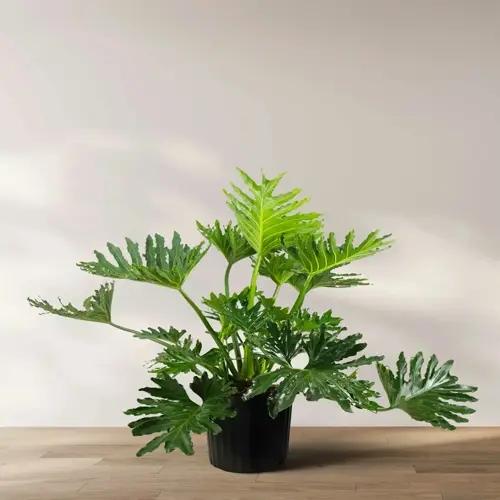

Yes, this plant is very easy to care for, and a new owner can keep it thriving with just three habits. Give it bright indirect light. Check the soil with your finger before you water. Give it a pole to climb. That short list is the whole reason the rhaphidophora tetrasperma care difficulty sits so low. It forgives the small slips that sink other plants, which makes it a great beginner houseplant for a first split-leaf vine. You do not need special skills to keep it happy.
The split leaves trick people into thinking it must be fussy like a true monstera. It is not. NC State Extension lists it as low maintenance, and it notes the plant's rapid growth too. That speed is a gift for beginners. You see new leaves often, so you know fast whether your routine is working. Most plants make you wait months for that kind of feedback. This one shows you in weeks, and a happy stretch of growth tells you to keep doing what you are doing.
Its one real weak point is overwatering. Soggy roots are the single thing that sets it back. Almost every problem people report traces back to a pot that stayed wet too long. The roots cannot breathe in heavy, wet soil, and that is when rot starts. Get the watering right and the rest of the care is simple. That one rule covers most of what could ever go wrong, which is rare for any plant.
The care numbers prove how forgiving it is. Water only when the top 1 inch (2.5 cm) of mix feels dry. That finger test is all the precision you need, and no gadget beats it. Keep the plant between 65 and 80 degrees Fahrenheit (18 to 27 degrees Celsius), which already matches most homes. Aim for around 60% humidity for the fullest leaves. It still copes with drier air without dropping foliage, so a normal living room is fine. None of these are tight targets. You have real room to be a little off and still get a healthy plant.
All of that adds up to a true low maintenance plant that fits a busy week. You are not misting it every day or chasing a strict feeding chart. A chunky mix with bark and perlite drains fast. That fast drainage protects the sensitive roots and lets air reach them between drinks. Pair the mix with a pot that has drainage holes. Do those two things and you remove the main way people kill this plant, before you even worry about light or food.
Bright indirect light keeps the growth tight and the leaves green. A spot near an east window works well, or a few feet back from a brighter one. Harsh midday sun through glass can scorch the leaves, so skip the hottest exposure. Too little light is the other trap. In a dim corner the new leaves come out small and stay whole, with no splits. If your plant stretches toward the window with long gaps between leaves, move it closer to the light and it bounces back.
If you keep one habit above all others, make it this: let the chunky mix dry slightly before you water again. Lift the pot now and then so you learn what dry feels like by weight, not by guessing. A heavy pot still holds water, so wait. When you do water, soak it until the excess runs out the bottom, then leave it alone. This simple rhythm handles the plant's only weakness and keeps the roots strong and white.
For the best-looking growth, give it a moss pole to climb early. Aerial roots grab the damp moss, and the plant rewards you with bigger leaves and deeper splits than it ever makes trailing off a shelf. Tie the stem loosely as it climbs. Water the pole when you water the plant. Do that and you get the dramatic mature foliage with almost no extra effort, which is the whole appeal of this easy little vine.
Read the full article: Rhaphidophora Tetrasperma Care Guide