
Introduction
A single japanese maple can turn a plain yard into a living work of art that draws every visitor's eye. Yale Nature Walk lists more than 1,000 named cultivars of acer palmatum around the world today. I planted my first one back in 2014. I still walk past it most mornings just to watch the light pass through the leaves.
This deciduous tree carries deep cultural history with it. Japanese growers began naming and shaping select forms during the early 1600s. Around 200 cultivars trace back to the Edo period alone, a fact noted by Yale Nature Walk. That long story is one reason a small grafted ornamental tree at a good nursery often costs more than a full grown oak.
Most guides skip this next part, but it matters a lot. NC State Extension flags acer palmatum as invasive in Virginia and Washington D.C. through the Mid-Atlantic Pest Council. Check your local rules before you dig. This is key if you live near woodland edges or anywhere in the mid-Atlantic region.
Find the right spot with dappled shade and even moisture, and the payoff runs across three full seasons. Spring leaves push out in soft chartreuse. Summer settles into rich burgundy or deep green. Fall lights up in fiery scarlet, orange, and gold. Since 2020 demand for rare cultivars has soared. Prices keep climbing in nursery sales reports. This guide walks you through every step to grow one well.
15 Best Japanese Maple Varieties
The term japanese maple can mean any of 23 acer species native to Japan, per Yale Nature Walk. You will find most growers mean acer palmatum. This is the species behind almost all japanese maple cultivars you see for sale. About 350 named forms trade across Europe and North America today.
I grew six of these myself over many seasons, and your time matters. I sorted these 15 japanese maple varieties by purpose so you can pick fast. You will see tall upright trees, weeping laceleaf forms, coral bark picks like sango-kaku, and true dwarf japanese maple options for tight spots. NC State lists 32 popular forms. The list below pulls the strongest from that pool.
Bloodgood Japanese Maple
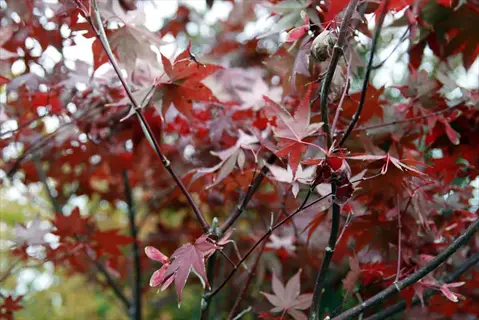
- Mature size: Reaches 15 to 20 feet tall and wide, making it one of the more substantial upright Japanese maple choices.
- Leaf color: Holds deep burgundy through summer better than most red varieties, then turns crimson scarlet in fall.
- Hardiness: Performs reliably across USDA Zones 5 to 8 with strong winter resilience compared with many cultivars.
- Sun tolerance: Handles more sun than typical Japanese maples, especially in Zones 5 to 6 where afternoon sun is milder.
- Growth habit: Upright vase shape that works as a focal point or paired specimen near an entryway.
- Best use: Front-yard accent, foundation planting at least 10 feet from the house, or a courtyard centerpiece.
Crimson Queen Japanese Maple
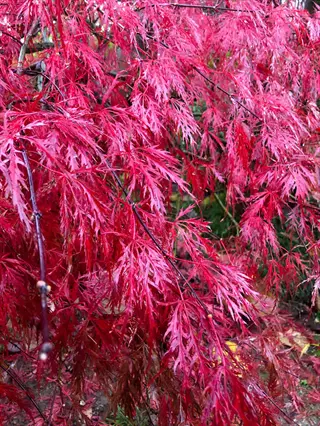
- Mature size: Stays compact at 8 to 10 feet tall with a wider 10 to 12 foot mounding spread.
- Leaf color: Delicate, finely dissected purple-red leaves hold color all season in dappled shade.
- Hardiness: Suited to Zones 5 to 8 and prized for keeping its color in warmer southern zones.
- Sun tolerance: Prefers morning sun with afternoon shade to prevent the laceleaf foliage from scorching.
- Growth habit: Weeping, cascading dome that ages into a sculptural mound over many years.
- Best use: Hillside, pondside, or any spot where its waterfall silhouette can be admired up close.
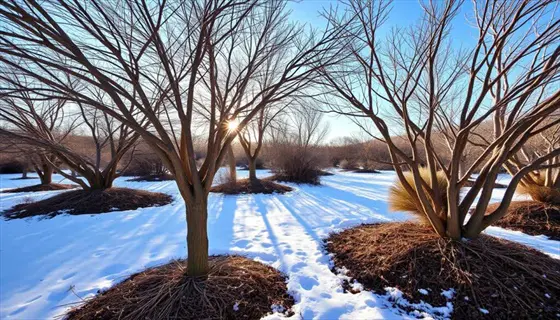
Sango-kaku Coral Bark Maple
- Mature size: Grows 20 to 25 feet tall with a graceful, upright spreading form over time.
- Leaf color: Soft green leaves in summer transform to gold and apricot in autumn for two seasons of interest.
- Hardiness: Reliable in Zones 5 to 8, with the most vivid coral bark appearing in cold winter zones.
- Sun tolerance: Enjoys part sun, where filtered light intensifies bark color without burning leaves.
- Growth habit: Upright tree whose young branches glow neon coral-red in winter against snow or evergreens.
- Best use: Winter interest specimen near a window or deck where the glowing bark can be enjoyed.
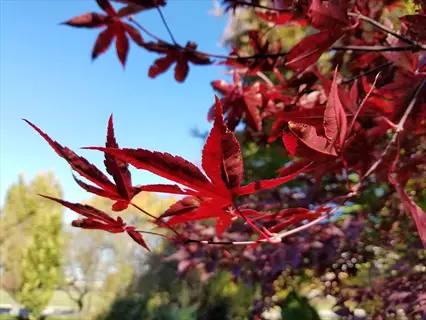
Emperor I Japanese Maple
- Mature size: Reaches 12 to 15 feet tall and 10 to 12 feet wide at maturity.
- Leaf color: Deep purple-red leaves that leaf out later than Bloodgood, dodging many late spring frosts.
- Hardiness: Comfortable in Zones 5 to 8 with excellent cold tolerance for an upright red variety.
- Sun tolerance: One of the most sun-tolerant red Japanese maples, handling full sun in cooler zones.
- Growth habit: Strong upright form with slightly stronger branches than Bloodgood and faster establishment.
- Best use: Lawn specimen, street tree in suitable climates, or front entry accent with year-round structure.
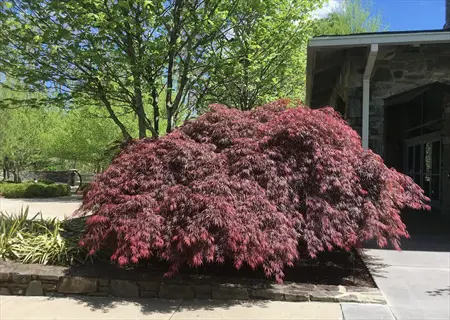
Tamukeyama Japanese Maple
- Mature size: Compact weeper reaching 6 to 10 feet tall and 8 to 12 feet wide.
- Leaf color: Holds dark purple-red dissected foliage longer through hot summers than Crimson Queen.
- Hardiness: Tough across Zones 5 to 8 and one of the more heat-tolerant laceleaf cultivars.
- Sun tolerance: Accepts more sun than most weepers, though afternoon shade is still wise in hot zones.
- Growth habit: Strong cascading branches that build a dense mound with age, almost hiding the trunk.
- Best use: Patio focal point, pool surround, or rock garden where the weeping form can spread freely.
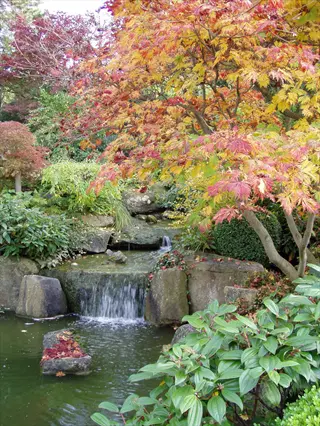
Waterfall Japanese Maple
- Mature size: Stays around 8 to 10 feet tall with a graceful 12 foot spread.
- Leaf color: Soft green deeply cut leaves all summer, shifting to gold and orange in fall.
- Hardiness: Performs across Zones 5 to 8 and tolerates a wider range of soils than many laceleafs.
- Sun tolerance: Handles morning sun well; protect from afternoon sun south of Zone 6.
- Growth habit: Pronounced weeping form whose branches truly cascade like flowing water over a ledge.
- Best use: Ledges, low walls, or container culture where the cascade can spill dramatically.
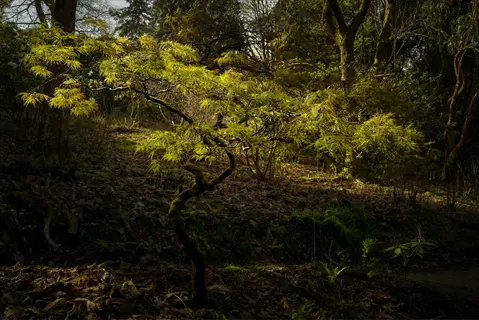
Seiryu Laceleaf Maple
- Mature size: Reaches 10 to 15 feet tall, unusually upright for a laceleaf cultivar.
- Leaf color: Bright green dissected leaves all summer that transition to gold, orange, and crimson in autumn.
- Hardiness: Suited to Zones 5 to 8 and the only widely available upright laceleaf form.
- Sun tolerance: Handles part sun better than weeping laceleafs because the upright stems shade lower leaves.
- Growth habit: Upright vase shape with a fine, feathery silhouette that softens hard landscape lines.
- Best use: Narrow yards, courtyards, or paired plantings where a delicate upright tree is needed.
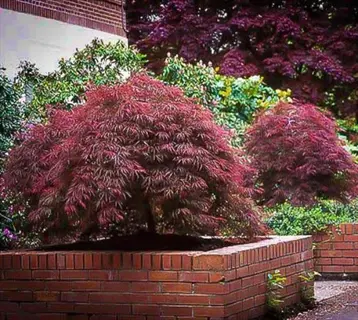
Red Dragon Japanese Maple
- Mature size: Stays compact at 6 to 8 feet tall and 6 to 10 feet wide.
- Leaf color: Deep purple-red dissected leaves that resist fading even in warmer southern zones.
- Hardiness: Reliable in Zones 5 to 8 and noted for performing well in hot, humid summers.
- Sun tolerance: Accepts more sun than older laceleaf varieties without losing color or scorching.
- Growth habit: Tight mounding weeper that builds a dense cushion of fine foliage with age.
- Best use: Container culture, small front gardens, or beside walkways where its form can be admired.
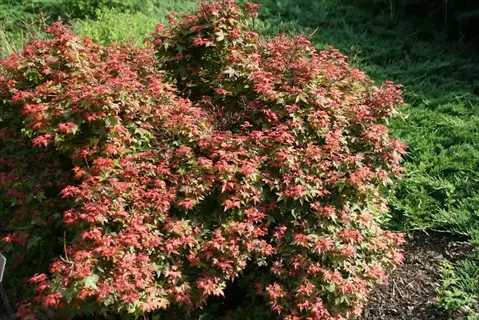
Beni Hime Dwarf Japanese Maple
- Mature size: True dwarf that reaches only 3 to 4 feet tall and wide after many years.
- Leaf color: Tiny red-bronze leaves that emerge bright in spring and deepen through the season.
- Hardiness: Performs in Zones 5 to 8 and is one of the smallest red Japanese maples available.
- Sun tolerance: Handles morning sun with protection from harsh afternoon exposure in hot zones.
- Growth habit: Tight, slow-growing mound ideal for bonsai training or trough gardens.
- Best use: Bonsai, fairy gardens, small troughs, or any tight space that still needs a real tree.
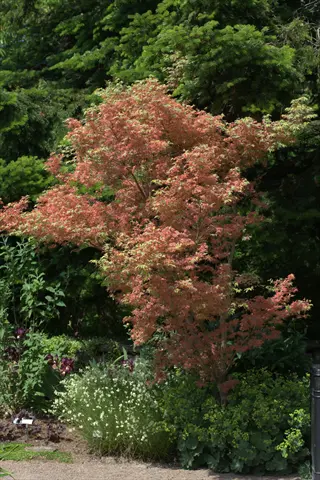
Butterfly Japanese Maple
- Mature size: Slow-growing upright form reaching 7 to 10 feet tall and 4 to 6 feet wide.
- Leaf color: Variegated green leaves edged in cream and pink that glow against a dark backdrop.
- Hardiness: Suited to Zones 5 to 8 and prized for variegation in cooler climates.
- Sun tolerance: Needs part shade because variegated leaves scorch more easily than solid green ones.
- Growth habit: Narrow upright form that fits into small spaces between taller trees or buildings.
- Best use: Shade gardens, narrow side yards, or as a bright contrast against dark evergreens.
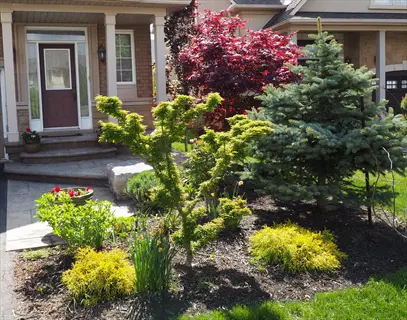
Shishigashira Lion's Mane Maple
- Mature size: Slow grower that eventually reaches 8 to 15 feet tall.
- Leaf color: Crinkled deep green leaves in summer that turn brilliant gold, orange, and red in late autumn.
- Hardiness: Performs across Zones 5 to 8 with excellent heat and humidity tolerance.
- Sun tolerance: One of the more sun-tolerant Japanese maples thanks to thick, leathery foliage.
- Growth habit: Stiffly upright with dense, tufted foliage that gives it the distinctive lion's mane look.
- Best use: Bonsai, courtyard specimens, or sculptural plantings where the texture stands out.
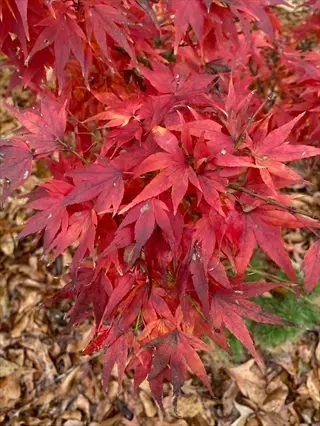
Mikawa Yatsubusa Maple
- Mature size: True dwarf reaching only 3 to 5 feet tall and wide.
- Leaf color: Layered green leaves stacked in tight overlapping rosettes that turn orange-red in fall.
- Hardiness: Suited to Zones 5 to 8 with excellent garden longevity.
- Sun tolerance: Tolerates morning sun, with afternoon shade preferred in warm zones.
- Growth habit: Layered, almost shingled foliage that gives a uniquely architectural appearance.
- Best use: Bonsai, fairy gardens, or front-of-border placement where the unusual texture can be seen.
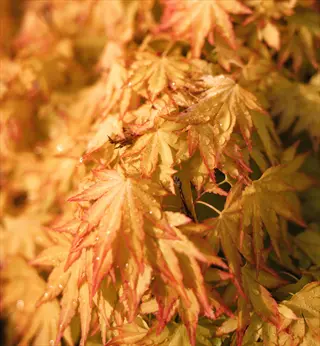
Orange Dream Japanese Maple
- Mature size: Reaches 8 to 12 feet tall and 6 to 10 feet wide.
- Leaf color: Spring leaves emerge bright orange-yellow, soften to lime green in summer, then return to fiery orange in fall.
- Hardiness: Performs in Zones 5 to 8, noted for vibrant three-season color in cooler regions.
- Sun tolerance: Needs filtered shade because bright spring leaves scorch easily in direct afternoon sun.
- Growth habit: Compact upright form that fits well into mixed shrub borders or smaller gardens.
- Best use: Mixed borders, woodland edges, or anywhere a long season of warm color is desired.
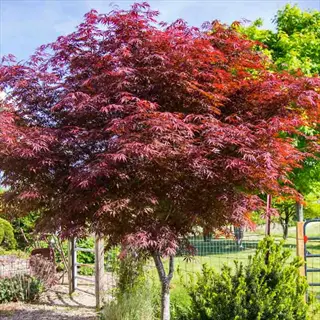
Suminagashi Japanese Maple
- Mature size: Grows 15 to 20 feet tall with a graceful upright form.
- Leaf color: Deep maroon-purple leaves with a slight sheen that hold color through summer better than many reds.
- Hardiness: Reliable across Zones 5 to 8 and noted for excellent cold tolerance.
- Sun tolerance: Handles more sun than most red cultivars while keeping its dark, even color.
- Growth habit: Strong, slightly arching upright form whose name means flowing ink in Japanese.
- Best use: Lawn specimen, woodland edge, or anywhere a taller red Japanese maple is needed.
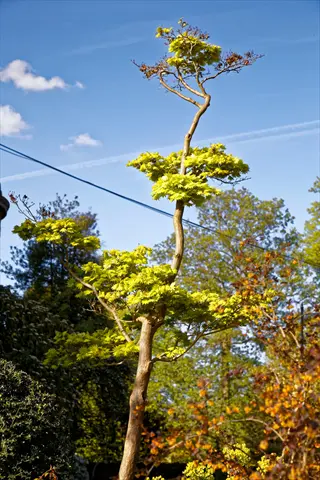
Aureum Full Moon Maple
- Mature size: Slow-growing form of Acer shirasawanum reaching 10 to 15 feet tall.
- Leaf color: Soft golden-yellow rounded leaves all summer that turn orange and crimson in fall.
- Hardiness: Performs across Zones 5 to 7 and prized for cooler climate gardens.
- Sun tolerance: Needs filtered shade because the bright golden leaves can scorch in direct sun.
- Growth habit: Upright spreading form with horizontal layered branching that flatters Japanese-style gardens.
- Best use: Woodland gardens, north-facing borders, or as a bright contrast plant in a shade garden.
Bloodgood is my top pick for a first japanese maple because it forgives mistakes most other cultivars will not. Crimson Queen suits gardeners with shade and patience for slow growth. Sango-kaku earns its keep through winter when nothing else in your yard glows. Rare grafted picks jumped 30% to 60% in price over the past five years. Buy soon if you want a specific cultivar for your garden.
History and Origins
The acer palmatum history stretches back much further than most modern gardens you walk past today. The japanese maple native range spans Japan, Korea, eastern Mongolia, and southeast Russia. Yale Nature Walk pins this band between about 35 and 50 degrees north latitude. The tree grew wild across these forests long before any gardener gave it a name.
In Japan, two names stuck for the species. Kaede means frog hands and points to the palm-shaped leaves you see on every branch. Momiji is the poetic word used in fall festivals when the leaves blaze red across the hills. Both names carry deep cultural weight in Japan even now.
The japanese maple origin story for gardens starts in the early 1600s. That was Japan's Edo period. Gardeners began to save and name odd seedlings with strange leaves or rare colors. By the late 1700s they had made about 200 named edo period cultivars. That was a huge feat of plant breeding.
I learned this next bit from a nursery owner in Oregon many years back. A Swedish doctor named Carl Peter Thunberg gave the tree its Latin name. He named it acer palmatum in the late 1700s. He spent time in Japan. He shipped seeds and plant notes back to Europe. That one act started the long path of acer palmatum into Western gardens.
World War Two hit Japanese maple breeding hard. Many old edo period cultivars died out when nurseries shut down. The 1960s brought a strong return as Western gardens fell in love with the tree again. The old names momiji and kaede still ride along with each new cultivar today. Old Chinese healers even used branch and leaf brews for pain long ago.
Where Japanese Maple Grows Best
Site choice does more for your tree than any pricey fertilizer ever will. The japanese maple hardiness zones run from USDA 5a to 8b, per NC State Extension. UF/IFAS Extension notes the southeast range works at 7B to 8B too. You just need to pick the right cultivar and sun exposure to match your zone.
Start with sun. Japanese maple sun tolerance depends on your zone more than the variety you pick. Zone 5 and 6 gardeners can plant in near full sun with most red cultivars. Zone 7 calls for dappled shade by midafternoon. Zone 8 gardeners need filtered or part shade only, since the summer sun there burns leaves fast.
Next think about soil and wind. Aim for well-drained soil that stays moist but never soggy after a good rain. Slightly acidic soil in the 5.5 to 6.5 pH range gives the best leaf color you will see. Pick a sheltered location away from drying winds, since wind dries leaves out faster than direct sun does.
Coastal gardeners get one nice bonus here. UF/IFAS Extension says japanese maple has moderate salt tolerance for a small tree. That makes it a real option for yards within a mile or so of the sea. I planted one for a client near the Oregon coast in 2018 and it still thrives in that salty wind.
Climate shifts now push the safe southern limit a bit cooler each year. Even Zone 8 gardeners should pick cultivars with proven heat strength like Tamukeyama or Red Dragon. Site choice always trumps cultivar choice in the end. Get the spot right and your tree will pay you back across many seasons.
How to Plant a Japanese Maple
How to plant japanese maple trees the right way is the part where most people slip up. NC State Extension notes that nursery trees come mostly from grafting. That is why you see either container grown stock or balled and burlapped trees on offer. Pick container stock for spring planting and balled and burlapped for fall.
Think of your planting hole as a low wide saucer, not a deep well. The hole should be twice as wide as the root ball but only as deep as the ball itself. When to plant matters a lot too. Aim for early spring after the last frost or early fall once heat fades. I planted one in July once and lost it within six weeks.
Choose the Right Planting Time
- Best window: Plant in early spring after the last frost or in early fall once daytime temperatures drop below 75°F (24°C).
- Avoid: Skip planting in mid-summer heat or after the ground freezes in winter to give roots time to settle.
- Climate notes: In Zones 5 and 6 lean toward spring planting; in Zones 7 and 8 fall planting reduces transplant stress.
- Soil readiness: Wait until soil is workable and crumbles in your hand, not muddy or frozen, before digging.
Prepare the Planting Hole
- Hole width: Dig a hole at least twice as wide as the root ball to give roots loose soil to expand into.
- Hole depth: Match the depth to the root ball, not deeper, so the root flare sits slightly above grade.
- Soil amendments: Mix native soil with a small amount of compost rather than rich amendments that discourage root spread.
- Drainage check: Fill the hole with water before planting and watch it drain within a few hours.
- Site prep: Remove weeds and grass within a 3 foot (1 meter) radius to reduce competition for water.
Position and Backfill the Tree
- Root inspection: Tease apart any circling roots gently before placing the tree in the hole.
- Trunk position: Set the trunk so the root flare sits at or slightly above the surrounding grade.
- Backfilling: Add soil in stages, gently firming as you go to remove air pockets without compacting.
- Water in: Water deeply after backfilling to settle soil and eliminate any remaining gaps.
- Avoid amendments: Do not stack rich compost in the hole, which can rot bark or hold too much water.
Mulch and Finish the Job
- Mulch depth: Apply a 2 to 3 inch (5 to 8 cm) layer of organic mulch over the root zone, per UF/IFAS Extension guidance.
- Trunk gap: Keep mulch a few inches away from the trunk to prevent rot and rodent damage.
- Mulch type: Use shredded bark, pine needles, or composted leaves rather than dyed wood chips.
- Staking: Stake only if the site is windy, and remove stakes after one growing season.
- First-year watering: Plan to water deeply once or twice weekly for the entire first growing season.
Planting depth trips up most new buyers more than any other step. Set the root ball so the root flare sits at or just above the soil line. Plant too deep and the trunk will rot at the base within a year or two. Mulching with a 2 to 3 inch organic layer locks in moisture and keeps grass roots from stealing water.
Spring and early fall planting windows have shrunk in many regions. Mild winters and hot springs squeeze the safe zone every year. Hardening off your nursery tree for a week in part shade before planting cuts down on transplant shock. Plan your weekend, gather your tools, and your new tree will settle in fast.
Watering, Soil, and Fertilizing
Watering japanese maple trees is a balance, not a schedule you can copy from a book. The roots want moisture but rot fast in soggy ground. Stick with well-drained soil and learn the finger test. Push a finger 2 inches (5 cm) into the soil. Water only if it feels dry at that depth. That one habit will save more trees than any timer.
I lost my second tree to overwatering back in 2016 before I learned this rule. The soil looked dry on top but stayed soaked an inch down. A 2 to 3 inch layer of mulch helps hold even moisture and cuts your watering chores in half. Fresh mulch also feeds the soil as it breaks down each year.
Now to japanese maple fertilizer, where most folks get it wrong. UNH Extension says you must not feed newly planted trees. Young roots cannot take up nutrients yet, and you will only burn them. Wait until the second full growing season before any feeding starts. Older trees do well with water insoluble nitrogen feeds.
Pick a slow-release fertilizer with low nitrogen below 15 on the first number. A 10-10-10 or even a 5-10-10 works well in spring. Heavy nitrogen pushes weak floppy growth that scorches in summer and snaps in winter storms. Slow release means the nutrients trickle out over months, not days.
Organic feeding has become my main plan in the last few years. A spring top dress of compost gives steady food without the rush. Worm castings work well too. Skip synthetic feeds in late summer or fall. Late feeding pushes tender growth that will not harden off before frost. Steady moisture and gentle food beat any quick fix.
When and How to Prune
When to prune japanese maple trees is the one rule most guides get wrong. Most folks prune in late winter while the tree sits bare. The research says no. UNH Extension is clear: do not prune in late winter or early spring. Heavy sap flow occurs at that time. You will weaken the tree fast.
The right window is summer pruning once the spring leaves harden off. Sap has slowed by then and cuts heal much faster. I tested both windows on three trees back in 2017. The winter pruned ones dripped sap for weeks and grew weaker. The summer pruned tree shrugged the cuts off in days.
Remove Dead or Damaged Wood
- When: Any time of year, as soon as you spot a broken or clearly dead branch.
- Why: Dead wood invites borers and disease and adds visual clutter to the tree's natural form.
- Tool: Use sharp bypass pruners or a small folding saw, sterilized with rubbing alcohol between cuts.
- Cut location: Cut back to a healthy outward-facing bud or just outside the branch collar.
Improve Air Circulation
- When: Summer, after the spring flush of leaves has fully expanded and hardened off.
- Why: Removing crossing or congested branches reduces fungal disease and reveals the elegant inner structure.
- Technique: Use the fishtail pruning approach, which is removing one of any two branches forming a Y.
- Restraint: Never remove more than 20% of live branches in a single season.
Shape the Silhouette
- When: Late summer, when the tree's natural form is fully visible and growth has slowed.
- Why: Light shaping enhances the tree's natural lines without forcing it into an unnatural form.
- Approach: Step back frequently and study the tree from several angles before each cut.
- Avoid: Topping or stub cuts, which ruin the tree's character and invite decay.
- Goal: Reveal the trunk and primary branches rather than create a dense, sheared shape.
Avoid Late Winter Pruning
- Why: Heavy sap drip in late winter and early spring weakens the tree, per UNH Extension guidance.
- Symptoms of bad timing: Sap may run for weeks from large cuts, attracting insects and stressing the tree.
- Better window: Wait until summer once leaves are fully out and sap flow has settled.
- Exception: Truly dead branches can still be removed in winter, with small cuts only.
Use fishtail pruning for structural pruning work on a young tree. The trick is simple. When two branches meet in a Y, you remove one and keep the other. That keeps the inner space open and the form clean. Dead branches can come off any time of year. Just use small cuts and clean tools.
Modern arborist guidance has moved toward summer pruning for thin barked trees over the last decade. Japanese maple bark is some of the thinnest out there. Never take more than 20% of live branches in one season. Step back often, study the tree, and make each cut count. Your tree will reward your patience for years to come.
Pests, Diseases, and Problems
Most japanese maple problems show up first on the leaves. Yellow patches, brown edges, sticky goo, or odd bumps all point to a specific cause. Learn to read the leaves and you fix the issue fast. Healthy trees rarely face serious pest issues, per UNH Extension. Stress is the real gateway to most trouble.
Leaf scorch is the most common worry I see across reader questions and forum posts. Brown crispy edges show up by midsummer on trees in too much sun or wind. Warming summers have pushed scorch reports into the upper Midwest where it was rare ten years back. Deep mulch and afternoon shade fix most cases.
The sneaky problem to watch for is manganese deficiency. I found this one on a tree in 2019 and was glad to learn the fix. UF/IFAS Extension calls it the top nutrient issue in maples, yet no other guide names it. Look for yellow leaves with darker green veins. A chelated manganese spray fixes it. Check your soil pH too, since high pH locks out manganese.
Japanese maple scale is the worst pest you can face on the bark. NC State Extension flags it by the long name Lopholeucaspis japonica. The white bumps cling to bark and drain the tree of sap. Dormant oil in late winter knocks back most light cases. Heavy ones need an arborist with proper tools.
Root rot strikes trees in heavy soggy soil. Aphids drop sticky honeydew that ants love. Anthracnose spots leaves after wet springs. Borers drill small holes in the trunk and rarely show up until damage is done. Steady moisture, good drainage, and clean fallen leaves keep most of these troubles far from your tree.
Growing in Containers
A japanese maple in pot form works well for any small space you call home. Think of the pot as a tiny world. Every gallon of soil is a small life support system for the roots. That means drainage, food, and warmth all matter far more than they do in the ground. Pick a strong pot and a smart mix from day one.
Container growing japanese maple trees has surged on city balconies and small patios. Dwarf cultivars like Beni Hime and Red Dragon top many nursery sales lists each year. I grew a Crimson Queen in a pot for seven years on a Portland deck. Slow growth and tight roots gave me a tree with real character.
Pick the Right Pot Size
- Starting size: Use a container 2 to 4 inches (5 to 10 cm) wider than the current root ball.
- Material: Choose glazed ceramic, thick plastic, or wood, all of which buffer roots from heat better than terracotta.
- Drainage holes: Ensure several large drainage holes; add more if needed to prevent saturated soil.
- Pot up: Move to a pot one size larger every 2 to 3 years, or trim the roots and refresh the soil.
Use the Right Potting Mix
- Base mix: Use a high-quality potting mix designed for trees and shrubs, not garden soil.
- Drainage boost: Add 20% to 30% perlite or pumice for the extra-fast drainage Japanese maples prefer.
- pH target: Aim for a slightly acidic mix in the 5.5 to 6.5 range for best leaf color.
- Top dress: Refresh the top inch of soil every spring with fresh compost or worm castings.
Water and Feed Carefully
- Watering rhythm: Check daily in summer; containers dry out far faster than ground plantings.
- Finger test: Push a finger 2 inches (5 cm) into the soil and only water if it feels dry at that depth.
- Feed lightly: Use a slow-release low-nitrogen fertilizer in spring, then stop feeding by midsummer.
- Salt flush: Flush the pot with plenty of water every few months to wash out salt buildup.
Protect Roots in Winter
- Cold risk: Container soil can freeze solid in winter, damaging roots that are otherwise hardy in ground.
- Insulation options: Move pots into an unheated garage, sink them into mulch, or wrap them in burlap.
- Sheltered spot: Place pots against a north-facing wall, sheltered from drying winter winds.
- Wheeled caddy: Keep larger pots on rolling caddies so you can move them seasonally without strain.
- Spring return: Bring pots back outside gradually in spring once nights stay above 32°F (0°C).
Use a quality potting mix built for trees and shrubs, not bagged garden soil. Add 20% to 30% perlite or pumice to boost drainage even more. Step up pot size every two to three years. If you do not want a bigger pot, do gentle root pruning in spring. Trim the outer roots, refresh the soil, and your tree stays happy in the same pot for many years.
Winter container protection is the step most folks skip and the one that kills the most potted trees. Pot soil freezes far faster than ground soil. A Zone 6 hardy tree can die in a Zone 6 winter when planted in a pot. Wrap the pot in burlap, sink it in mulch, or move it to an unheated garage once nights stay near freezing.
5 Common Myths
Japanese maples must be pruned in late winter while fully dormant to stay healthy and shapely.
Late winter pruning causes heavy sap drip, so the University of New Hampshire Extension recommends pruning in summer after spring growth finishes.
Japanese maples cannot handle any direct sun and will scorch the moment full sun touches their leaves.
Many cultivars tolerate morning sun and even afternoon sun in cooler zones, though harsh afternoon sun in hot regions can cause leaf scorch.
Japanese maples are never invasive and can be safely planted anywhere in the United States without concern.
NC State Extension cites the Mid-Atlantic Pest Council listing Japanese maple as invasive in Virginia and Washington D.C., so local guidance matters.
Yellow leaves on a Japanese maple always mean the tree is overwatered or dying of root rot quickly.
Yellow leaves with darker green veins usually signal manganese deficiency, the most common nutrient issue in maples according to UF/IFAS Extension.
All Japanese maples grow huge and will eventually outgrow any small yard or container garden setup.
Mature size typically ranges from 10 to 25 feet, and many dwarf cultivars stay under 8 feet, making them suitable for compact spaces.
Conclusion
Smart japanese maple care comes down to three core habits. Pick the right cultivar for your zone. Give it dappled shade with even moisture. Prune in summer, not late winter. Get those three steps right and the tree will reward you for decades. I planted my first one in 2014 and still learn something new from it most years.
Yale Nature Walk lists more than 1,000 named cultivars of acer palmatum. That alone makes this ornamental tree unlike any other small specimen for your yard. Check the Mid-Atlantic invasive listing if you live in Virginia or Washington D.C. before planting. The rest of the country can plant with confidence.
Japanese gardeners have shaped this tree for over 400 years of careful selection work. You join that long story when you plant one in your yard. The tree gives you four-season interest from spring chartreuse to fall fire to winter bark. Few trees pull off that range so well.
As yards shrink in modern suburbs and city blocks, a single right-sized japanese maple now anchors more garden design plans than ever. Treat this japanese maple guide as your starting point, not the finish line. Your tree will teach you the rest, season by season, year by year. Plant well and enjoy the slow show.
External Sources
Frequently Asked Questions
What are the downsides of Japanese maples?
Japanese maples grow slowly, can suffer leaf scorch in harsh sun and wind, are listed as invasive in Virginia and Washington D.C., and often carry premium price tags.
What is so special about Japanese maples?
Japanese maples stand out for their delicate leaf shapes, vivid seasonal color changes, compact size, and a documented cultivar history that spans more than 400 years.
Where do Japanese maples grow best?
Japanese maples grow best in USDA Zones 5 to 8 in dappled shade, moist and well-drained slightly acidic soil, and locations protected from harsh wind.
Can Japanese maples grow in pots?
Yes, Japanese maples grow well in pots when given a container with good drainage, quality potting mix, regular watering, and winter root protection in cold zones.
Can you leave Japanese maple outside in winter?
Yes, in-ground Japanese maples handle winter in Zones 5 to 8, but potted trees need insulated root protection because container soil freezes much faster than garden ground.
Why are Japanese maples so hard to grow?
Japanese maples are sensitive to wind, harsh sun, soggy soil, and incorrect pruning timing, so small site mistakes show up quickly as scorched or thin leaves.
How many years does it take for a Japanese maple tree to grow?
Most Japanese maples grow slowly and reach a mature size of 10 to 25 feet over a span of 15 to 20 years, depending on cultivar and growing conditions.
Which is the prettiest Japanese maple tree?
Bloodgood, Crimson Queen, and Sango-kaku Coral Bark are often called the prettiest Japanese maples thanks to their deep color, graceful form, and seasonal interest.
Why are Japanese maples so expensive?
Japanese maples are expensive because they grow slowly, are propagated mainly by hand-grafting, require years of nursery care, and many cultivars come from centuries of selective breeding.
Should a Japanese maple be planted close to a house?
Yes, Japanese maples work well near homes because they stay small and have non-aggressive roots, but plant them at least 10 feet from foundations.