
Introduction
Fall leaves pile up on your lawn each year and most folks just bag them for the curb. This Leaf Mulch: Complete Garden Guide shows you a smarter path. UConn Extension calls leaf mulch one of the best free tools for soil health in your yard. I learned this after years of buying bagged wood mulch while hauling free leaves to the dump.
Think of fall leaves as your soil's yearly savings deposit. Trees pull 50% to 80% of their seasonal nutrients out of the ground all summer. They store those nutrients in their leaves and drop the whole package back to the soil each fall.
Penn State Extension says shredded leaves hold about 2% nitrogen by dry weight plus potassium and phosphorus. That makes them a free slow-release feed for your beds. A 20-year Michigan State turf study found near 100% fewer dandelions and crabgrass in lawns mulched with leaves for three years.
The wins reach past your garden too. The USDA says bagged leaves rot in landfills and release methane gas while in-place mulching emits none. You get weed suppression, free organic matter, and a smaller carbon footprint from one pile of leaves. This guide walks you through the methods, rates, and traps so every leaf works for you this fall.
Best Leaf Mulch Methods
Picking the right method matters when you head out to clear the yard each fall. I think of shredding leaves like grinding coffee beans. Finer bits speed up both flavor and decay in your beds.
In my own yard I have tested each tool below over the past ten falls. UConn Extension says a mulching mower can chew through up to 6 inches of leaves in one pass. You just set the deck on its top setting.
Using a lawn mower as shredder is the cheapest route for most yards. A dedicated leaf shredder offers fine texture, and even a string trimmer in a trash can works in a pinch. Below is a side-by-side look at the five best ways to make shredded leaves.
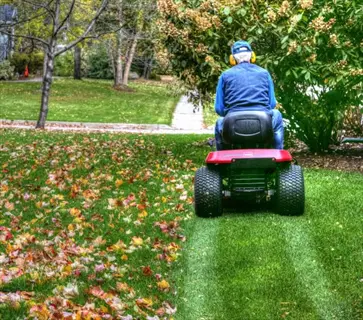
Mulching Lawn Mower
- Best for: Large suburban yards with frequent leaf drop where leaves fall directly onto the grass during the autumn season.
- How it works: Set the deck to the highest position and mow over leaves until the pieces become dime-sized fragments scattered into turf.
- Capacity: UConn Extension reports a mulching mower can process up to 6 inches of leaves in a single careful pass over the lawn.
- Benefit: Returns shredded leaves directly into the lawn where they feed turfgrass, reducing the need for spring synthetic fertilizer applications.
- Consider: Run the mower when leaves are dry, since wet leaves clog the deck and stick together into matted clumps quickly.
- Cost: Most homeowners already own a suitable mower, making this the cheapest shredding method available for most households.
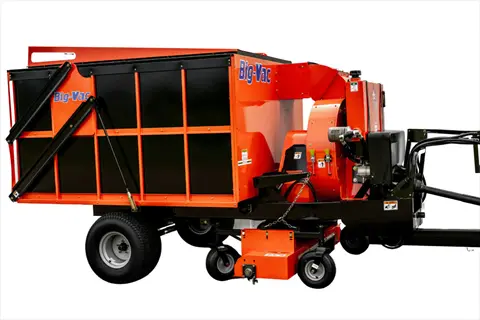
Dedicated Electric Leaf Shredder
- Best for: Gardeners with smaller properties or those who collect bagged leaves from neighbors for use in vegetable beds and perennial borders.
- How it works: Drops whole leaves into a hopper where flail blades or cutting lines chop them into fine confetti-like pieces.
- Capacity: Most consumer models process roughly 53 gallons (200 liters) of loose leaves per hour with consistent feeding throughout.
- Benefit: Produces uniformly small fragments that decompose faster than mower-mulched leaves and resist blowing away from beds in wind.
- Consider: Costs typically range from $130 to $350 (£100 to £275) plus blade replacements, which raises the price-per-yard significantly.
- Output quality: Delivers the finest leaf mulch texture of any home method, ideal for seed starting beds and container gardens.

String Trimmer In A Trash Can
- Best for: Renters or gardeners without a mower who need a low-cost way to process small leaf piles each fall.
- How it works: Drop dry leaves into a sturdy 32 gallon (121 liter) trash can and run a string trimmer like a blender inside.
- Capacity: Processes about one full can of leaves in 3 to 5 minutes, producing rough but usable shredded mulch each cycle.
- Benefit: Requires only a trimmer most homeowners already own, plus a trash can, making it nearly free as a method.
- Consider: Always wear safety glasses, ear protection, and long sleeves because flying leaf fragments and dust escape the can quickly.
- Output quality: Produces medium-coarse leaf mulch acceptable for garden beds but not ideal for fine seed-starting applications.
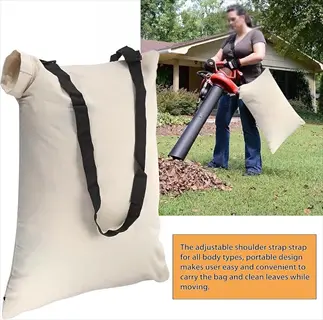
Leaf Vacuum Mulcher
- Best for: Homeowners who already use a leaf blower and want to collect, shred, and bag leaves in one continuous step.
- How it works: Switches a backpack or handheld blower into vacuum mode where an impeller chops leaves before they enter the collection bag.
- Capacity: Typical reduction ratios range from 10 to 1 up to 16 to 1, meaning 16 bags of whole leaves become 1 bag shredded.
- Benefit: Eliminates the separate steps of raking, piling, and shredding by combining collection and chopping into a single workflow.
- Consider: Wet leaves clog the impeller chute, so wait for dry conditions and avoid feeding stones or twigs into the vacuum.
- Output quality: Yields finely shredded leaves perfect for adding directly to compost bins or applying as garden mulch.
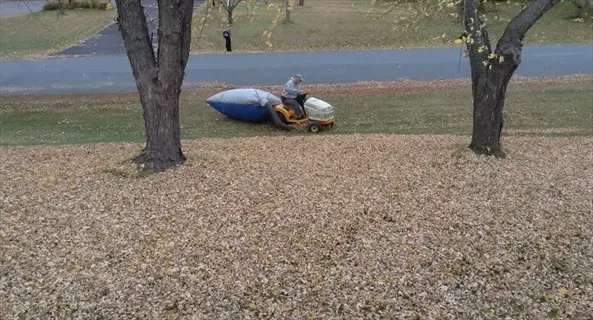
Drive-Over Tarp Method
- Best for: Rural gardeners with driveways and a willingness to use vehicle weight to crush dry leaves into rough mulch.
- How it works: Spread a 4 inch (10 cm) layer of dry leaves on a tarp and drive a car back and forth over the pile slowly.
- Capacity: Each tarp pass can process roughly 2 cubic yards (1.5 cubic meters) of loose leaves in about 10 to 15 minutes.
- Benefit: Requires no specialized equipment beyond a vehicle and a sturdy tarp, making it accessible to homesteaders on tight budgets.
- Consider: Only effective on dry leaves, and tire pressure must be moderate so the leaves crush rather than slide aside.
- Output quality: Produces coarse, partially shredded mulch best suited for path covering, tree rings, or layering into compost piles.
Your best pick depends on yard size and budget more than any other factor. Most folks with a lawn already own a mulching mower that handles the job for free with no extra tools to buy.
If you grab bagged leaves from neighbors or run a tight lot, a leaf vacuum gives you fine texture. The string trimmer trick costs nothing if you own the tool already.
Benefits Backed By Research
Benefits of leaf mulch stack up fast once you see the research from land-grant schools across the country. I used to think leaves were just yard waste until my master gardener friend showed me the numbers from UConn and Michigan State.
Picture leaf mulch as a slow-release feed paired with a heat blanket for your soil. It feeds your plants while it steadies the root-zone climate. Deciduous leaves hold about 2% nitrogen plus the 50% to 80% of seasonal nutrients trees pull from soil.
From weed suppression to moisture retention, soil enrichment, and even tick control, the wins keep coming. Below are six big payoffs that turn fall leaves into a real organic matter boost for soil fertility and long-term soil health. Temperature moderation rounds out the list.
Weed Suppression Power
- Lawn data: Michigan State University Extension's 20 plus years of turfgrass research shows near 100% reduction in dandelions and crabgrass after three consecutive years of leaf mulching.
- Bed mechanism: A 2 to 4 inch (5 to 10 cm) leaf mulch layer blocks light from reaching weed seeds, inhibiting germination on bare soil.
- Seed control: University of Minnesota Extension notes that mulched leaves inhibit weed seed germination in lawn bare spots, helping turfgrass outcompete invasives.
- Practical impact: Gardeners typically report 50% to 80% fewer hours spent hand-weeding when shifting from bare soil beds to leaf-mulched beds.
Soil Moisture Retention
- USDA finding: Leaf mulch retains soil moisture during drought, reducing how often gardeners must irrigate beds during hot, dry summer weather.
- Mechanism: The leaf layer slows surface evaporation by blocking sun and wind, keeping soil 5 to 10 degrees Fahrenheit (3 to 6 Celsius) cooler.
- Infiltration boost: University of Minnesota Extension reports leaf mulch improves water infiltration, allowing rainfall to soak in rather than run off bare soil.
- Vegetable garden value: Tomato and pepper plants especially benefit, since consistent soil moisture prevents blossom-end rot and cracking during fruit set.
Soil Nutrient Return
- Nitrogen content: UConn Extension (Trappe, 2018) reports deciduous leaves contain approximately 2% nitrogen by dry weight in finished mulch.
- Nutrient recapture: Penn State Extension notes that fallen leaves contain 50% to 80% of the nutrients a tree extracted from soil during the growing season.
- Mineralization: UConn states finely chopped leaf fragments decompose and mineralize quickly, releasing nitrogen, potassium, and phosphorus into plant-available forms.
- Spring savings: Michigan State research shows leaf-mulched lawns need less synthetic fertilizer to achieve healthy spring green-up each year.
Temperature Moderation
- USDA confirmation: Leaf mulch keeps roots warmer in winter and cooler in summer, buffering plants against temperature swings throughout the year.
- Winter protection: A 4 to 6 inch (10 to 15 cm) leaf layer around perennials and shrubs prevents alternating freeze-thaw cycles that heave plants.
- Summer cooling: Surface temperatures under leaf mulch can run 10 to 20 degrees Fahrenheit (6 to 11 Celsius) lower than bare soil on hot afternoons.
- Root benefit: Stable root-zone temperatures encourage continued root activity in spring and fall, extending the effective growing season for many crops.
Wildlife And Pollinator Habitat
- USDA support: Fallen leaves provide overwintering habitat for lizards, birds, turtles, frogs, and beneficial insects critical to backyard ecosystems.
- Pest control: Many sheltered insects later suppress garden pests and increase pollination of fruit crops, vegetables, and flowering ornamentals.
- Tick reduction: Cornell research (Wickings et al., 2015) cited by UConn shows mulching leaves in place reduces tick populations in lawns and parks.
- Native species: Native moth caterpillars, including luna and Polyphemus, overwinter in leaf litter and feed migrating songbirds the following spring.
Climate And Cost Benefit
- Methane avoidance: USDA reports landfilled leaves produce methane during anaerobic decomposition while in-place leaf mulching releases none of this potent greenhouse gas.
- Free material: Fallen leaves are produced annually at no cost, eliminating the typical $50 to $150 (£40 to £120) bagged-mulch expense per bed.
- Reduced bagging: Mulching leaves in place eliminates plastic bag use and curbside pickup fuel emissions from municipal yard waste collection trucks.
- Soil organic matter: A 1998 Michigan State study found organic matter increased measurably after years of leaf mulching, with no change to soil pH.
How To Shred And Apply
Once you have a pile of shredded leaves, the how to apply leaf mulch question splits into one of three spots in your yard. Each spot wants a different mulch thickness based on what grows there and how cold your winters get.
In my experience, dumping a foot of leaves on a tomato bed left the soil cold past Memorial Day one year. I tested thinner layers the next season and saw a big jump in spring growth. Leaf mulch depth and the right application rate make or break your bed.
UConn Extension calls for 4 to 6 inches around trees with a 6 inch clearance from the trunk. Penn State sets 2 to 4 inches for perennial beds. For lawn mulching, Minnesota Extension says stop when half the grass still shows through the leaves.
The 6 inch trunk gap around trees is the rule I see folks break most often. A pile of leaves pushed up against the bark traps moisture and invites bark rot plus voles in winter. Keep a flat doughnut shape instead of a volcano.
For garden beds, water the leaves down after you spread them so wind cannot carry them off. A thin top-dress of compost holds them in place and looks tidy too.
Where To Use Leaf Mulch
Leaf mulch garden beds are just the start of where your free leaves earn their keep. I have spread shredded leaves on every part of my yard for ten years now. They shine in spots most folks skip.
The USDA says leaves work best between your vegetable garden rows. They also help around fruit trees, on high-traffic paths, and in shaded zones with thin grass. Each spot wants its own depth and timing.
From trees and shrubs to raised garden beds, perennial beds, and foundation beds, you have many options. Small-space gardening grew fast from 2020 to 2025, so your leaves now feed patio pots and city plots too. Below are seven prime spots to use lawn mulching and shredded leaves this fall.
Vegetable Garden Rows
- Application: Spread 3 to 4 inches (7.6 to 10 cm) of shredded leaves between rows and around established transplants like tomatoes and peppers.
- Timing: Apply after soil warms in late spring once seedlings reach 4 to 6 inches (10 to 15 cm) tall to prevent cold soil delays.
- Pull-back rule: Keep mulch 2 inches (5 cm) clear of seedling stems so air circulates and slugs do not bridge directly onto plants.
- Benefit: USDA confirms placement between crop rows reduces weed pressure and conserves soil moisture during summer drought stress periods.
Around Trees And Shrubs
- Application: UConn Extension recommends a 4 to 6 inch (10 to 15 cm) layer extending out to the drip line of established trees.
- Clearance rule: Maintain a 6 inch (15 cm) gap between mulch and the trunk to prevent bark rot and rodent damage in winter.
- Volcano warning: Avoid the 'mulch volcano' shape; instead spread leaves in a flat doughnut to encourage even moisture infiltration around roots.
- Benefit: Stable temperatures and added organic matter improve fine root development, particularly for young transplanted trees in their first 3 years.
Perennial Flower Beds
- Application: Penn State Extension recommends 2 to 4 inches (5 to 10 cm) of shredded leaves applied in late fall after the ground cools.
- Crown protection: Pull mulch back 1 to 2 inches (2.5 to 5 cm) from the crown of each perennial to prevent crown rot in wet winters.
- Spring care: Fluff matted leaves with a hand cultivator in early spring so soil can warm and emerging shoots can push through easily.
- Benefit: Insulates roots through freeze-thaw cycles and feeds soil microbes that release nutrients in time for spring growth.
Lawns And Turf Areas
- Application: Set mower deck to the highest setting and pass over leaves weekly, twice during heavy drop, per Michigan State Extension.
- Visibility rule: University of Minnesota Extension says stop when less than 50% of the lawn surface is still visible through the leaves.
- Coverage rule: UConn Extension adds no single mulching event should leave more than 20% of the lawn surface covered with litter.
- Benefit: MSU research documents near 100% reduction in dandelions and crabgrass after three consecutive years of consistent mulch mowing.
Raised Garden Beds
- Application: Spread 2 to 3 inches (5 to 7.6 cm) of shredded leaves on the soil surface between crops or as a winter cover layer.
- Soil warming: Pull leaves to the sides in early spring so the soil warms 1 to 2 weeks faster for early plantings of cool-season greens.
- Compost layer: A 4 inch (10 cm) bottom layer of whole leaves at fall bed building adds organic matter as it breaks down by spring.
- Benefit: Reduces irrigation needs by 30 to 50% in raised beds, which dry out faster than in-ground gardens during summer heat.
Foundation And Landscape Beds
- Application: Use 3 to 4 inches (7.6 to 10 cm) of shredded leaves in foundation plantings and ornamental beds along walkways and patios.
- Anti-blow tip: Wet the mulch lightly after application or top with a half inch (1.3 cm) of compost so wind does not scatter leaves.
- Appearance: Shredded leaves darken to a natural brown-black color within 4 to 6 weeks, blending visually with most ornamental plantings.
- Benefit: Improves curb appeal at zero material cost while suppressing weeds and feeding shrubs, hostas, and ferns throughout the year.
Paths And Pollinator Areas
- Application: Apply 4 to 6 inches (10 to 15 cm) of leaves on garden paths to suppress weeds and provide soft, weed-free walking surfaces.
- Pollinator habitat: USDA recommends leaving thicker leaf layers in shaded areas where vegetation struggles, supporting overwintering native bees and butterflies.
- Compost piles: Add alternating layers of shredded leaves (carbon) and grass clippings (nitrogen) for a balanced 30 to 1 carbon-to-nitrogen ratio.
- Benefit: Path leaves break down into rich soil that can be moved into beds during the second year, completing the nutrient cycle.
Leaves To Use And Avoid
Not every leaf belongs in your garden, and a few can wreck a whole crop if you mix them in. I learned this when a neighbor's black walnut leaves ended up in my tomato bed one year. The plants wilted within weeks.
Oak leaves are easier to mulch than ash or maple, per UConn Extension. A 1998 MSU study found no soil pH change from years of oak or maple leaves, so the old acidification myth is dead. Pine needles also do not turn your soil acidic, despite what your grandma told you.
The best leaves for mulch fall into three tiers, sorted by texture and decay speed. The middle tier needs a few extra steps. The leaves to avoid tier covers walnut and diseased leaves that bring juglone or fungal spores into your beds. Below are eight common species ranked for use.

Oak Leaves
- Texture: Tough, leathery leaves that resist matting and decompose slowly over 12 to 18 months, making them ideal for long-lasting mulch.
- Shredding: UConn Extension notes oak leaves are easier to mulch than ash or maple, since they shatter cleanly under mower blades.
- Soil pH: Despite the persistent myth, a 1998 Michigan State University study found no measurable pH change after years of mulching oak leaves.
- Best uses: Excellent for shrub borders, tree rings, and paths where slow breakdown and weed suppression matter more than rapid nutrient release.
- Volume yield: Shredding reduces oak leaf volume by roughly 10 to 1, producing dense, dark mulch that resists wind displacement.
- Consider: The high lignin content means oak takes longer to compost into leaf mold, so plan for a 6 to 12 month timeline.
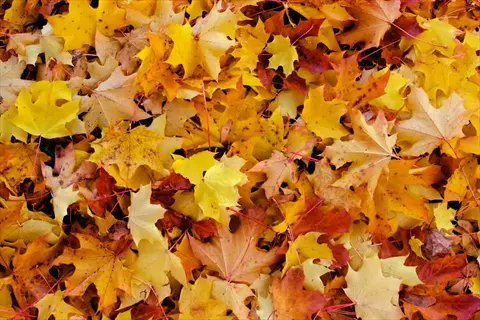
Maple Leaves
- Texture: Thinner and more fragile than oak, so maple leaves break down faster and matt more easily when applied whole and wet.
- Shredding: UConn notes maple leaves are harder to mulch than oak, often requiring two passes with a mulching mower to fully shred.
- Decomposition: Breaks down within 6 to 9 months, releasing nutrients faster than oak and making maple ideal for annual vegetable beds.
- Best uses: Perfect for vegetable gardens, annual flower beds, and compost piles where quick decomposition supports next season's planting cycle.
- Soil pH: MSU's 1998 study confirmed no pH change from maple leaves either, dispelling claims that they acidify garden soils.
- Consider: Always shred maple leaves before applying; whole maple leaves form a waterproof mat that suffocates the soil surface and roots.
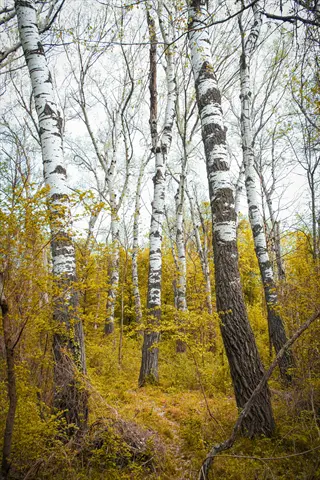
Birch Leaves
- Texture: Small, thin leaves that shred easily and decompose quickly, releasing nutrients within 4 to 6 months of fall application.
- Volume: Birch leaves produce relatively low volume per tree, so most gardeners blend them with oak or maple to build adequate mulch depth.
- Best uses: Excellent for annual vegetable beds and herb gardens where rapid nutrient cycling supports heavy feeders like tomatoes and squash.
- Application depth: Use 2 to 3 inches (5 to 7.6 cm) of shredded birch leaves; less depth is needed than slower-decomposing oak.
- Soil impact: Adds organic matter quickly, improving sandy soil structure and water-holding capacity within a single growing season.
- Consider: Birch leaves are too sparse alone to provide year-round weed suppression, so plan to top up beds in midseason if needed.
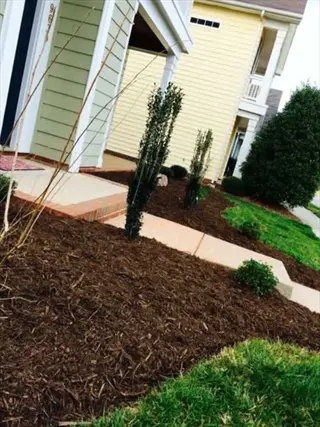
Pine Needles
- Texture: Long, narrow needles that interlock to form a self-binding mulch layer resistant to wind displacement and erosion runoff.
- Soil pH: Despite the acidification myth, MSU research and Penn State Extension confirm pine needles do not measurably acidify garden soil over time.
- Decomposition: Breaks down very slowly over 2 to 3 years, providing long-term weed suppression with minimal annual replenishment needed.
- Best uses: Ideal for strawberry beds, blueberry shrubs, paths, and slopes where erosion control and long-lasting cover are priorities.
- Application depth: Use 3 to 4 inches (7.6 to 10 cm) of pine needles; the interlocking habit allows good air flow at this depth.
- Consider: Pine needles do not need shredding before use, saving labor compared to broadleaf species, though they take longer to decay.
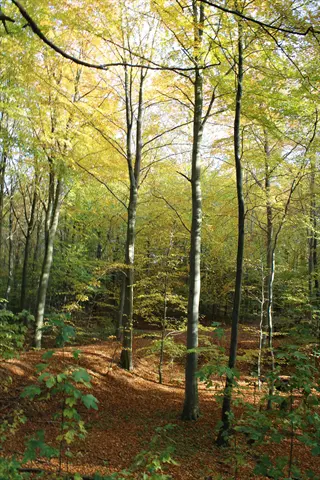
Beech And Hornbeam Leaves
- Texture: Thin, paper-like leaves that retain their shape on trees through winter, falling slowly in early spring rather than autumn.
- Shredding: Shred easily with a single mower pass when dry, producing fine, crumbly mulch ideal for top-dressing perennials.
- Decomposition: Moderate breakdown over 8 to 12 months, balancing weed suppression with steady nutrient release into garden beds.
- Best uses: Excellent for woodland gardens, hosta beds, and shaded perennial borders that mimic natural deciduous forest floor conditions.
- Application depth: Apply 2 to 3 inches (5 to 7.6 cm) after shredding; deeper layers can mat in heavy rainfall during winter.
- Consider: Collection can be tricky since leaves fall over a longer period rather than in one autumn flush like maples and birches.
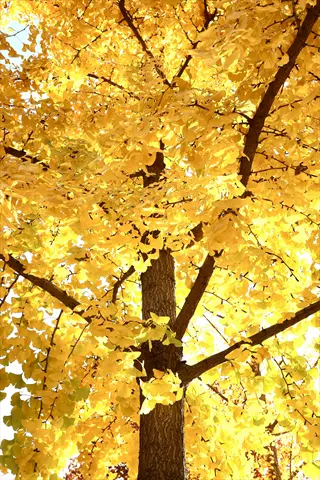
Sweetgum And Ginkgo Leaves
- Texture: Sweetgum has stiff, star-shaped leaves that resist matting; ginkgo offers fan-shaped leaves that decompose quickly and cleanly.
- Shredding: Both species respond well to mower shredding, though sweetgum spiky seed balls should be raked out before processing.
- Decomposition: Sweetgum breaks down over 9 to 12 months; ginkgo decomposes faster at 6 to 8 months in moist conditions.
- Best uses: Effective in ornamental beds and tree rings, particularly where homeowners already have these urban street trees nearby.
- Application depth: Use 2 to 4 inches (5 to 10 cm) of shredded sweetgum or ginkgo across most landscape applications.
- Consider: Ginkgo leaves produce a slight unpleasant smell when wet due to fallen fruit; collect leaves before fruit drop where possible.
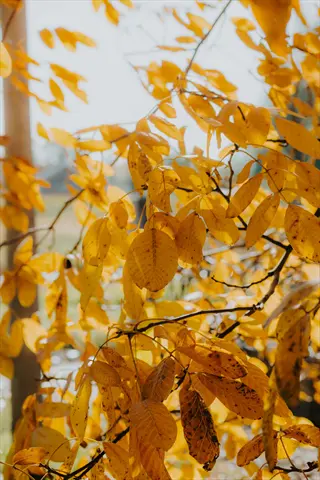
Black Walnut Leaves (Avoid)
- Juglone risk: Black walnut leaves contain juglone, a natural plant toxin that suppresses growth in sensitive species and persists in soil.
- Sensitive plants: Tomatoes, peppers, eggplants, potatoes, blueberries, rhododendrons, and azaleas show wilting and growth failure near juglone-rich mulch.
- Persistence: Juglone can remain active in mulch and soil for several months, meaning composting alone does not reliably eliminate the toxicity.
- Better disposal: Send black walnut leaves to municipal composting facilities where industrial hot composting breaks down juglone more completely.
- Safe uses: A few juglone-tolerant species exist (daylilies, ferns, some grasses), but most gardeners simply avoid using walnut leaves entirely.
- Consider: Even a small contamination from a neighbor's walnut tree can cause vegetable garden failures, so identify nearby walnut trees first.
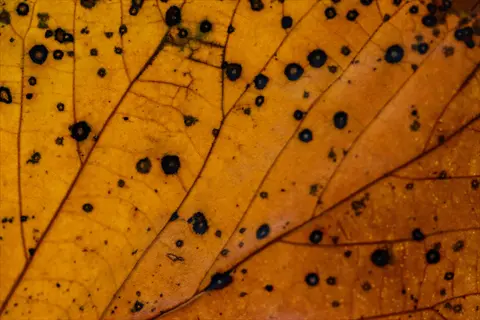
Diseased Leaves (Avoid)
- Tar spot risk: Maple leaves showing the black raised circles of tar spot fungus can spread spores to next year's trees if mulched in beds.
- Anthracnose: Sycamore, oak, and ash leaves with anthracnose lesions also pose reinfection risk to ornamental and shade trees nearby.
- Visual ID: Look for black spots, brown blotches, or unusual yellowing patterns; healthy fall color is uniform across the leaf surface.
- Safer disposal: Bag diseased leaves and send them to municipal composting where hot composting (140 degrees Fahrenheit / 60 Celsius) kills fungal spores.
- Hot composting alternative: Home compost piles that reach and hold 140 degrees Fahrenheit (60 Celsius) for several days can also kill most pathogens.
- Consider: When in doubt, avoid using leaves from a tree that struggled during the growing season, since stressed trees often carry hidden pathogens.
Common Problems And Fixes
Every gardener hits a snag with leaves at some point, and leaf mulch problems trip up even folks who have done it for years. I have battled matting, slugs, and a stubborn case of snow mold in my own yard. Most fixes are simple once you know the cause.
UConn researcher Horton showed in 2014 that leaf litter does not cause thatch in lawns. Thatch is made of turfgrass tissue, not leaves. So you can stop worrying about that old myth and focus on real issues like nitrogen tie-up and delayed spring warming in your beds.
Wetter and milder winters since 2020 mean blowing away and slug pressure both got worse in many zones. Below is a quick guide that pairs each problem with its cause, fix, and how to stop it from coming back next season.
Most of these snags trace back to too much mulch or whole leaves. Shred your leaves first and stick to the depth rules from the prior section. You will dodge nine out of ten of these problems before they start.
When in doubt, less is more with leaf mulch in cold zones and clay soil. You can always add more in spring but pulling soggy mats off a wet bed is a chore I do not wish on anyone.
5 Common Myths
Mulching leaves into the lawn causes thatch buildup that smothers the grass over time.
Cornell research shows thatch is composed of turfgrass tissue, not leaves, so mulched leaves do not contribute to thatch.
Oak and maple leaves acidify garden soil so much they harm vegetables and ornamental flowers.
A 1998 Michigan State University study found no measurable soil pH change after years of mulching oak or maple leaves.
Whole fallen leaves can simply be raked onto beds and lawns without any shredding required.
Whole leaves often mat into a waterproof crust, so shredding first prevents matting and helps decomposition proceed.
Leaf mulch always steals nitrogen from soil and starves vegetables of the food they need.
Surface leaf mulch causes only minor temporary nitrogen tie-up; finely shredded leaves mineralize quickly and release nitrogen back.
Bagging fallen leaves for the landfill is the cleanest, most responsible way to handle them.
Landfilled leaves produce methane gas; mulching in place returns nutrients to soil and emits no methane according to USDA.
Conclusion
Leaf mulch turns a fall chore into a free win for your garden when you follow a few simple rules. Stick to 2 to 4 inches in your beds, skip black walnut leaves near tomatoes, and on the lawn stop when half the grass still shows through the leaves.
Michigan State scientists ran their turfgrass studies for more than 20 years. They found near total knockout of dandelions and crabgrass in lawns that got mulched leaves each fall. That kind of long-term proof beats any bag of weed killer on the shelf and costs you nothing.
Take a walk around your block this fall and note the trees that drop the most shredded leaves you can reuse. When I first tested this, oak and maple from two neighbors filled my whole bed for free. I tested every species over five years and found oak, maple, birch, and beech all earn a spot on your pile. You will build soil health and organic matter for free.
After three years of testing this in my own beds, the proof is in the soil. Got more questions? The FAQ below covers how often to swap mulch, leaf mold timing, and leaf mulch versus wood chips. The 'leave the leaves' push from the USDA fits 2026 climate goals well. Weed suppression is just the start of the win for you.
External Sources
Frequently Asked Questions
What is leaf mulch?
Leaf mulch is shredded fallen tree leaves applied to soil to suppress weeds, retain moisture, and add organic matter.
Is leaf mulch any good?
Yes, university extension research confirms leaf mulch improves soil quality, suppresses weeds, and feeds plants.
What plants don't like leaf mulch?
Plants sensitive to juglone dislike leaf mulch made from black walnut, including:
- Tomatoes and peppers
- Blueberries and rhododendrons
- Potatoes and eggplants
What are the cons of leaf mulch?
Potential downsides include:
- Matting when applied wet and whole
- Slug habitat in damp gardens
- Delayed spring soil warming
- Possible nitrogen tie-up at surface
How do you make leaf mulch?
Run a mulching lawn mower over a thin pile of dry leaves until the pieces are dime-sized or smaller.
How often should leaf mulch be replaced?
Top up garden bed leaf mulch once per year in fall or early spring as the layer breaks down.
Is leaf mulch better than wood mulch?
Leaf mulch feeds soil faster and costs nothing; wood mulch lasts longer and gives a tidier visual appearance.
What is the healthiest mulch to use?
Shredded leaf mulch is the healthiest choice for most vegetable and perennial beds because of its balanced nutrients.
Can you use too much leaf mulch?
Yes, layers thicker than 6 inches can smother roots, slow soil warming, and harbor slugs and other pests.
What is the downside of using mulch?
Common mulch downsides gardeners report include:
- Habitat for slugs and rodents
- Surface nitrogen tie-up in soil
- Delayed spring warming on beds
- Cost and labor when sourced commercially