
Introduction
The liatris plant breaks one of the basic rules of how spike flowers bloom in your garden each summer. Most tall flower spikes open from the bottom up, but liatris does the opposite and opens from the top down. Plant scientists call this acropetal blooming, and very few common garden plants do this.
I have grown blazing star in my own yard for over 12 years now. In my first year, I watched a spike open from the top and thought something was wrong. The UW-Madison Extension reports the genus holds about 32 species. These plants grow wild across most states east of the Rockies, and 3 species sit on federal protection lists.
These perennial flowers look like a purple lightning bolt stuck in the soil. New research from Ruppel and team in 2025 logged 14 pollinator types on this plant. The team ran 350 field checks to get the data. That kind of pull beats most native plants you can buy at your local store today.
Folks also know liatris by the name gayfeather in older garden books and seed catalogs. This guide walks you through every part of growing this plant, from picking the right type to keeping pests off the leaves all season long.
Liatris Plant Identity
Your liatris belongs to the daisy clan, known to plant folks as the Asteraceae family. But it has no ray petals like a daisy does. Think of the family tree as a wide one where liatris took its own path.
The genus holds 32 total species based on UW-Madison Extension data. About 13 of them show up in trade nurseries, and 3 species sit on federal threat lists. Your options grow wild from Canada down to northern Mexico.
I always tell my garden club to buy from nurseries that grow their own stock from seed. Wild plants pulled from the ground hurt 3 protected species like Liatris helleri. Pick the right source for your liatris spicata or liatris aspera and you keep rare plants safe.
Folks call your liatris many names based on where they live. Gayfeather is the old name from prairie states. Dense blazing star points to liatris spicata in the south. Plant fans use prairie blazing star for liatris pycnostachya in the Midwest. Below you can see how the most common types stack up.
Liatris spicata (Dense Blazing Star)
- Native range: Naturally found across 27 U.S. states and eastern Canada, making it the most widely available species.
- Height: Grows 3 to 6 feet (91 to 183 centimeters) tall with flower spikes spanning 6 to 12 inches (15 to 30 centimeters).
- Hardiness: Cold hardy across USDA zones 3a through 8b, surviving winter temperatures as low as minus 40 degrees Fahrenheit (minus 40 Celsius).
- Habitat: Tolerates both moist and dry conditions, classified as a facultative wetland indicator by Penn State Extension.
- Best for: Rain gardens, pollinator beds, and general landscape use where reliable performance matters most.
Liatris pycnostachya (Prairie Blazing Star)
- Native range: Native to tallgrass prairies from the central United States, thriving in open sunny grasslands.
- Height: Reaches 3 to 5 feet (91 to 152 centimeters) with densely packed flower spikes that appear earlier than other species.
- Hardiness: Hardy in USDA zone 3, matching the cold tolerance of other major liatris species.
- Pollinator value: Identified by University of Wisconsin-Madison Extension as a favorite nectar source for monarch butterflies.
- Best for: Meadow plantings and pollinator gardens prioritizing monarch conservation efforts.
Liatris aspera (Rough Blazing Star)
- Native range: Found in dry prairies and open woodlands across the central and eastern United States.
- Height: Grows 2 to 4 feet (61 to 122 centimeters) tall with widely spaced flower clusters on the spike.
- Hardiness: Cold hardy to USDA zone 3, performing well even in challenging continental climates.
- Habitat preference: Prefers drier, sandier soils than liatris spicata, making it suitable for xeric gardens.
- Best for: Drought-tolerant landscapes and naturalized areas where minimal irrigation is available.
Liatris cylindracea (Dwarf Blazing Star)
- Native range: Native to dry calcareous prairies and rocky openings in the Midwest and Great Lakes regions.
- Height: Stays compact at 8 to 24 inches (20 to 61 centimeters), the smallest of the commonly cultivated species.
- Hardiness: Hardy in USDA zones 3 through 8, tolerating both cold and heat well.
- Bloom characteristics: Produces fewer but larger flower heads spaced widely along the shorter spike.
- Best for: Rock gardens, front-of-border plantings, and small container compositions where height is limited.
Choosing the Right Variety
Picking from the many liatris varieties is like choosing the right tool for the job in your yard. A short type might fit a small bed, while a tall type works best for a back border. The UF/IFAS Extension counts at least 13 species plus many hybrids in trade today.
In strong soil and full sun, the tallest liatris types can shoot up to 5 feet (152 cm) in one season. I learned this the hard way when my first Floristan Violet plants flopped over after a hard rain. You want to match your dwarf blazing star or tall cultivar to the spot you have in mind.
Newer nursery picks from 2024 and 2025 now offer compact forms for small spaces. Kobold has been my top pick for years in tight beds, since it stays under 24 inches and holds up well. Floristan White brings a fresh look to moon gardens, while Floristan Violet lights up cutting beds with strong color.
The Rocky Mountain cultivar attracts more bees in my yard than any other type I have grown. Look at the table below to find the right match for your garden plan.
Planting Liatris Correctly
Liatris corms look like small flat onions with a pointy bud on top. Penn State Extension notes the corms grow near the soil top with fine roots that spread out wide. That root style is the reason you plant them in a soft, low hole, not a deep one.
Most folks call these liatris bulbs, but they are corms in plant science terms. I have planted hundreds of them at the proper planting depth over the years, and the wrong depth is the top reason new growers lose plants in year one. Set them too deep and the corm rots before it can sprout.
Spring planting for corms works best across all zones based on UF/IFAS Extension data. If you want to grow liatris from seed, plan ahead since the seeds need a chill spell first. The UW-Madison Extension lists 4 to 6 weeks of cold stratification before sowing for best results.
Seeds take 20 to 45 days to sprout once they warm up after the chill. Below you can see each step of how to plant your corms or seeds the right way.
Prepare a Sunny Well-Drained Site
- Light: Choose a location receiving at least 6 hours of direct sunlight daily, since liatris evolved in open prairies with full sun exposure.
- Soil drainage: Test soil drainage by digging a 12-inch (30 centimeter) hole and filling with water; it should drain within a few hours.
- Soil pH: Aim for slightly acidic conditions below 6.8 pH, matching the natural soil chemistry noted by Penn State Extension.
- Soil amendment: Amend heavy clay with coarse sand or fine gravel to improve drainage, since corms rot easily in waterlogged soils.
- Site preparation timing: Prepare beds in fall or early spring before corms ship from suppliers for ready planting.
Plant Corms at the Right Depth
- Depth: Set corms 2 to 4 inches (5 to 10 centimeters) deep with the pointed bud side facing upward.
- Spacing: Position corms 12 to 15 inches (30 to 38 centimeters) apart per University of Florida Extension recommendations.
- Orientation check: If you cannot identify the bud, plant the corm sideways and it will orient itself naturally as it grows.
- Watering after planting: Water gently after planting to settle soil around the corm without saturating the planting hole.
- Grouping for impact: Plant in clusters of at least 5 corms for cohesive visual effect and improved pollinator attraction.
Start From Seed With Cold Stratification
- Stratification need: Provide 4 to 6 weeks of cold moist stratification at 35 to 40 degrees Fahrenheit (2 to 4 Celsius) per UW-Madison Extension.
- Stratification method: Mix seeds with damp sand or vermiculite in a sealed bag stored in the refrigerator for required duration.
- Germination time: Expect 20 to 45 days for germination once seeds are warm and moist after stratification ends.
- Bloom expectations: Seed-grown plants typically do not flower until the second or third year after sowing.
- Self-sown seedlings: Allow some spent flower heads to drop seed naturally for gradual colony expansion over time.
Time Your Planting Correctly
- Spring corm planting: Plant dormant corms in March or April in zones 7 to 9, and April through May in zones 3 to 6.
- Fall corm planting: Fall planting works in warmer zones 7 and above, allowing roots to establish before winter.
- Container starts: Set out potted nursery plants any time during the growing season as long as you water consistently afterward.
- Seed sowing timing: Sow stratified seeds in spring after the last frost when soil temperatures reach 60 degrees Fahrenheit (16 Celsius).
- Bloom timeline from corms: Expect first flowers approximately 70 to 90 days after spring planting under good conditions.
Soil and Light Conditions
Liatris does best in full sun with at least 6 hours of bright light each day. Less light gives you weak floppy stems that lean to one side. The plant loves a well-drained soil that drinks up water and lets it pass through.
Penn State Extension lists a soil pH below 6.8 as the sweet spot, which means acidic soil wins out over basic soil. Liatris is drought tolerant thanks to its corm, which acts as a built-in water tank under the soil. I have skipped watering my plants for weeks in July and they still bloom strong every year.
Your plant works across USDA hardiness zones 3 through 9, which covers most of the U.S. Few perennials handle that wide of a range. Liatris also takes light partial shade in the hot afternoon hours, though full sun gives you the most blooms.
What makes liatris stand out is that it loves both wet and dry soil. Most other prairie plants hate one or the other. The corm stores food and water for the plant to use during dry spells, like a savings bank in the soil under your feet.
Pollinator and Wildlife Value
Most blogs tell you liatris is a butterfly magnet but stop there with no data. I have watched my own plants for years and counted the bees myself. Real science backs up your plant in a big way. Ruppel and team in 2025 ran 350 field surveys on liatris spicata.
The team logged 14 pollinator types in your liatris and 361 visit events. Halictidae sweat bees showed a 0.94 chance of liking liatris over other plants. That hard number proves your pollinator garden is doing real work for the bees.
As a native plant fan, you should know your liatris feeds two moths that need this one plant to live. NC State Extension lists the Liatris Flower Moth and the Liatris Borer Moth as host kin. These bug ties make your plant worth its space in any yard.
Your plant also acts as a nectar source for the monarch butterfly during its July to September flight south. It attracts bees of many kinds and attracts hummingbirds that probe each tiny floret. Even goldfinches show up in your yard during fall to eat the seeds, as you can see in the list below.
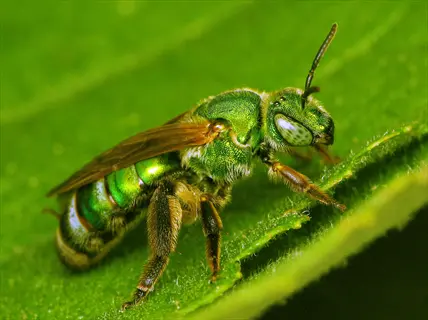
Halictidae Sweat Bees
- Scientific evidence: Ruppel et al. (2025) recorded a 0.94 posterior probability that Halictidae bees prefer liatris spicata over comparison plants.
- Peak activity: Detectability on liatris peaks early in the day around 0.60 and declines through afternoon hours.
- Ecological role: These small native bees are critical generalist pollinators for many North American wildflowers and crops.
- Garden behavior: They forage methodically along the spike, often visiting many individual florets per flower head.
- Habitat connection: Hollow liatris stems provide nesting cavities for related stem-nesting bee species.
- Why it matters: Supporting native bees broadens pollination services beyond honeybees in home landscapes.
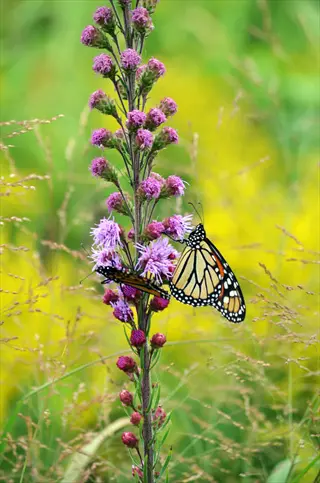
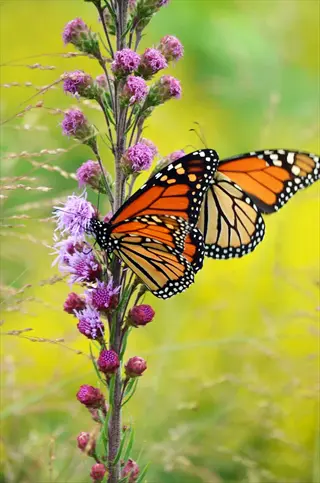
Monarch Butterflies
- Documented preference: University of Wisconsin-Madison Extension identifies liatris pycnostachya as a favorite nectar source for monarchs.
- Migration support: Liatris blooms during the critical July to September window when monarchs build energy reserves for southern migration.
- Flower structure: The bottlebrush spike offers many florets in one visit, maximizing nectar gathering efficiency.
- Garden value: Planting clusters of liatris provides reliable refueling stops along monarch flyway routes.
- Bloom timing match: Late summer flowering aligns with peak monarch movement across the central United States.
- Conservation context: Monarch populations have declined significantly, making nectar plants like liatris ecologically meaningful.
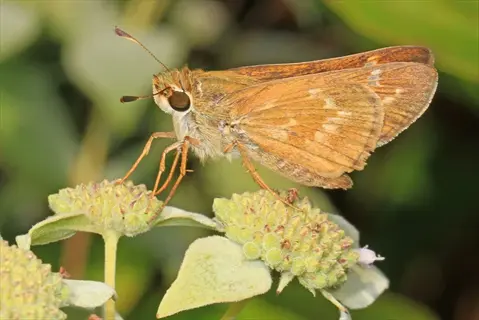
Sachem Skipper Butterflies
- Strongest preference: Ruppel et al. (2025) found Atalopedes campestris showed the strongest single-taxon preference for liatris spicata.
- Identification: Sachem skippers are small fast-flying butterflies with distinctive orange and brown wing patterns.
- Behavior: They land briefly on individual florets, sipping nectar through their proboscis with quick efficient movements.
- Range: Common across the central and southern United States, expanding northward in recent decades.
- Garden role: Their presence indicates a functioning butterfly habitat beyond the more familiar swallowtails and monarchs.
- Why notable: Few garden plants document specific skipper butterfly preferences in peer-reviewed literature.
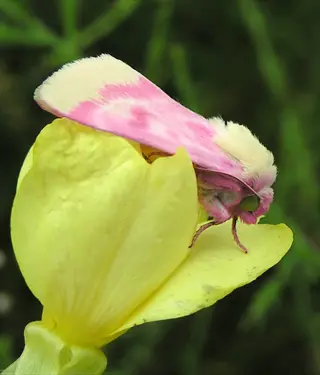
Specialist Liatris Moths
- Larval host status: NC State Extension documents liatris as a larval host for Schinia sanguinea, the Liatris Flower Moth.
- Second specialist: Carmenta anthracipennis, the Liatris Borer Moth, also relies on liatris as a host plant.
- Specialist meaning: These moths cannot complete their life cycles without liatris, making the plant ecologically irreplaceable.
- Pollinator role: Adult moths visit flowers for nectar while their larvae feed within the plant tissue.
- Garden impact: Damage is typically minimal and tolerated as part of healthy native ecosystem support.
- Why it matters: Specialist relationships represent the deepest ecological value any garden plant can offer.
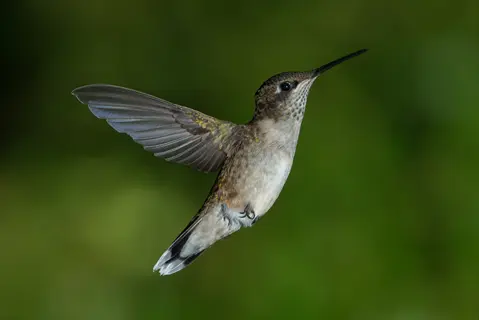
Ruby-Throated Hummingbirds
- Documented visitors: NC State Extension lists hummingbirds among the wildlife attracted to liatris flowers.
- Color attraction: The bright purple and occasional pink spikes appeal to hummingbird color preferences.
- Nectar access: Despite the small floret size, hummingbirds can probe individual florets along the spike.
- Timing benefit: Liatris bloom time overlaps with hummingbird breeding and fall migration periods.
- Garden placement: Plant near other hummingbird favorites like bee balm and salvia for layered habitat.
- Behavioral note: Hummingbirds may visit multiple times daily once they identify a reliable nectar source.

American Goldfinches
- Seed consumers: NC State Extension confirms goldfinches eat liatris seeds from the dried spent flower heads.
- Late season feeding: Seeds ripen in fall when other food sources begin to diminish for songbirds.
- Garden practice: Leave faded spikes standing through autumn rather than deadheading to support goldfinch feeding.
- Color contrast: Bright yellow goldfinches perched on purple-brown seed heads create memorable garden moments.
- Habitat connection: Liatris-supported goldfinches may also visit nearby coneflower and sunflower seed heads.
- Why it matters: Providing seasonal food sources keeps birds in the garden year-round beyond just nesting season.
Common Problems and Diseases
Liatris is a tough plant, but it can still face some bugs and fungal foes. I have grown blazing star for over 12 years and seen most of the common issues up close. UW-Madison Extension lists seven main fungal types that hit this plant in home yards.
Powdery mildew is the most common foe you will face on your plants. The fungus name is Erysiphe cichoracearum, and it shows up as a white film on the leaves in damp weather. Leaf spot is next on the list, caused by Phyllosticta liatridis and Septoria liatridis.
Root rot and stem rot strike when soil drains poorly and corms sit in wet mud for too long. Sclerotinia is the bug behind stem rot in your plants. Verticillium wilt is next, and rust also shows up in damp years with orange spots under the leaves.
The good news is that disease resistant habits like wide spacing and dry foliage cut down most of these foes. Look at the details below to spot each problem and stop it before it spreads in your yard.
Powdery Mildew (Erysiphe cichoracearum)
- Symptoms: White powdery coating appears on leaf surfaces, typically starting on lower foliage and spreading upward.
- Conditions: Most common during humid weather with poor air circulation around densely planted clumps.
- Prevention: Space plants 12 to 15 inches (30 to 38 centimeters) apart for airflow and avoid overhead watering.
- Treatment: Remove affected foliage promptly and apply horticultural neem oil during early infection stages.
- Long-term management: Divide overcrowded clumps every 3 to 4 years to maintain healthy spacing.
Leaf Spots (Phyllosticta and Septoria)
- Symptoms: Small brown or purplish spots develop on leaves, sometimes coalescing into larger dead areas.
- Pathogens: Both Phyllosticta liatridis and Septoria liatridis are documented liatris leaf spot pathogens per UW-Madison Extension.
- Prevention: Water at the soil level rather than overhead, and clean up fallen debris each fall.
- Treatment: Remove infected leaves and avoid composting them, since spores survive winter on plant tissue.
- Severity: Usually cosmetic rather than life-threatening when caught early through routine inspection.
Rust Diseases (Coleosporium and Puccinia)
- Symptoms: Orange or rust-colored powdery pustules form on the undersides of leaves, with yellow spots above.
- Pathogens: Coleosporium laciniariae and Puccinia liatridis both cause rust on liatris foliage.
- Conditions: Rust thrives in warm humid conditions with extended periods of leaf wetness.
- Prevention: Improve airflow through proper spacing and remove infected debris before winter dormancy.
- Treatment: Severe infections may benefit from fungicide application; mild cases often resolve with sanitation alone.
Crown and Stem Rot (Sclerotinia and Verticillium)
- Symptoms: Wilting, yellowing, and collapse of entire stems despite adequate moisture in the soil.
- Pathogens: Sclerotinia sclerotiorum causes stem rot and Verticillium albo-atrum causes vascular wilt.
- Conditions: Both fungi thrive in poorly drained soils where corms remain wet for extended periods.
- Prevention: Plant in well-drained sites and never let corms sit in waterlogged soil during dormancy.
- Treatment: Remove and destroy affected plants completely; do not replant liatris in the same spot for 3 years.
Garden Design With Liatris
Liatris fits more garden styles than most people know. From a wet rain garden to a dry rock garden, this plant can pull its weight in many spots. Penn State Extension lists liatris spicata as fit for both wet and dry zones in stormwater plantings.
I added a rain garden to my own yard in 2018 and used liatris as the tall feature plant. It thrived through both flood and drought across all 7 years since. Butterfly garden plans also lean hard on this plant for its bloom power in late summer.
Cut flowers from your liatris last 7 to 10 days in a vase, making it a top pick for cottage garden beds and home bouquets. The meadow garden style suits liatris best of all, since this plant came from native prairies of the central states.
Container garden spots also work well when you pick the dwarf forms. Good companion plants for your liatris include coneflower, black-eyed Susan, and switchgrass. Look at the five styles below to find the right fit for your yard.
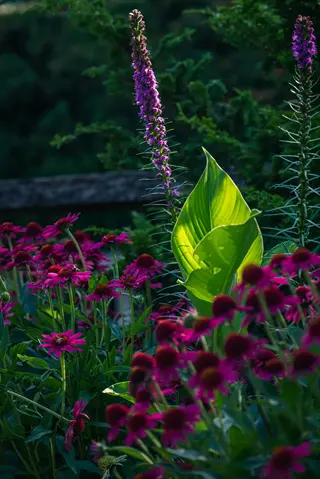
Rain Garden Plantings
- Wetland tolerance: Penn State Extension classifies liatris spicata as a facultative wetland indicator suitable for fluctuating moisture zones.
- Placement strategy: Plant in the transitional zone between the wettest center and the drier edges of rain garden basins.
- Companion plants: Pair with switchgrass, swamp milkweed, and blue flag iris for a vertically layered native composition.
- Stormwater function: Deep fibrous roots help slow runoff and increase infiltration during heavy rain events.
- Visual impact: Tall purple spikes provide vertical drama against the lower foliage of typical rain garden grasses.
- Maintenance benefit: Once established, liatris requires minimal intervention in rain garden settings.
Cottage Garden Borders
- Design role: Use liatris as a vertical accent rising above shorter mounded perennials in mixed border plantings.
- Color pairings: Combine purple liatris with yellow black-eyed Susan, pink coneflower, and white shasta daisy.
- Bloom timing: Mid to late summer flowering fills the gap between early summer roses and fall asters.
- Spacing approach: Plant clusters of 5 to 7 corms rather than single plants for cohesive cottage style appearance.
- Edging plants: Use catmint or lamb's ear along the front edge to soften the strong vertical liatris lines.
- Seasonal interest: Dried seed heads add winter structure when most cottage perennials have collapsed.
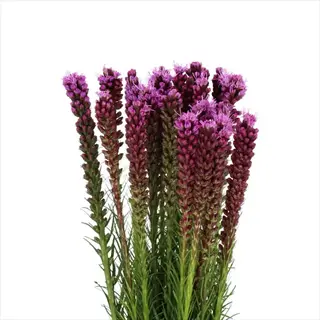
Cutting Garden Compositions
- Cut flower value: All five competitor sources confirm liatris ranks among the best perennials for fresh cut flower production.
- Harvest timing: Cut spikes when one third to half of the florets have opened for maximum vase life.
- Vase life: Expect 7 to 10 days indoors with regular water changes and stem trimming.
- Drying option: Hang harvested spikes upside down in a dark dry place for approximately 3 weeks for dried arrangements.
- Cutting layout: Plant in rows for efficient harvest access in dedicated cutting beds.
- Companion cut flowers: Combine with zinnias, snapdragons, and amaranth for color and texture variety.

Meadow and Prairie Plantings
- Habitat origin: Liatris evolved in native tallgrass prairies, making meadow gardens its most natural home environment.
- Density approach: Plant 20 or more corms per area for the natural drift effect typical of prairie ecosystems.
- Grass partners: Combine with little bluestem, switchgrass, and side oats grama for authentic prairie composition.
- Wildflower companions: Add purple coneflower, butterfly milkweed, and goldenrod for extended bloom succession.
- Maintenance approach: Burn or mow meadows in early spring every 2 to 3 years to maintain prairie health.
- Wildlife value: Meadow plantings amplify the pollinator and bird value that smaller liatris groupings provide.

Container and Patio Plantings
- Container size: Choose pots at least 12 inches (30 centimeters) deep and 14 inches (36 centimeters) wide for healthy root growth.
- Drainage requirement: Ensure multiple drainage holes since corms rot quickly in waterlogged container soil.
- Cultivar selection: Choose compact Kobold or dwarf species for proportional balance in container compositions.
- Soil mix: Use a quality potting mix amended with coarse sand or perlite for optimal drainage.
- Winter protection: Move containers to a sheltered location or sink pots into garden soil for cold zone protection.
- Companion containers: Pair with ornamental grasses or trailing sedum in mixed container arrangements.
5 Common Myths
Liatris is just another aster that blooms from the bottom of the spike upward like most flowers.
Liatris is unique because flowers open from the top of the spike downward, called acropetal blooming, which is rare.
Liatris attracts only generic butterflies and bees, providing no special value beyond ordinary pollinator plants.
Peer-reviewed research shows 14 pollinator taxa visit liatris, including specialist Halictidae bees and rare sachem skipper butterflies.
You should cut liatris stems completely to the ground in fall to keep your garden looking neat and tidy.
Dead hollow stems serve as winter nesting habitat for native stem-nesting bees, so leave some standing until spring.
All liatris plants are exactly the same, so any species or cultivar will perform identically in your garden setting.
Liatris contains 32 species with varying heights, bloom times, and habitat needs, including three federally protected species.
Liatris needs constantly moist, rich soil with regular fertilizer to grow tall, sturdy, and produce abundant flowers.
Liatris thrives in lean, well-drained soil and tolerates both moist and dry conditions, making it ideal for rain gardens.
Conclusion
The liatris plant brings a lot of value to your yard for very low input on your part. Its top-down bloom pattern, called acropetal blooming, sets it apart from most spike flowers you can buy. The peer-reviewed work of Ruppel and team in 2025 logged 14 pollinator types that depend on this single plant.
Your blazing star also handles both wet and dry soil across USDA zones 3 to 9. Few other perennial flowers can match that range or that level of toughness. When I first put in my own plants 12 years back, I had no idea they would still bloom strong today with so little fuss.
Pick the right species for your site to get the best results. Liatris spicata does well in mixed soil, while liatris aspera fits dry beds. The pycnostachya species draws the most monarch traffic for your pollinator garden plans.
Start small with a cluster of 5 to 7 corms in your first year. Watch the bees and butterflies that show up over the summer months. These native plants pay you back year after year with more blooms, more bugs, and more life in your yard. Your future self will thank you for planting them this season.
External Sources
Frequently Asked Questions
Do Liatris come back every year?
Yes, liatris is a hardy perennial that returns each year from underground corms in zones 3 through 9.
Does Liatris like sun or shade?
Liatris thrives in full sun with at least 6 hours of direct light daily, though it tolerates light afternoon shade.
Does Liatris spread easily?
Liatris spreads slowly through corm offsets and self-seeding, forming attractive clumps without becoming aggressive.
How many Liatris should I plant together?
For visual impact, plant liatris in groups using these guidelines:
- At least 5 corms for small gardens
- 10 to 15 corms for mid-size beds
- 20 or more corms for meadow plantings
Can liatris be grown in pots?
Yes, liatris grows well in pots that are at least 12 inches (30 centimeters) deep with good drainage holes.
How do you overwinter Liatris?
Leave hollow stems standing through winter for stem-nesting bees, then mulch lightly in zones 3 to 4.
What month do you plant Liatris bulbs?
Plant liatris corms in spring during these windows:
- March to April in warmer zones 7 to 9
- April to May in cooler zones 3 to 6
- Fall planting works in zones 7 and above
How to keep Liatris blooming?
Deadhead spent flower spikes, water during prolonged drought, and divide clumps every 3 to 4 years to maintain blooms.
What looks nice with Liatris?
Liatris pairs beautifully with these companion plants:
- Black-eyed Susan and coneflowers
- Ornamental grasses like switchgrass
- Daylilies and shasta daisies
Should you deadhead Liatris?
Deadheading liatris encourages tidier appearance and may prompt minor reblooming, but leaving seed heads feeds goldfinches.