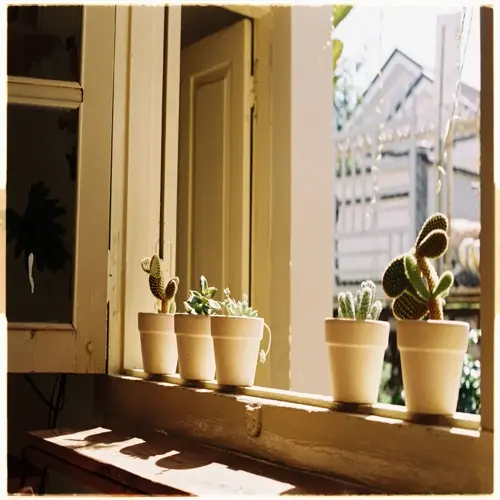

Five plants top the list of the best beginner succulents. Pick from jade plant, aloe vera, haworthia, echeveria, and sedum. These are the easy succulents that shrug off a missed watering or an extra splash. They still grow fine on a normal windowsill. You will see all five on almost any garden center shelf. Most cost just a few dollars each, which shows how tough and common they are.
Walk past the cactus rack and you can spot the friendly ones fast. The plump rosettes and thick glossy leaves store their own water. So the plant carries you through a busy week when you forget to check it. That built-in buffer is what makes the best beginner succulents hard to kill by accident.
A succulent earns a beginner-friendly label for four plain reasons. It puts up with irregular watering because the leaves hold a reserve. It adapts to ordinary indoor light near your window instead of demanding full desert sun. It grows slow and steady, so your small mistakes show up over time and give you room to fix them. And it propagates with ease, so a dropped leaf or a snapped stem often roots into a new plant. Cheap recovery is the real gift here. When a mishap costs you nothing, you learn the wet-dry rhythm without losing your plant.
Jade plant
- Why it is easy: This sturdy shrubby succulent tolerates irregular watering and can live for years, even decades, on a bright sill.
- Look: Thick, glossy, oval leaves on woody stems that slowly build into a small tree-like form.
- Care note: Wants bright light and a thorough soak only once the soil has dried out completely.
- Heads up: Jade can be toxic to cats and dogs if chewed, so place it out of a curious pet's reach.
Aloe vera
- Why it is easy: A tough rosette that stores plenty of water in its fleshy spears and forgives the occasional missed watering.
- Look: Upright, pointed green leaves arranged in a spreading rosette that offsets into pups over time.
- Care note: Likes a bright window and gritty, fast-draining soil; let it dry well between drinks.
- Heads up: Aloe is considered toxic to pets if eaten, so keep it away from cats and dogs.
Haworthia
- Why it is easy: A small, slow rosette that handles slightly lower light than most succulents, making it forgiving indoors.
- Look: Compact dark-green rosettes, many with translucent windows or white stripes on the leaves.
- Care note: Tolerates bright indirect light and infrequent watering, so it suits a desk or shelf near a window.
- Bonus: Stays small and rarely outgrows its pot, which makes it ideal for tight spaces.
Echeveria
- Why it is easy: A classic rosette succulent that grows readily and propagates from a single fallen leaf.
- Look: Tight, symmetrical rosettes in blue-green, pink, or purple tones that blush in strong light.
- Care note: Needs bright light to stay compact and gritty soil that dries fast between waterings.
- Bonus: Drop leaves callous and sprout new plants, so one rosette can become many.
Sedum
- Why it is easy: A large, varied group of tough succulents, including trailing types like donkey's tail, that root from dropped pieces.
- Look: Plump small leaves on trailing or mounding stems, great for hanging pots and windowsills.
- Care note: Wants bright light and a dry-out watering cycle; trailing types spill nicely over pot edges.
- Bonus: Stems and leaves that fall off readily root into new plants with little effort.
You will see these five on almost every beginner list for a reason. They are common, easy to find, and proven on real windowsills. They are not rare collector plants that need your special care. Buy one in person if you can. That way you get to check the leaves are firm and plump rather than soft or shriveled. A healthy start makes your whole job simpler.
Start with just one or two of these, not a whole tray. Give each a bright window and a gritty, fast-draining mix. Then water only when the soil has dried out fully. That single wet-dry rule covers most of the care. These low-maintenance succulents will even warn you when you slip. They pucker a little before they ever drop a leaf.
Skip the fussy and rare types for now. Living stones, fancy striped rosettes, and pricey imports are not so kind. They punish small timing slips and will sour you fast. Once your jade or echeveria has cruised through a few months of the basic routine, you will know enough to branch out. Master the simple ones first. The rest of the hobby then opens up on its own.
Read the full article: Succulent Plants: Complete Care Guide