
Introduction
Here is the good news about succulent plants: they reward you for doing less, not more. You do not need a green thumb or a daily routine to keep them happy. In fact, the people who fuss the most are usually the ones who kill them. These are drought-tolerant plants built to handle a bit of forgetting. That is why they make such forgiving plants for your windowsill.
You have probably been told to water less and then left to figure out the rest. Nobody explains why, and that missing reason is where most plants die. You will get the why here, not just the what. Every key tip you read comes from university plant experts. The sources are Iowa State, Texas A&M, and the University of Minnesota. You finally get the real reasons behind the rules.
So what counts as a succulent? Any plant that stores water in thick, fleshy tissue earns the name, which makes succulent a trait and not a single family. These water-storing plants span more than 60 plant families, with around 10,000 species spread across the globe. Think of your plant as a built-in water bottle. Your succulent sips slowly from stored reserves between deep drinks. That is why overwatering, not neglect, is the usual cause of death.
Gardeners have grown these plants indoors since at least the 17th century, and you will see why they top so many beginner lists. Your succulent shrugs off dry household air and even likes a snug, tight pot. Below you get clear succulent care broken into watering, light, soil, feeding, and common problems. Master those five areas and your indoor succulents will thrive for years with very little effort from you.
What Succulent Plants Are
So what are succulent plants, in plain science terms? For the cleanest succulent plant definition, you can turn to the team at Britannica. A succulent is any plant with thick, fleshy tissue that stores water in its leaves, stems, or roots. That stored water is the whole point. It lets your plant ride out long stretches with no rain.
This trait shows up all over the plant world. Britannica notes that succulents grow in more than 60 plant families. Three of them stand out, Aizoaceae, Cactaceae, and Crassulaceae, and they are almost fully succulent. The total count sits at around 10,000 species, but treat that as an estimate, not a hard figure. That wide range gives you so many types of succulents to choose from, so you can pick the look you want for your space.
Here is the clever part. Many of them run on a trick called crassulacean acid metabolism, or CAM for short. They keep their pores shut through the hot day. Then they open them at night to take in carbon dioxide. So your plant feeds after dark and loses almost no water in the heat. These plants come from deserts and dry land, where that kind of thrift keeps them alive. Some sources even put the water in certain succulent parts as high as 90 to 95%.
People often ask, are cacti succulents, and yes, they are. Think of succulent like the word waterproof. It names a trait that many plants share, not one tidy family. A cactus stores water in its stem. An aloe stores it in its fleshy leaves. Both fit the same group, so you can grow them with the same basic care. Gardeners keep cacti on their own shelf out of habit, but the botany puts them right next to the rest. That same water-thrifty design is also why your succulent does so well in dry indoor air.
Unlike those of most plants, the stomata of many succulent plants are closed during the day and open at night.
Watering Succulents Right
The beads on my string of pearls turned soft and translucent within two weeks. I noticed them go from firm and green to mushy and pale on my south-facing windowsill. I had jammed the plant into a cute pot with no drainage hole. I watched each little ball drop off at a touch, then realized I had drowned it, not dried it out.
That is the part that trips up new growers. Too much water kills faster than too little. A thirsty succulent can sit wrinkled for weeks and bounce right back after one good drink. A waterlogged one rots from the roots up, and by the time you see it on the leaves, the plant is often past saving. I have lost more plants to a kind hand than a forgetful one.
So how often to water succulents? There is no fixed number, and a strict calendar is the wrong tool. The honest answer is that you water based on the soil, not the date. Push a finger a few inches into the soil and check it before you reach for the watering can.
The method that works is the wet-dry cycle. You soak the soil hard, then leave it alone until it dries out, then soak it again. This swing between wet and dry is what succulent roots are built for, since they evolved in deserts that flood and then bake. Here is how the cycle runs step by step.
Push a finger a few inches into the soil; water only when it feels dry, like fresh bread rather than wet, never on a fixed calendar.
Water until liquid runs freely from the drainage hole, wetting the entire root ball and flushing out any built-up salts.
Empty the saucer right away so the bottom soil and roots never sit in standing water, which is what causes rot.
Let most of the soil dry out before the next drink, roughly every two to three weeks indoors, longer in winter.
When you do water, water with purpose. Pour until liquid runs out the drainage hole, which soaks the whole root ball and flushes out built-up salts from your tap water and fertilizer. Then tip out any water that pools in the saucer. The bottom soil should never sit wet, because standing water at the roots is exactly what rots them.
Use a wet-dry cycle: water thoroughly, wetting the entire root ball until it drains, then let the soil dry completely before watering again.
Season sets your rough watering schedule. WVU Extension suggests about once a week in spring and summer when plants grow fast, and once every two to three weeks in winter when they rest. Treat those as starting points, then adjust for your own soil, light, humidity, and pot. A plant in a small terra cotta pot on a hot, bright sill drinks far more often than one in a glazed pot in a dim room.
The two experts seem to clash here, but they do not. Most of the soil should dry between drinks. Yet David Reed of Texas A&M warns against letting it go bone-dry for long, since that can damage the root system. Aim for soil that feels moist like fresh bread, not soaking and not dust.
Learn to read the leaves, because the plant tells you which mistake you are making. The signs of overwatering are yellow, soft, mushy, or see-through leaves, often starting low and spreading fast. Underwatering looks different and far gentler, with wrinkled, drying lower leaves that firm back up once you water. When in doubt, wait a day. A dry plant forgives you, but overwatering succulents is the mistake that is hard to take back.
Light and Placement
Light is the one thing most people get wrong with succulent plants. So how much light do succulents need to thrive? Aim for at least 6 hours of bright light a day. Treat 6 to 8 hours as the floor. Give them 10 or more hours for the best color and the tightest shape.
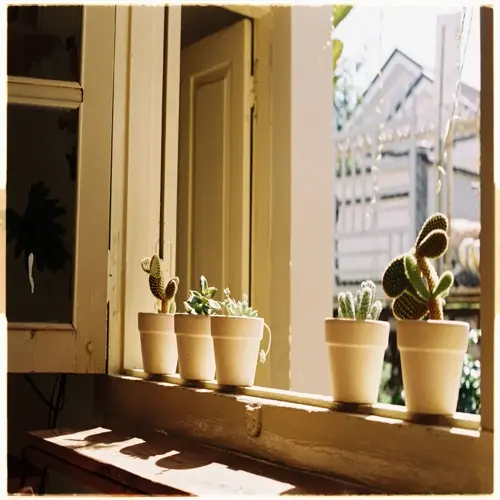
Where you set the pot matters more than almost any other choice. For succulents indoors, the absolute brightest window in your home is the right spot, and a south-facing window usually wins. A north window tends to be too dim, while east and west windows land in the bright but gentler middle.
When a plant gets too little light, it starves and starts to reach. A weak succulent stretches tall and turns pale. It is just like a houseplant that leans toward a window. The plant grows loose and leggy instead of tight and colorful. This stretching has a name. It is called etiolation, and once the stem pulls apart it will not snap back.
Grow lights for succulents fix this fast when a sunny window is not an option. Fluorescent grow lights work well placed 6 to 12 inches (15 to 30 cm) above the plants for 14 to 16 hours a day, which keeps new growth compact. Set them on a timer and you never have to think about it again.
There is a catch with bright light, and the experts do not fully agree on it. Texas A&M treats succulents as desert plants that want the most sun you can give. But UC Master Gardeners warn that many types scorch in hot afternoon summer sun. The safe path splits the difference. Give them strong, bright light but shelter them from intense afternoon rays. Then watch for color blushing in the leaves. That blush is a healthy sign of plenty of light, not sunburn on succulents.
Succulents are dry plants. These plants grow in desert-like environments with tons of sun every day and dry weather conditions. They need to be in the absolute brightest light, or your absolute brightest window.
Best Soil and Pots
I tipped my jade plant out of its pretty glazed pot and broke up the dense black soil with my fingers. The roots came out wet and packed. I had not watered in over a week. I set the plant in a gritty mix in a terracotta pot on the same sunny sill. Then I poured water over the top and watched it drain through in seconds. That fast drain is the whole game with succulent plants.
The best soil for succulents is fast, gritty, and a bit rough to the touch. These plants store their own water. So the soil around them needs to dry out fast, not stay damp. A dense bagged potting mix holds water like a sponge and rots the fleshy roots from the inside.
You can mix your own succulent soil mix with a simple recipe backed by extension experts. Combine one part standard potting soil with one part coarse sand. Or aim for one-third organic and two-thirds mineral grit such as perlite, pumice, or fine gravel. A bagged cactus mix from the garden center works too. Just add a handful of extra perlite to make it sharper.
The pot matters as much as the soil. Skip any container without drainage holes, no matter how nice it looks. Water that cannot escape pools at the bottom and drowns the roots. Terra cotta pots breathe and pull moisture out of the soil, so the mix dries faster than glazed or plastic. Pick a snug pot too, since extra soil holds extra water that stays wet too long.
Use the building blocks below to set up a mix that drains well every time you water. Then check the notes on repotting, since you will need it far less often than you think.
Sharp-draining soil mix
- Goal: Recreate the fast-draining, gritty ground succulents grow in naturally so roots never sit in soggy soil.
- Easy recipe: Combine one part standard potting soil with one part coarse sand for a porous mix most succulents love.
- Mineral-heavy option: Aim for about one-third organic material and two-thirds mineral grit such as perlite, pumice, or fine gravel.
- Shortcut: A bagged cactus and succulent mix works on its own and gets even sharper with extra perlite or pumice mixed in.
A pot with a drainage hole
- Non-negotiable: The container must have at least one hole in the bottom so excess water can escape after every soak.
- Material matters: Terracotta breathes and pulls moisture from the soil, helping it dry faster than glazed or plastic pots.
- Saucer habit: Tip out any water that collects in the saucer so the roots never sit in a standing puddle.
- Sizing: Choose a snug pot rather than an oversized one, since extra soil holds extra water that stays wet too long.
Drainage and aeration helpers
- Perlite: Lightweight white volcanic beads that open up the mix and let air and water move through quickly.
- Pumice: A heavier porous rock that improves drainage while holding a little moisture and stabilizing top-heavy plants.
- Coarse sand: Builder's or horticultural sand adds grit; avoid fine play sand, which can pack down and hold water.
- Fine gravel: Mixed into the soil it boosts drainage, but a gravel layer at the pot bottom does the opposite.
When and whether to repot
- Rarely urgent: Succulents tolerate and even thrive in a tight, root-bound pot, so repotting can usually wait.
- Clear signals: Repot when roots fill the pot, push out the drainage hole, or the plant tips over its container.
- Best timing: Move plants during the active growing season and let the soil dry before disturbing the roots.
- Settle in dry: After repotting, wait several days before watering so any nicked roots can callous and avoid rot.
A layer of gravel at the bottom of a pot is not a substitute for a drainage hole and can actually make drainage worse by raising the soggy zone into the root zone. Use a real drainage hole and mix grit into the soil instead.
Feeding and Propagating
Eight new echeveria rosettes sat crowded across one windowsill tray, each one fat and tight and ready to pot up. Every single one had started as a fallen leaf I set on a saucer to dry by the same south-facing window. I had almost swept that pile of loose leaves straight into the trash a few weeks earlier. They looked like nothing, just leftover scraps from a plant that had taken a knock off the shelf.
Those scraps are pure gold. You can grow whole new plants for almost no money from the bits that fall off the ones you already own. Before we get to that, let's clear up feeding, because succulent fertilizer is where a lot of people go wrong without knowing it.
Here is how to fertilize succulents without harming them. Feed only during the growing season and always cut the dose to half the rate on the label. WVU Extension suggests a couple of feedings a year. The University of Minnesota feeds 3 to 4 times in the brighter months. It picks a food higher in phosphorus than nitrogen. Texas A&M keeps it simple and feeds about every two months with any soluble plant food.
Why so light? Too much food pushes weak, stretched growth instead of the tight, compact shape you want. A flooded plant grows fast and floppy, and that soft growth flops over and rots easier. Skip feeding through winter entirely. Your plant is resting then, and the extra salts just build up in the soil.
Now for the fun part. Knowing how to propagate succulents turns one plant into a tray full of them. You have three easy routes. Pull whole leaf cuttings from the stem. Snip stem cuttings with a clean blade. Or twist off the offsets and pups that crowd the base of plants like aloe and sempervivum.
The one rule that makes or breaks it comes from UC Master Gardeners. Let the cut end callous over for several days before it touches soil. A fresh, wet wound rots fast once it sits on damp mix. A dried, sealed one roots clean. Stem and offset cuttings often root in about a week, while leaves take longer to wake up.
Gently twist off a whole healthy leaf or snip a stem section with a clean blade so you get a clean, undamaged break.
Set the cutting on a dry tray out of direct sun for several days until the cut end dries and seals, which prevents rot.
Lay leaves on top of barely moist gritty mix or insert stem cuttings just deep enough to stand upright.
Mist lightly only when the soil is dry; roots and tiny new plants appear over one to several weeks, then water normally.
Leaf propagation tests your patience more than your skill. Roots and tiny new plants can take a few weeks to show, and nothing happens if you keep poking at them. Set the leaves down, mist the soil only when it dries out, and walk away. The ones that take will surprise you, and a handful of duds is no loss when the leaves were free.
Use any soluble fertilizer diluted to half the recommended rate and only during the growing season, roughly every two months. Skip feeding in winter; overfeeding pushes weak, stretched growth rather than strong, compact plants.
Problems, Pests, and Safety
Most succulents die from kindness, not neglect. The plant sends you clear signs long before it gives up, but those signs are easy to read backward. A nurse checking a patient does not guess; she reads the symptoms, then acts. Treat your plant the same way.
Here is the trap that catches new growers. A mushy yellow leaf and a wrinkled dry leaf look like the same kind of trouble, yet they call for opposite fixes. One needs less water, the other needs more. The signs of overwatering are soft, yellow, collapsing leaves and stems. Underwatering shows up as wrinkled, drying lower leaves. Match the symptom to the cause before you touch the watering can.
Once root rot sets in, you cannot water your way out of it. Root rot succulents need surgery, not more care. Cut the plant back to clean tissue. Slice away every rotted root and any soft, mushy stem. Then set the healthy top aside for a few days to callous over. Replant that dry stub in a fresh, gritty mix and hold off on water until it roots. A rescued plant often comes back stronger than the one you lost.
Most succulent pests are easy to spot and easier to stop. Mealybugs look like tiny white cotton tufts in the leaf crevices, and spider mites leave fine speckling and webbing. Good air flow prevents both, so do not crowd your plants on a still windowsill. For a light outbreak, dab each bug with a cotton swab dipped in rubbing alcohol. The alcohol kills mealybugs and scale on contact and dries off fast.
Now a word on safety. So are succulents toxic to pets? The answer is not a simple yes or no. Some succulents are pet-safe. Others can hurt a curious cat, dog, or child who chews on them. Jade, aloe, and euphorbias such as the pencil tree can be toxic if eaten. Euphorbia sap stings the skin too. Keep any plant you are not sure about out of reach. Check the species against a trusted toxic-plant list before you bring it into a home with pets or kids.
One last threat is cold. Frost can kill a tender succulent overnight, and cold tolerance swings wildly from one species to the next. Not sure how hardy your plant is? Treat it as fragile. Bring it inside or cover it before the temperature drops below freezing. A single hard frost can undo a whole season of growth.
In general, succulents do best with infrequent watering, as they approach dryness, rather than keeping the soil constantly moist. Their fleshy roots and stems will easily rot if they are overwatered.
5 Common Myths
Succulents barely need any water because they store so much, so you can leave them alone for months at a time.
They store water but still need a deep soak whenever the soil dries; total neglect eventually shrivels and weakens them.
A layer of gravel at the bottom of a pot replaces a drainage hole and keeps roots from sitting in water.
Extension experts say a gravel layer is not a substitute for a drainage hole and can actually make pot drainage worse.
All succulents are desert plants that crave the hottest, most intense direct sun you can possibly give them.
Many burn in harsh afternoon sun; they want bright light but often grow better with some afternoon shelter.
Succulents and cacti are completely different groups of plants with nothing botanical in common between them.
Cacti are botanically succulents; succulent simply describes water-storing tissue found across more than 60 plant families.
Misting your succulents lightly and often is the gentlest, safest way to keep these delicate plants hydrated.
Repeated shallow sprinklings cause distorted growth; succulents need infrequent, thorough soakings followed by drying out.
Conclusion
Good succulent care comes down to a handful of habits, and none of them are guesswork. Every tip here came straight from the plant pros at university extension offices. Think of schools like Iowa State, WVU, and Texas A&M. These are the people who study what keeps plants alive, so you can trust the playbook.
Here is the short version you can pin to your fridge. Give your plant at least 6 hours of bright light a day. For how to water succulents, use a wet-dry cycle and soak the soil about every two to three weeks, then let it dry out. Plant in sharp, gritty soil inside a pot with a real drainage hole, and feed at half strength only during the growing season.
If one rule sticks, make it this. The biggest favor you can do any succulent is to water less and drain well. Overwatering succulents, not forgetting them, is the number one cause of death, because fleshy roots rot fast when they sit in wet soil. So when you feel the urge to grab the watering can, wait a few more days.
Think back to that water bottle in the desert. Your plant sips slowly from the water it already stored, so the best thing you can do is back off and let it drink on its own clock. Succulent plants reward patience like few other houseplants. Indoor succulents can live for years and sometimes decades. They also propagate almost for free, so one healthy plant can grow into a whole collection over time.
Glossary
- Callous (callusing)
- The drying and sealing of a fresh cut on a cutting before it is planted, which helps prevent rot.
- Crassulacean acid metabolism (CAM)
- A water-saving process in which a plant opens its leaf pores at night and keeps them closed during the hot day.
- Etiolation
- Stretched, pale, leggy growth that happens when a plant does not get enough light.
- Offsets (pups)
- Small baby plants that grow from the base of a parent succulent and can be separated to make new plants.
- Root rot
- Decay of a plant's roots caused by soil staying too wet for too long.
- Stomata
- Tiny pores on a leaf that open and close to let in carbon dioxide and release water vapor.
- Succulent
- Any plant with thick, fleshy tissue adapted to store water in its leaves, stems, or roots.
- Wet-dry cycle
- A watering method that soaks the soil thoroughly, then lets it dry out completely before the next watering.
External Sources
Frequently Asked Questions
How often should you water a succulent?
Water roughly once a week in spring and summer and once every two to three weeks in winter, always letting the soil dry first.
What does an overwatered succulent look like?
Overwatered succulents show yellowing, soft or mushy leaves, translucent or collapsing stems, and sometimes black spots near the base.
Do succulents need full sun or shade?
Most succulents want bright light for at least 6 hours a day, though many prefer some shelter from intense afternoon summer sun.
What is the trick to keeping succulents alive?
The trick is bright light, sharp-draining soil, a pot with a drainage hole, and watering only when the soil is dry.
What are the best succulents for beginners?
Forgiving beginner choices include:
- Jade plant
- Aloe vera
- Haworthia
- Echeveria
- Sedum
What soil and pot do succulents need?
Succulents need a sharp-draining gritty mix and a pot with a drainage hole; a bottom gravel layer is not a substitute.
Are succulents toxic to pets?
Some succulents are pet-safe while others, such as jade, aloe, and euphorbias, can be toxic if a cat or dog chews them.
Can succulents grow in just water?
Succulents can root in water for a short time, but they are built for dry soil and rot if kept in water long term.
Why do you put cinnamon on succulents?
Many gardeners dust fresh cuts and callousing cuttings with cinnamon as a low-cost way to keep the wound dry and discourage rot.
How long do succulents live indoors?
With bright light and correct watering, many indoor succulents live for years, and some, like jade plants, can last decades.