
Succulents need a gritty, fast-draining mix and a pot with a drainage hole in the bottom. Get those two things right and you avoid the mistake that kills more succulents than anything else. When people ask about succulent soil and pots, the honest answer is that water has to move through both, fast. The best soil for succulents drains in seconds, not minutes, and the pot lets that water leave.
I'm scooping perlite into a bowl of potting soil at the kitchen table. I work it in with my hands until the mix feels loose and crumbly instead of dense. This is for the same jade plant that sits on my south-facing windowsill. I knocked it out of its old nursery pot, settled it into a terracotta one with a hole, and poured water over the top. The water ran straight through and dripped out the bottom in under ten seconds.
That speed is the whole point. Succulents store water in their leaves and stems, so the roots hate sitting in wet soil. Leave your roots damp for days and they rot, and root rot is the most common way these plants die. Your soil has to let water pass quickly, and your pot has to let it escape. One without the other still leaves you with a soggy mess at the bottom.
You can mix your own with cheap parts. WVU and University of Minnesota Extension both point to one part potting soil to one part coarse sand. Iowa State suggests going grittier. Use one-third organic material to two-thirds mineral grit like perlite, pumice, or fine gravel. Either ratio works because the grit makes air pockets. Those pockets keep water from pooling around your roots.
If you'd rather skip the mixing, a bagged cactus and succulent mix does the job out of the bag. I still toss in an extra handful of perlite to open it up, since some bagged mixes hold more moisture than I want. The goal stays the same no matter which route you pick. The mix should feel light and crumbly, and water should run through it without hesitation.
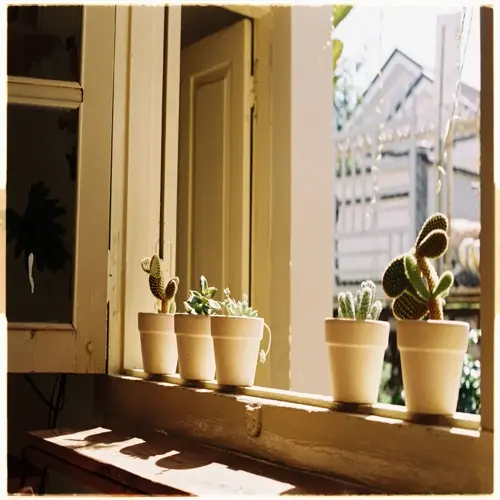
Your pot matters just as much as what goes in it. Pick a snug terracotta pot, one only slightly wider than your plant. Terracotta is porous, so it breathes and pulls moisture out of the soil through its walls. That helps your roots dry faster between drinks. A pot that's too big holds a big slug of wet soil the roots can't reach, and that stays damp far too long.
Whatever pot you choose, it must have a succulent drainage hole in the bottom. This is the part people skip, and it's the most important rule of all. A bare hole lets the extra water leave instead of collecting at the roots. Without it, even perfect soil turns into a swamp after one good watering.
Do not fall for the old trick of putting a layer of gravel in the bottom of a pot with no hole. A bottom gravel layer is not a substitute for a drainage hole. The water still has nowhere to go, so it builds up in the soil right above the rocks and sits against your roots. Your only real fix is a hole that lets water out of the pot entirely.
Sort out the soil and the pot and you've handled the hard part. Once your succulent sits in a gritty mix inside a snug terracotta pot with a hole, the rest comes down to how you water it. For that, follow the watering routine and let the soil dry out fully before you give it another drink.
Read the full article: Succulent Plants: Complete Care Guide