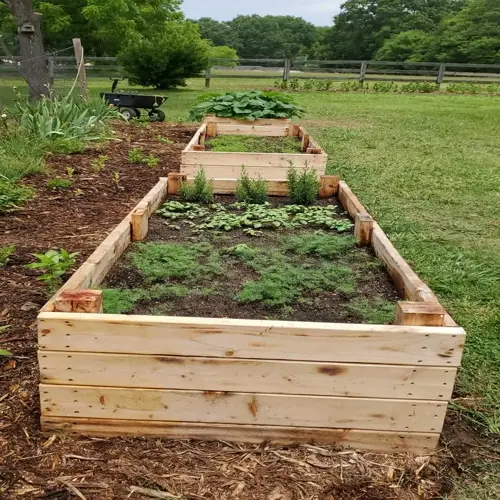

My tomatoes in the sandy-loam bed by my back fence yellowed and stalled all season. I kept feeding them and nothing changed. So I checked the soil with a meter and got a reading near 5.4. That number traced every symptom straight to pH. The clearest signs of unhealthy soil pH are yellowing leaves and stunted growth. You also see poor patches that lag the rest of the bed. And nutrients stay locked up so no amount of feed fixes them.
These red flags all share one root cause. Your soil pH sets how easy it is for roots to pull nutrients out of the ground. When the number drifts too far in either direction, food sits in the soil but the plant cannot reach it. That gap is what you see on the leaves.
The mechanism is simple once you picture it. Below pH 6.0, phosphorus, nitrogen and potassium drop, so plants starve even in a well-fed bed. Above pH 7.5, iron and manganese lock up instead. Both extremes give you the same nutrient deficiency symptoms. The missing element just changes with the direction.
Direction matters when you read the leaves. Sour soil below 5.5 can free up toxic metals like aluminum. Those metals burn roots and slow the microbes your plants depend on. Alkaline soil tells a different story. It often shows interveinal yellowing, where the leaf fades between green veins because iron runs short. That link between chlorosis and yellowing leaves pH is one of the clearest clues you get.
Yellowing Leaves
- What you see: Leaves fade or yellow between the veins, often on newer growth, a classic sign of locked-up iron or manganese.
- Likely pH: This often points to alkaline soil above 7.5 where those micronutrients become hard to absorb.
- Confirm it: A pH test separates a true pH issue from a simple feeding or watering problem before you treat it.
Stunted, Slow Growth
- What you see: Plants stay small and grow at a crawl even with steady feeding and watering across the season.
- Likely pH: Below pH 6.0, phosphorus, nitrogen and potassium become hard to absorb, starving plants despite fertilizer.
- Confirm it: Pair the symptom with a pH reading to see whether nutrients are present but locked away.
Poor or Patchy Areas
- What you see: Certain spots in a bed or field perform far worse than the rest with no obvious cause.
- Likely pH: Acidic patches can show up as weak zones, often where fertilizer banding has acidified the soil.
- Confirm it: Test the bad patch on its own, since one mixed sample can average away a localized pH problem.
Weak Response to Fertilizer
- What you see: Adding fertilizer barely helps, because the nutrients cannot be taken up at the current pH.
- Likely pH: Both very acidic and very alkaline soils block uptake, so most of the feeding effort goes to waste.
- Confirm it: Checking pH before adding more fertilizer prevents spending on nutrients the plant cannot reach.
Here is the catch you cannot skip. These symptoms only hint at pH, and a real test confirms it. Pests, drought stress and overwatering can all mimic the same yellow, stunted look on your plants. A cheap meter or a mail-in lab sample gives you the actual number so you treat the cause and not a guess.
So watch the leaves, the growth rate and the patchy spots, then back up what you see with a reading. If your plants look starved while you keep feeding them, suspect pH first and test before you reach for more fertilizer. The number on the meter turns a vague worry into a fix you can act on.
Read the full article: Soil pH Testing: A Clear, Accurate Guide