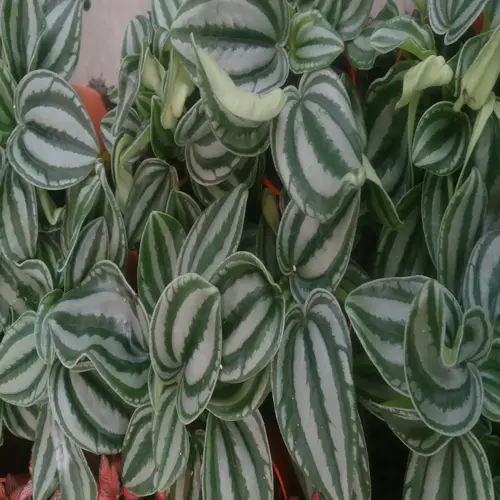

The plant most often mistaken for pothos is satin pothos. The funny part is that it is not a true pothos at all. The biggest pothos look-alikes split into two camps. The first is satin pothos, which belongs to the genus Scindapsus. The second is the heartleaf philodendron. It comes from a different group, yet it shares the same trailing shape and heart-shaped leaves. Both fool plenty of shoppers.
A true pothos is an Epipremnum. So satin pothos sits on the wrong branch of the family tree, even with pothos in its name. Stores still sell it as a pothos because the leaves trail and look close enough. But the two genera are not the same plant. You can own both and never know the difference until you read the labels.
The leaf surface gives you the best clue. Satin pothos goes by the science name Scindapsus pictus. Its leaves feel slightly velvety and carry silver speckles. A true pothos leaf feels thicker and waxier. Its pattern shows up as creamy or yellow streaks, not silver. Run a finger across the leaf and you can often feel the gap before you even spot it.
Among these pothos look-alikes, you will also meet a popular cousin called Silvery Ann. It is another Scindapsus, and it wears even more silver wash on each leaf. People grab it thinking they found a fancy pothos. It is a look-alike from the same Scindapsus group. It is not a real Epipremnum, so the same rule applies to it.
The other big mix-up is pothos vs philodendron. Heartleaf philodendron and Philodendron Brasil both trail in long vines. Both grow heart-shaped leaves. That is why they fool so many people. They belong to the genus Philodendron, a group apart from Epipremnum. Their leaves tend to be thinner and glossier. New growth often opens in a soft reddish or pinkish tone before it turns green.
Philodendron Brasil gives you one more tell. Its green leaves carry a bright lime stripe straight down the center. It looks almost like someone painted it on. True pothos variegation is more scattered and patchy across the whole leaf. So when the marking runs in a clean central line, you are holding a philodendron. The pattern alone settles the pothos vs philodendron question most of the time.
Care needs add to the confusion, since these plants all want similar light and water. You give them bright indirect light, and you let the top inch of soil dry before you water again. Because the routine looks the same, you cannot tell them apart by how you treat them. That makes the leaf clues even more useful when you want a real ID. If you keep more than one trailing vine at home, mark each pot so you do not mix them up later. A small label saves you a lot of second-guessing down the road.
Why does the name matter if the care is the same? It helps you when you shop, swap cuttings, or look up a problem online. If you search for pothos help but you actually own a Scindapsus, the advice may not fit your plant. Knowing your true genus points you to the right tips. It also keeps you from overpaying, since some sellers price a common Scindapsus like a rare pothos.
The fastest way to settle any doubt is to check the plant tag for a scientific name. If the tag reads Scindapsus or Philodendron, you have a look-alike, not a true pothos. Only a name that starts with Epipremnum points to the real thing. Snap a photo of that tag before it gets tossed. Then you will never have to guess what sits in your pot again.
Read the full article: Pothos Varieties: Types, Care and ID Guide