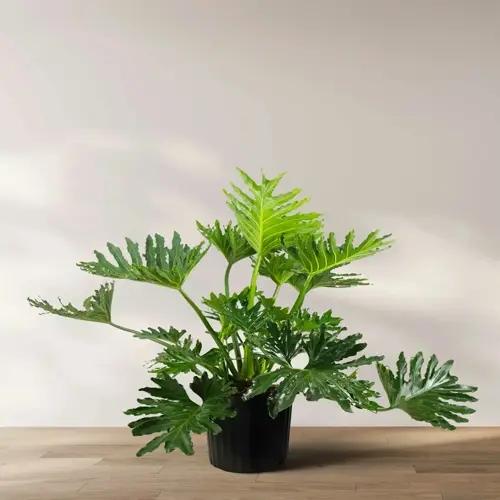

Aim for 65°F to 80°F. In metric that is 18°C to 27°C. The right rhaphidophora tetrasperma temperature is just the warm, draft-free air you and I like to sit in at home all day. NC State Extension lists this band as the plant's sweet spot. So if your living room feels good to you, it feels good to your plant. The one catch is a cold windowsill in winter. That spot can chill your plant even when the rest of the room stays warm.
That comfy ideal temperature range is no accident. Your plant comes from the wet tropical forests of Thailand and Malaysia. There it climbs trees in steady warmth all year long. Kew's Plants of the World Online files it as a wet tropical species. Plants from that biome carry almost no cold tolerance. Drop yours below its preferred band and growth slows down. Leaves can yellow, and new split leaves come in small or not at all.
Many growers report their plants hold on down to around 55°F (13°C) for short spells. But that is survival, not happy growth. Your plant sulks at that point and stops pushing out new leaves. Use 65°F as your real floor for active growth. NC State pegs the outdoor hardiness at USDA zones 9a to 12b. That number tells you the same thing in another way. Any place that sees frost cannot keep this plant outside through winter. The cold simply does too much harm.
Cold draft damage is the trap that catches most people off guard. Your wall thermometer can read a fine 70°F all day. But the spot right by a single-pane window dips much colder after dark. Leaves pressed against frosty winter glass turn brown and mushy overnight. Air conditioning vents do the same harm from the other side. So does the cold blast from a door that opens onto a winter porch. Watch for these cold pockets, since they hide in plain sight.
Keep your plant a few feet back from any heating or cooling vent. Pull it off cold windowsills once nights turn chilly. A steady interior wall beats a bright but freezing window every time. Sudden swings stress this plant more than a slightly cool but stable spot. So you want to chase consistency as much as the right number. A spot that holds near 72°F all day suits it better than one that spikes and crashes. When you set the right rhaphidophora tetrasperma temperature and hold it there day in and day out, the plant just grows.
- Place It Right: Set your plant on an interior wall away from glass, vents, and exterior doors.
- Check After Dark: Touch the wall near the plant on a cold night, since that pocket reads colder than the room.
- Move In Early: Bring summer plants inside once fall lows near 60°F, not at the first frost alert.
- Skip cold-water shocks by warming the watering can to room temperature in winter.
Do you move your plant outdoors in summer for the brighter light? If so, watch the fall forecast and bring it back inside in good time. Do not wait for the first frost warning. Your plant starts to struggle long before ice ever forms. Aim to move it in once evening lows settle near 60°F. Give it a quick check for hitchhiking pests first. Then it slides right back into its warm indoor band. Your plant will reward the care with steady new growth come spring.
Read the full article: Rhaphidophora Tetrasperma Care Guide