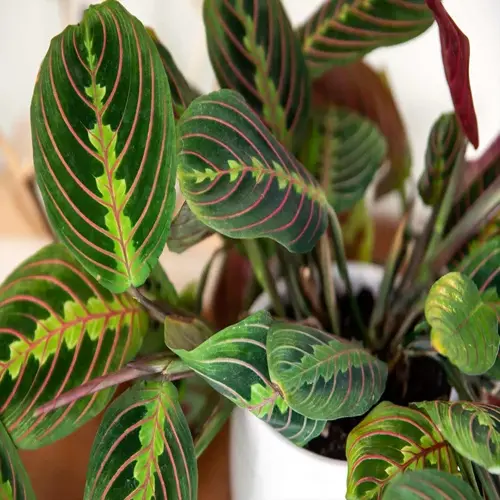

Look at the new leaves on the shaded side of the plant. They come in darker and smaller than the vivid ones near the window. The plant is showing you where the light runs short. In most cases your neon pothos losing color comes down to one thing: too little light, which fades that bright lime toward a dull, plain green.
This is not the plant getting sick. It is the plant adapting. Neon pothos foliage starts out a pale yellow-green. It matures to a rich chartreuse, the color the University of Florida IFAS lists for this plant. That glow takes steady light to hold. Drop the light too low and the leaves trade brightness for survival. You end up with a plant that grows fine but looks more like a common green pothos than the electric one you bought.
Here is the mechanism. NC State Extension notes that low light can cause loss of variegation in pothos. The bright tissue has less of the green pigment that drives food production. When the plant sits in dim conditions, it leans on plain green to capture more energy, so each new leaf comes in greener than the last. The plant is choosing fuel over color.
The fix is bright indirect light, and lots of it. Move the plant within a few feet of a window that gets strong, filtered sun for most of the day. An east window works well. A south or west window works too if you soften the harshest rays with a sheer curtain. A simple test helps here. Hold your hand a foot above the leaves at midday, and you should see a soft, fuzzy shadow rather than no shadow at all. Give it that light and the fade slows, then reverses over the next several weeks as fresh leaves push out brighter.
Rotate the pot a quarter turn each week so every side gets even exposure, and rule out sun scorch first. Scorch shows as crisp, bleached patches on leaves facing direct glass, not a slow all-over fade. A true light shortage dulls the whole plant evenly.
Light is the usual answer, but it pays to rule out the rest before you commit. Check the undersides of a few leaves for tiny webbing or specks. Spider mites can stipple the color out of foliage and leave it looking washed. A heavy infestation drains the leaf, so the green and the lime both go flat. Then wipe a leaf with a damp cloth and look at the cloth. Dust alone can mute the shine and block the light the plant needs. A monthly wipe-down keeps every leaf working at full strength.
Watering plays a smaller role, but it still matters here. A pothos that stays soggy roots out slowly, and stressed roots cannot feed bright new growth. Let the top inch or two of soil dry between drinks, then water until it runs from the drain holes. Steady moisture and steady light work as a pair. Get both right and the plant has what it needs to push out vivid leaves instead of pale ones.
Give your moved plant time and watch the newest growth, not the old leaves. Old faded leaves stay faded, so the proof shows up at the growing tips. Within three to four weeks of better light you should see new leaves coming in a brighter lime. If they keep coming dull even by the window, step the light up again or check that nothing tall is shading the spot during the brightest hours.
Skip the urge to fertilize your way out of this. Feeding a dim plant does not restore the glow, and heavy feeding in low light can burn the roots. Fix the light first. A neon pothos that gets a couple feet from a bright window, turned now and then for even exposure, holds that electric lime year round.
Read the full article: Neon Pothos Care: Bright Color Guide