Tree · Lauraceae
Avocado
Persea americana
Give it full sun, sharp drainage, and frost shelter, and an avocado will throw shade over a yard for decades.
Full sun
Every 3–7 days
USDA 9–11
30–66 ft · 9–20 m
Overview
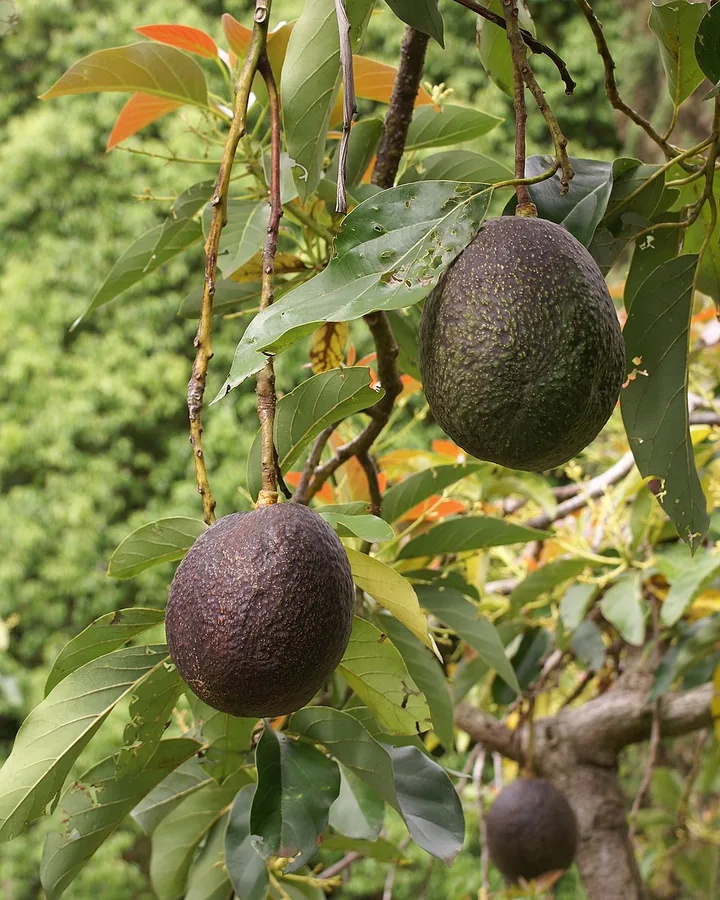
The avocado is a sprawling evergreen of the laurel family, hailing from the warm uplands of Mexico and Central America. Turned loose in open ground it shoots up tall and spreads wide, sailing past 65 feet (20 m), though its shallow roots and brittle wood call for room and a sheltered spot to settle. The fruit steals the show, buttery and rich, and here is the kicker: it ripens off the tree, not on it.
Avocados split into three races, and pinning yours down takes the guesswork out of winter. The Mexican race powers through the most cold, the West Indian race chases true tropical heat, and the Guatemalan race lands between the two, so that lineage dictates how much frost a tree will take. Most named cultivars blend more than one race.
An avocado plays the long game, and that is half the fun. Its flowers run in two patterns, type A and type B, and because the two open on staggered schedules, pollination gets a real boost. Plant one, keep its feet dry and its crown out of the frost, and once it locks into bearing it will feed a household for years on end.
Care
The short version: full sun and fast-draining soil drive everything, because soggy ground is what brings avocados down. Soak deeply but let the top half dry between drinks, guard young trees against frost, and feed steadily right through the growing season.
Light
Avocados crave full sun, ideally six or more hours of it a day. They will tolerate a touch of partial sun, but park one in real shade and it stretches lanky and sets far less fruit, so hand it your sunniest spot.
Water
Soak deeply but not often, then let the top half of the soil dry before the next drink. Young and fruiting trees want steady moisture, but avocados loathe wet feet, and waterlogged ground throws open the door to the root rot that finishes them off.
Soil
Set them in deep, well-drained sandy loam that never bogs down. A pH between 6.0 and 7.0 keeps them humming, and where drainage drags, planting on a raised mound flips the odds in your favor.
Temperature
Avocados run happily from about 23°F to 95°F (-5°C to 35°C), though the cold end swings hard on the race. Frost-tender types take a hit well before the Mexican-race trees, so match the cultivar to your winters.
Humidity
Average humidity, around 40% to 60%, keeps a tree cruising. They shrug off changes in air moisture, so there is nothing to chase outdoors.
Feeding
Feed monthly through the spring-to-fall growing season with a balanced fertilizer packing nitrogen plus micronutrients. Avocados lean hard on zinc and iron, and a shortfall of either flares up fast in the leaves.
Pruning
Avocados barely need the shears. Clip out dead, diseased, or crossing branches and head back lightly after harvest to rein in height and shape, but steer clear of heavy pruning, which just robs you of fruit.
Repotting
Avocados almost always go straight into the ground, so repotting rarely enters the picture. A young container tree can ride along, potted up every 2 to 3 years, until it lands in its permanent home.
Size & spacing
This tree gets big, vaulting from 30 to 65 feet (9 to 20 m) tall with a spread to match. Plant it well clear of buildings, foundations, and power lines, and turn the brittle, shallow-rooted crown loose with all the room it needs.
When to plant
Avocados thrive on warmth and refuse to forgive a hard freeze, so timing the planting well pays off fast. Get young trees into the ground in spring, once the frost danger lifts and the soil warms up. Bloom bursts from late winter into spring, and the fruit ripens on the tree to be picked across several months, depending on the cultivar.
Northern hemisphere
Southern hemisphere
Typical months for a temperate climate: start earlier in warm zones, later where spring frosts linger.
- Sow: Seed can be sprouted indoors year-round in warm conditions, but named cultivars are grafted rather than seed-grown.
- Plant: Spring, after danger of frost has passed and soil has warmed.
- Harvest: Flowers late winter to spring; fruit matures on the tree and is harvested over several months depending on cultivar (e.g., Hass roughly summer to winter).
Hardiness
USDA hardiness zones: 9–11
Temperature: down to -7°C
Troubleshooting
Nearly every avocado snag traces back to the roots or to a cold night, and the leaves are quick to broadcast it. Keep an eye on the canopy and you can leap in long before a tree slides into decline. Spot your symptom below, then move on it while it still turns things around.
Limp, colorless leaves and a crown thinning fast
This is Phytophthora root rot, the disease that downs more avocados than anything else. The fungus chews through the fine feeder roots in soggy ground, so the tree starves and wilts even while you keep watering. Fix the drainage first, ease off the water, and dig in coarse mulch held clear of the trunk.
Fix:
- Improve drainage and stop overwatering
- Apply phosphite (phosphonate) treatments
- Replant or topwork onto tolerant rootstocks using certified disease-free stock
- Maintain coarse wood-chip mulch kept several inches off the trunk and apply gypsum
Blackened shoot tips and scorched leaves from cold
This is frost damage, and the West Indian and Guatemalan types cop it worse than the tougher Mexican race. A freeze blackens the tender new growth and sears the leaf edges, and whole shoots can die back. Wrap and cover young trees through a freeze, then hold off until spring growth fires back up before cutting away the dead wood.
Fix:
- Protect young trees with covers, trunk wraps, and overhead irrigation during freezes
- Prune frost-damaged wood only after new growth resumes in spring
Scorched brown tips ringing the leaf margins
Browning that marches in from the tips and margins is salt tip burn, where chloride and sodium pile up from salty irrigation water or too much fertilizer. It flares worst in the dry season. Flush the salt down past the roots with a deep, slow soak, and dial back the feed.
Fix:
- Leach the soil with deep irrigation
- Reduce fertilizer rates
- Switch to lower-salinity water where possible
Toxicity
The ripe flesh is a treat, but the rest of the tree is a genuine hazard worth respecting. Leaves, bark, fruit, and that hefty pit all pack a compound called persin, which threatens horses, livestock, and birds most of all, and can sicken cats and dogs too. Keep grazing animals and pet birds well clear, and sweep up any fallen fruit.
Toxic to
Cats · Dogs · Horses · Rabbits · Livestock · Birds
Safe for
People
Cats Mild
A cat that nibbles avocado usually escapes lightly, with some vomiting or loose stool from the persin. The real worries are the rich fat, which can spark pancreatitis, and a swallowed pit big enough to jam the gut.
Dogs Mild
Most dogs brush off a small taste with little more than an upset stomach. Watch the fatty flesh, which can trigger pancreatitis, and keep the pit well out of reach, since a gulped seed can choke a dog or block the bowel.
Horses Severe
Horses take persin hard. The classic sign is a swollen, puffy head and neck, often paired with colic, and a serious dose can turn dangerous. Keep them clear of the leaves, bark, and any dropped fruit.
Rabbits Toxic
Persin makes every part of the plant unsafe for rabbits, so none of it belongs in the hutch or run. Keep leaves, bark, and windfall fruit entirely out of reach.
Livestock Severe
Cattle, sheep, goats, and donkeys get walloped, puffing up around the head and neck, then courting real heart and lung trouble. Mastitis can strike nursing animals as well, so rope stock off well beyond the tree and haul away every dropped branch.
Birds Severe
Birds sit at the very edge of the danger, and the smallest taste can prove fatal. Look for a bird gone weak and restless, its feathers ruffled or plucked, its breathing strained as the heart edges toward failure. Keep every scrap of avocado away from a pet bird.
People Flesh safe
The ripe flesh is the part people eat, and it is a healthy, everyday food. The leaves, bark, and skin are not meant for eating, and a small child should be kept from gnawing on the hard pit.
Keep fallen fruit, pits, leaves, and prunings away from pets and livestock; never feed any part of an avocado to pet birds.
Helpline numbers

United States
ASPCA Animal Poison Control: (888) 426-4435 (fee applies)
Poison Control: (800) 222-1222



Canada
Poison Centres: 1-844-764-7669
Varieties
A handful of standout cultivars cover almost every avocado you will come across, each marked by its flower type, skin, and how much cold it can brush off.
Hass
A type A cultivar that grabs about 95 percent of California's commercial crop, with pebbly skin that turns black as it ripens and a bloodline traced to a single patented 1935 tree.
Fuerte
A type B cultivar of Guatemalan and Mexican parentage sporting smooth green skin, the market's reigning avocado before Hass charged in.
Mexicola
A Mexican-race cultivar prized as one of the most cold-hardy, cranking out small fruit with thin, dark skin you can eat.
How to propagate
Avocados take off two ways, and they could hardly be more different: a fast, chancy pit on the windowsill, or a skilled graft that clones a named variety dead-on.
GraftingDemanding
Spring, during warm weather when the bark slips and growth is active · Grafted trees typically bear in 3-4 years
Grafting is how every named avocado comes to life. In spring, when the bark slips and the tree is in active growth, growers cleft- or tip-graft a cultivar onto a seedling rootstock, locking the fruit true to type and landing a crop in about 3 to 4 years. It demands a steady hand, but it is the one way to clone a variety like Hass.
SeedEasy
Any time in warm conditions · 5-13 years to fruit, if at all
Sprouting a pit is a breeze and works any time the weather stays warm, but the payoff is a gamble. A seedling runs genetically all over the map and may take 5 to 13 years to fruit, if it fruits at all, which is why growers mostly raise seedlings as rootstock rather than for the fruit itself.
Myths
One bite of avocado can kill a dog or cat.
In dogs and cats the persin in the flesh usually stirs up nothing worse than a mild stomach upset. The bigger risks are pancreatitis from the rich fat and a swallowed pit that can choke or block the gut. It is the birds, horses, and grazing livestock that face the real danger.
Sprout a pit on the sill and it will fruit true to its parent.
A seedling avocado is a flat-out genetic gamble and may take 5 to 13 years to fruit, if it ever does. Named cultivars like Hass are grafted, so they fruit true to type and far sooner.
A lone avocado tree fruits abundantly all on its own.
Avocados carry two flower types, A and B, and pairing a type A tree with a type B improves pollination and fruit set. A lone tree can still pump out some fruit, just less reliably.