Tree · Anacardiaceae
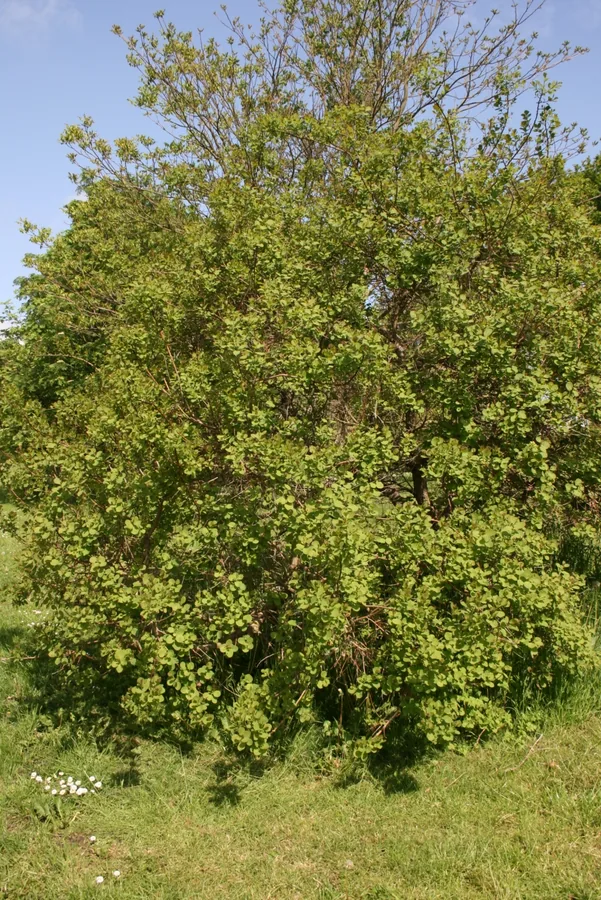
American Smoketree (Tree Form)
Cotinus obovatus
Plant it in poor, dry soil and full sun, and watch the American smoketree throw up a summer haze and light the fall on fire.
Full sun
Every 7–21 days
USDA 4–8
20–30 ft · 6.1–9.1 m
Overview
The American smoketree is a real showstopper of a native, named for the airy, smoke-like plumes that hover over its branches by early summer. Grow it as a single-trunk tree and it shoots up to 20 to 30 feet (6 to 9 m), taller and more upright than the European smokebush most gardeners meet first. It runs in the same family as cashews and sumacs, and it inherits their talent for flourishing where other plants throw in the towel.
The best part? It thrives on being left alone. Once its roots dig in, it powers through drought, moves right into poor, rocky, and alkaline limestone ground, and laughs off cold down to -29°F (-34°C). Even better, going lean pays you back, because the poorer the soil, the harder it flowers and the brighter it burns in fall.
Give it a little time and it delivers twice over. Growth is slow, sure, but every year it fires off that hazy summer bloom and then torches its leaves orange, red, and purple before they drop. Set it in full sun, keep the soil quick to drain, and it will keep the show running for decades.
Care
The short version: full sun, lean and sharp-draining soil, and steady water only while it is young. After that it powers through drought on its own, barely wants feeding, and needs just a light trim to keep its shape.
Light
Plant it in full sun and it rewards you with the heaviest flowering and the boldest fall color going. It will take partial sun or light shade, but every hour of shade shaves off some of that smoke and some of that autumn fire, so chase the sun.
Water
While it is young and rooting in, keep the water coming on a steady rhythm, about every 7 to 21 days as the weather dictates. Once it settles it turns drought tolerant and only wants a drink through a long dry spell. Just keep it out of soggy ground, because wet soil is exactly what disease is waiting for.
Soil
This tree grabs hold in lean, well-drained ground and shrugs off poor, dry, rocky, clay, and alkaline limestone spots that stop softer plants cold. It runs across a wide pH band from 5.5 to 8.5, so odds are you will never touch the soil.
Temperature
Cold or scorching, this tree keeps going, holding strong from -29°F to 100°F (-34°C to 38°C). That huge range is a big reason it performs so reliably across so many gardens.
Humidity
Forget chasing a humidity number, since plain outdoor air does the job. What really pays off is strong air movement and dry soil, because still, damp air is what lets leaf fungi and rust dig in.
Feeding
Go easy on the feeding, or skip it entirely, because this tree loves lean ground. Pile on fertilizer and you will knock back the flowers and fall color, so if you feed, keep it light and stick to spring.
Pruning
Pruning barely makes the to-do list. Jump in during late winter or early spring to shape it, cut out dead or crossing wood, and drive it toward a single trunk. Keep it light, though, because the smoke fires off wood from the year before, and a hard cut wipes the display out.
Repotting
Repotting almost never comes up, since this tree wants a forever spot in the ground. If you are running a young one in a pot, bump it up only when roots start circling the edge or breaking out the drainage holes.
Size & spacing
Plan big, because as a tree it powers up to 20 to 30 feet (6 to 9 m) tall and just about as wide. Give it plenty of open room away from buildings and other trees so the crown can stretch out and air can rip right through it.
When to plant
Timing is easy to get right. Get it in the ground while it is dormant, so spring or fall is your window, letting the roots dig in before heat or hard cold hits. The smoky bloom fires up in May and June, drifts through summer, and then autumn brings the real fireworks.
Northern hemisphere
Southern hemisphere
Typical months for a temperate climate: start earlier in warm zones, later where spring frosts linger.
- Plant: spring or fall
- Harvest: May to June, with the smoky display persisting through summer
Hardiness
USDA hardiness zones: 4–8
Temperature: down to -34°C
Troubleshooting
This tree keeps trouble to a minimum, and what little crops up nearly always starts with wet soil or a stressed plant. Keep an eye on the branches and leaves for the two issues below, and pounce early while it still counts.
Branches wilting out and dying back in patches
You are looking at verticillium wilt, a soilborne fungus that climbs the tree's water lines and shuts down branch after branch. Slice into a failing limb and dark streaks in the wood give it away. Nothing cures it, so cut the dead wood well below the damage, keep the tree watered through drought, and never drop a susceptible species back into that soil.
Fix:
- Prune out and destroy affected branches well below symptoms
- Keep the tree vigorous with appropriate water during drought
- Do not replant susceptible species in confirmed infested soil
Spots and orange pustules popping up on leaves
These are leaf spot and rust fungi, and they zero in on trees that are already stressed. Good news: the damage is skin-deep and hardly ever worth chasing. Rake up the fallen leaves, open the canopy so air can rush through, and fix whatever wore the tree down, be it a dry spell or a soggy site.
Fix:
- Rake and remove fallen infected leaves
- Improve air circulation and avoid overhead watering
- Reduce plant stress with proper siting and watering
Toxicity
Pet owners can relax and plant with confidence: the American smoketree is not toxic to pets or people and never lands on the ASPCA poison lists. The one thing to flag is the sap, which, like a sumac's, can nip sensitive skin, so pull on gloves before you dive into pruning.
Safe for
People · Cats · Dogs · Horses · Rabbits · Livestock · Birds
Cats None
A cat can chomp the leaves and walk away fine, since the tree packs no toxins that touch them.
Dogs None
Dogs are totally clear around it, and gnawing a leaf or twig does them no harm.
Horses Safe
Horses can graze right next to it with zero worries.
Rabbits Safe
Rabbits are in the clear too, since the foliage holds nothing that would bother them.
Livestock Safe
Cattle, goats, and sheep can graze the same pasture without a hitch.
Birds Safe
Birds can perch and feed all through the branches with nothing to fear.
People Safe
It will not poison you either, though the sap can leave sensitive skin irritated, so gear up with gloves before pruning.
The plant is in the Anacardiaceae (cashew/sumac) family, and its sap contains urushiol-type compounds that may cause mild contact dermatitis in sensitive people; wear gloves when pruning. This does not affect pet toxicity rating.
Varieties
Smoketrees split into the bigger American native and the flashier European types and their hybrids. The three below are the ones you will actually track down and train into a tree.
Cotinus obovatus (American smoketree, species)
The native is the big, tree-like heavyweight of the group, blazing orange-red-purple in fall and tearing into dry, rocky, and alkaline ground that stumps other plants.
Cotinus coggygria 'Royal Purple'
'Royal Purple' is the purple-leaved European smoketree, its foliage plunging to a near-black maroon; usually a multi-stemmed shrub, it trains up neatly into a small single-trunk tree.
Cotinus x 'Grace'
'Grace' is a vigorous European-American hybrid loaded with big purple-red leaves and a showy pink smoke, and it grows happily as a small tree.
How to propagate
Ready to make more? A smoketree grows from seed, from cuttings, or by layering, and your pick comes down to whether you are chasing the wild species or a named cultivar kept true.
SeedModerate
Fall (sow outdoors) or stratify for spring · 1-2 growing seasons
Seed is a fun long game if you have the patience. The seed comes dormant, so kick-start it with a cold spell, either sowing outdoors in fall or chilling it for a spring start, and germination climbs. The species grows true from seed, and a young plant charges into shape over one to two growing seasons.
Stem cuttingsModerate
Early to mid summer (softwood) · Several weeks to root, then 1-2 seasons
Grab softwood cuttings in early to midsummer and root them under mist, where they take hold in several weeks and then bulk up over the next season or two. This is your go-to for named cultivars, since only cuttings carry them true to the parent.
LayeringEasy
Spring · 1 growing season or more
Layering is the easiest win on the board. In spring, bend a low branch to the soil and pin it, let it root right there over a season or more, then cut it free as a ready-to-go plant.
Myths
The smoketree has to be dangerously poisonous, given its poison ivy and poison sumac cousins.
Same family, totally different result. Cotinus does not count as toxic to pets and never turns up on the ASPCA lists. The only thing to watch is the sap, which can irritate sensitive skin, so glove up before you prune.
American smoketree will only take off in rich, fertile, moist soil.
Flip that on its head. This tree wants lean, well-drained ground, powers through drought, and hits its stride on poor, dry, rocky, and alkaline sites. Drown it in water and fertilizer and you toss away the flowers and fall color instead.