Shrub · Anacardiaceae
Smoke Bush
Cotinus coggygria
Plant it in full sun with sharp drainage and watch smoke bush erupt into summer haze and fiery fall leaves.
Full sun
Every 7–14 days
USDA 4–8
10–15 ft · 3–4.6 m
Overview
Here is a shrub that rewards the gardener who loves a bit of drama. Smoke bush rockets up fast, drops its leaves each winter, and belongs to the cashew and sumac family, all while asking for almost nothing once it digs in. Give it space to run, because it charges up to 10 to 15 feet (3 to 4.5 m) in every direction.
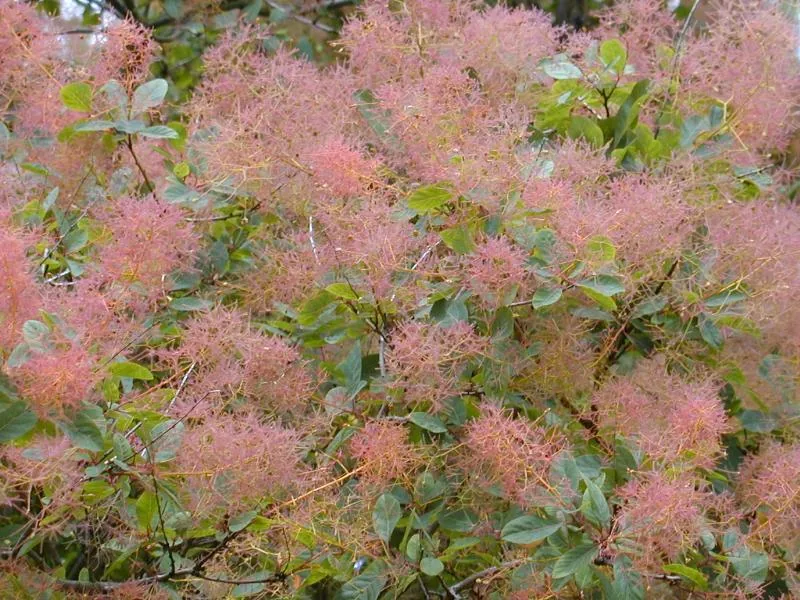
The real thrill is the color. Leaves swing from cool green to a deep, near-black purple depending on the pick, and most burst into orange and red once fall lands. Higher up, plumes lift off the faded flowers and hover like smoke drifting through the branches, a sight that keeps you coming back to look.
Best of all, it thrives on being left alone. Sun, lean ground, and sharp drainage are all it craves, and once rooted it powers through drought without blinking. Just steer it away from soggy soil, the one thing that trips it up, and it will run and run.
Care
The short version: plant it in full sun with fast-draining, lean soil, soak it deeply while it's young, then step back and let it rip. A settled smoke bush shrugs off drought, rarely wants feeding, and only asks you to prune for the payoff you're chasing, smoke or color.
Light
Drop it into full sun and the leaf color and smoke both hit their peak. It will get by in partial sun, but heavy shade drains the purple cultivars back toward green and flattens the haze, so chase the brightest spot you have.
Water
Keep the soil moist while your shrub is digging in, then back right off, because a settled plant turns drought tolerant and loves a deep soak every 7 to 14 days far more than constant sips. The one thing that stops it cold is wet, poorly drained ground, which rots the roots fast.
Soil
This one actually revels in tough ground. Plain, well-drained loam works, and it takes off just as happily in poor, rocky soil that would flatten a fussier shrub. It handles a big pH swing from 5.5 to 8.0, as long as the drainage stays sharp.
Temperature
Cold or heat, it barely flinches, powering through -29°F to 95°F (-34°C to 35°C) without missing a beat. That grit is exactly why it takes off in temperate gardens almost everywhere.
Humidity
Regular outdoor air is plenty, so forget about chasing a humidity number. Airflow is the real lever, since packed, damp foliage is where leaf spot and rust get their start, and a bit of breathing room keeps them out.
Feeding
Go easy on the feeding, or skip it entirely. A light spring shot of balanced fertilizer is all any plant might use, and most never touch it, because this shrub loves lean ground and sprawls leggy in soil that's too rich.
Pruning
Pruning is where you steer the whole show. A light early-spring trim guards the smoke display, which rides on old wood. Chasing knockout color on a purple cultivar instead? Coppice it hard in late winter down to 6 to 8 inches and swap that year's smoke for a rush of bold new growth.
Repotting
Smoke bush is built for open ground and rarely bothers with a pot. If you do run one in a container, only size it up when the roots start circling or water blasts straight through, both clear cues it's ready to move on.
Size & spacing
Give it room to really cut loose. A mature smoke bush fills 10 to 15 feet (3 to 4.5 m) tall and wide, so set it well clear of paths, walls, and smaller plants from day one and let it stretch out.
When to plant
Smoke bush is a tough customer across zones 4 to 8, going into the ground in spring or fall the moment hard frost clears. The smoke really gets rolling from late spring through summer, with the flowers popping open May to July before their stalks blow out into that haze.
Northern hemisphere
Southern hemisphere
Typical months for a temperate climate: start earlier in warm zones, later where spring frosts linger.
- Plant: Spring or fall, after the last hard frost
- Harvest: Smoke display from late spring through summer (flowers May to July)
Hardiness
USDA hardiness zones: 4–8
Temperature: down to -34°C
Troubleshooting
A thriving smoke bush hardly ever slows down, and the few issues that crop up are quick to spot. Keep an eager eye on the branches for sudden wilt and the leaves for spots, and pounce early. Match what you see below and you'll shut trouble down fast.
One side of the shrub crashing and dying back
When branches suddenly wilt, yellow, and die off, often on a single side, the usual suspect is verticillium wilt, a soil fungus that jams the plant's water lines from inside and drops whole limbs. Slice into a fading stem and dark streaks jump out in the wood under the bark. No spray beats it, so move fast: cut out the dead wood, disinfect tools between every cut, and pull a lost plant rather than set another in the same ground.
Fix:
- Prune out and destroy affected branches, disinfecting tools between cuts
- Improve drainage and avoid overwatering
- Remove and destroy severely infected plants; do not replant susceptible species in the same spot
Hard little crusts gripping the stems
Those tiny gray-to-brown crusts clamped onto the bark are San Jose scale, sap-sucking insects hunkered under a hard shell that slowly drain a branch's strength. Flick one and it lifts right off. Cut out the worst wood, then hit the rest with a dormant horticultural oil in late winter, before the scale springs back to life.
Fix:
- Prune out and destroy heavily infested branches
- Apply dormant horticultural oil in late winter to smother overwintering scale
Speckled leaves or rusty spots below
Damp, crowded growth throws the door open to leaf spot and rust, peppering the leaves with spots or coating the undersides in orange-brown pustules. It looks rough but rarely lays a glove on an established shrub. Rake up the fallen leaves and toss them, open the plant up for airflow, and keep water off the foliage.
Fix:
- Rake up and dispose of fallen infected leaves
- Improve air circulation and avoid overhead watering
Toxicity
Pet owners and parents get to relax, because smoke bush is not toxic. It never turns up on the ASPCA's poison lists, and no animal has to keep its distance. The lone catch is a small one for people, since the sap can spark a mild rash on anyone who reacts to poison ivy, so grab gloves before you prune and dig right in.
Safe for
People · Cats · Dogs · Horses · Rabbits · Livestock · Birds
Cats None
Smoke bush never lands on the ASPCA toxic list, so a curious cat that grabs a leaf has nothing to worry about.
Dogs None
A dog can crash through the branches or chomp a leaf and walk away fine, since the shrub packs no toxin to bother one.
Horses Safe
No horse poisoning has ever been traced to smoke bush, so a grazing mouthful is nothing to sweat.
Rabbits Safe
Rabbits can work over the low branches and stay perfectly fine, because the plant holds nothing that hurts them.
Livestock Safe
Cattle, goats, and sheep can graze right alongside this shrub with zero poisoning risk.
Birds Safe
Birds nesting or foraging around a smoke bush are in the clear, whether it's the leaves, the stems, or the fluffy seed heads.
People Safe
It's a great plant to grow, though anyone touchy about poison ivy might catch a mild rash from the sap, so pull on gloves before you prune.
As a member of the Anacardiaceae (cashew and sumac family), contact with the sap may cause mild contact dermatitis in sensitive people, especially those allergic to poison ivy. Wear gloves when pruning if you are sensitive.
Varieties
Almost every smoke bush at the nursery is a named cultivar, bred for standout leaf color or a bigger burst of smoke. These are the ones that will grab you first.
Royal Purple
A compact purple-leaved standout that opens maroon-red in spring and drives to a near-black purple, gripping that color straight through summer.
Golden Spirit ('Ancot')
Bright golden-yellow leaves that ignite into orange and red come fall, a bold break from the usual green and purple crowd.
Young Lady
A compact green-leaved form that pumps out clouds of smoky panicles even while the plant is still young.
Velvet Cloak
Deep purple foliage teamed with big pink panicles on a bigger shrub that can shoot up to the top of the size range.
How to propagate
Multiplying smoke bushes is genuinely fun, though the cultivars only stay true from cuttings or layers. Craving one or two more for the garden? Layering is the surest, most satisfying place to jump in.
Stem cuttingsModerate
Early to mid summer · Several weeks to root; a full season to establish
Grab softwood or semi-hardwood cuttings off the current season's growth in early to mid summer. They take several weeks to root and a full growing season to settle, so let them build at their own pace.
LayeringEasy
Spring to early summer · One growing season or more to root
The easiest win is layering in spring or early summer. Bend a low, whippy branch to the soil, pin it down, and let it root over a season or more before you cut it free from the parent.
SeedModerate
Fall sowing or after cold stratification · Slow; seedlings of cultivars will not come true to type
Seed is the play for the plain species, sown in fall or after a cold stratification. It's a slow burn, and seedlings off named cultivars won't come true, so raise those from cuttings or layers instead.
Myths
That pink haze is a burst of flowers.
Not quite, since the true flowers are tiny, yellowish, and simple to miss. The smoke is really the spent flower stalks, which shoot out into long, feathery hairs that shift from smoky pink to purplish pink as summer builds.
Cut it back hard every spring for maximum smoke.
It backfires, because smoke rides on old wood, so a hard yearly cut hands you foliage instead of haze. Coppice in late winter and you unlock bold leaf color but zero smoke that season, the exact reason growers run purple cultivars for their leaves.