Shrub · Caprifoliaceae
Beautybush
Kolkwitzia amabilis
A rewarding, arching shrub that erupts in pink, bell-shaped flowers every spring.
Full sun
Every 7–14 days
USDA 4–8
6–10 ft · 1.8–3 m
Overview
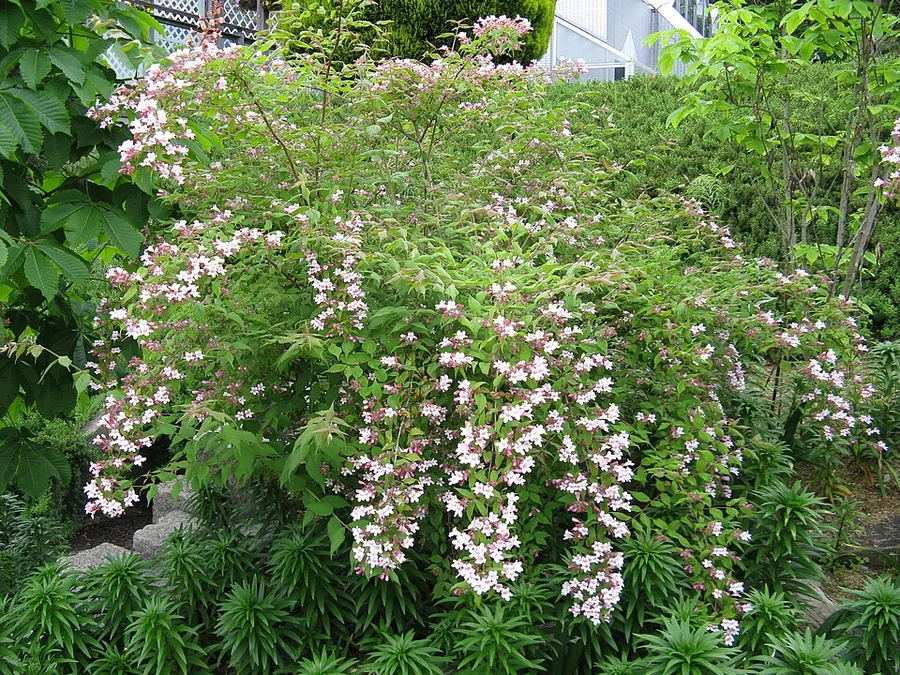
Mid spring is when beautybush truly takes off, flinging its arching, vase-shaped branches under hundreds of soft pink bells, each one lit by a yellow throat. The rest of the year it anchors the garden as a steady backbone, and its peeling bark keeps the interest going right through winter. It hails from the honeysuckle family and roamed wild in China before gardeners carried it west.
Growing this one pays off fast, because it just keeps shrugging things off. It powers through clay and drought, rides out cold down to -29°F (-34°C), and brings no real pest or disease problems along with it. Deer breeze right past it, which is a genuine win wherever browsing has been wrecking the garden.
Hand it some space and it tears into the job. A mature shrub climbs to 6 to 10 feet (1.8 to 3 m) tall and spreads just as wide, fountaining outward instead of standing stiff. Plant it where that loose, open shape can stretch out freely, and it asks for almost nothing beyond a well-timed prune.
Care
The short version: plant it in full sun and average, well-drained soil, water it hard through the first season to drive deep roots, then step back, leave it be, and prune only right after it blooms.
Light
Beautybush flowers hardest in full sun, which works out to six or more hours of direct light a day. It will still grow in partial shade, but every hour of shade chips away at that spring bloom.
Water
Water it hard through its first growing season so the roots punch down deep. After that it runs on its own and powers through both drought and heavy clay, so a good soak every 7 to 14 days in a dry stretch keeps it happy.
Soil
Average, well-drained ground is all it demands. It grabs hold in clay, loam, or sand and rolls with a wide pH band from 5.5 to 8.0, acid through alkaline, so just about any garden soil will do the trick.
Temperature
Hardy across USDA zones 4 to 8, beautybush blasts through winters down to -29°F (-34°C) and summer heat up to 100°F (38°C) without flinching.
Humidity
Outdoor humidity barely registers for this shrub, so there is no level to chase. It thrives in muggy summers and dry ones alike.
Feeding
As a low-maintenance shrub, it wants next to no feeding. A balanced general-purpose fertilizer or a topdressing of compost in spring does it, and plenty of gardens skip even that and lose nothing.
Pruning
Timing drives the whole thing here, because beautybush blooms on old wood. Prune right after the flowers fade, knocking out some of the oldest stems at the base to keep the form open. Dodge late-winter or early-spring cuts, which strip off that season's flower buds.
Repotting
This landscape shrub rarely needs repotting, so it stays out of your way. If you do start a young one in a container, bump it up the moment roots circle the pot or the soil dries out fast, then drive it into the ground.
Size & spacing
A full-grown beautybush shoots up to 6 to 10 feet (1.8 to 3 m) tall and spreads just as wide. Hand it that much room from day one so the arching branches can fountain out with room to spare.
When to plant
Get beautybush in the ground in spring or fall, while the weather stays mild and the roots can dig in before heat or hard cold hits. The big payoff lands in mid to late spring, around April into May, as the pink flowers fire up along last year's wood.
Northern hemisphere
Southern hemisphere
Typical months for a temperate climate: start earlier in warm zones, later where spring frosts linger.
- Plant: Spring or fall
- Harvest: Mid to late spring (April to May)
Hardiness
USDA hardiness zones: 4–8
Temperature: down to -34°C
Troubleshooting
This shrub barely puts a foot wrong, and almost everything that does slip traces straight back to pruning at the wrong moment. Match what you spot below and the fix usually comes down to nailing the timing.
Few or no flowers in spring
A bloomless spring almost always traces straight back to the pruning calendar, since beautybush builds its buds on old wood. Cut it in late winter or early spring and the shears carry off the buds that were ready to burst open. Shade tamps the show down too, so move it into full sun and put the pruners away until the flowers wrap up.
Fix:
- Prune only immediately after flowering ends
- Relocate or thin surrounding plants to provide more direct sun
A dense, twiggy shrub that looks unkempt with age
Skip the pruning for a few years and beautybush stacks up old stems until the center jams into a crowded thicket that barely flowers. Renewal pruning turns it right around. Slice a handful of the oldest canes to the ground just after bloom each year, and the shrub springs open and throws its energy into vigorous new wood that flowers hard.
Fix:
- Remove a portion of the oldest stems at ground level after flowering
- Thin congested growth to open the form
Toxicity
Beautybush slots happily into a garden full of pets, livestock, or kids. It stays off the ASPCA's toxic list and packs no known poison in its leaves, stems, or fruit. It grows to be admired rather than eaten, so there is nothing here to slow you down.
Safe for
People · Cats · Dogs · Horses · Rabbits · Livestock · Birds
Cats Safe
Let a curious cat poke around the foliage all it likes, because beautybush stays off the ASPCA toxic list. A big mouthful might stir up a little stomach upset, but no poison ever enters the picture.
Dogs Safe
A dog can charge through the branches or grab a leaf without running into any real risk from this shrub. The most a greedy nibble kicks up is some mild, passing tummy trouble.
Horses Safe
A horse grazing nearby hits no trouble, since nothing in beautybush is known to harm one. It grows as an ornamental rather than feed, so it pulls little interest in the first place.
Rabbits Safe
Rabbits, wild or kept, can nibble the leaves and come away just fine. Better still, deer and rabbits both tend to skip the shrub entirely.
Livestock Safe
Cattle, goats, and sheep run into no toxic threat from this shrub if they grab a stray branch along the fence line. It simply never works as a feed plant.
Birds Safe
Birds dart safely through this shrub and often shelter in its arching, twiggy growth. Even its dry, capsule-like fruit packs nothing toxic.
People Safe
Beautybush grows as a landscape shrub, not a food plant, and it carries no known toxin, so nothing here worries a gardener or a child. Just keep in mind it earns its spot for looks, not for eating.
No special handling precautions noted; routine garden hygiene (wash hands after pruning) is sufficient.
Varieties
The straight species already delivers, but a couple of named selections crank up either the flowers or the foliage. Track these down and run with them.
Pink Cloud
Chase this selection for clear pink flowers a notch bigger than the wild form, packed on so thickly the whole shrub disappears into bloom.
Dream Catcher ('Maradco')
Grab this one for foliage that bursts out copper, races through yellow and golden chartreuse, then blazes into orange and gold to close the year.
How to propagate
Crank out more beautybush from cuttings, by splitting an old clump, or from seed, and the route you grab mostly sets how long you will wait.
Stem cuttingsModerate
Late spring to early summer using softwood cuttings · Several weeks to root; one or more seasons to establish
Reach for softwood cuttings and stack the odds in your favor for making more beautybush. Snip them in late spring or early summer while the stems still flex and run green. They strike roots over several weeks, then dig in for a season or more in the ground before they hit full stride.
DivisionModerate
Dormant season · One growing season
An older clump pushes up suckers and basal shoots that you can lift and replant in a fresh spot. Tackle it in the dormant season while the plant rests. Give each piece about a growing season and it powers into place.
SeedModerate
After collecting ripe capsules · Multiple years to reach flowering size
Seed runs the long game, so brace for a wait. Gather the dry, capsule-like fruits the moment they ripen and sow them, knowing a seedling crawls along for several years before it reaches flowering size. That slow climb is exactly why most growers fire up cuttings instead.
Myths
Beautybush should be cut back hard in late winter like many summer-blooming shrubs.
Plenty of summer bloomers crave that hard late-winter chop, so the mix-up makes sense, but beautybush flips the script. It flowers on old wood, so a late-winter or early-spring cut hacks off the exact stems that were gearing up to bloom. Hold off until the flowers fade, then prune.