Ornamental · Caprifoliaceae
Pincushion Flower
Scabiosa columbaria
Plant it in full sun with sharp drainage and the pincushion flower keeps firing off blooms from spring to frost.
Full sun
Every 5–10 days
90–120 days
USDA 5–9
Overview
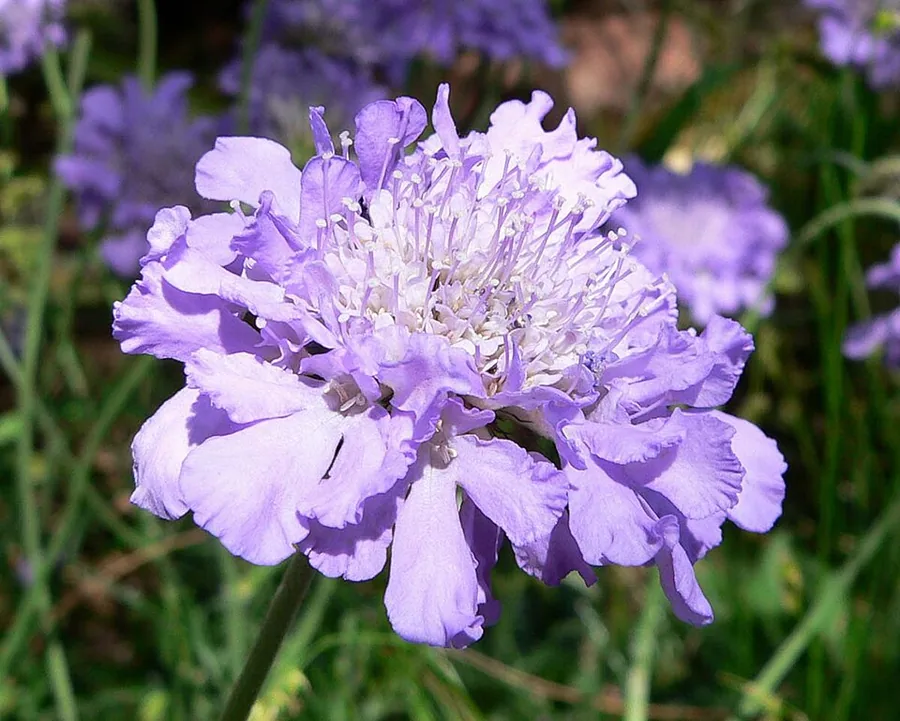
The pincushion flower shows off exactly what its name promises. Every bloom builds a rounded, domed center packed with tiny stamens that stand up like pins in a cushion, and it is a delight to watch open. This hard-working perennial in the honeysuckle family stays compact at the front of a border and keeps flowering for months on end, so the show never really pauses.
Pollinators flock to it. Bees and butterflies swarm the lavender-blue and soft pink blooms from late spring onward, turning any pollinator border into a busy, buzzing patch. Better still, cut a handful of stems for the vase and the plant fires right back with more, so harvesting only keeps the flowers coming.
Once it takes hold, it rewards you and asks almost nothing in return. It powers through dry spells, deer tend to skip it, and it carries no toxin, so it stays a safe pick around pets and kids. Give it sharp drainage and it flourishes; the only thing that stops it cold is soil that stays soggy, especially over a wet winter.
Care
The short version: full sun, fast-draining soil, and water only once the top half dries out. Keep deadheading to drive nonstop bloom, and split the clump every few years to keep it charging along.
Light
Hand it full sun and it flowers with real gusto, though it will take a little afternoon shade where summers turn brutal. Push it into deep shade, though, and it trades those blooms for soft, leggy stems, so keep it bright.
Water
Let the top half of the soil dry out before you water, which usually lands around every 5 to 10 days. Once it is established this plant powers through drought, and it resents soggy roots far more than a dry stretch, especially over winter.
Soil
Sharp drainage is what unlocks this plant. Drop it into well-drained loam or sandy loam loaded with organic matter, along a pH range from a mildly acidic 6.0 to an alkaline 8.5. Just keep it clear of heavy soil that traps water, which is the one thing that will sink it.
Temperature
This is a genuinely tough customer, hardy from -20°F to 90°F (-29°C to 32°C). It storms through cold winters in zones 5 to 9 and keeps right on flowering through everyday summer heat.
Humidity
Ordinary outdoor humidity is all it wants, so skip chasing a number. Far more important is air moving freely around the leaves, because still, muggy air rolls out the welcome mat for powdery mildew.
Feeding
Go easy, since this is no heavy feeder. A balanced all-purpose feed or a light spring topdressing of compost does the job, and piling on more just pumps out soft, floppy stems.
Pruning
Deadhead the spent blooms as they fade and the plant keeps launching fresh flowers for months. Cut worn stems right back to the base now and then to spark vigorous new growth from the crown.
Repotting
Out in the garden it mostly runs itself, but the clump thrives on a division every 3 to 4 years. Fewer flowers, a woody crowded center, and a clump losing its drive are your signals to lift and split it.
Size & spacing
It stays compact, hitting 12 to 18 inches (30 to 46 cm) tall and nearly matching that in width at 9 to 18 inches (23 to 46 cm) across. Space each one that far apart to keep air rushing through and mildew shut out.
When to plant
Treat it as a cool-season perennial that powers through winters down to zone 5. Fire up seed indoors a month or two before your last frost, move the plants out once the cold clears, and the blooms roll from late spring right up to the first hard frost.
Northern hemisphere
Southern hemisphere
Typical months for a temperate climate: start earlier in warm zones, later where spring frosts linger.
- Sow: 4 to 8 weeks before the last spring frost
- Plant: After danger of frost has passed in spring
- Harvest: Blooms from late spring (April to May) until first frost
Hardiness
USDA hardiness zones: 5–9
Temperature: down to -29°C
Troubleshooting
Scabiosa keeps things easy, and nearly all of its hiccups come down to wet soil or overcrowding rather than anything strange. Keep watch on the crown and the fresh growth, since that is where trouble tips its hand first. Spot your symptom below and jump on it early to keep the plant surging.
Plant crashes down with black stems and soft, brown roots
A sudden crash with blackened stem bases spells root rot, and it almost always kicks off in soil that holds water, worst over winter. Dig in at the crown and you will turn up dark, mushy roots where firm pale ones belong. Move fast: lift the plant, drive grit or compost through the bed to sharpen drainage, and replant only the healthy divisions somewhere higher and drier.
Fix:
- Improve drainage by amending soil with grit or organic matter
- Avoid overwatering and remove affected plants
- Replant healthy divisions in a well-drained site
Twisted new shoots and a sticky glaze on leaves and buds
Sticky foliage and warped tips flag aphids attacking the tender new growth, sometimes with mites or whiteflies piling on. Flip the leaves and scan the growing tips to catch the little clusters. Blast them off with a hard jet of water, then knock out any survivors with insecticidal soap.
Fix:
- Spray off pests with a strong stream of water
- Apply insecticidal soap if needed
A powdery white film racing across the leaves
A chalky white coating means powdery mildew, which takes off when crowded plants sit in stale, stagnant air. Open the clump up by thinning and spacing to get air rushing through, and rip off the worst-coated leaves. Keep it in full sun and water low at the soil instead of across the leaves to shut it right down.
Fix:
- Improve air circulation by spacing and thinning
- Remove affected foliage
Toxicity
Pet owners get to relax completely here, because the pincushion flower is safe. Nothing about it lands on the toxic list for cats, dogs, horses, or any other animal, and it holds no compound that could bother a person handling it. Plant it wherever the family and the animals roam and just enjoy it.
Safe for
People · Cats · Dogs · Horses · Rabbits · Livestock · Birds
Cats Safe
Cats are perfectly safe alongside this plant, and a quick curious bite does nothing to hurt one. Gorge on any greenery and a cat might get sick, sure, but that is the bulk, not a toxin.
Dogs Safe
Dogs have zero to fear here. The plant never made the ASPCA toxic list, so a nibbled leaf here and there means nothing at all.
Horses Safe
Horses can graze right up against these borders with no trouble, since nothing in it is toxic to them.
Rabbits Safe
Rabbits can nibble away without harm too. Just ease any fresh green in slowly so a delicate gut has time to catch up.
Livestock Safe
Cattle, goats, and sheep roam around the plant safely, since nothing in it will upset grazing animals.
Birds Safe
Birds face no danger from the flowers or seed heads, and plenty swoop in to raid the nectar and seed regardless.
People Safe
It is completely safe to handle and holds nothing poisonous to people. It earns its place for the flowers, not the plate, so there is no edible part to it.
No special handling precautions required; generally safe around pets and children.
Varieties
Two standout named forms lead the pack, and both deliver. These are the two worth chasing down.
Butterfly Blue
Butterfly Blue flaunts lavender-blue flowers that snagged the 2000 Perennial Plant of the Year award and a spot on the Missouri Botanical Garden's Plants of Merit.
Pink Mist
Pink Mist keeps things compact and piles on frilly, soft pink pincushion blooms, and it really pops planted right next to Butterfly Blue.
Companions
Pincushion flower pairs naturally with other sun-loving perennials that share its taste for well-drained ground and keep the pollinators coming all season.
Plant near
Scabiosa Pink Mist: Complementary pincushion blooms recommended for grouping in border fronts and rock gardens.
Other sun-loving border perennials: Shares full-sun, well-drained conditions and supports a continuous pollinator display.
How to propagate
Multiplying pincushion flowers is a blast: raise a fresh batch from seed, or split a plant already going strong. Both routes rank among the easiest wins in the garden.
SeedEasy
Start indoors 4 to 8 weeks before last spring frost · Germinates in about 2 to 3 weeks; flowers in roughly 12 to 16 weeks from seed
Kick seed off indoors 4 to 8 weeks before your last spring frost. The seed craves light to sprout, so barely cover it and hold the tray at 65°F to 70°F (18°C to 21°C), and seedlings burst through in two to three weeks. From there it charges to its first flowers in roughly 12 to 16 weeks.
DivisionEasy
Early spring or fall when not in bloom · One growing season
Grab an established clump and split it in early spring or fall while it is out of bloom. Repeat every few years to stop the center turning woody and keep the flowers pumping. Each division digs in and puts down fresh roots across one growing season.
Myths
Pincushion flower poisons cats and dogs.
Not a chance. No record ties Scabiosa columbaria to any harm in pets. It grows as a pollinator border perennial, and the entire genus stays off the ASPCA toxic plant list. Grow it with total confidence around cats and dogs.