Ornamental · Asteraceae
African Daisy
Osteospermum ecklonis
Hand it full sun, fast drainage, and cool air, and the African daisy erupts into nonstop bloom.
Full sun
Every 3–7 days
50–75°F · 10–24°C
USDA 10–11
Overview
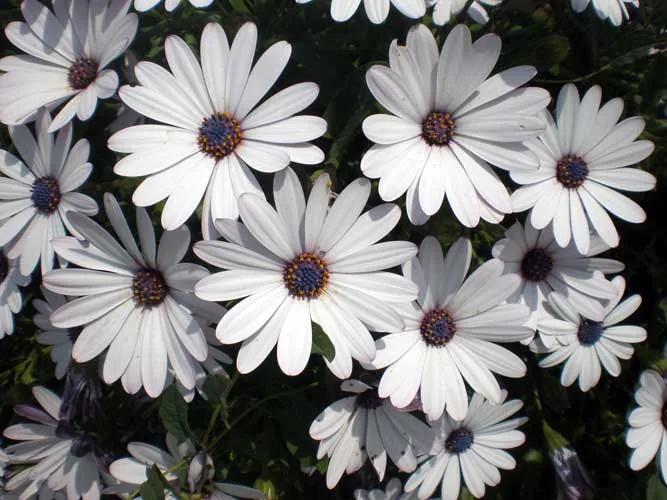
The African daisy belongs with the sunflower crew and hails from southern Africa, the homeland that handed it the names Cape daisy and Cape marguerite. Through most of the country gardeners grow it as an outdoor flowering annual, where it piles up or spills into a low pad of gray-green foliage capped by daisy-shaped heads. Every bloom shoots up on a skinny stalk and flares open into a bright wheel of rays circling a middle disk that jumps out in another shade.
Here is the move that splits it from a true daisy. The petals clamp shut after dark and under dim light, then throw themselves open when the sun climbs, so a planting that read as empty at dawn floods with color by mid-morning. This one is a tender perennial that only muscles through winter in zones 10 and 11, and everywhere chillier, gardeners just start it over each spring and let it run as an annual.
Its laid-back reputation earns every bit of trust. Give it sunshine and quick-draining ground, stay sharp about removing the finished blooms, and it churns out flowers from late spring deep into fall. The single thing that throws it off stride is a hot, muggy summer, which can park the bloom until milder weather fires it back up.
Care
The short version: full sun and loose, fast-draining soil are the two things that really move the needle. Hold the soil evenly moist without drowning it, feed with a light hand, and keep snapping off the spent flowers so fresh ones keep firing.
Light
African daisies thrive in full sun, soaking up at least 6 hours of direct light a day to flower flat out. They will get by in partial sun, but shade swaps flowers for floppy, stretched stems. Bonus: a sunnier spot dries the foliage and keeps mildew on the back foot.
Water
Keep the bed evenly damp yet never waterlogged, because pooled water turns roots to mush fast. After it digs in, the plant powers through a brief dry stretch, though it blooms hardest on a reliable drink. Wait for the surface to firm up between waterings, landing near every 3 to 7 days as warmth climbs.
Soil
Plant it in a loose bed that drains in a hurry, eased with a touch of organic matter, since quick drainage is what keeps this daisy charging. Acidity barely registers, and it cruises across a pH of 5.5 to 7.5. The lone obstacle to knock out first is dense, sopping clay.
Temperature
This cool-season plant hits its stride between 50°F and 75°F (10°C to 24°C). Bloom downshifts once a hot, humid summer barges in, then surges back as the air cools. Frost shuts the plant down across most regions.
Humidity
Plain outdoor humidity is all it needs, so skip chasing a number. Airflow is the real driver, since still, crowded conditions are exactly where powdery mildew sinks in its hooks.
Feeding
Keep the feeding light and the plant rewards you. A balanced slow-release fertilizer or a bit of compost through the growing season is plenty, applied seasonally. Go overboard and you grow piles of leaves with hardly any flowers, since extra nitrogen drives foliage past bloom.
Pruning
Pop off the faded heads the second they brown and the plant launches a fresh batch. Pinch young tips early to drive a denser, rounder mound. Trim back any rangy, trailing stems from late summer into autumn to whip the clump back into line.
Size & spacing
A grown plant shoots up 12 to 35 inches (30 to 90 cm) tall and stretches 9 to 24 inches (23 to 61 cm) wide. Give each one space to hit its full spread so air rips through and the leaves stay dry.
When to plant
This outdoor grower wants warm soil underfoot but cool air overhead. Fire up the seed indoors 6 to 8 weeks before the last frost, push the plants outside once frost clears and the ground warms, and you are off, with blooms running from late spring into fall and peaking while the weather stays cool.
Northern hemisphere
Southern hemisphere
Typical months for a temperate climate: start earlier in warm zones, later where spring frosts linger.
- Sow: 6 to 8 weeks before the last spring frost
- Plant: after the last spring frost when soil has warmed
- Harvest: late spring through fall, blooming most heavily in cool weather
Hardiness
USDA hardiness zones: 10–11
Temperature: down to -1°C
Troubleshooting
Nearly every African daisy stumble traces to one of two things: wet feet or a scorching summer. Catch the first clues on the flowers and lower leaves and you can jump in before a small snag spirals. Match the case below, then move while a quick fix still pays off.
Drooping and yellowing climbing up from the base
Most often the villain is root rot, which strikes when soggy soil chokes the roots and turns them brown and mushy. Watch out for verticillium wilt too, since it triggers the very same droop and fade. Dry the soil out between waterings, yank any plant that has truly given up, and steer fresh daisies well clear of ground that stayed infected.
Fix:
- Improve drainage and let soil dry between waterings
- Remove and discard severely affected plants
- Avoid replanting susceptible species in infected soil
New growth twisting up and turning sticky
Those tiny soft-bodied troublemakers are aphids, swarming the shoot tips and leaf undersides to drink sap and leave a sticky film in their wake. Hit them with a sharp jet of water and you will knock most of the crowd loose at once. Chase any holdouts with insecticidal soap, then let a few ladybugs move in and clean up the stragglers.
Fix:
- Spray off with a strong jet of water
- Apply insecticidal soap if populations persist
Blooms taper off when the heat rolls in
Hang in there, because this is a cool-season bloomer and plenty of cultivars simply downshift through the hot, sticky middle of summer. Pile on the nitrogen and the slump only digs in deeper, since the plant throws its energy into leaves over flowers. Back off the feeding, keep snapping off the dead heads, and the blooms rush right back the moment cooler air arrives.
Fix:
- Site in a spot with cooler conditions and good air flow
- Reduce fertilizer and avoid high-nitrogen feeds
- Deadhead regularly to promote rebloom when cool weather returns
A chalky white film creeping over the leaves
That dusty layer is powdery mildew, a fungus that pounces when damp, stagnant air hangs around plants packed in tight, then keeps marching across the leaves. Spread the plants out and get a breeze flowing through them. Water down at the base instead of overhead, and pull off whatever foliage has taken the biggest hit.
Fix:
- Improve air circulation and spacing
- Avoid overhead watering
- Remove affected foliage
Toxicity
Anyone juggling pets or kids will love this part. The African daisy rates non-toxic, and approved sources clear it for cats, dogs, and horses across the board. If a pet or a toddler grabs a taste, nothing bad follows, so plant this daisy with full confidence right where the family runs around.
Safe for
People · Cats · Dogs · Horses · Rabbits · Livestock · Birds
Cats Safe
Cats get the green light here, so a curious bite of a leaf will leave them perfectly fine.
Dogs Safe
Dogs can sprawl right beside it or grab a chew, and nothing in the plant will poison them.
Horses Safe
Trusted sources wave it through for horses, since the plant packs no toxic compounds.
Rabbits Safe
Rabbits are clear to be around it, though leafy greens should stay just a small part of their menu.
Livestock Safe
Goats, sheep, and cattle can graze close by with no poisoning risk hanging over them.
Birds Safe
Pet birds and backyard hens can root around the plant happily and run into no trouble.
People Safe
It is harmless to people, so plant it boldly where toddlers and young kids play.
Varieties
A whole crowd of plants answers to African daisy, but the garden Osteospermum really comes down to the species plus a handful of named picks. These are the ones worth chasing by name.
Osteospermum ecklonis
This is the original parent that most hybrids spring from, a woody-based grower that mounds or trails and flashes white rays around a blue-purple eye.
Bright Lights series
A compact hybrid lineup that has earned its stripes in university trial gardens, chosen for punchy flower colors and a long, hardworking run of cool-season bloom.
Wildside
A named pick that plant-finder records flag for the surprising twist in its flower coloring.
How to propagate
African daisies launch from either cuttings or seed, and the call usually hinges on which variety landed in your hands. Most named hybrids only stay true when you grow them from cuttings.
Stem cuttingsModerate
During active growth in the growing season · Roots typically form in about 4 to 5 weeks under mist or a humidity tent
Chasing a plant that matches its parent dead on? Reach for cuttings, which is exactly why most named hybrids get propagated this way instead of from seed. Snip a tip while the plant is charging ahead, dunk the cut end in rooting hormone, and tuck it into a moist soilless mix. Park it under mist or a humidity tent and the roots push out over roughly 4 to 5 weeks.
SeedModerate
Sow indoors 6 to 8 weeks before the last spring frost · Several weeks to transplant size before moving outdoors after frost
Plenty of cultivars will sprint up from seed, even though most garden hybrids stick with cuttings. Kick them off indoors 6 to 8 weeks before the last spring frost, and let the seedlings spend several weeks bulking up to transplant size before they launch outdoors once the cold has cleared off.
Myths
African daisies bloom best in the heat of summer.
It actually runs the opposite direction. Osteospermum cranks out its best flowers in cool weather, and tons of cultivars practically take five through a hot, humid summer. Run it as a cool-season plant and the show keeps rolling far longer.
Every plant called African daisy is the same one, and it is toxic.
It is easy to see how the scare gets going, since a pile of unrelated plants all grab this same name. But yours is Osteospermum in the Asteraceae family, and approved sources tag it as non-toxic to cats and dogs.