Ornamental · Asteraceae
Chocolate Cosmos
Cosmos atrosanguineus
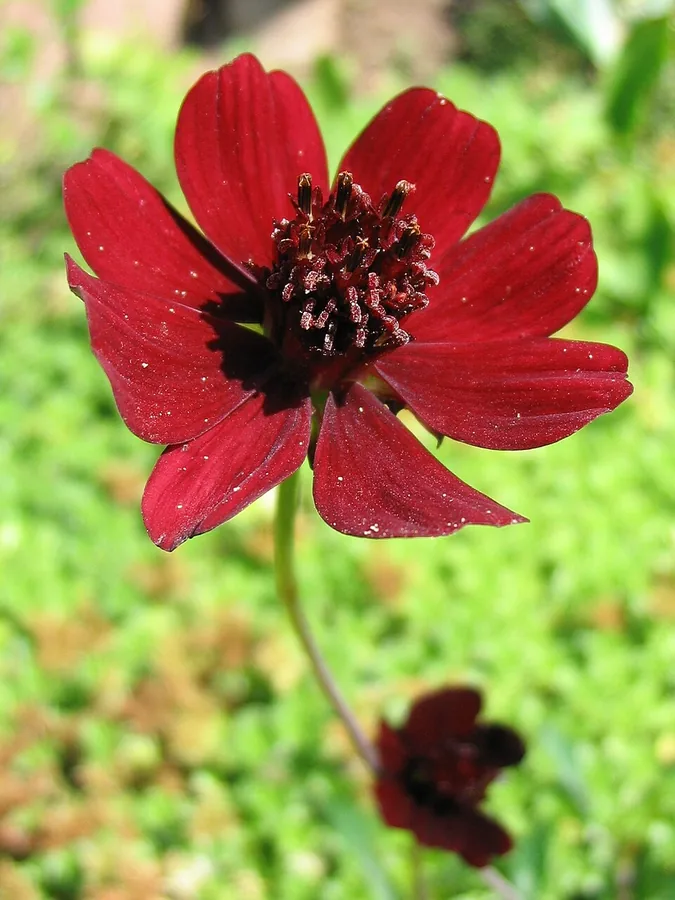
Deep maroon blooms that genuinely smell of dark chocolate, rising from a tender tuber you handle much like a dahlia.
Full sun
USDA 7–9
2–3 ft · 0.6–0.9 m
Overview
Chocolate cosmos lives up to its name on both fronts, pairing petals the shade of dark chocolate with a matching scent that lifts on a warm afternoon. A daisy-family native of Mexico, it grows from a small tuber rather than fibrous roots. Nearly every plant you'll buy descends from one sterile clone, handed down by division across generations.
It keeps a compact frame, topping out at 2 to 3 feet (61 to 91 cm), lifting its flowers on slender stems above ferny leaves. Blooms break open from early summer and run deep into fall, so it keeps the color coming in a border or a container for months. Snip a few stems for a vase and that chocolate scent drifts indoors.
Think of it as a tender perennial. It returns each year only where winters stay mild, so in colder spots most growers lift the tubers and keep them dry, exactly as they would with a dahlia, and set them back out in spring.
Care
The short version: full sun, ordinary soil that sheds water fast, and a light hand with the hose. Let the top half of the soil go dry between drinks, feed lightly, and keep those tubers out of soggy ground.
Light
Hand chocolate cosmos a spot in full sun, one that catches direct light through most of the day. Strong light is what pulls out the richest petal color and keeps those slim stems compact instead of leggy and toppling.
Water
Go light on the water and wait until the top half of the soil dries before the next round. The plant shrugs off dry to average conditions, but wet ground rots the tubers in a hurry, so lean dry and never leave it standing in moisture.
Soil
Set it in average, well-drained soil with moderate fertility. Sharp drainage beats richness every time for this one, since the tubers can't pull through in heavy, soaked ground. Mix in grit or build a raised bed if your soil clings to water.
Humidity
Everyday outdoor humidity does the job, so there's no target to hit. Moving air matters far more, because tight, stagnant spots are what usher powdery mildew onto the foliage.
Feeding
A light feed across the growing season covers it. Overdo it and you'll grow leaves where you wanted flowers, so keep it modest and steer the plant's energy toward blooms.
Pruning
Deadhead the faded flowers as they go over and the plant keeps cranking out fresh buds for longer. Snip off any battered or diseased growth the moment you catch it to keep things tidy.
Size & spacing
Plan for a plant 2 to 3 feet (61 to 91 cm) tall spreading 12 to 24 inches (30 to 61 cm) across. Leave space between plants so air can flow freely, and you'll hold mildew off.
When to plant
Chocolate cosmos holds out for warmth and has no patience for frost. Where it isn't hardy, get fertile strains going indoors in early spring, move plants outside once the chill lifts in late spring, and the flowers carry you from early summer right through fall.
Northern hemisphere
Southern hemisphere
Typical months for a temperate climate: start earlier in warm zones, later where spring frosts linger.
- Sow: early spring (seed-grown strains only)
- Plant: late spring after last frost
- Harvest: early summer to fall
Hardiness
USDA hardiness zones: 7–9
Temperature: down to -18°C
Troubleshooting
Most snags with chocolate cosmos begin below the soil or in stagnant, packed-in air. Spot the first warning signs and the cures are quick. Match what you're seeing below, then jump in before it spreads.
Mushy tubers and a plant that flops or caves in
What you've got here is tuber and root rot, and the trigger is soil that holds water too long, not a disease any spray will fix. Dig up a fading plant and the tubers lift out soft, brown, and reeking. Dial back the watering, fork grit through the bed or switch to a raised one, and toss the rotted tubers before you put the firm survivors back.
Fix:
- Stop overwatering and improve drainage
- Remove and discard severely rotted tubers
- Replant healthy tubers in gritty, well-drained soil or a raised bed
Tacky shoot tips swarming with tiny soft-bodied bugs
Those packed-in colonies on the fresh growth and buds are aphids, and ants frequently tag along for the sticky honeydew the aphids drip. Blast them with a sharp spray of water to clear most, then finish off the holdouts with insecticidal soap. Pulling back on nitrogen pays off as well, because tender, sappy growth is precisely the buffet they hunt for.
Fix:
- Dislodge aphids with a strong jet of water
- Treat persistent infestations with insecticidal soap
Chalky white bloom coating the foliage and stems
Say hello to powdery mildew, a fungus that moves in when plants stand packed together in damp, motionless air. Those white patches wipe off the leaf, which tells you it isn't simple residue. Thin the planting so air can travel, strip out the worst leaves, and aim your water at the soil to keep the foliage dry.
Fix:
- Improve spacing and airflow
- Remove badly affected foliage
Toxicity
Pet owners can relax: chocolate cosmos is safe. The ASPCA marks cosmos as non-toxic to cats, dogs, and horses, and that chocolate scent holds none of the theobromine that turns real chocolate hazardous. The worst a nibble might bring is a mild, brief stomach upset, no different from any non-food plant.
Safe for
People · Cats · Dogs · Horses · Rabbits · Livestock · Birds
Cats None
Cats are in the clear. The ASPCA marks cosmos as non-toxic, so an inquisitive bite calls for no panic.
Dogs None
Dogs face no danger here. Chew a leaf or a bloom and a dog might get a brief, minor tummy gripe, just like with most non-toxic plants.
Horses None
Horses are fine, and the ASPCA backs that up for the entire cosmos genus. A mouthful or two of the plant won't hurt them.
Rabbits Safe
Rabbits won't be poisoned by it. Like any fresh green, start them on small portions so their gut can adapt.
Livestock Safe
Cattle, goats, and sheep can graze on it without harm. The plant holds no toxin to fret over.
Birds Safe
Garden birds and poultry are safe with it, and they'll often pick at cosmos seed heads without any issue.
People Safe
People have nothing to fear from it. It's a garden ornamental, not a food crop, so enjoy the dark blooms and the scent rather than putting it on the plate.
Varieties
Just a handful of named chocolate cosmos forms make the rounds, and they part ways mostly on petal color and how generously they flower. Here are the ones you'll most likely run across.
classic sterile clone
This is the time-honored form, with deep maroon-brown petals and that chocolate scent, and because it sets no seed you build it up only through division or cuttings.
'Choca Mocha'
Tidy and quick to flower, this pick pumps out more dark reddish-brown, chocolate-scented blooms than the old clone ever managed.
'Black Magic'
Gardeners chase this one for its intensely dark, nearly black maroon flowers.
How to propagate
Since the classic plant sets no seed, most chocolate cosmos gets multiplied by splitting tubers or striking cuttings instead of sowing.
DivisionModerate
Spring · One growing season
Divide the dormant tubers come spring, the way you'd handle a dahlia, and every section roots down across one growing season. With the classic clone being sterile, division is how you keep it true to the parent.
Stem cuttingsModerate
Late spring to summer · Several weeks to root
Pull basal or stem cuttings anytime from late spring through summer, and over several weeks they strike roots and grow on as exact copies of the parent. This is the go-to method for bulking up the old clone, which never sets seed.
SeedModerate
Early spring indoors · One season to flowering
Seed pays off only with the newer fertile strains, never the old sterile clone. Sow it indoors in early spring and the seedlings hit flowering before their first season is out.
Myths
Because chocolate cosmos has dark petals and a chocolate smell, it must poison cats and dogs.
That smell is purely an aroma, and it holds none of the theobromine that turns real chocolate into a hazard for pets. The ASPCA puts cosmos on its non-toxic list for dogs, cats, and horses, and chocolate cosmos belongs to the very same genus. Neither the dark petals nor the scent should give you a moment's pause.