Ornamental · Asteraceae
Blanket Flower
Gaillardia × grandiflora
Give it full sun and lean, dry soil, and the blanket flower fires off color from June straight to frost.
Full sun
USDA 3–10
1–3 ft · 0.3–0.9 m
Overview
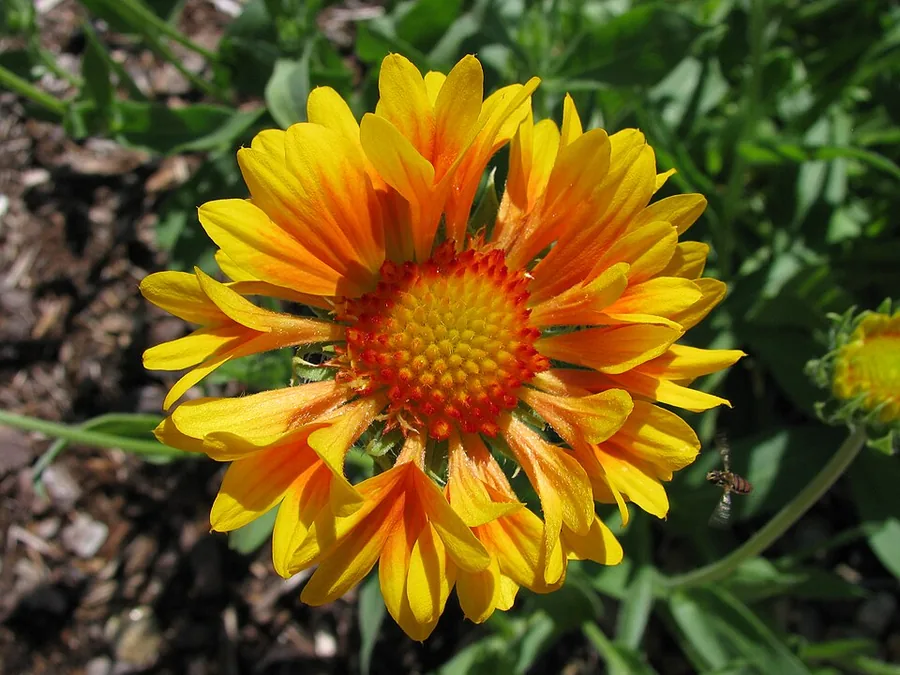
Blanket flower is a tough, sun-chasing member of the daisy family, named for the warm reds, oranges, and yellows that wrap each bloom like a woven blanket. Grow it when you want a long, easy show that keeps on giving. Drop it into a hot, dry corner and it flowers from early summer well into fall.
What makes it such a winner is how little it demands. It powers through drought, heat, and poor soil without missing a beat and keeps blooming where fussier perennials throw in the towel. Just remember the flip side of all that grit: rich soil and too much water are what bring it down.
It runs as a short-lived perennial, so a clump tends to fade after a few years, and that is no reason to walk past it. Split it every couple of seasons or let it self-sow, and the color rolls on with next to no work from you.
Care
The short version: full sun, lean and well-drained soil, and a light hand on the watering can. Keep deadheading through the season to drive fresh flowers, and skip the fertilizer.
Light
Blanket flower craves full sun, and the more it soaks up the better. Plant it in a baking, wide-open spot and it flowers its hardest. Bury it in shade and it stretches, flops, and barely blooms.
Water
Water steadily while a young plant digs in, then back right off. Once established it turns drought tolerant and runs far happier dry than wet. Overwatering, or heavy clay that refuses to drain, rots the roots faster than anything, so lean toward less.
Soil
Set it in well-drained loam or sandy soil with a little organic matter mixed through. It shrugs off a wide pH range from 6.0 to 8.0, so most ground works just fine. The one soil that beats it is soggy clay sitting cold through winter.
Humidity
Plain outdoor air does the job, so there is no level to chase. What really counts is airflow, since damp, packed plantings hand powdery mildew an open door onto the leaves.
Feeding
This plant thrives on going hungry. Feed it lightly during the growing season at most, because lean soil drives sturdier plants and more flowers. Load on fertilizer and it flops and blooms less.
Pruning
Deadhead the spent blooms all season to keep fresh ones firing and the plant looking sharp. Cut it back as needed when it turns ragged and it bounces out a whole new flush.
Size & spacing
Plants shoot up to 1 to 3 feet (30 to 91 cm) tall and spread 12 to 24 inches (30 to 61 cm) wide. Space them 12 to 18 inches apart so air rips through and mildew stays away.
When to plant
Blanket flower runs on warmth and balks at wet cold, so let the calendar work for you. Start seeds indoors in late winter or sow straight outside once frost clears, and the plants bloom from early summer through fall, even longer when you keep deadheading.
Northern hemisphere
Southern hemisphere
Typical months for a temperate climate: start earlier in warm zones, later where spring frosts linger.
- Sow: Start seeds indoors about 4 to 6 weeks before the last frost.
- Plant: Transplant or direct sow after the last spring frost; space plants 12 to 18 inches apart.
- Harvest: Blooms from early summer (June) through fall (September); deadheading extends the season.
Hardiness
USDA hardiness zones: 3–10
Temperature: down to -40°C
Troubleshooting
Almost every snag a blanket flower hits traces back to soil that stays too wet or air that sits too still. Nail the drainage and spacing and most of this list never gets going. Match what you spot below, then act fast before it spreads.
Plant keeling over as stem bases blacken and the crown turns to mush
This points straight to root and crown rot, the one trouble that can really take down a blanket flower, and wet soil sits behind it every time. Dig in at the base and the roots tell the story, turning brown and mushy where healthy ones stay firm and white. Jump on it: blend sand or organic matter through the bed, shift the plant up to a drier perch, and dial the watering way back.
Fix:
- Improve drainage by amending soil with organic matter or planting in a raised or sandier site
- Reduce watering and remove severely affected plants
Yellowing, twisted shoots topped by warped blooms
This one is aster yellows, a phytoplasma that leafhoppers haul from plant to plant, and once it lands there is no cure, so move quickly. Watch for flowers that green out or twist and stunted, broom-like shoots that never bounce back. Yank and destroy the infected plant on the spot, then knock back the leafhoppers and weedy hosts that keep it on the march.
Fix:
- Remove and destroy infected plants promptly
- Control leafhoppers that spread the disease
Telltale white dust creeping across leaves and stems
That dusty white layer is powdery mildew, and it moves in fast when plants bunch up in humid, still air. Rub a leaf and it lifts right off, but it storms back unless the setup changes. Open the planting up with more space or split a packed clump, strip the worst leaves, and steer water away from the foliage.
Fix:
- Improve air circulation by spacing and dividing plants
- Remove affected foliage
Dark speckles popping up across the leaf surface
These marks are fungal leaf spots, and they bark a lot louder than they bite. A plant wearing them rarely takes any real hit. Pluck the spotted leaves, send the water to the base instead of over the top, and give the planting room for air to sweep through.
Fix:
- Remove affected leaves
- Avoid overhead watering and improve air flow
Toxicity
Great news for pet owners: blanket flower is non-toxic and stays off the ASPCA toxic plant list. Cats, dogs, and grazing animals are all safe around it. The one thing to keep tabs on is your own skin, since the fuzzy leaves and flowers can leave sensitive hands a little itchy.
Safe for
People · Cats · Dogs · Horses · Rabbits · Livestock · Birds
Cats None
Cats get a clean pass. The ASPCA keeps it off the toxic list, so a curious nibble does no harm.
Dogs None
Dogs are clear too. It sits off the ASPCA toxic list, so a dog can sniff and chew without any trouble.
Horses Safe
Horses can graze right beside it and stay perfectly fine, since not one part of it carries poison.
Rabbits Safe
Rabbits are good to go. The leaves and flowers pack no toxin, though it still earns a spot as just an occasional bite.
Livestock Safe
Cattle, goats, and sheep can roam around it safely, because it holds nothing that would upset them.
Birds Safe
Birds face zero risk, whether they raid the seed heads or peck the foliage.
People Safe
People come out safe as well, with one quick catch: the fuzzy leaves and flowers can itch sensitive skin, so pull on gloves before diving into a long deadheading run.
Generally regarded as non-toxic and not listed on the ASPCA toxic plant list. Contact with the fuzzy foliage and flowers can cause mild skin irritation (contact dermatitis) in sensitive people; wearing protective gloves when handling is recommended.
Varieties
Blanket flower rolls out in a lineup of named cultivars, sorted mostly by height and how the colors land. Here are a few well worth chasing down.
Goblin
A compact dwarf that hugs the ground in a tidy mound and fires off red flowers ringed in yellow.
Burgundy
A taller standout that earns its name with bold, solid wine-red blooms and skips the two-tone edge.
Oranges and Lemons
A softer charmer whose peachy-orange rays melt into pale yellow right at the tips.
How to propagate
Blanket flower multiplies in a flash, which comes in handy since each plant is short-lived. Split an established clump or sow it fresh from seed and you are off.
DivisionEasy
Spring; divide clumps every 2 to 3 years to maintain vigor. · One growing season
Blanket flower runs short on years, so split the clumps in spring every 2 to 3 years to keep it charging, and bank free new plants while you are at it. Lift a clump, pull it into pieces, and tuck them back in. The divisions hit their stride within a single growing season.
SeedEasy
Start indoors 4 to 6 weeks before last frost or direct sow after frost. · Blooms in the first or second season
Seed makes it even more fun. Fire seeds off indoors 4 to 6 weeks before your last frost, or scatter them straight outside once frost clears, and flowers follow in the first or second season. It self-sows with gusto, but these are hybrids, so the volunteers often come up looking nothing like the parent.
Myths
Blanket flower only hits its stride with fertile soil and lots of regular watering.
Flip that on its head. Blanket flower charges ahead in lean, well-drained ground and laughs off drought once it digs in. Hand it heavy, fertile, soggy soil and you cut its life short with fewer blooms, so go easy and it pays you back big.
Blanket flower is poisonous to pets.
Not a chance. The plant rates as non-toxic and stays off the ASPCA toxic list for cats and dogs. The only real catch lands on people, since the hairy foliage can leave sensitive skin a touch itchy.