Ornamental · Asteraceae
Aster
Symphyotrichum
Give it full sun and well-drained soil, and the aster fires your garden's color clear into fall.
Full sun
USDA 3–8
1–5 ft · 0.3–1.5 m
Overview
Asters charge in with a wave of daisy-like blooms right as the rest of the garden coasts to a stop. They run with sunflowers and daisies in the same family, and the hardy garden kinds grow as clump-forming perennials that bounce back stronger every year. Whether you crave a low mound up front or a tall, leggy stand at the back, an aster steps up to fill almost any sunny spot.
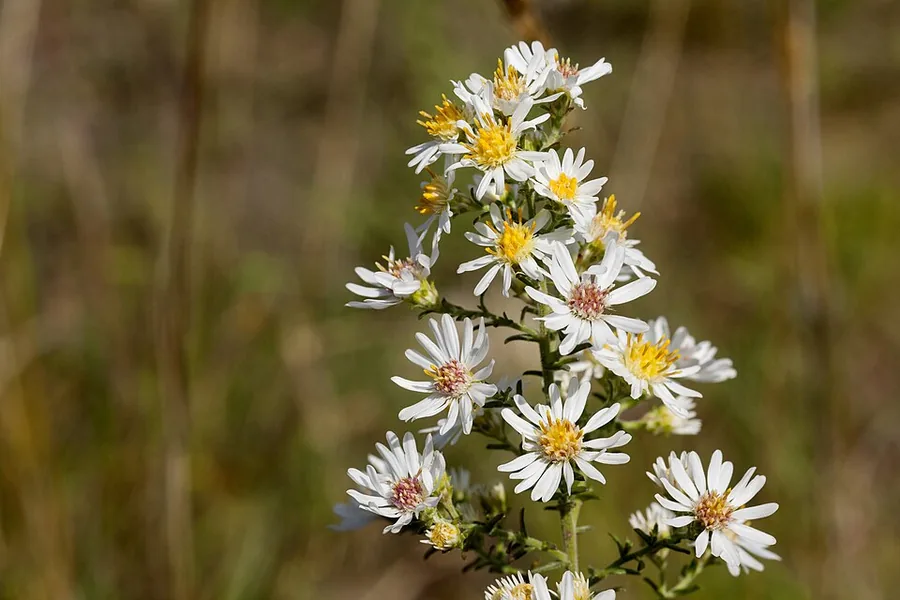
Color is where they really let loose. The flowerheads burst open in blue-violet, pink, and white, often so thick that the foliage all but vanishes beneath the show. Bloom keeps rolling from late summer into fall, commonly August through October, which makes asters one of the last big nectar stations for pollinators before frost shuts things down.
Best of all, they ask for next to nothing. Hand them full sun, ground that drains, and one midsummer pinch to firm up the stems, and they take it from there. Cram them into damp shade, though, and you swap the fireworks for mildew and floppy growth, so a little elbow room and a sunny site pay off big.
Care
The short version: asters crave full sun and well-drained soil of almost any texture, with steady moisture through the growing season. Pinch the stems back in June for fuller plants, and split crowded clumps every few years to keep the blooms cranking.
Light
Asters flower their hardest in full sun, though they'll tolerate a bit of partial shade if pressed. Shove them into real shade and you'll wind up with tall, floppy stems and only a scattering of blooms to show for it.
Water
Keep them in average, steady moisture through the growing season, since dry spells slash the flower count. Established plants power through a brief drought, but the soil has to drain well, because constant wet throws the door open to wilt.
Soil
Asters aren't picky and take off in loam, sandy loam, or clay as long as it drains well and packs some organic matter. They handle a wide pH band from 5.5 to 8.0, so most garden ground suits them just fine.
Humidity
Outdoor humidity is whatever the season serves up, and asters roll with it. Air movement counts for far more than any moisture number, since crowded, still air is exactly where powdery mildew gets its start.
Feeding
A light spring hit of balanced general-purpose fertilizer fuels them for the whole season. Go easy on the nitrogen, though, or you'll push soft, floppy stems that flop onto stakes and bloom less.
Pruning
Pinch the stems back by a few inches from early to late June to drive a bushier, sturdier plant that stands tall on its own. Knock off the pinching after early July so you don't lop off the forming flower buds, and cut the spent foliage to the ground once the show wraps up.
Size & spacing
Asters shoot anywhere from 1 to 5 feet (30 to 150 cm) tall depending on the species, spreading 2 to 4 feet (60 to 120 cm) across. Hand each clump that full width so air rips through and mildew never gets a foothold.
When to plant
Asters thrive at the cool ends of the year and reward a bit of forward planning. Start seed indoors in late winter or sow it outside in spring, set plants out after the last frost once the soil warms, and the payoff lands late, with flowers from August into October.
Northern hemisphere
Southern hemisphere
Typical months for a temperate climate: start earlier in warm zones, later where spring frosts linger.
- Sow: Late winter to early spring; seed germinates in about 15 days indoors
- Plant: After last frost in spring once soil has warmed
- Harvest: Summer into late fall (commonly August to October)
Hardiness
USDA hardiness zones: 3–8
Temperature: down to -40°C
Troubleshooting
Most aster trouble boils down to crowding, poor drainage, or too little sun, and the good news is that each one bends to a quick fix. Spot the early signs on the leaves and stems and a smart change of site or spacing usually flips it around. Match what you see below, then jump in before it tears through the clump.
Stems yellowing and toppling, usually along one side
This one means business: it points to verticillium or aster wilt, a soil fungus that digs into heavy, soggy ground and offers no cure once it lands. The dead giveaway is a plant that flops while the soil sits plenty moist. Pull and destroy the worst plants without delay, get that drainage moving, and steer clear of replanting susceptible asters in the same patch.
Fix:
- Improve soil drainage
- Remove and destroy severely affected plants
- Avoid replanting susceptible species in the same spot
A vigorous plant holding back on the blooms
A skimpy show almost always traces to too little light or too little water. Park an aster in shade or let it bake dry through summer and it simply cannot match the flower power of one basking in full sun with steady moisture. Shift it into the sun and keep the soil from drying out, especially through a hot stretch, and watch the buds come pouring back.
Fix:
- Relocate or site plants in full sun
- Maintain consistent soil moisture during the growing season
A powdery white bloom creeping across the top leaves
That dusty coating is powdery mildew, a fungus that pounces on crowded plants and stale air once late summer rolls in. Get ahead of it fast: thin and space the clump so the air moves, water at the roots to keep the leaves dry, and strip out anything heavily coated. Should it keep marching on, a fungicide every 10 to 14 days puts you back in charge.
Fix:
- Improve air circulation by thinning and spacing plants
- Avoid overhead watering
- Remove and discard heavily infected foliage
- Apply an appropriate fungicide on a 10 to 14 day schedule if needed
Fresh shoots warping under a swarm of sticky insects
Those tiny soft-bodied insects packing onto the shoot tips are aphids, and the sticky glaze they leave behind is honeydew. Hit them with a hard jet of water and most of them go flying, with insecticidal soap kept on standby for when the numbers really spike. Dial back the nitrogen too, since the lush, soft growth it drives is exactly the buffet that lures them in.
Fix:
- Dislodge with a strong spray of water
- Apply insecticidal soap if populations are high
Toxicity
Great news for anyone with pets or kids underfoot: asters are safe all around. The ASPCA lists them as non-toxic to cats, dogs, and horses, and they pose no real danger to other animals or to people. The worst a nibble kicks up is the mild stomach upset that almost any plant can cause.
Safe for
People · Cats · Dogs · Horses · Rabbits · Livestock · Birds
Cats None
Cats and garden asters get along just fine, and the ASPCA backs that up by listing the plant as non-toxic. Chew a leaf and a cat might land a mildly upset stomach, which holds true for almost any plant out there.
Dogs None
Dogs can romp through a bed of asters with zero worry, because the plant packs no poison. Gnaw a stem and the worst a curious pup faces is a touch of drool or a brief tummy upset.
Horses None
Horses share space with asters without a hitch, since the plant stays non-toxic in or around a pasture. Graze the foliage and nothing worse than the occasional mild digestive grumble follows.
Rabbits Safe
Rabbits can tuck into asters freely, with nothing in the plant to fear. Just keep the helpings modest, as with any fresh greenery, so a little gut stays happily settled.
Livestock Safe
Cattle, goats, and sheep graze around asters and come away unharmed every time. The plant simply holds no toxin to trouble a grazing animal.
Birds Safe
Asters are harmless to birds, and the late seedheads pull in finches and other songbirds like a magnet. Not a single part of the plant poses any hazard.
People Safe
A curious child near asters is in no danger at all, since the plant is not poisonous to people. They are grown for the flowers, not the plate, so there is no reason to snack on them anyway.
Varieties
Hundreds of asters are out there, but a handful of species keep showing up in gardens for good reason. These are the ones worth knowing by name.
Symphyotrichum novi-belgii (New York aster)
A rock-solid front-of-border performer that shoots up 3 to 4 feet and throws blue-violet, pink, or white flowerheads from August to October, hardy clear to zone 4.
Symphyotrichum dumosum (Bushy aster)
A compact, bushy American aster that piles on small button-like flowerheads, perfect for packing the front of a low border.
Symphyotrichum oblongifolium (Aromatic aster)
A tough, drought-tolerant aster with scented foliage that keeps the color rolling very late into fall, hardy straight through zones 3 to 8.
How to propagate
Asters multiply with hardly any effort, whether you split a settled clump or kick things off from seed. Division keeps named varieties true to type, while seed is the budget-friendly route for the straight species.
DivisionEasy
In October as flowering deteriorates, or in early spring · One growing season
Division is the surefire way to keep asters charging along, and it hands you free plants in the bargain. Every few years, lift a crowded clump and split it, either in October as the blooms wind down or in early spring, then drop the pieces into well-drained soil. Each one digs in and bushes out across a single growing season.
SeedEasy
Sow indoors in late winter or outdoors in spring · Germinates in about 15 days indoors or 20 to 30 days outdoors
Raising asters from seed is a blast, whether you sow indoors in late winter or outdoors in spring, with sprouts popping up in about 15 days inside or 20 to 30 days out in the garden. Just remember to divide named cultivars instead, since seed-grown plants often won't come true to the parent.
Myths
Asters are poisonous to dogs and cats.
Toss this one out, because the ASPCA lists garden asters, China aster and all, as non-toxic to dogs, cats, and horses. A pet that nibbles one is in no real danger, though eating any plant can stir up a mild, passing stomach upset.
Asters need rich, constantly moist soil to thrive.
Not a chance, since asters power along in average, well-drained ground, shrug off all kinds of textures and pH, and ride out a brief dry spell once they settle in. Soggy, poorly drained soil is the real culprit, because it rolls out the welcome mat for the wilt and mildew that drag these plants down.