Ornamental · Asteraceae
Ageratum
Ageratum houstonianum
Floss flower pumps out soft blue from late spring to frost on just full sun and steady moisture.
Full sun
Every 2–4 days
50–86°F · 10–30°C
55–70 days
Overview
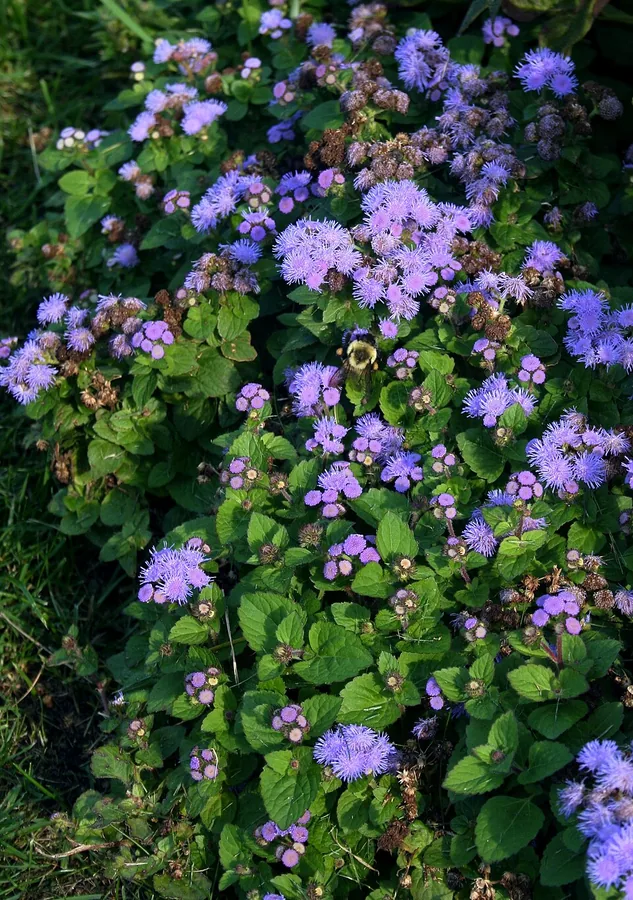
Ageratum, the floss flower, packs a low garden annual with fuzzy clusters of soft blue, lavender, and purple, all in the daisy family. The bloom heads puff up like tiny powder puffs and keep firing from late spring until frost with barely a breather. Plant it at the front of a bed, run it down an edge, or pop it in a pot and watch the color tumble over the rim.
These plants build into tidy mounds, with bedding types carpeting the ground and cutting types climbing higher for the vase. It runs with asters and sunflowers in the same family, but it trades their bold faces for a soft haze of cool color instead. A real blue is hard to find in an annual, and ageratum nails it, which is why gardeners keep coming back to it every summer.
Get it settled and it practically grows itself, asking mainly for even moisture and warmth. Let the soil dry out, though, and it wilts in a flash, so keep the water coming. Hand it sun, steady moisture, and good air around the leaves, and it pays you back with months of nonstop bloom.
Care
The short version: full sun with a little afternoon shade where summers cook, rich well-drained soil kept evenly moist, and a monthly feed through the growing season to keep those blue flowers firing.
Light
Ageratum cranks out the most bloom in full sun, though it takes partial shade in stride and even soaks up a little afternoon shade where summers turn brutal. Pile on too much shade, though, and the flowers thin out while the plants stretch loose and leggy.
Water
Keep the soil evenly moist and water roughly every 2 to 4 days, because this plant wilts the instant the ground dries out. It wants steady moisture but hates soggy roots, so nail the drainage just as hard as your watering routine.
Soil
Dig it into rich, well-drained soil loaded with organic matter so it grips moisture without bogging down. Aim for a pH between 6.0 and 7.5, and most garden ground hits that mark once you stir in a little compost.
Temperature
Ageratum thrives on warmth, running strong from about 50°F to 86°F (10°C to 30°C). Frost wipes it out cold, so hold off until spring weather settles before you turn it loose outdoors.
Humidity
Ordinary outdoor humidity suits it fine, and there is no number to chase. Moving air counts for way more, because still, muggy pockets around crowded leaves are exactly what powdery mildew jumps on.
Feeding
Hit it with a balanced general-purpose fertilizer about once a month through the growing season. That light, steady feeding keeps the foliage green and the flowers firing without forcing soft, floppy growth.
Pruning
Skip the heavy pruning, because it just is not needed here. Deadheading is optional, not required, but clipping off spent flower clusters keeps the planting sharp and drives fuller, more even bloom.
Size & spacing
Plants shoot from 6 to 30 inches (15 to 76 cm) tall depending on the type, with dwarf bedding kinds staying low and cutting kinds climbing higher. Give each one 6 to 18 inches (15 to 46 cm) of breathing room so air rips through freely and mildew stays shut out.
When to plant
Ageratum craves warmth and shrugs off nothing about frost, so time it to the heat. Fire up seeds indoors in late winter, about 6 to 8 weeks before your last frost, push the plants outside only after frost clears out, and you will pull bloom from late spring straight through to the first hard frost.
Northern hemisphere
Southern hemisphere
Typical months for a temperate climate: start earlier in warm zones, later where spring frosts linger.
- Sow: Late winter, about 6 to 8 weeks before last frost
- Plant: After all danger of frost has passed in spring
- Harvest: Late spring or June through frost
Hardiness
USDA hardiness zones: 2–11
Temperature: down to -46°C
Troubleshooting
Almost every ageratum snag boils down to two things: stale air around the leaves or too much water drowning the roots. Spot it early and you will turn it around fast. Hunt down the match below, then jump on it before it spreads through the whole planting.
Plants flopping and yellowing fast, then keeling over
A plant that yellows, wilts, and caves in despite watering is almost always fighting root rot from soggy, badly drained soil. Dig at the base and you will turn up soft, brown, mushy roots. Nothing brings it back this far gone, so pull it fast and fix the drainage before you slot anything new into that spot.
Fix:
- Improve soil drainage before or at planting
- Reduce watering frequency and avoid waterlogging
- Remove severely affected plants
A chalky white bloom racing across leaves and stems
A dusty white film flags powdery mildew, a fungus that pounces in hot, muggy weather when air stalls around crowded plants. Throw the planting open for airflow, aim your water at the base instead of the leaves, and yank off the worst foliage. Lock in full sun and steady moisture to slam the door on it.
Fix:
- Improve air circulation by spacing plants properly
- Avoid overhead watering and water at the base
- Remove and discard heavily infected foliage
Sticky shoots, twisted tips, and swarming little bugs
Sticky honeydew and twisted new growth scream aphids or whiteflies working the foliage and flower buds. Flip the leaves and hunt for soft-bodied aphids or tiny white flies that bolt when you bump them. A hard jet of water blasts most of them off, and insecticidal soap mops up the holdouts.
Fix:
- Rinse pests off with a strong spray of water
- Apply insecticidal soap if infestations persist
- Encourage natural predators
Speckled, dulled leaves strung with fine webbing
Fine yellow stippling and thin webbing peg twospotted spider mites, which run riot on dry, drought-stressed plants in the heat. Tap a leaf over white paper and you will catch the specks scrambling. Pour on the water to kill the stress, blast the mites off, and only grab a miticide if they refuse to budge.
Fix:
- Keep plants adequately watered to reduce stress
- Rinse mites off leaves with water
- Apply miticide or insecticidal soap if needed
Toxicity
Keep the animals clear of this one. Ageratum loads up on pyrrolizidine alkaloids, natural compounds that hit the liver and stack up with repeated feeding instead of clearing out. A pet that grabs a leaf usually walks away with nothing worse than a queasy stomach, but bar horses, rabbits, and grazing livestock from it for good, and never put any part of the plant on a plate.
Toxic to
Cats · Dogs · Horses · Rabbits · Livestock · Birds · People
Cats Mild
A nosy cat that chews a leaf usually shrugs it off with little more than drooling, vomiting, diarrhea, or a flat, tired mood. Block the bigger bites all the same, since the liver-damaging alkaloids pile up over time.
Dogs Mild
Most dogs that grab a taste skate by with a mild stomach upset, maybe some vomiting, loose stools, or a dull spell. The real danger is repeated or heavy ingestion, because the alkaloids quietly wear down the liver.
Horses Toxic
Horses are touchy grazers, and the pyrrolizidine alkaloids stack up to scar the liver across weeks of feeding. Watch for dropping weight, jaundice, and dull, off behavior, and lock this plant well beyond their reach.
Rabbits Toxic
Rabbits chew plants all day, which puts them squarely at risk from these same liver toxins. Never toss them ageratum trimmings, and shut it out of any run or hutch where one might browse.
Livestock Severe
Cattle, sheep, and goats catch the worst of it. Long-running alkaloid poisoning drags in poor appetite, depression, jaundice, swelling, fluid in the belly, and lasting liver damage, so grazing animals have to stay off it completely.
Birds Toxic
Those same liver-hitting alkaloids that wreck grazing animals are no friend to birds either. Slam the plant off-limits for poultry and pet birds instead of rolling the dice on repeated exposure.
People Caution
None of ageratum is food, full stop. The pyrrolizidine alkaloids it carries can injure the human liver, so keep kids from popping it in their mouths and never brew or eat any piece of it.
Keep grazing animals away; contains liver-damaging pyrrolizidine alkaloids.
Helpline numbers

United States
ASPCA Animal Poison Control: (888) 426-4435 (fee applies)
Poison Control: (800) 222-1222



Canada
Poison Centres: 1-844-764-7669
Varieties
Ageratum splits into tall cutting types for the vase and low mounding types for bedding, and the named picks drop neatly into those two camps. Grab one of the favorites below to get going.
Blue Horizon
A tall cutting type that shoots to about 30 inches, lifting medium-blue flowers high enough to snip for the vase.
Blue Danube
A compact dwarf bedding cultivar that hunkers low and tidy under a haze of lavender-blue flowers.
Hawaii series (e.g. Leilani Blue)
Low mounding bedding ageratums that pump out a dense, even blanket of blue across a bed.
How to propagate
Ageratum springs from seed, and once you nail its one little trick it could not be smoother. Kick off a tray indoors before the season and you will raise plenty of plants to pack a bed.
SeedEasy
Start indoors in late winter, about 6 to 8 weeks before the last frost; transplant or direct sow outdoors after frost danger passes. · Roughly 1 to 2 weeks to germinate; flowering in about 8 to 10 weeks from sowing.
Kick ageratum off indoors in late winter, about 6 to 8 weeks before your last frost, then move it out or direct sow once frost clears. The seed runs tiny and needs light to germinate, so press it right onto the surface and leave it bare. Sprouts pop in 1 to 2 weeks, and the first flowers fire about 8 to 10 weeks after sowing.
Myths
Ageratum is a totally safe, worry-free bloom for any pet or person.
Wrong on every count. The plant packs pyrrolizidine alkaloids that hit the liver, so a pet that chews it can end up with an upset stomach and grazing livestock can take lasting harm. Treat ageratum as toxic and keep animals from feeding on it.
Stop deadheading ageratum and its flower show shuts right down.
Not a chance. The plant fires off bloom all season on its own, trimmed or not. Deadheading is optional, a quick tidy-up that pushes fuller, more even bloom rather than a job the plant leans on you to handle.