Ornamental · Asteraceae
Calendula
Calendula officinalis
Give it full sun and lean soil and pot marigold keeps the color coming from spring straight to frost.
Full sun
Every 3–7 days
39–75°F · 4–24°C
45–65 days
Overview
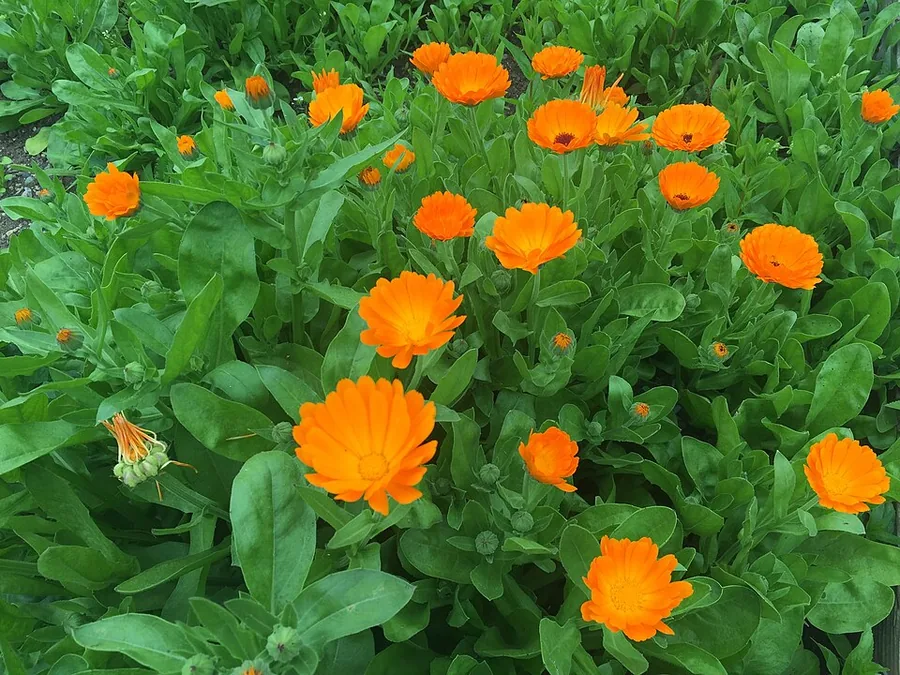
Calendula, the cheerful pot marigold, is a cool-season annual in the daisy family that delivers far more than it asks. Sow it once and it cranks out flowers from spring into fall, then drops seed and bounces right back the next year. The bright yellow and orange heads are edible, which is why cooks keep scattering the petals over salads and using them to color food.
Best of all, it grows like a dream on next to nothing. Hand it a spot in full sun and ordinary, well-drained soil and it takes off, blooming even harder when you skip the fertilizer. Summer heat can knock the wind out of it, but a bold cutback fires up a fresh wave of flowers the moment fall cools things down.
New to growing or short on time? Calendula makes it easy to win. Deadhead it here and there, keep the foliage dry to shut out mildew, and watch it carry the front of a bed or kitchen border with barely any effort at all.
Care
The short version: full sun, plain well-drained soil, and an easy hand with the fertilizer. Keep it watered evenly at the base, deadhead the spent flowers, and it pumps out cool-season color from spring through fall.
Light
Calendula blooms hardest in full sun, though it will take partial shade where summers turn hot. More sun pumps out more flowers, so hand it the brightest spot you have.
Water
Keep the soil evenly moist with regular watering, and make sure it drains so the roots never sit wet. Water at the base, not over the top, since wet leaves throw the door open to powdery mildew. Its thirst stays only medium overall.
Soil
Average, well-drained soil is all it asks, and it shrugs off clay, loam, sand, or rich ground alike. Any pH from 5.5 to 7.0 suits it just fine. Good drainage carries it far more than fertility does.
Temperature
This is a cool-weather plant, firing on all cylinders around 39°F to 75°F (4°C to 24°C). It can stall and look ragged in midsummer heat, then come roaring back as fall cools off.
Humidity
Ordinary outdoor humidity is no obstacle, so there is no number to chase. Moving air beats any reading, since crowded, damp plants are the ones that catch mildew.
Feeding
Feed lightly, if at all, through the growing season. Calendula blooms best on lean soil, and a heavy feed just cranks out leaves at the cost of flowers.
Pruning
Deadhead the spent blooms as they fade to keep fresh ones firing and to curb self-seeding. If it flags in summer heat, cut it back hard and it often reblooms once fall arrives.
Size & spacing
Plants shoot to about 12 to 24 inches (30 to 61 cm) tall and spread to match. Give each one that much room so air rips through freely and mildew gets no grip.
When to plant
Calendula hits full stride in the mild weather at both ends of summer. Get seed going indoors in late winter or sow it straight into the ground around the last frost, and the flowers keep rolling from spring until a hard frost finally calls time.
Northern hemisphere
Southern hemisphere
Typical months for a temperate climate: start earlier in warm zones, later where spring frosts linger.
- Sow: About 6 to 8 weeks before the last spring frost
- Plant: Direct sow or transplant just before to around the last spring frost; a cool-season annual best in spring and fall
- Harvest: Blooms spring through summer, continuing almost nonstop until first heavy frost in cool climates
Hardiness
USDA hardiness zones: 2–11
Temperature: down to -46°C
Troubleshooting
Calendula is tough as nails, and most of its troubles flag up fast on the leaves or new growth. Spot them early and a quick move usually wraps it up. Match what you see below, then jump on it before it spreads.
Puckered, patchy leaves and a plant losing steam
Blotchy yellow-green, twisted leaves that shrug off every drink and every feed point to cucumber mosaic virus, which aphids haul from plant to plant. Nothing cures it, so dig out and destroy any plant that shows it before it jumps to the rest. Keep the aphids beaten back and wash your hands between plants, and you slam the brakes on its spread.
Fix:
- Remove and destroy infected plants to limit spread
- Control aphid vectors
- Avoid handling healthy plants after touching infected ones
White dust creeping over healthy green growth
That flour-like dusting on the foliage is powdery mildew, a fungus that pounces when plants crowd together in still, humid air. Jump on it fast: open up the spacing to get air rushing through, water down at the base to keep the leaves dry, and pull any leaf that has gone heavily coated. Drop it into full sun with room to breathe and it stays away.
Fix:
- Improve air circulation by thinning and spacing plants
- Water at the base to keep foliage dry
- Remove and discard severely affected leaves
Swarms of tiny insects gumming up buds and fresh shoots
Those soft green or black specks swarming the new shoots and buds are aphids, racing straight for the tenderest growth. Knock them flying with a hard jet of water, then bring in insecticidal soap if a big crowd holds on. Dial back the high-nitrogen feeding that pumps out the soft growth they chase, and let the lady beetles charge in and feast.
Fix:
- Spray plants with a strong stream of water to dislodge aphids
- Apply insecticidal soap if populations are high
- Encourage beneficial insects such as lady beetles
Foliage and flowers riddled with jagged chew marks
Ragged holes and a shiny trail give away slugs and snails, which raid after dark and target the young plants first. Grab a flashlight at dusk, hunt them down, and pluck them off, then sweep away the damp debris they tuck into by day. When they keep marching back, traps or iron-phosphate baits turn the tide.
Fix:
- Hand-pick slugs and snails in the evening
- Remove garden debris that provides shelter
- Use traps or iron-phosphate baits if damage is heavy
Toxicity
Here is the great part. The ASPCA lists pot marigold as non-toxic to cats, dogs, and horses, and the petals are edible for people too. A grazing pet or a curious kid faces zero danger, so plant it anywhere in the garden and go.
Safe for
People · Cats · Dogs · Horses · Rabbits · Livestock · Birds
Cats None
Cats get the all-clear here. The ASPCA lists pot marigold as non-toxic to cats, so a nibble does zero harm.
Dogs None
Dogs are good to go too. This is the garden pot marigold, not the bedding type, and the ASPCA rates it safe.
Horses Safe
Calendula packs no known toxic compounds, so a horse can graze on it with nothing to fear.
Rabbits Safe
Rabbits can dig into the leaves and petals freely, and gardeners often grow the flowers as a safe forage.
Livestock Safe
Cattle, goats, and sheep take to calendula just fine, with no poisoning ever reported.
Birds Safe
Backyard birds can dive into the seed heads and petals without a worry.
People Safe
The petals are edible and brighten salads or stand in as a saffron-style coloring, so people have nothing to dodge.
Varieties
Calendula shows up in a handful of flower forms and colors worth scoping out before you sow. These are the ones you will run into most.
Double-flowered types
These pack full, many-petaled heads in yellows right through deep orange, far rounder and bolder than the plain open daisy.
Single-flowered types
These flash an open, daisy-style bloom, just one ring of ray petals circling a flat little disk.
Yellow to orange color forms
These blaze from bright yellow to deep orange, and the edible petals jump straight from the bed to a garnish or natural coloring.
How to propagate
Calendula runs on seed and little else, and it tears through the job with almost no help, sprouting fast and reseeding itself for next year.
SeedEasy
Start indoors about 6 to 8 weeks before the last frost, or direct sow outdoors around the last spring frost · Germinates in about 5 to 15 days; first blooms in roughly 45 to 65 days from seed
Calendula rockets up from seed, making it one of the most rewarding flowers to grow this way. Kick it off indoors 6 to 8 weeks before the last frost, or drop seed straight into the ground around frost at 1/4 to 1/2 inch deep. Sprouts burst up in 5 to 15 days and the first flowers pop within 45 to 65 days. Leave it standing and it scatters its own seed for next year, reseeding with gusto but never overrunning the bed.
Myths
Calendula is the very same flower as the garden-center bedding marigold and carries a mild poisoning risk for pets.
The two get mixed up all the time, but pot marigold is Calendula officinalis, a totally separate genus from the Tagetes bedding marigolds. The ASPCA lists it as non-toxic to dogs and cats, so that toxicity worry never even enters the picture.
Calendula demands loaded soil and constant fertilizing before it will bloom its best.
Far from it, since it powers along in plain, well-drained ground and asks for next to nothing. Heavy feeding actually works against the flowers, driving leaves instead of blooms, so keep that fertilizer light.