Shrub · Caprifoliaceae
Old Fashioned Weigela
Weigela florida
Hand it full sun and a well-timed prune, and weigela erupts into a late-spring rush of tubular blooms.
Full sun
Every 7–14 days
USDA 4–8
6–10 ft · 1.8–3 m
Overview
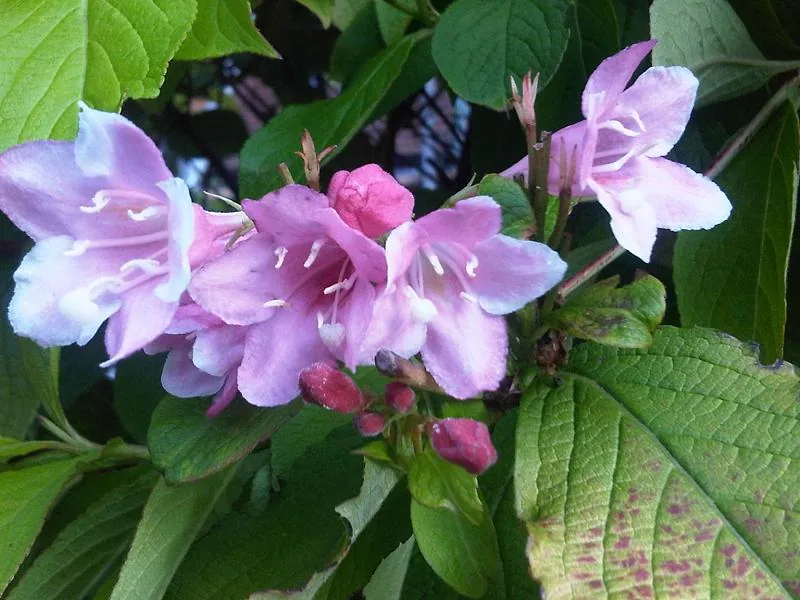
Weigela is a shrub that gives back fast. This deciduous member of the honeysuckle family bursts open in late spring with a rush of tubular, rose-pink to red flowers, and those blooms bring hummingbirds and butterflies streaming into the garden just as everything wakes up. Let it grow free and it builds a broad, arching mound full of movement.
Better still, it thrives on very little. It powers along in full sun to light shade, takes almost any soil in stride, and sails through winters down to zone 4. Learn its one trick, that it flowers on old wood, and your pruning timing turns a good spring into a spectacular one.
The species grows big and bold, but the choices keep getting better. Breeders have delivered a wave of dwarf and reblooming cultivars that pack the same punch into small beds and containers, many flaunting purple or variegated leaves that carry the interest long after the flowers finish.
Care
The short version: plant weigela in full sun and average, well-drained soil, keep the water coming through dry spells until it's established, and time every shaping cut for right after it blooms.
Light
Weigela puts on its biggest show in full sun, though it still performs in partial sun or light shade. Give it 6 or more hours of direct sun a day and watch the flowers pile on. Too much shade is the fastest way to thin that display, so chase the brightest spot you can find.
Water
Keep the water flowing to a young shrub through its first season, then back right off and reach for the hose only during a drought. Let the top inch or so of soil dry between drinks, which usually lands near every 7 to 14 days when rain is scarce. Once it's established, it powers through dry spells on its own.
Soil
Weigela grabs hold in clay, loam, or sandy soil alike, as long as it drains well and holds average, medium moisture. It cruises across a wide pH from 5.5 to 7.5, so you can plant straight into most beds without touching the soil.
Temperature
This shrub is a tank, hardy from -29°F to 90°F (-34°C to 32°C) across zones 4 through 8. In the coldest gardens the branch tips may die back over winter, but it comes roaring back, pushing fresh growth from below the moment spring arrives.
Humidity
Everyday outdoor humidity is all weigela asks, so there's no number to chase. Good airflow does the heavy lifting instead, keeping the leaves dry and shutting out the few pests that ever bother it.
Feeding
Weigela sips rather than feasts. One shot of slow-release shrub fertilizer in spring fuels it for the whole season, and there's no reason to feed again unless the growth starts to flag.
Pruning
Nail this and everything else falls into place. Shape the shrub right after the late-spring bloom, since the buds ride on old wood and a later cut steals next year's flowers. Then in late winter, cut out a few of the oldest stems and any dead or winter-damaged wood to fire up fresh, vigorous growth.
Repotting
Weigela almost never lands in a pot, and in the ground it never needs repotting at all. Growing a dwarf cultivar in a container? Just bump it up a size the moment roots start circling or breaking out through the drainage holes.
Size & spacing
The species shoots up into a big shrub, 6 to 10 feet (1.8 to 3 m) tall and spreading even wider at 9 to 12 feet (2.7 to 3.7 m) across. Give it room to arch and show off, or grab a dwarf cultivar to bring the same energy to a tight spot or a container.
When to plant
Weigela is a woody shrub, so skip the seed trays and get straight to the fun part. Plant it out in spring or fall, watch the flowers pour out from April into June, and swoop in with your shaping pruning in the short window right after the bloom fades.
Northern hemisphere
Southern hemisphere
Typical months for a temperate climate: start earlier in warm zones, later where spring frosts linger.
- Plant: Spring or fall
- Harvest: April to June, with sparse repeat bloom in mid to late summer on modern cultivars
Hardiness
USDA hardiness zones: 4–8
Temperature: down to -34°C
Troubleshooting
Nearly every weigela hiccup traces back to pruning at the wrong moment, a tough winter, or soil that runs too wet or too dry. Spot the early signs and a well-aimed cut or a shift in watering usually turns it right around. Match your symptom below and pounce before it swallows a whole season of bloom.
Spring arrives, but the flowers don't
The prime suspect is pruning at the wrong time, because weigela loads its flower buds onto old wood and any cut in late summer, fall, or winter carries next spring's bloom off with it. Heavy shade and winter dieback of the flowering wood can rob you too. Fight back by pruning only right after the late-spring bloom, handing it 6 or more hours of direct sun, and leaving those healthy old stems standing.
Fix:
- Prune only immediately after the late-spring bloom since flowers form on old wood
- Relocate or limb up surrounding plants so the shrub gets 6 or more hours of direct sun
- Remove only dead, winter-damaged wood and leave healthy old stems intact
Brown, dead branch tips showing in spring
That's winter dieback, and it strikes hardest in colder zones or on a cultivar pushed to the edge of its hardiness. Prove it fast with a scratch of the bark: dead wood runs brown and dry with no green cambium under it. Cut those dead stems back to live growth in late winter and let the shrub charge back from the healthy lower wood.
Fix:
- Prune out dead wood back to live, green growth in late winter or early spring
- Let the shrub regrow from healthy lower stems
Browning, wilting leaves and stalled growth
When the whole shrub sags, water is usually to blame, whether a drought or roots drowning in soggy, poorly drained ground. A nutrient shortage or salty soil can drag it down the same way. Dig your fingers into the soil to read it, water through dry spells, fix the drainage where it stays wet, and hit it with a slow-release shrub fertilizer if growth still won't take off.
Fix:
- Provide regular water during dry spells and improve drainage in soggy sites
- Apply a slow-release shrub fertilizer if a deficiency is suspected
Sticky, stippled, or twisted leaves and shoots
Chances are it's mealybugs, tucking white cottony clusters into the stem junctions, though flea beetles might be chewing the foliage too. Get in close under the leaves and at the stem joints to confirm. Blast light infestations off with a hard jet of water, then bring in insecticidal soap or horticultural oil to finish the stubborn ones.
Fix:
- Wash off light infestations with a strong stream of water
- Treat persistent mealybug infestations with insecticidal soap or horticultural oil per label
- Remove and dispose of heavily infested shoots
Toxicity
Grow weigela with a clear conscience. It never made the ASPCA toxic-plant lists and lands squarely as non-toxic to pets, livestock, and people, with no irritant lurking in the sap. The worst a hungry pet might get is a quick stomach upset after tucking into a pile of leaves.
Safe for
People · Cats · Dogs · Horses · Rabbits · Livestock · Birds
Cats None
Cats are in the clear with weigela, which never lands on the ASPCA toxic list. A curious nibble does zero harm, though a big mouthful of any leaf might spark a quick bout of stomach upset.
Dogs None
Dogs can chomp the foliage with no danger at all. The worst a greedy one earns is some passing tummy trouble, just like most greenery in the garden.
Horses Safe
Nothing in weigela lays a finger on horses, so plant it right up against a paddock or pasture without a second thought.
Rabbits Safe
Rabbits can browse the leaves freely and safely. No part of the plant packs a toxin, so a stray bite means nothing.
Livestock Safe
Cattle, goats, and sheep shrug weigela off completely, since the shrub carries no toxic risk for grazing stock.
Birds Safe
Weigela does birds no harm, and its tubular spring flowers actively pull hummingbirds in for the nectar.
People Safe
The plant is non-toxic to people, with no known irritant in the sap. It's grown for the flowers, not the plate, so there's no edible part to hunt for.
No special handling precautions; sap is not a known irritant.
Varieties
The straight species is a beauty, but the named cultivars are where the excitement is these days. Here are the standouts worth chasing down.
'Alexandra' WINE AND ROSES
A punchy, compact pick at 4 to 5 foot, grown for its dark purple leaves and a heavy burst of reddish-pink flowers each spring.
'Verweig' MY MONET
A tiny dwarf at just 12 to 18 inches, flashing variegated pink, cream, and green foliage under soft pink blooms.
'Tango'
One of the smallest weigelas going, a tight 2 to 2.5 foot mound of purplish leaves that flowers with real gusto in spring.
SONIC BLOOM
An upright rebloomer that fires off lipstick-red flowers in May and keeps launching fresh waves right through to frost.
How to propagate
Here's the best part: weigela multiplies with almost no effort. Take the fast summer route or the slower dormant-season one, and turn a single shrub into a whole row of free plants.
Stem cuttingsEasy
Late spring to early summer (late May through early July) · Several weeks to root; a full season to establish
The quickest win is a softwood cutting, snipped from late May into early July off this season's growth. Grab a shoot that bends freely but snaps cleanly when you bend it sharply. It fires out roots in a few weeks and then just wants a full growing season to settle in.
Stem cuttingsModerate
Dormant season (late fall to winter) · One growing season
For another round, take hardwood cuttings off the dormant stems through late fall and winter. This route runs a bit slower and asks for a full growing season before the young plant is truly established.
Myths
Weigela will poison dogs and cats.
Not so, since weigela never made the ASPCA toxic-plant lists and stands as non-toxic to both dogs and cats. A pet that gobbles down a load of leaves might get a mild, passing stomach upset, and that's the whole of it.
Prune weigela whenever and keep every bloom.
No chance, since weigela loads its buds onto old wood, so a cut in late summer, fall, or winter strips off next spring's flowers. Shape it right after it finishes blooming and you'll keep that show firing year after year.