Shrub · Caprifoliaceae
Glossy Abelia
Abelia × grandiflora
Hand it sun and soil that drains, and glossy abelia keeps flowering from late spring to frost with barely any effort.
Full sun
Every 5–10 days
USDA 6–9
2–8 ft · 0.8–2.4 m
Overview
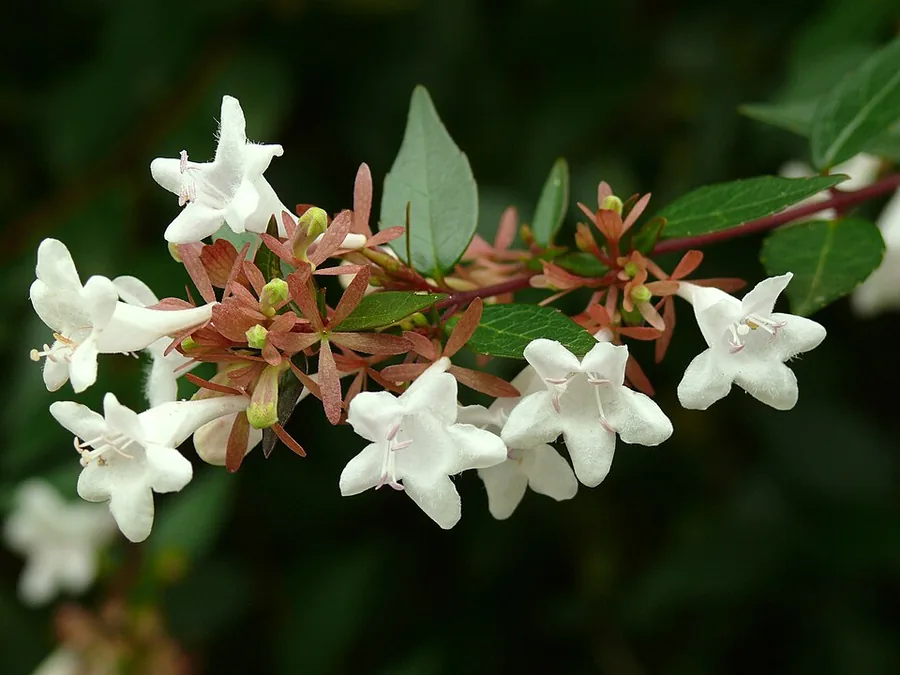
Glossy abelia pulls its weight in any busy garden, a sturdy and laid-back shrub that keeps performing. Small, fragrant flowers open from late spring and carry on until the first frost, while arching stems lend a bed gentle motion. Its name comes from foliage that keeps a polished sheen across much of the year.
Gardeners in USDA zones 6 to 9 can grow it in full sun or let it cope with a bit of shade. Expect moderate, steady growth up to 2.5 to 8 feet (76 to 244 cm) tall, spreading as far as 6 feet across. After it roots in, it powers through dry stretches and barely asks for a thing.
Beginners get a lot back from abelia for very little input. Flowers come on new wood, so one spring trim keeps it neat and blooming hard. Plenty of the named selections finish the season with fall color, their leaves turning orange and red ahead of winter.
Care
The short version: plant it in full sun to part shade, in well-draining soil that holds a little organic matter, water it as it roots in and through dry spells, and trim it once in late winter or early spring.
Light
Plant abelia in full sun to coax out the heaviest flowering and a tight, full shape. It copes with partial sun and even partial shade, though blooms and fall color fade as light thins out. Hunt for a bright, open patch.
Water
Water often to hold the soil moist while roots take hold, then back off as the plant digs in. Established abelia turns drought tolerant and drinks only every 5 to 10 days, a touch more through dry stretches. Soak it deeply when the weather bakes for the strongest flowering.
Soil
Set it into moist, well-drained loam, clay, or sand laced with some organic matter. A pH spanning 5.5 to 7.5 suits most garden ground, so you rarely have to tweak it. Watch one limit: salty soils are off the table for abelia.
Temperature
Abelia rides out a broad weather span, from roughly -9°F to 95°F (-23°C to 35°C). That swing lines up with USDA zones 6 to 9 and lets the shrub power through baking summers and biting winters alike. Tuck it into a sheltered nook in the chilliest zones for an extra edge.
Humidity
Plain outdoor air humidity works fine for abelia, so skip chasing a number. What counts far more is moving air, because stale, soggy air around packed plants is exactly what gray mold loves. Hand each shrub space to breathe freely.
Feeding
Feed once each year, working in a balanced slow-release fertilizer or spreading compost in early spring. That lone seasonal meal fuels the plant clear through its long flowering run. Skip piling on extra nitrogen, which only pushes the soft growth that pests chase.
Pruning
Abelia flowers on new wood, so reach for the pruners in late winter or early spring ahead of fresh growth. Overgrown plants take a hard rejuvenation cut right down to roughly 12 inches (30 cm) above the ground as spring growth kicks off. Steer clear of cutting from late fall through mid-winter, which lets cold damage creep in.
Repotting
Out in the garden, abelia gets repotted only rarely and would rather settle into the ground for good. Grow one in a pot and you bump it up a size when roots wind around the inside or shove out the drainage holes. Water rushing straight through with little soaking up flags another outgrown container.
Size & spacing
Mature plants climb 2.5 to 8 feet (76 to 244 cm) tall and stretch 3 to 6 feet (91 to 183 cm) wide. Hand every shrub enough elbow room to bulk up so air flows freely around it, which stops gray mold from settling in when the weather turns damp.
When to plant
Slot abelia into the ground during the year's mild windows. Set it out in spring or fall once hard frost has cleared, and the roots dig in before summer scorch or winter chill arrives. After that the flowers keep rolling from late spring to frost, a generous run for so little effort.
Northern hemisphere
Southern hemisphere
Typical months for a temperate climate: start earlier in warm zones, later where spring frosts linger.
- Plant: Spring or fall after danger of hard frost has passed.
- Harvest: Late spring through fall (roughly May until frost).
Hardiness
USDA hardiness zones: 6–9
Temperature: down to -23°C
Troubleshooting
Abelia powers along in good health, and the rare hiccup it runs into is simple to spot. Cold winters, damp packed-in air, or a burst of tender new shoots cover almost all of them. Spot your symptom below, then jump in early before any small snag can grow.
Winter cold knocks back the stems and steals the flowers
Cold zones at the outer edge of this shrub's range bring on winter dieback, and pruning anywhere from late fall into mid-winter only deepens that injury. Test the wood in spring by scratching the bark: brown and dry means dead, so cut those stems down to live tissue or right to the ground as growth fires up. Because abelia flowers on new wood, blooms return the very same season.
Fix:
- Prune dead stems back to live wood or to the ground when spring growth begins
- Since it blooms on new wood, plants flower the same season after spring cutback
Fuzzy gray patches creep over the blooms and tender shoots
Damp, packed-in plantings with stagnant air invite Botrytis, a gray mold that settles onto spent flowers and the softest new growth as fuzzy gray-brown fuzz. Strip away every affected bloom and shoot the moment you spot them. Then thin the shrub and widen its spacing so fresh air can sweep through and dry things out.
Fix:
- Remove and discard affected blooms and stems
- Improve air circulation by thinning and spacing plants
New shoots twist up under a sticky coating
Blame aphids, the odd visitor that drains the juicy new shoots and leaves a sticky honeydew behind. Flip the tips and undersides of leaves and hunt for huddles of tiny soft insects. Blast them off with a sharp jet of water, then mop up any holdouts using insecticidal soap. This shrub fends off pests on its own most years, so the trouble seldom escalates.
Fix:
- Dislodge aphids with a strong spray of water
- Treat persistent infestations with insecticidal soap
Toxicity
Great news for homes with pets and little ones: glossy abelia is non-toxic. ASPCA toxic-plant references leave it off entirely, and it counts as safe around cats and dogs. As with any greenery, a big mouthful of foliage might trigger mild stomach upset, yet this shrub demands no special caution at all.
Safe for
People · Cats · Dogs · Horses · Rabbits · Livestock · Birds
Cats Safe
A curious cat can rub against the foliage or take a nibble with zero harm, since glossy abelia carries no toxins for them.
Dogs Safe
Let dogs roam right up to this shrub; an accidental mouthful of leaves gives you nothing to fret over.
Horses Safe
Horses grazing past abelia along a fence or in the paddock run no risk of poisoning whatsoever.
Rabbits Safe
Rabbits stay perfectly fine around it, though leafy greens of every sort should make up only a slice of what they eat.
Livestock Safe
Goats, sheep, and cattle can browse close by with no chance of poisoning from this shrub.
Birds Safe
Backyard poultry and pet birds can share the garden alongside abelia and stay completely out of harm.
People Safe
Plant it freely wherever toddlers and kids dash around and dig outdoors, because the shrub poses no danger.
No special handling required; large quantities of any plant material may cause mild stomach upset.
Varieties
A handful of named abelia selections each spin their own take on flower color, foliage, and form. Get to know these before you settle on one.
Rose Creek
Stays compact and mounding, lifting pink-flushed flowers over stems washed in red.
Kaleidoscope
Wears variegated gold-and-green leaves that blaze into orange-red when fall rolls in.
Edward Goucher
This hybrid arches gracefully and dangles lavender-pink flowers along its branches.
Prostrata
Spreads low and wide, sprawling across the ground much like a loose groundcover.
How to propagate
Abelia ranks among the simplest shrubs to multiply at home, and a single specimen can hand you a whole crew of new plants from cuttings taken across the warm months.
Stem cuttingsEasy
Take softwood or semi-hardwood cuttings in late spring through summer. · Roughly 35 to 70 days to root depending on temperature.
Few shrubs propagate as readily as abelia. Snip softwood or semi-hardwood cuttings across the warm stretch from late spring through summer, and steady warmth around 80°F to 86°F (27°C to 30°C) drives roots in about 35 to 50 days. Where conditions run cooler the timeline stretches toward 70 days, so hold the warmth and let the cuttings take their time to a strong strike.
Myths
Glossy abelia poisons dogs and cats.
ASPCA toxic-plant references never list abelia, and it counts as non-toxic for both cats and dogs. Like any greenery, a big gulp could stir up mild stomach upset. Grow it with confidence wherever pets roam.
Abelia needs a fall pruning to stay the right size.
Since the flowers form on new wood, the prime time to cut sits in late winter or early spring. Reach for the shears any time from late fall through mid-winter and you simply expose the stems to cold damage. Hold off until spring growth fires up, and the shrub keeps both its shape and its blooms.