Herb · Caprifoliaceae
Valerian
Valeriana officinalis
Plant valerian in full sun and moist soil, and it powers up fast into fragrant summer flowers and a root that gets cats going.
Full sun
Every 3–7 days
USDA 4–9
3–5 ft · 0.9–1.5 m
Overview
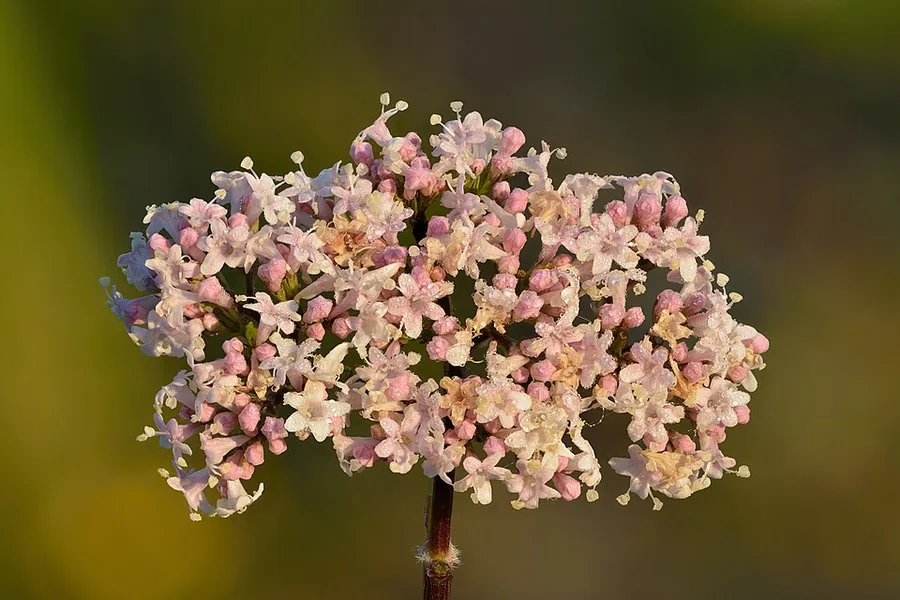
Valerian earns its place fast. This old cottage perennial grows for two great payoffs, scented summer flowers and the medicinal root below, and it wastes no time getting there. Tall stems shoot up and open into soft, pale flower heads through early and midsummer, pulling in pollinators and sending fragrance right across the bed. Treat it as a tough, hardy perennial and it rewards the effort with fast, generous growth once its roots grab hold.
The root is where the story gets good. Dry it, steep it, and you have a centuries-old herbal sedative that eases sleep and calms the nerves, the reason the plant once went by all-heal. That same root fires up cats much as catnip does, so expect a lively feline crowd around a planting, all of it harmless fun.
One trait keeps things interesting: valerian spreads with real enthusiasm. It grows quickly, scatters seed with abandon, and pushes outward on rhizomes, so in some regions it has bolted beyond gardens and picked up an invasive listing. Stay a step ahead by planting it in a bright, moist spot and snipping the flowers before they seed, and it stays a generous but well-behaved plant.
Care
The short version: hand valerian full sun and steady moisture in rich, fertile soil, then deadhead fast so it does not seed across the whole garden. It laughs off cold and takes almost any soil, so watering and cutting back cover the work.
Light
Aim valerian at full sun, where it flowers hardest and holds its tall stems upright and firm. It will take partial shade, but shaded plants stretch and flop, so grab the brightest spot going.
Water
Keep the soil evenly moist, because valerian craves damp, rich ground and hates drying out. Water it every 3 to 7 days, more when the heat climbs, and it powers into stronger growth. It shrugs off the odd missed drink, but never leave it parched.
Soil
Dig it into rich, moist, well-drained loam for the best run, though it adapts fast to clay, loam, or sand. It likes a soil pH of 6.0 to 7.5, which covers most garden ground, so there is little to fuss over.
Temperature
Cold barely registers with valerian, which storms through winters as low as -31°F (-35°C) and handles summer heat up to around 86°F (30°C). It hits its stride in cool conditions, so long, baking summers can slow it down.
Humidity
Forget fussing over humidity. Ordinary outdoor air, roughly 40% to 70%, keeps valerian happy, and as a hardy garden perennial it takes whatever the weather serves up.
Feeding
Give one light feed in spring, right as growth wakes up, using a balanced fertilizer or compost dug into the soil. Stop there, because piling on more only pumps out soft, floppy stems instead of extra flowers.
Pruning
Snip off the faded flower heads the moment they go over to shut down the heavy self-seeding valerian is famous for. Cut the stems back after bloom, then clear the dead foliage as the plant drops to the ground for winter.
Repotting
Valerian is no long-term pot plant, but established clumps thrive on a split every 2 to 3 years to keep them charging. Lift and divide the crown the moment you spot crowding, weaker flowering, or roots packing a container.
Size & spacing
Plants rocket to about 3 to 5 feet (90 to 150 cm) tall, so send them to the back of the bed. Give each one 2 to 4 feet (60 to 120 cm) of room for air, light, and those big airy flower heads.
When to plant
Valerian runs on a cool-season clock, and it is a joy to time. Fire up seed indoors in late winter to early spring, move plants out once hard frost clears, and watch fragrant flowers roll in through early and midsummer. Chasing the medicinal root? Dig it in the fall of the second year, when it packs the most punch.
Northern hemisphere
Southern hemisphere
Typical months for a temperate climate: start earlier in warm zones, later where spring frosts linger.
- Sow: Late winter to early spring, 6-8 weeks before last frost
- Plant: Spring after danger of hard frost
- Harvest: Fragrant pinkish-white flower clusters in early-to-mid summer (June-July); harvest roots in fall of the second year for medicinal use
Hardiness
USDA hardiness zones: 4–9
Temperature: down to -34°C
Troubleshooting
Valerian throws up few real problems, and the two that do turn up are about how it stands and how far it roams, not pests or disease. Spot your plant's symptom below and jump on it early, before a small habit takes over the whole garden.
Seedlings springing up all over the place
Valerian is a runaway self-seeder that also marches outward on rhizomes, so one plant can spawn a colony in no time. Scan for seedlings around the parent and in nearby beds, ditches, and wild edges. Deadhead before the flowers set seed, yank young volunteers while they pull up easily, and dig out any rhizomes that have made a break for it.
Fix:
- Deadhead before seed set
- Remove volunteer seedlings while young
- Dig and discard escaped rhizomes
Tall stems flopping instead of standing tall
Flopping, leaning stems almost always shout too little sun. Stuck in shade or overly rich ground, valerian pumps out soft, lax growth that cannot hold its height, but it bounces back fast. Shift it into full sun, cut back the nitrogen, and prop the tallest stems with a stake if they still lean.
Fix:
- Site in full sun
- Provide staking or grow-through support for tall stems
- Avoid excess nitrogen
Toxicity
Great news for animal-loving homes: valerian is non-toxic and pet-safe. The root gets cats buzzing just as catnip does, but that is pure play rather than poisoning, and the same root works as a gentle calming herb for people and pets alike.
Safe for
People · Cats · Dogs · Horses · Rabbits · Livestock · Birds
Cats None
Cats tend to pounce on the root just like catnip, rolling, rubbing, and turning gloriously playful beside it. It is a harmless behavioral high, not poisoning, so let the party run and clear up once they settle.
Dogs None
Dogs are perfectly safe around it. Nothing in the plant troubles them, and the root even steps in as a mild calming herb for anxious dogs.
Horses Safe
Horses face no risk here, since grazing on the leaves brings no poisoning.
Rabbits Safe
Rabbits can chomp the leaves safely, though like any new green, start them off with just a little.
Livestock Safe
Grazing livestock take no harm from valerian, which acts as ordinary forage rather than a poisonous weed.
Birds Safe
Birds stay safe around it too, with no toxic parts to worry about if they peck at the foliage or seed heads.
People Safe
People have leaned on valerian as a herbal sedative for ages, taking the dried root to ease sleep and calm the nerves. The plant is non-toxic, though anyone using it as a remedy should stick to sensible doses.
The root acts as a catnip-like attractant: many cats become excited, playful or euphoric around it. This is a benign behavioral response, not toxicity. Store dried root away from cats if you do not want them disturbing it.
Varieties
Skip the cultivar chase, since valerian is grown as the wild species nearly every time, leaving one form to get to know.
Valeriana officinalis (species)
This is the classic medicinal garden valerian, firing tall stems up into airy domed heads of fragrant pale-pink to white flowers, above the aromatic, sedative roots that hand the plant its name.
How to propagate
Making more valerian is half the fun, and you can either raise a fresh crop from seed or split an established crown to clone a plant you already love.
SeedEasy
Sow indoors late winter to early spring or direct sow in spring; self-sows readily · Germinates in roughly 2-3 weeks; establishes and flowers within the first to second season
Seed is the easy, satisfying way to a crop of new plants. Start it indoors from late winter to early spring, or sow straight into the ground once spring lands, and leave the seed on the surface, since light kicks off germination. Sprouts burst through in about 2 to 3 weeks, and plants settle in and flower across the first or second season. Let a few heads ripen and valerian reseeds itself freely, often faster than planned.
DivisionEasy
Spring or early fall · Divisions re-establish within a few weeks to a single growing season
Want to clone a plant you already love? Division is the fastest track. In spring or early fall, dig up an established clump, break the crown into pieces, and drop them back into moist, fertile soil. Each division roots in and takes off within a few weeks to a single growing season.
Myths
Valerian sends cats wild like catnip, so it has to be a drug that hurts them.
The wild display can look alarming, but it is the same innocent draw cats get from catnip, sparked by the root's aromatic compounds and not any poison. Valerian rates as non-toxic and even doubles as a gentle calming herb for jumpy pets. That catnip-style buzz is play, not poisoning.