Tree · Anacardiaceae
Pistachio
Pistacia vera
Give it hot, dry summers and a male tree nearby, and the pistachio rewards your patience with split-shell nuts.
Full sun
Every 10–21 days
USDA 7–11
20–30 ft · 6–9 m
Overview
Pistachio is a long-lived nut tree from the dry hills of western Asia, and it runs in the same family as the cashew and the mango. It builds slowly into a broad, spreading tree that climbs to 20 to 30 feet (6 to 9 m) in both height and width over the years. Plant this one for the next decade, not the next season, and let the payoff build.
Here is the part that hooks growers: male and female flowers grow on separate trees. A female tree carries the nuts, but she stays barren unless a male tree blooms nearby and the wind sweeps pollen across to her. Line up both from the start and you turn a good-looking tree into a producing one.
Pistachio also demands the right climate, and it does not budge. It wants hot, dry summers, real winter chill, and low humidity, the exact conditions of California's Central Valley and the Mediterranean. Push it into damp, mild air and you trade nuts for fungal blight.
Care
The short version: full sun, deep but infrequent water, and a dry canopy in alkaline, well-drained soil. Plant a male near your females, feed through the growing season, and hand the tree the hot summers and winter chill it craves.
Light
Pistachio wants full sun and shrugs off no shade whatsoever. The tree burns through every hour of light and the baking heat that rides along to ripen a full crop, so hand it the most open, sun-blasted spot you have.
Water
Water deeply but rarely, soaking the root zone every 10 to 21 days and letting the top half of the soil dry between drinks. Once established the tree powers through drought, and keeping the canopy dry while backing off near harvest is what shuts blight down.
Soil
Set it in deep, well-drained sandy loam to loam, ideally leaning alkaline at a pH of 7.0 to 8.0. Pistachio brushes off calcareous and moderately salty ground, but it will not stand wet feet, so waterlogged soil is the one thing that flattens it.
Temperature
This tree tears through a huge range, from about 14°F (-10°C) in winter to 109°F (43°C) in summer. It actually demands both ends, the long winter chill to snap dormancy and the fierce summer heat to pack out the nuts.
Humidity
Pistachio thrives in dry air, around 20% to 50% humidity. Damp, muggy weather is exactly what Alternaria and Botryosphaeria blights feast on, so good spacing and a dry canopy do more heavy lifting than any other humidity move.
Feeding
Feed through spring and summer with nitrogen plus potassium, zinc, and boron, split across several hits rather than one big dump. The micronutrients pull real weight here, since zinc and boron shortfalls crop up all the time in the orchard.
Pruning
Prune in the dormant winter, shaping young trees into an open vase or modified central leader. Strip off any rootstock suckers and water sprouts below the graft union, then thin and head shoots to renew fruiting wood and tame the heavy-and-light alternate bearing.
Repotting
Not container-grown; field/orchard tree planted in the ground
Size & spacing
A grown pistachio shoots to 20 to 30 feet (6 to 9 m) tall and just as wide. Hand it that full footprint of open ground from day one, because the canopy needs the airflow to stay dry and disease-free.
When to plant
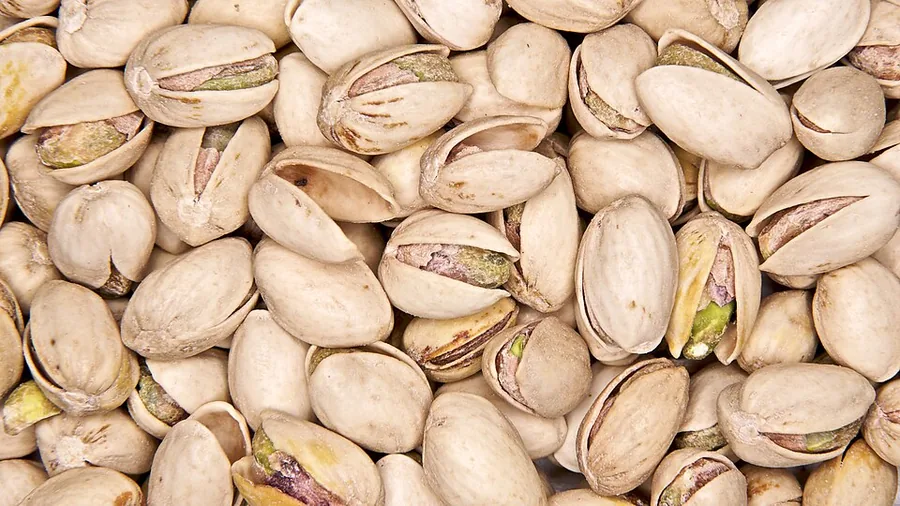
Pistachio runs on a slow, seasonal clock, and every phase is worth chasing. Set out dormant grafted trees in late winter to early spring once hard frost has passed, catch the petalless spring bloom, then bring in the nuts from late August into October as the hulls loosen and the shells split.
Northern hemisphere
Southern hemisphere
Typical months for a temperate climate: start earlier in warm zones, later where spring frosts linger.
- Plant: Late winter to early spring, as dormant grafted nursery trees, after hard frost danger passes
- Harvest: Blooms early to mid spring (wind-pollinated, no petals); nuts harvested late August through October when the hulls loosen and split and separate from the shell
Hardiness
USDA hardiness zones: 7–11
Temperature: down to -18°C
Troubleshooting
Most pistachio trouble tracks back to one of two things: a soil or canopy fungus, or a tree that never got pollinated. Catch the early signs on the wood, leaves, and shells and you jump in before a whole season slips away. Match what you see below, then move on it fast.
One side of the tree wilts and starts dying back
Track this straight to Verticillium wilt, a soil fungus that pushes into the roots and clogs the water-carrying tissue from the inside, so one branch collapses while the rest holds green. Slice into that branch and brown streaking runs through the wood, almost always packed to one side. No spray will beat it, so get ahead of it: start with a resistant rootstock like UCB-1 and steer young trees clear of ground that once grew cotton, tomato, or pepper.
Fix:
- Plant on resistant rootstock such as Pistacia integerrima (PGII) or UCB-1
- Remove and destroy severely affected trees
- Avoid replanting into heavily infested soil
Black shoot lesions and blighted nut clusters
Chalk this up to Botryosphaeria blight, a fungus that rides in on rain and overhead water and roars to life in wet years. Hunt for blighted shoots and shriveled nut clusters peppered with tiny black fruiting bodies. Move fast: prune out and burn the infected wood, drop those sprinkler heads to keep the canopy dry, and line up a strobilurin fungicide for bloom and the rain that follows.
Fix:
- Prune out and destroy blighted shoots and mummified panicles
- Apply strobilurin fungicides starting at bloom and before rain events
- Lower sprinklers and shorten irrigation duration to keep the canopy dry
Angular black leaf spots and leaves dropping early
Zero in on Alternaria late blight, which pounces the moment humidity, dew, or a wet canopy hang around the leaves. The spots come in black and angular, the hull lesions often flash a reddish halo, and the tree dumps its leaves well ahead of schedule. Take charge: open the canopy so air rushes through, swap overhead irrigation for drip, and rotate fungicides from late June into early July.
Fix:
- Improve canopy airflow and avoid late-season canopy wetting
- Apply fungicides around late June to early July, rotating modes of action
Harvest packed with empty or unsplit shells
Trace these blanks right back to pollination every time. Pistachio splits its male and female flowers across separate trees, so a female with no male blooming close by never grabs the wind-borne pollen she needs. Fix it head-on: plant one male within about 20 m of the females with bloom that overlaps, drive water and feeding through nut fill, and keep the crop load in check so alternate bearing does not starve the developing nuts.
Fix:
- Plant a male pollenizer within about 20 m of female trees with overlapping bloom
- Maintain adequate irrigation and nutrition during nut development
- Manage crop load to reduce alternate bearing
Toxicity
Pistachio nuts are a safe, healthy snack for people, with no toxin in the kernel itself. For cats and dogs the picture is milder than the rumors claim but not spotless: the high fat can upset the stomach, the shells can choke or block the gut, and moldy nuts can carry aflatoxin. Keep nuts and shells away from pets, and toss anything that smells musty.
Toxic to
Cats · Dogs · Horses · Rabbits · Livestock · Birds
Safe for
People
Cats Mild
The kernel is no true poison, but the fat can still leave a cat drooling, turning up her nose at dinner, and battling vomiting or loose stools. The real flashpoint is a swallowed shell, which can choke or jam the gut, and a moldy nut stacks on a risk of tremors or liver trouble.
Dogs Mild
Dogs charge the bowl first, and a fatty haul can kick off vomiting, diarrhea, and even pancreatitis. The hard shells choke or block the intestines, and any nut gone moldy can shove a dog straight into tremors or seizures.
Horses Caution
Pistachios are no horse feed, so there is no call to hand them over. A horse that raids the rich, fatty nuts can land in colic or a sour stomach, and moldy ones ratchet the risk up further.
Rabbits Caution
A rabbit's gut runs on hay and greens, not oily nuts. Even one small pistachio piles on far too much fat and can throw digestion off, so keep the kernels and the shells well clear.
Livestock Caution
Cattle, goats, and sheep have no use for pistachios, and clearing a scatter of fallen nuts is the smart move. The fat sits badly with a grazing animal, and moldy nuts carrying aflatoxin are the real hazard to hunt down.
Birds Caution
Plain, unsalted kernels get passed to pet birds now and then, but a salted nut dumps far too much sodium and a moldy one turns dangerous. Ditch the shells too, since a bird cannot handle them.
People Edible nuts safe
For people, shelled pistachios make a healthy snack and are safe to eat, so dig in. The only calls to make are tossing any nut that smells musty or moldy, since spoiled ones can carry aflatoxins, and easing back if a tree-nut allergy is in the mix.
Salted or seasoned pistachios add a sodium risk; keep shells and nuts, especially any moldy ones, out of reach of pets.
Helpline numbers

United States
ASPCA Animal Poison Control: (888) 426-4435 (fee applies)

United Kingdom
Animal PoisonLine: 01202 509000 (fee applies)

Australia
Animal Poisons Helpline: 1300 869 738
Varieties
Pistachio cultivars split into two camps, the females that bear the nuts and the males that pollinate them. A producing orchard needs both, so the names below are worth learning as pairs.
Kerman
California's long-reigning standard female cultivar, a late bloomer that swings hard between heavy and light crop years in a bold alternate pattern.
Peters
The workhorse male pollenizer, prized because its bloom lines up with Kerman and drives pollen to it on the wind.
Golden Hills
A University of California release that jumps ahead of Kerman in bloom and ripening, stretching the harvest window wide.
Lost Hills
Another UC female cultivar prized for its big nuts, usually teamed with the Randy male as its pollenizer.
Companions
Pistachio's one essential companion is a male tree of its own kind. Without a bloom-matched male within range, the wind has no pollen to carry and the females set nothing.
Plant near
Male pistachio pollenizer (e.g., 'Peters' or 'Randy'): Pistachio is dioecious and wind-pollinated; a nearby, bloom-synchronized male tree is required for female trees to set nuts.
How to propagate
Pistachio gets going by grafting, not by tossing a nut in the ground, because the named cultivars will not breed true. Seed still pulls its weight, but only to raise the rootstock that a chosen variety later gets grafted onto.
GraftingDemanding
Late summer (budding) or early spring (whip/bench graft) onto seedling rootstock · Grafted trees begin bearing in about 5 to 7 years; full production by 10 to 12 years
Named pistachio cultivars never come true from seed, so growers bud or graft them onto tough rootstocks like UCB-1 or Pistacia integerrima that pack in vigor and resistance to Verticillium. Bud in late summer or bench-graft in early spring, then settle in for the long haul. A grafted tree fires up bearing in about 5 to 7 years and hits full production by 10 to 12 years out, and that payoff is well worth the wait.
SeedModerate
Spring, after stratification · 1 to 2 years to a graftable rootstock
Seed pulls its weight raising rootstock, not copying a named variety, since the cultivars refuse to breed true. Chill the seed through stratification, sow it in spring, and within 1 to 2 years you have a seedling beefy enough to graft your chosen cultivar onto.
Myths
Pistachios are poisonous to dogs.
The kernel itself is no true toxin, and the ASPCA drops pistachios into the same not-genuinely-poisonous group. The real dangers are the fat, the shells, and mold: a rich load can upset the stomach or spark pancreatitis, a swallowed shell can block the gut, and a moldy nut can carry aflatoxin.
A single pistachio tree will produce a crop on its own.
Every pistachio tree lands as either male or female, never both. A female sets nuts only when a male blooms nearby at the same time and the wind carries its pollen across, so a lone tree hands you leaves and zero harvest.
Pistachios grow well in humid, mild climates.
These trees are built for hot, dry summers, real winter chill, and dry air. Humidity is the enemy here, feeding both Alternaria late blight and Botryosphaeria blight and leaving you with sick trees and poor nuts.