Tree · Pinaceae
Colorado Blue Spruce
Picea pungens
Plant it in full sun, cool air, and well-drained ground, and the blue spruce blazes silver for decades.
Full sun
Every 7–14 days
USDA 2–7
30–60 ft · 9.1–18.3 m
Overview
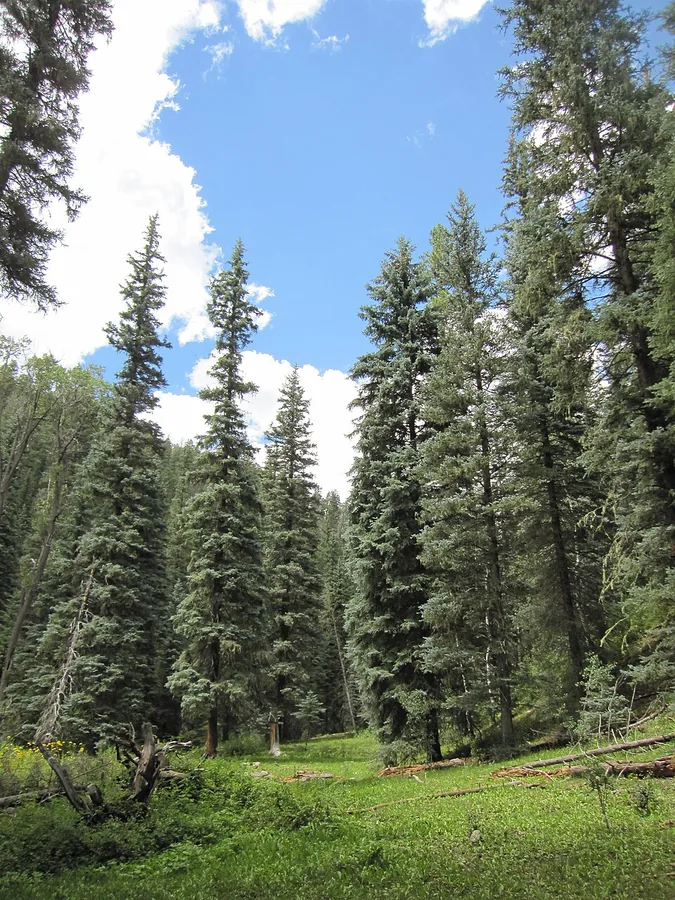
A Colorado blue spruce stops people in their tracks, flashing silvery-blue needles on a crisp pyramid frame. It charged out of the cool, dry central Rocky Mountains, where the air bites and the soil drains in a flash. Tap into that mountain heritage and the whole care routine clicks into place.
This slow-growing evergreen plays the long game and pays it back in spades. Turn it loose with room and time and it rockets past 60 feet tall and fans out 20 feet at the base, so it powers a landscape as a showpiece specimen or a windbreak, not some corner filler. Those stiff needles taper to genuinely sharp points, prickly enough to send most browsers running.
Cold only makes it stronger, hardy from zone 2 to zone 7 and built to power through winters that flatten weaker trees. The thing that trips it up is heat and humidity. Drop it into a muggy southern garden and it thins out and drops its lower branches, so the cooler and breezier the spot, the harder it holds its dazzling looks.
Care
The short version: full sun, cool air, and rich, well-drained soil that never sits wet. Soak it deeply while it is young, hand it plenty of room to stretch out, and then mostly stand back and let it run.
Light
Hand a blue spruce full sun, ideally 6 or more hours a day, and it fires back the densest growth and the most electric blue. It will take some afternoon shade, a real bonus in hot regions, but bury it in deep shade and it grows thin and the color drains away.
Water
Soak young trees deeply and keep the soil evenly moist but never sodden, since standing water is one of the rare things that drops this tree for good. An older, established spruce kicks into being fairly drought tolerant and mostly handles itself, though a deep drink through a long dry spell pays you back fast.
Soil
Plant it in rich, moist, well-drained loam, though it adapts to most soils as long as water keeps moving through. A pH anywhere from 5.5 to 7.0 suits it perfectly. The one thing that stops it cold is ground that stays wet, which rots the roots.
Temperature
This mountain tree shrugs off the cold, thriving from a savage -51°F (-46°C) up to around 86°F (30°C). Heat sets the real ceiling here, not cold. Pile on sustained warmth and humidity and the tree strains, which throws the door open to disease.
Humidity
Blue spruce craves it dry and airy, the polar opposite of a steamy greenhouse. Damp, stagnant air is exactly what lets needle-cast fungi dig in, so the more open and breezy the spot, the stronger the tree powers along.
Feeding
An established spruce in decent soil rarely needs feeding at all. If a soil test flags a real shortfall, a balanced slow-release tree fertilizer in spring does the whole job. Drop the routine yearly feeding, because this tree neither craves it nor benefits from it.
Pruning
Go light on pruning and never cut the central leader, the shoot that drives the tree's signature shape. Strip out only dead, diseased, or damaged branches, and tackle it in late winter or a dry stretch to keep Cytospora canker from riding in on fresh wounds.
Repotting
A blue spruce wants open ground, not a pot, so repotting rarely comes up beyond shifting a young nursery tree into its permanent home. If one is parked in a container, watch for roots circling the pot or bursting out the drainage holes, your green light to plant it out.
Size & spacing
Gear up for a giant, because a mature specimen shoots to 30 to 60 feet (9 to 18 m) tall and 10 to 20 feet (3 to 6 m) wide at the base. Hand it that wide-open room and keep it well clear of buildings, walks, and power lines right from day one.
When to plant
This evergreen hands you no harvest to chase, just a prime window to get it planted and growing. Jump on spring once the soil thaws, or early fall while the roots still grab warm weeks to dig in before winter. Steer clear of midsummer heat, when a new tree fights to keep its young roots fed.
Northern hemisphere
Southern hemisphere
Typical months for a temperate climate: start earlier in warm zones, later where spring frosts linger.
- Plant: Spring or early fall
- Harvest: Non-flowering; grown for evergreen foliage and pyramidal form
Hardiness
USDA hardiness zones: 2–7
Temperature: down to -46°C
Troubleshooting
Most blue spruce trouble flares up first in the needles or on one fading branch, and a lot of it tracks straight back to heat, humidity, or a site that traps water. Pounce on the early signs and you can often head a problem off before it spreads. Match what you spot below, then move while it still counts.
Lower branches giving out, bluish-white resin crusting the bark
Cytospora canker pounces on trees already worn down by drought or heat, picking off one scattered lower branch at a time. The dead giveaway is a hard, bluish-white crust of dried sap near the base of a dying branch. No spray will cure it, so prune the dead wood out in dry weather, sterilize your tools between cuts, and keep the tree watered and mulched to power it back up.
Fix:
- Prune out and destroy infected branches during dry weather
- Disinfect pruning tools between cuts
- Repeat pruning over two consecutive seasons if needed
- Reduce stress with mulch and watering during drought
Inner needles browning off and dropping as bare patches climb upward
Inner and older needles browning and dropping while the tree thins from the lowest branches upward spells needle cast, usually the Rhizosphaera fungus charging up from the bottom. Grab a hand lens and hunt for rows of tiny black dots along the needles, a marking no healthy tree ever shows. Throw the tree open for airflow, keep the foliage dry, and hit new growth with a fungicide for at least two seasons straight.
Fix:
- Improve air circulation by spacing and selective thinning
- Avoid wetting the needles with overhead sprinklers
- Apply chlorothalonil, copper hydroxide, or mancozeb when new needles are about half their mature length, with a second application 3 to 4 weeks later, for at least two consecutive years
- Remove and destroy fallen infected needles
The leader folding like a shepherd's crook before dying back
When the leader flops into a shepherd's crook and dies, the white pine weevil is to blame, its larvae boring straight down inside the top shoot. Scan last year's leader in spring for pinhead holes weeping sap. Cut the dead leader out below the damage before the adults break free, then tie up one straight side branch and train it to take over as the new top.
Fix:
- Prune out and destroy the infested dead leader below the larval damage in summer before adults emerge
- Train a single straight side branch to become the new leader
- Apply a labeled insecticide to the leader in early spring where weevil pressure is high
Bronzing, speckled needles strung with fine webbing
Needles going dull and speckled under a haze of fine silk flag the spruce spider mite, which explodes in hot, dry, dusty spells. Rap a branch over a sheet of white paper and watch for specks that crawl. Blast the foliage with a hard jet of water, then bring in horticultural oil in the cool of spring or fall while the mites are active.
Fix:
- Hose down foliage with a strong stream of water to dislodge mites
- Apply horticultural oil or a labeled miticide when mites are active in cool spring and fall
- Avoid broad-spectrum insecticides that kill mite predators
Toxicity
Pet owners and parents can breathe easy, because the blue spruce is not poisonous. The one thing to keep an eye on is the needles, which taper to sharp points that can scratch skin or poke a small child near the eyes. A pet that grabs a mouthful might land a quick upset stomach, and that is as bad as it gets.
Safe for
People · Cats · Dogs · Horses · Rabbits · Livestock · Birds
Cats None
Cats have nothing to fear here. A cat that nibbles a few needles might drool or throw up briefly, and that passes fast.
Dogs None
No danger for dogs here. The prickly needles poke rather than poison, though a hearty chew can leave a pup briefly off its food.
Horses None
Horses face zero toxic risk. The rigid, prickly needles are unappetizing enough that most will not bother grazing them.
Rabbits None
No worries for rabbits here, and the spiny foliage is hardly the sort of thing most will stop to nibble.
Livestock None
Cattle, sheep, and goats can browse right beside it unharmed, though the sharp, spiny needles tend to steer them elsewhere.
Birds None
Birds are entirely safe, and many gladly roost and nest deep within its dense, spiny branches.
People None
People run no risk of poisoning. Just keep an eye on the sharp needle tips, which can nick skin or poke a young child close to the eyes.
The needles are stiff, sharp, and bristly and can mechanically poke or scratch skin and eyes, and the species has been noted to cause injury to toddlers from its sharp leaf tips; this is physical irritation, not a poisoning. Chewing on needles may cause mild mouth or stomach irritation in pets.
Varieties
Nearly every blue spruce on the garden bench is a named cultivar, each one picked for a standout color, shape, or size. A handful turn up way more than the rest, and they span the whole range from towering giants down to pint-sized rock-garden dwarfs.
Hoopsii
Hoopsii is a dense, pyramidal star grown for the most intense silvery-blue needles of the whole bunch, climbing to around 30 to 50 feet.
Fat Albert
Fat Albert packs a broad, full pyramid into a manageable 8 to 15 feet, which lands its bright blue needles right in reach of smaller yards.
Baby Blue
Baby Blue is a semi-dwarf with an even, tidy cone shape to about 15 to 20 feet, decked out in closely set silvery blue-gray foliage.
Montgomery
Montgomery is a slow dwarf that builds a broad cone or globe just 2 to 3 feet across over years, perfect for firing up rock gardens and foundation beds.
How to propagate
Blue spruce multiplies by seed or by grafting, and the pick hinges on whether that knockout blue is non-negotiable. One route runs slow but easy, the other demands skill but delivers every time.
SeedModerate
Sow stratified seed in spring · Several years to reach landscape size
Growing the species from seed absolutely works, but it is a slow climb, and a tree takes several years to reach any real landscape size. Sow in spring after a cold, moist stratification to kick germination into gear. Just know the seedlings vary in color, so the famous blue is far from a sure thing.
GraftingDemanding
Late winter onto seedling rootstock · Several years
The named blue cultivars like Hoopsii and Fat Albert refuse to come true from seed, so they get grafted instead. The work goes down in late winter onto a seedling rootstock, and even then the young graft needs several years to settle in. This is exacting work, far better in the hands of a seasoned propagator than a first-timer.
Myths
The Colorado blue spruce is a hardy, enduring tree that flourishes in nearly any North American landscape.
The reality is that it came out of the cool, dry central Rocky Mountains and struggles the moment it lands outside that climate. All across the humid East and Midwest it thins out and drops its lower branches as needle casts and Cytospora canker pile in, and several extension programs no longer recommend it for those regions.