Tree · Pinaceae
Dwarf Alberta Spruce
Picea glauca
A neat, slow-growing evergreen cone that thrives on full sun, steady moisture, and air that moves.
Full sun
Every 7–14 days
USDA 3–6
10–13 ft · 3–4 m
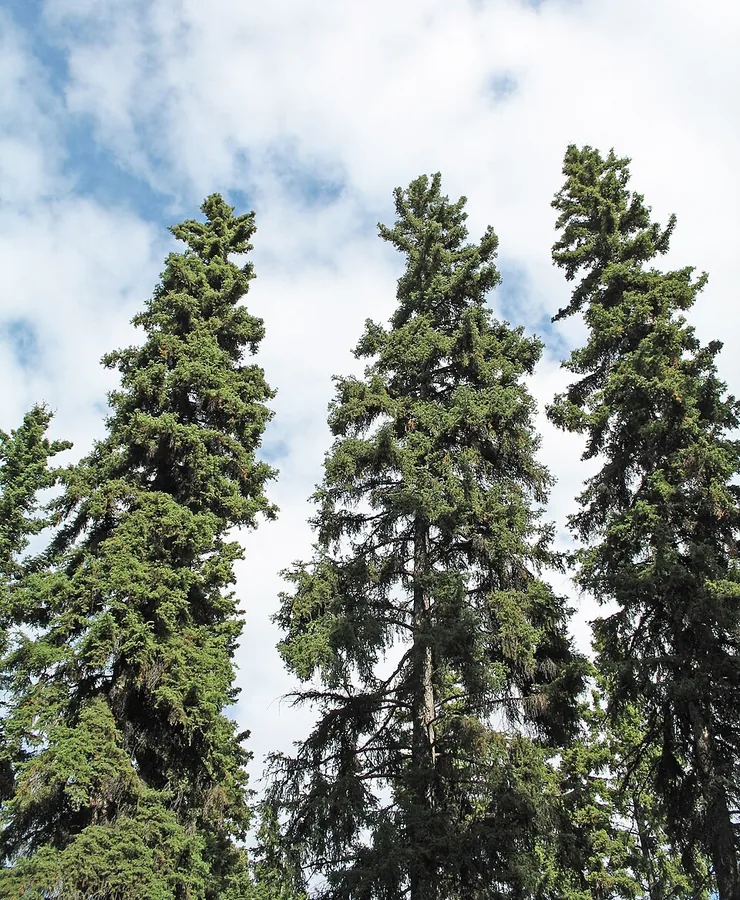
Overview
The dwarf Alberta spruce earns its spot as the crisp little evergreen cone that frames doorways and holds down foundation beds with real presence. It is a slow-growing sport of the white spruce, a naturally compact mutation that gardeners have grown for generations to enjoy its dense, near-perfect pyramid of soft green needles. Best of all, it sculpts itself, so the good looks come built in.
It truly comes alive in cold gardens, powering through hardiness zones 3 to 6 and brushing off winters that plunge to -40°F (-40°C). It grows at an unhurried pace, just a couple of inches a year, so a young plant keeps its small stature for a long time before it ever reads as a tree. That gentle climb makes it a joy to slot into a small yard or a generous pot.
Nail two things and it rewards you for years. It craves full sun and air that keeps moving, because hot, still, dusty corners roll out the welcome mat for spider mites, the one pest that can hollow it out from the inside. Hand it that plus steady moisture, and it holds its sharp, clean shape season after season while asking next to nothing.
Care
The short version: full sun, soil that stays moist but well-drained, and good air circulation. Water deeply in dry spells and before winter, feed lightly in spring, and stay sharp for spider mites when the weather turns hot and still.
Light
Hand it full sun and it rewards you with the densest, healthiest growth. It will tough out partial shade, but a shaded plant grows thinner and more open, and shade with poor airflow is exactly where spider mites get rolling.
Water
Keep the soil evenly moist and well-drained, watering roughly every 7 to 14 days and stepping it up in drought. A deep soak before the ground freezes in late fall is your number one weapon against winter burn. Dry foliage and moving air also knock back mites.
Soil
Plant it in moist, well-drained loam that runs acidic to neutral, a pH of 6.0 to 7.0. It hates soggy ground, so amend heavy clay or build it a raised spot to keep the roots happy.
Temperature
This conifer laughs at the cold, thriving from -40°F to 95°F (-40°C to 35°C). It shrugs off deep cold far more easily than long, hot, dry heat, which wears it down and throws the gates open for mites.
Humidity
Plain outdoor humidity does the job, so there is no figure to chase. What really counts is air circulation, since still, damp air around the needles cranks up the risk of pests and disease.
Feeding
Feed lightly in spring with a balanced or acidifying slow-release evergreen fertilizer. One feed a season fuels this slow grower just fine, and piling on more does it no favors.
Pruning
Pruning stays mostly minimal, which is a treat. Clear out dead or mite-damaged wood, and the instant a vigorous, large-needled shoot reverts to the wild white spruce form, lop it back below where it emerges before it takes over.
Repotting
In a pot, refresh it every 2 to 3 years with new mix. Keep watch for roots circling or bursting out the drainage holes, water rushing straight through, or growth that stalls and dies back, all loud signs it has outgrown its home.
Size & spacing
Over many years it shoots up to about 10 to 13 feet (3 to 4 m) tall with a 7 to 10 foot (2.1 to 3 m) spread. Give it open ground and room for air to move, both to make space for its mature size and to keep mites from gaining a foothold.
When to plant
Forget a sowing season here, since the dwarf form springs from cuttings or grafts rather than seed. Plant young specimens out in spring or early fall, when the soil works easily and the roots grab mild weather to dig in before heat or hard frost arrives.
Northern hemisphere
Southern hemisphere
Typical months for a temperate climate: start earlier in warm zones, later where spring frosts linger.
- Plant: spring or early fall
Hardiness
USDA hardiness zones: 3–6
Temperature: down to -40°C
Troubleshooting
Almost every issue with this spruce surfaces in the needles or the shape. Browning foliage flags spider mites or winter burn, while a sudden coarse limb signals the dwarf form reverting. Match what you see below and pounce early, since a stressed conifer takes its time bouncing back.
Inner needles drifting to bronze under fine webbing
Time to take action, because this points straight to the spruce spider mite, a pest that piles onto plants worn down by hot, dry, dusty corners with stale air. Grab a sheet of white paper, tap a branch above it, and hunt for the tiny crawlers that drop. Then blast the foliage with a hard water spray, hit it with insecticidal soap or horticultural oil, and keep the plant deeply watered with the air moving so it powers right back to health.
Fix:
- Wash foliage with a strong water spray weekly to bi-weekly to dislodge mites
- Apply insecticidal soap or horticultural oil to affected foliage
- Apply a dormant oil spray in mid-winter to kill overwintering eggs
- Reduce plant stress with deep watering and improved air circulation
Scorched brown needles racing across the windward side in late winter
Meet winter burn, the trick the cold plays when frozen soil locks the roots out of the water that drying winter sun and wind keep yanking from the needles. Look for it on the exposed south or southwest side, where foliage browns while the sheltered side stays a healthy green. Soak the plant deeply in late fall before the ground freezes, then wrap young or exposed plants in burlap to carry them through their first few winters in great shape.
Fix:
- Water deeply in late fall before the ground freezes
- Provide a windbreak or burlap screen on the exposed side
- Site away from drying winter wind and reflected heat
A coarse, fast limb charging out of the cone shape
Here is a fascinating quirk: the dwarf 'Conica' sprang from the full-size white spruce, and every so often a shoot reverts straight back to that vigorous parent, usually after a bout of stress. Catch it early by the giveaways, longer needles, faster growth, and a coarser look crashing against the trim dwarf foliage. Slice that reverted shoot off cleanly below where it emerges the second you spot it, or it will muscle out and take over the whole plant.
Fix:
- Prune the reverted shoot off cleanly below where it emerges as soon as it is noticed
- Remove repeatedly reverting plants if they cannot be kept in character
Toxicity
Brilliant news for a pet household: dwarf Alberta spruce is not toxic. It stays clear of the ASPCA's list of poisonous plants, and nothing in the needles or wood will harm cats, dogs, or other animals. The single thing to watch is the sharp, stiff needles, which can prickle a curious mouth or upset a stomach if chewed.
Safe for
People · Cats · Dogs · Horses · Rabbits · Livestock · Birds
Cats None
Great news for cat people. A cat that gnaws the stiff needles might drool or cough a little back up, but that is purely the prickle talking, not poison.
Dogs None
Dog owners can breathe easy. The worst a mouthful of sharp needles delivers is a mild stomach upset, and that is the end of it.
Horses Safe
Horses can graze right alongside it without a care, since the foliage packs no toxin.
Rabbits Safe
Rabbits are in the clear, and the coarse needles rarely tempt much nibbling anyway.
Livestock Safe
Cattle, goats, and sheep face zero poisoning risk from this spruce.
Birds Safe
Birds flock to spruce for shelter and a perch, and nothing on the plant is poisonous to them.
People Safe
People are perfectly safe too. There is nothing here to eat, and the only real catch is a sharp poke from the needles.
No special toxicity precautions needed; discourage pets from chewing sharp evergreen needles.
Varieties
Most shelves stock the plain 'Conica', but a few named selections crank up the difference in size, color, or density. These are the ones worth chasing down.
Jean's Dilly
Pint-sized and slower still than 'Conica', it inches up just 2 to 4 inches a year toward roughly 5 feet, packing very short, slightly twisted needles into a tight cone.
Rainbow's End
It bursts into creamy yellow new growth in early summer against the light-green older foliage for a striking two-tone, variegated show.
Pixie
A tighter, denser little miniature of the 'Conica' form that fits the very smallest spaces.
Sander's Blue
A 'Conica' sport flashing soft blue-green needles that holds a cone shape but climbs on to around 20 feet in time.
How to propagate
Steer clear of seed for this one, since seedlings revert to the full-size white spruce. Both ways of reproducing it run slow and demand patience, so most growers happily snap it up rather than raise it from scratch.
Stem cuttingsDemanding
Late summer to fall (semi-hardwood) · Several months to over a year to root
Skip seed and grow the 'Conica' from cuttings, since seed never comes true to the dwarf form. Take semi-hardwood cuttings from late summer into fall, then dig in for a long haul, because rooting can stretch from several months to more than a year.
GraftingDemanding
Late winter onto white spruce rootstock · One or more seasons
Grafting nails the dwarf form reliably, fusing it onto vigorous white spruce rootstock in late winter. Give the union a season or more to knit together, and the young plant is then set to grow on.
Myths
Dwarf Alberta spruce stays tiny forever.
It is slow, not stuck at tiny. Give it decades and it climbs to about 10 to 13 feet, so what you are really raising is a small tree taking the scenic route, not a forever-dwarf.