Tree · Fagaceae
Bur Oak
Quercus macrocarpa
Plant a bur oak and kick off a tough, century-spanning shade tree that powers through cold, drought, and gritty city soil.
Full sun
Every 7–14 days
USDA 3–8
60–80 ft · 18.3–24.4 m
Overview
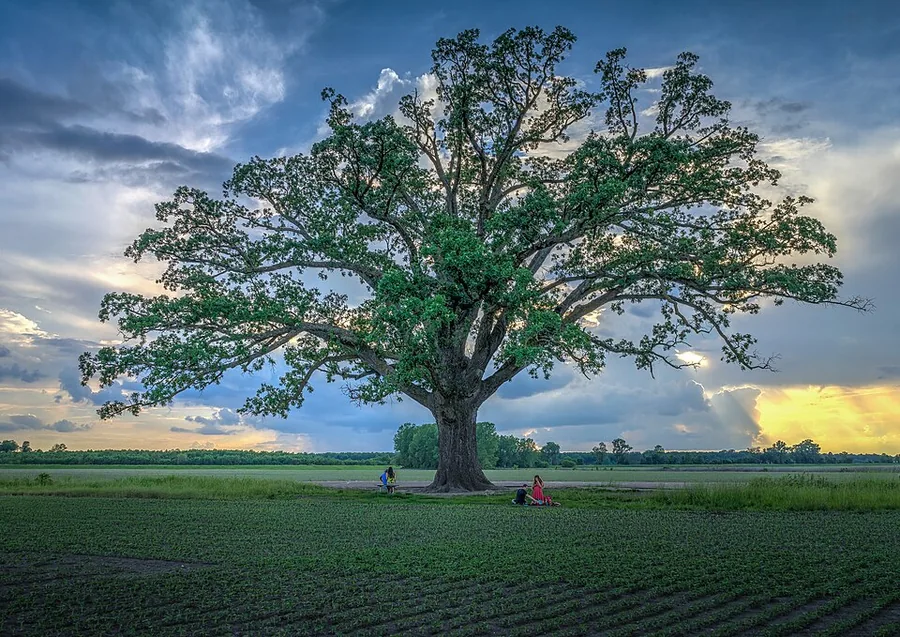
The bur oak earns its reputation as one of the toughest trees on the continent, a slow but unstoppable giant that can push past a century and stretch to 60 to 80 feet (18 to 24 m) tall and just as wide. It runs with the white oak group, and it powers through conditions that flatten softer trees, from bone-deep winters at -40°F (-40°C) to dry uplands and packed city clay.
Then come the acorns, the biggest of any native oak and now and then a full 1.5 inches across, each one riding in a deep fringed cup that looks downright mossy and hands the tree its other name, mossycup oak. The catkins keep a low profile, hanging yellow-green and easy to overlook through April, and the acorns swell and ripen in one go that same fall.
This is the tree to plant for the long run, and it loves room to spread out. Hand it full sun and open ground well clear of houses, foundations, and power lines, and once those roots dig in it gives back for generations while asking next to nothing.
Care
The short version: full sun and room to stretch, soil of almost any kind as long as it drains, steady water for the first few years, then watch it take off on its own.
Light
Bur oak chases full sun, six or more hours a day, and that flood of light is what builds its broad, even crown. It will tough out a little shade while young, but raise it in real shade and it grows thin and leans hard toward whatever light it can grab.
Water
Keep a young tree watered on a steady cycle through its first few years while the roots drive down, then step right back. A grown bur oak is very drought tolerant and powers through long dry spells solo, asking for a drink only when a drought turns severe.
Soil
Hardly any tree shrugs off bad ground like this one. It hits its stride in moist, well-drained loam but takes clay, dry sites, and even alkaline soil in stride, which is exactly why it thrives in the roughest city spots.
Temperature
Cold-hardy right to the core, this tree cruises across -40°F to 100°F (-40°C to 38°C) and holds strong through USDA zones 3 to 8. Barely any heat or cold in its range puts a dent in it.
Humidity
Forget fussing over humidity outdoors with a bur oak. It grows just as happily on damp bottomlands as on dry prairie edges, so there is no level to manage at all.
Feeding
A grown bur oak rarely needs feeding, pulling everything it wants from a sprawling root run. If the soil is truly poor, one shot of balanced slow-release fertilizer in spring covers it.
Pruning
Save the saw for late winter while the tree is dormant, and clear out dead, damaged, or crossing branches. Shut down all cutting from April through October, when sap-feeding beetles can ferry oak wilt into a fresh wound.
Repotting
none
Size & spacing
Gear up for a tree that climbs to 60 to 80 feet (18 to 24 m) tall and just as wide at maturity. Set it well clear of buildings, foundations, and utility lines so that big crown and its spreading roots get all the room they want.
When to plant
A bur oak gets planted, not sown to a vegetable's clock. Drop a container or balled-and-burlapped tree into the ground in spring, or press fresh acorns into the soil come fall and let the season carry them. The catkins slip past in April, and the acorns ripen and tumble down that same autumn, right on schedule.
Northern hemisphere
Southern hemisphere
Typical months for a temperate climate: start earlier in warm zones, later where spring frosts linger.
- Plant: Plant balled-and-burlapped or container stock in spring; sow acorns outdoors in fall
- Harvest: Yellowish-green inconspicuous catkins in April; acorns mature in fall of the same year
Hardiness
USDA hardiness zones: 3–8
Temperature: down to -40°C
Troubleshooting
A healthy bur oak hands you remarkably little trouble, and most of what turns up is purely cosmetic. The one issue that earns real attention is oak wilt, so learn its look and lock in the timing rules that shut it out. Match what you see below before you make a move.
Crown leaves browning from the edges and dropping fast
This is oak wilt, a fungus that jams the tree's water channels and kills from the top down. Good news with a bur oak: as a white oak it usually fades slowly instead of crashing in one season, though drought and root damage can pull off the same look. Keep the saw away from April through October, when the spore-carrying beetles are out, and get a certified arborist to lock down the diagnosis with a lab culture.
Fix:
- Avoid wounding or pruning oaks April through October
- Contact a certified arborist or extension diagnostic lab for confirmation
- Sever root grafts between adjacent oaks where feasible
- Remove and properly dispose of severely infected trees to limit spread
Odd bumps, balls, or growths on leaves and twigs
Those are galls, and they pop up when gall wasps or mites lay eggs and the tree throws a protective shell around the insect inside. They look wild, but they almost never hurt a healthy oak, so the smart play is usually to let them ride. Clip off a few heavily galled twigs if they bug you, and keep the tree watered and charging along instead of grabbing a spray.
Fix:
- Tolerate galls in most cases as they rarely harm tree health
- Prune out and dispose of heavily galled twigs if desired
- Maintain tree vigor with proper watering
Toxicity
This shade tree is a keeper, but its acorns, buds, and young leaves are off the menu for everyone. They pack tannins that upset the stomachs of cats and dogs, choke or block the gut when a whole acorn goes down, and drive serious kidney damage in horses and livestock that graze a lot of them. Rake up the fall drop where pets and stock can get at it, and skip the raw acorns yourself too.
Toxic to
Cats · Dogs · Horses · Rabbits · Livestock · Birds · People
Cats Mild
A cat that chews a leaf or a fallen acorn tends to vomit, drop its appetite, and run loose stools. A whole acorn is a real choking and gut-blockage risk for a small animal too, so clear them out fast.
Dogs Mild
Dogs lead the pack when it comes to crunching acorns off the ground, which kicks off drooling, an upset stomach, and diarrhea. The bigger danger is a swallowed acorn jamming the gut, so stay alert for repeated vomiting or a tender belly.
Horses Severe
Horses take the worst hit. A horse that eats a lot of acorns, buds, or young leaves can show colic, constipation that turns to bloody diarrhea, a dull mood, and dark urine, and the tannins can wreck the kidneys.
Rabbits Toxic
Keep rabbits well clear of oak. The tannins in leaves, buds, and acorns are too harsh for their gut, and even a small nibble can leave one off its food and dragging.
Livestock Severe
Cattle, sheep, and goats can poison themselves on a heavy load of buds, leaves, or acorns, especially when other forage runs short in fall. You are looking at kidney damage, weakness, and in bad cases death, so fence stock away from dropping oaks.
Birds Caution
Plenty of wild birds shell and eat acorns without missing a beat, but the same tannins can hit pet birds and poultry, and a whole acorn is far too big and hard for most to handle safely. Hand none to caged birds, and keep watch over backyard flocks scratching around under a tree.
People Caution
People do not eat raw acorns, and a mouthful is bitter and rough on the stomach thanks to the tannins. Traditional acorn foods get leached for hours first, so treat anything off the tree as not for snacking and keep young children from popping them in their mouths.
Rake up and dispose of fallen acorns and leaves where pets and livestock can access them.
Helpline numbers

United States
ASPCA Animal Poison Control: (888) 426-4435 (fee applies)
Poison Control: (800) 222-1222



Canada
Poison Centres: 1-844-764-7669
Varieties
Bur oak mostly goes in the ground as the straight species, but it loves to cross out in the wild. Here are the two forms worth chasing down.
Quercus macrocarpa (species)
The straight species grows the biggest acorns of any North American oak, up to 1.5 inches across, and each one rides in a deep mossy cap that fringes the rim, the very trick that hands the tree both names, bur oak and mossycup oak.
Quercus × schuettei
Where bur oak and swamp white oak grow shoulder to shoulder, they cross into this natural hybrid, kicking out leaves and acorns that land partway between the two parents.
How to propagate
The most rewarding way to launch a bur oak is to plant an acorn, and the white oak group makes it a breeze, because the seed fires up fast with hardly any fuss.
SeedModerate
Collect ripe acorns in fall and sow promptly outdoors or stratify before spring sowing · Acorns germinate within a few weeks; seedlings rapidly develop a deep taproot, making later transplanting difficult
Bur oak fires up from seed with ease as long as the acorns are fresh. Scoop up the ripe nuts as they drop and sow them straight into the ground that autumn, since white oak acorns carry almost no dormancy and sprout within a few weeks. Acorns from far northern trees take off better after 30 to 60 days of cold, moist storage at 32°F to 41°F (0°C to 5°C) ahead of a spring sowing. Plant the acorn right where you want the tree, because the seedling drives down a deep taproot almost at once and refuses to be moved after that.
Myths
Acorns are safe for pets and livestock because wild animals eat them all the time.
Deer, squirrels, and jays are wired to power through the tannins in acorns, buds, and oak leaves, but cats and dogs land an upset stomach, and horses and livestock can take serious kidney damage after eating a lot. What fuels wildlife can flat-out poison your animals, so rake up the drop and keep stock clear of it.