Houseplant · Orchidaceae
Cymbidium Orchid
Cymbidium
Give it bright light and cool fall nights, and the cymbidium fires up long, arching sprays of bloom.
Bright indirect
Every 5–7 days
50–86°F · 10–30°C
USDA 10–12
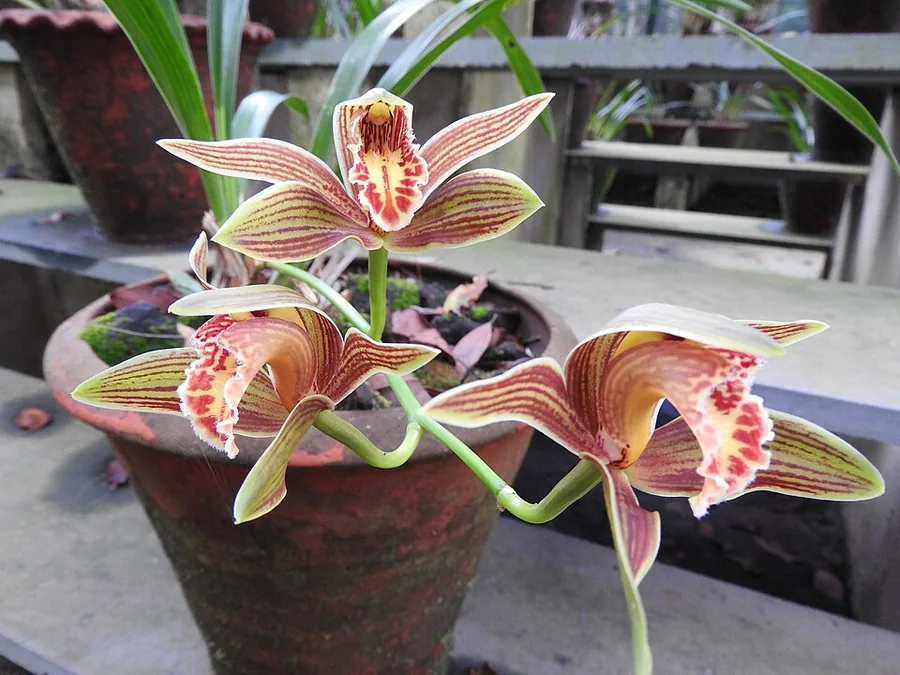
Overview
The cymbidium, or boat orchid, ranks among the easiest orchids to win over indoors, and it rewards the effort fast. It powers up from fat storage stems called pseudobulbs, launching long strap-shaped leaves and arching flower spikes that hold their bloom for weeks through late winter and spring. Unlike a lot of orchids it is terrestrial at heart, so it digs into a loose bark mix instead of gripping a tree.
Here is the trick that makes it tick: this plant chases a chill. It needs a stretch of cool fall nights to fire off its flower spikes, which is exactly why a thriving specimen kept toasty all year hands you gorgeous leaves and not one bloom. Get the seasonal rhythm dialed in, bright light through the year plus that autumn cool-down, and the flowering runs itself.
It really does forgive a lot once you crack its two habits: it wants its bark moist but never waterlogged, and it actually craves being a touch crowded in its pot. Grow it well and a single clump charges on for many years, widening out and flowering more freely every season.
Care
The short version: bright indirect light all year, a bark mix kept moist but never soggy, and a run of cool fall nights to spark the blooms. Feed weekly through the growing season at a weak dilution, and repot just every couple of years.
Light
Cymbidiums thrive on bright indirect light, with strong full light through winter and bright filtered light in summer to keep the leaves from scorching. Skipping flowers? Too little light is the second culprit to chase down.
Water
Soak it well with tepid water every 5 to 7 days, keep the bark moist but never soggy, and let every drop of excess drain off. Go for damp over wet, because water pooling at the roots is the fastest ticket to rot.
Soil
Pot it in a bark-based orchid mix that drains freely, never ordinary potting soil, which chokes the roots. A slightly acidic pH of 5.5 to 6.5 hits the mark, and the chunky bark keeps fresh air rushing around the roots.
Temperature
Cymbidiums roll with a wide range, from about 50°F to 86°F (10°C to 30°C). The seasonal swing is the real driver, since a stretch of cool fall nights is what tells the plant to fire up its flower spikes.
Humidity
Push for 50% to 70% humidity, well above what most rooms muster in winter. A pebble tray or a nearby humidifier lifts it, and steady airflow keeps the damp leaves from sliding into pest and rot trouble.
Feeding
Feed it weekly from spring through fall with a balanced fertilizer cut to quarter or half strength, dished out right after watering so it never lands on dry roots. Back off through winter as growth winds down.
Pruning
Forget any structural pruning. Once the blooms fade, cut the spent flower spikes back to the base, and strip off any yellowed or dead leaves to keep the plant tidy and breathing.
Repotting
Repot just every 2 to 3 years, in spring after flowering, since cymbidiums bloom harder when slightly crowded. Bump it up only once the leading pseudobulb hits the pot edge, the roots crowd or escape, or the old bark breaks down and stays wet.
Size & spacing
A grown clump shoots up 1 to 4 feet (30 to 120 cm) tall and spreads 9 to 35 inches (23 to 90 cm) wide, with the leaves and arching spikes claiming most of that height. Park it where those spikes can arch out wide without bumping into anything.
Troubleshooting
Almost every cymbidium snag tracks back to one of three culprits: too little light or warmth at the wrong season, the usual houseplant pests, or a pot that stays too wet. Pin down what matches below and pounce early, before a setback chews through the roots.
Mushy blackened roots and a soggy crown
Here comes root rot, sparked by a medium that sits too wet, usually once old bark crumbles and quits draining. Tip the plant out and read the roots fast, since firm pale ones still have life while brown mushy ones are toast. Snip off the dead roots, repot into fresh bark, dial back the watering, and the plant gets a real shot at bouncing back.
Fix:
- Remove rotted roots and repot into fresh well-draining bark medium
- Reduce watering frequency and ensure free drainage
Loads of leaves but the flower spikes never come
A cymbidium that grows strong yet stays bloomless is nearly always begging for its cool fall nights, that day-to-night temperature drop that kicks spike formation into gear. Dim winter light drags on it too. Hand it bright seasonal light plus a good run of chilly autumn nights, and watch the spikes push up.
Fix:
- Expose to cool fall nights with a marked day-night temperature drop
- Increase light to full winter light and bright filtered summer light
Speckled, yellowing leaves with webbing or sticky residue
Spot fine speckling and faint webbing and you have likely caught spider mites early, while soft clustered bugs and a sticky film flag aphids. Both move in on leaf undersides and tender new growth, so go straight there to scout them. Blast the foliage with a rinse, wipe the pests off, then hit them with insecticidal soap or horticultural oil and keep at it until they clear out.
Fix:
- Rinse foliage and wipe off pests
- Treat with insecticidal soap or horticultural oil, repeating as needed
Toxicity
Great news for anyone with pets or kids: the cymbidium is non-toxic. The ASPCA lists orchids as safe for cats, dogs, and horses, and that runs true for the other animals around the house. A curious pet that grabs a bite of leaf might catch a quick stomach upset from the roughage, but there is zero poison in play.
Safe for
People · Cats · Dogs · Horses · Rabbits · Livestock · Birds
Cats None
Cats get the all-clear here. Nibble a leaf and the worst that follows is a quick upset stomach from the roughage, and that fades fast.
Dogs None
Dogs are clear too. A keen chewer risks nothing more than a touch of mild, passing tummy trouble.
Horses Safe
Horses can graze nearby with zero worry. Cymbidium foliage packs no toxin that would harm them.
Rabbits Safe
Rabbits stay safe around it, though it earns no spot in their diet and should never crowd out their proper greens.
Livestock Safe
Cattle, goats, and sheep face no poisoning from this orchid whatsoever.
Birds Safe
Pet birds can perch right beside it, since the plant carries no toxic compounds at all.
People Safe
People stay safe around it, kids included. It just is not a plant anyone grows to eat.
Although non-toxic, eating large amounts of any plant material may cause mild, temporary stomach upset.
Varieties
Cymbidiums run to hundreds of species and hybrids, from cool-growing wild types to award-winning crosses bred for color and form. Here are a few worth chasing down.
Cymbidium erythraeum
A cool-growing species that performs so reliably in the garden it bagged the RHS Award of Garden Merit.
Cymbidium lowianum
A big species that fires off long arching sprays of green flowers, each lip flashed with red, and it grabs an Award of Garden Merit too.
Cymbidium Sarah Jean gx 'Ice Cascade'
A white-flowered hybrid that cascades, putting on its best show as it spills over the edge of a raised pot or shelf.
Cymbidium Tiger Tail gx
An Award of Garden Merit hybrid that keeps churning out dependable, patterned blooms.
How to propagate
At home you bulk up your cymbidiums by division rather than seed, carving one mature clump into several brand new plants.
DivisionModerate
Spring, after flowering and at repotting · 1-2 years to re-establish and flower again
Tackle a crowded clump in spring, right after flowering while you are already repotting. Split it so each fresh piece holds at least three healthy pseudobulbs plus a leading growth, the stored fuel that powers its comeback. Then hold your nerve, because a new division usually needs one to two years to dig in and flower again.
Myths
All orchids are poisonous to cats and dogs.
Toss that one out. The ASPCA lists orchids as non-toxic to cats, dogs, and horses, and cymbidiums slot right in. Chew a leaf and a pet risks nothing worse than a mild, short-lived stomach upset.
Orchids are parasites that live off other plants.
Wrong on every count. Cymbidiums are terrestrial and semi-terrestrial orchids that dig into their own bark medium and make their own food through their leaves. They pull nothing from a host and never have.