Houseplant · Orchidaceae
Slipper Orchid
Paphiopedilum
Keep a slipper orchid warm, softly lit, and evenly moist, and it puts on a single bloom that runs for months.
Medium indirect
Every 5–7 days
55–81°F · 13–27°C
USDA 10–12
Overview
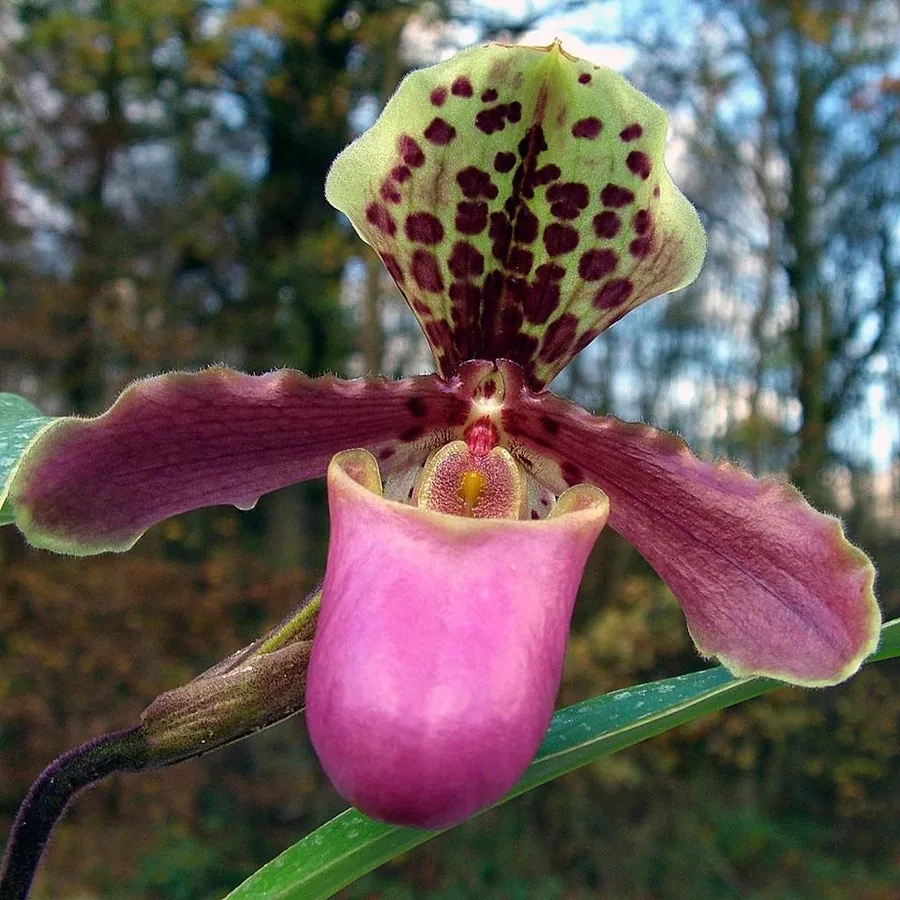
Meet the slipper orchid, named for the pouch on each flower that mimics a tiny shoe. The genus is Paphiopedilum, and it breaks from the tree-dwelling orchids most growers know: these root straight into the ground as terrestrial plants. Get your head around that one difference and the whole plant starts to make sense.
Here is what makes a slipper orchid such a fun grow. It skips the plump pseudobulbs other orchids lean on, so it never wants to go dry, and steady moisture keeps it thriving. Reward it and it fires back a single waxy flower that can run for up to three months, outlasting just about any bloom in the house.
Patience pays here. A slipper orchid grows slowly and stays neat at 6 to 18 inches (15 to 45 cm) tall, chasing soft light instead of a scorching sill. Give it even moisture, warmth, and humid air, and it digs in for years of growing.
Care
The short version: medium indirect light, compost kept evenly moist all year, warmth between 55°F and 81°F (13°C to 27°C), humid air around 50% to 70%, and a weak feed all through the growing season.
Light
Slipper orchids run best in medium indirect light, and direct sun scorches them, so park them out of it. An east window, or a spot pulled back from a brighter one, hits the mark, and the mottled-leaved kinds happily take lower light than most orchids. Pale, floppy growth calls for more light; scorched patches call for less.
Water
Keep the compost evenly moist all year and never let it dry out completely, because there are no pseudobulbs backing it up. Water every 5 to 7 days, easing off as winter sets in. Pour at the compost level and steer water clear of the crown to sidestep the usual trouble.
Soil
Plant it into a free-draining terrestrial orchid mix, fine-grade bark spiked with perlite or crushed bark. The roots crave air as much as moisture, so build a blend that stays damp without clogging up. A slightly acidic pH of 5.5 to 6.5 hits the sweet spot.
Temperature
Aim for 55°F to 81°F (13°C to 27°C), the easy warmth of a heated room. Steady beats chasing an exact number, and it is the sudden cold draught that knocks buds off, so keep it clear of chilly gaps.
Humidity
These orchids thrive in humid air, 50% to 70%, which runs higher than most homes. Bunch your plants together, sit the pot on a tray of damp pebbles, or fire up a humidifier nearby. Team that moisture with good airflow so the leaves dry between waterings.
Feeding
All through the growing season from spring to autumn, feed weekly with a balanced orchid fertilizer at quarter to half strength. Always apply it after watering so the weak feed never lands on dry roots. Back off over winter as growth slows down.
Pruning
Barely any work here. Once a flower spike is spent, cut it back to the base, and clip off any leaf that yellows or dies as it shows up. Past that, let the plant run.
Repotting
Repot every 1 to 2 years, best in spring after flowering, into fresh mix. Make the move when roots crowd the rim, the compost breaks down, or the plant tips loose. Old mix packs tight and waterlogs, exactly what these roots refuse to handle.
Size & spacing
A slipper orchid stays compact, hitting 6 to 18 inches (15 to 45 cm) tall and spreading 8 to 16 inches (20 to 40 cm) wide. That small footprint slots it onto a windowsill or shelf with ease, as long as air can move around the leaves.
Troubleshooting
Nearly every hiccup a slipper orchid throws comes down to water landing in the wrong place, whether a soggy root ball or a drop stuck in the crown. Spot the early signs and you can turn it around fast. Match your symptom below and jump on it before rot gets a foothold.
Soft brown rot at the centre of the fan
This one is crown rot, and it takes hold when water gets trapped where the leaves meet. The base of the fan turns soft and brown, often with a foul smell, and it can finish the plant off if you let it. Move fast: cut out every affected part with sterile tools, dry the crown, and water at the compost only from then on.
Fix:
- Cut away all affected tissue with sterile tools
- Allow the crown to dry and keep water out of the centre
- Improve air movement around the plant
Leaves fading to yellow
Nine times in ten this is root rot driven by compost that stays too wet, though a single yellowing lowest leaf is just old age doing its thing. Pop the plant out of its pot and check the roots: soft and blackened spells rot, firm and pale means you are fine. Snip away the mushy roots, repot into fresh free-draining mix, and water evenly from there on.
Fix:
- Remove the plant from its pot and cut away soft, rotten roots with clean tools
- Repot into fresh, free-draining terrestrial orchid compost
- Resume even moisture without letting the mix become waterlogged
Buds dropping before they open
Growers call this bud blast, and it usually strikes after a move, a cold draught, or a dry spell in the compost. The buds yellow and drop while the leaves stay in fine shape. Park the plant somewhere stable and draught-free, push the humidity to 50% to 70%, and keep the mix evenly moist while it holds buds.
Fix:
- Move the plant to a stable, draught-free spot
- Raise humidity to 50-70%
- Keep the compost evenly moist
Toxicity
Great news for a home full of pets and kids: the slipper orchid is non-toxic through and through. Nothing in the leaves or flowers will poison a cat, a dog, or a curious toddler, and a nibble earns nothing worse than a mildly grumbly stomach. The one thing to flag is that the fine glandular hairs on the leaves and stems can lightly irritate sensitive skin, so rinse your hands after you have been digging in.
Safe for
People · Cats · Dogs · Horses · Rabbits · Livestock · Birds
Cats None
Grow it around cats with confidence. A cat that nibbles a leaf might drool or bring a little up, but the plant packs no toxin and nothing needs treating.
Dogs None
No worries with dogs in the mix. A curious one that chews a leaf may get a mildly upset stomach, yet the orchid holds nothing poisonous.
Horses Safe
Horses are in the clear. No poisonous compound sits in the leaves or flowers, so a stray mouthful does zero harm.
Rabbits Safe
Rabbits are safe alongside it. The foliage is harmless, though as with any new green, keep the nibbles small.
Livestock Safe
Grazing animals face no danger. Cattle, goats, and sheep can brush past or sample it with no toxic effect.
Birds Safe
Safe for pet and backyard birds too. Nothing in the plant will poison them.
People Safe
Handle it and grow it around kids freely. The one flag is that the fine glandular hairs on the leaves and stems can lightly irritate sensitive skin, so rinse your hands after repotting if that gets to you.
Non-toxic, but ingesting plant material may cause mild gastrointestinal upset, so it is still best kept out of reach.
Varieties
Thousands of slipper orchid species and hybrids are out there to chase, but a handful keep landing on windowsills. Start with these, then let the collecting bug take over.
Paphiopedilum Maudiae gx
A crowd-favourite hybrid you will spot by its mottled leaves and crisp green-and-white striped flowers.
Paphiopedilum insigne
A cool-growing species with plain green strap leaves that ranks among the easiest and most forgiving slipper orchids to grow at home.
Paphiopedilum spicerianum
A standout for its white dorsal sepal streaked with a central purple stripe and finished with folded margins.
How to propagate
Grow your slipper orchid collection by splitting an established clump rather than fussing with seed at home, and let a little patience do the rest.
DivisionModerate
At repotting in spring, after flowering · 1-2 years to re-establish and resume blooming
Bulk up your plants by dividing a slipper orchid at repotting time in spring, once flowering wraps up. Break the clump into pieces that each carry at least 3 to 4 fans, because anything smaller crawls to recover and can take 1 to 2 years to settle in and bloom again. Go bigger with each piece and they bounce back faster.
Myths
Orchids are poisonous to cats and dogs.
Not this orchid. The ASPCA lists orchids such as the Phalaenopsis orchid as non-toxic to cats, dogs, and horses, and no poison is on record for the slipper orchid. The worst a nibble does is a passing stomach upset, not poisoning, so grow it with confidence.
Slipper orchids should dry out completely between waterings, just like a cactus.
Not a chance. Paphiopedilum carry no pseudobulbs to stash water, so they cannot power through a drought the way many orchids can. Keep the compost evenly moist and never let it dry out completely.