Houseplant · Orchidaceae
Brazilian Pansy Orchid
Miltonia
Give it warmth, steady moisture, and humid air, and the Brazilian pansy orchid fires back with star-shaped blooms.
Bright indirect
Every 5–7 days
55–84°F · 13–29°C
USDA 10–12
Overview
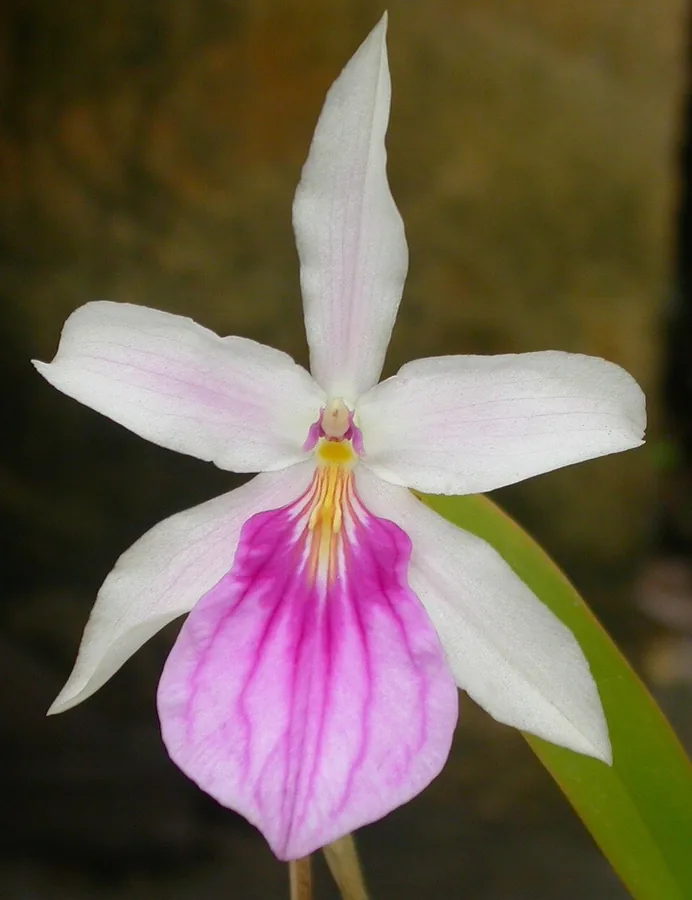
The Brazilian pansy orchid, known to botanists as Miltonia, is a warm-growing epiphyte straight out of the forests of Brazil, and growing it is a genuine treat. In the wild it grips tree branches instead of rooting in soil, drinking from rain and humid air. Indoors it keeps a compact frame, hitting around 8 to 18 inches (20 to 45 cm) tall, and it answers steady care by throwing up sprays of flat, showy flowers.
Plenty of growers mix it up with Miltoniopsis, the cooler flat-faced pansy orchid on florist shelves. But true Miltonia crave more warmth and brighter light and carry more star-shaped blooms. Pin down which one you have and you instantly nail how to water it and where to park it.
It lands at moderate because it asks for two things together: even moisture at the roots and humid air around the leaves. Deliver both and you get a forgiving, long-lived plant that keeps performing for years. Let the bark mix lurch from bone-dry to soggy, though, and the stress shows fast in pleated leaves and shriveled bulbs.
Care
The short version: hand it bright indirect light, tepid water whenever the bark mix nears dryness, and humid air around 50% to 70%, all kept between 55°F and 84°F (13°C to 29°C) with a half-strength orchid feed through the growing season.
Light
Hand it bright indirect light, the kind near an east window or set back from a brighter one. It shrugs off medium light and a bit of shade, but keep it clear of harsh direct sun, which scorches the leaves and turns them yellow.
Water
Reach for tepid, low-mineral water whenever the bark mix nears dryness, roughly every 5 to 7 days, and never let the roots dry out fully. Drain every drop afterward, because roots left standing in water rot fast.
Soil
Pot it in an open, free-draining orchid bark mix, fine to medium grade, with a little sphagnum or perlite mixed in. Keep it slightly acidic, around a pH of 5.5 to 6.5, and loose so air rushes to the roots.
Temperature
This one runs warm, thriving between 55°F and 84°F (13°C to 29°C). Ordinary room temperatures suit it well, so just steer it away from cold drafts and chilly windowsills in winter.
Humidity
This orchid craves humid air, ideally 50% to 70%. Average indoor air runs too dry, so stand it on a pebble tray, cluster it with other plants, or fire up a humidifier to keep the leaves from crimping.
Feeding
Right through the growing season, from spring into early autumn, feed it every two weeks with a balanced water-soluble orchid fertilizer diluted to half strength. Then back off as growth winds down for the year.
Pruning
Once the blooms fade, cut the spent flower spike right back to its base. Clear away any shriveled or dead pseudobulbs and roots with sterile tools, but leave the healthy green leaves standing.
Repotting
Repot every 1 to 2 years, ideally just after flowering as new growth fires up. Move it on when new growth spills over the rim, roots crowd out of the pot, or the bark breaks down and stays soggy.
Size & spacing
A compact orchid, it reaches 8 to 18 inches (20 to 45 cm) tall and spreads 6 to 12 inches (15 to 30 cm) across. That tidy size slots it easily onto a windowsill or a humid bathroom shelf.
Troubleshooting
Almost every Miltonia snag circles back to the roots and the moisture around them. Pleated leaves, wrinkled bulbs, and yellowing all shout that watering or humidity has slipped somewhere. Match what you see below, then dig into the roots, because they usually spill the real story.
Black, soft, mushy roots
This is root rot, the toughest challenge these orchids throw at you, and it takes hold when the mix stays waterlogged or breaks down and loses its air pockets. Tip the plant out and squeeze the roots, since healthy ones hold firm while rotted ones collapse and turn brown or black. Snip out every dead root with sterile scissors, repot into fresh open bark, and water lightly until new roots power up and take hold.
Fix:
- Remove all dead roots with sterile scissors
- Repot into fresh, open bark mix
- Resume careful watering as new roots develop
Pseudobulbs shriveling and wrinkling
Those plump pseudobulbs act as the plant's water tank, so a puckered look means it is running low. Two things drive it: straightforward dehydration, or roots that rotted away and can no longer drink. Pop the plant out and check the roots to tell them apart. Firm white or green roots? Water more and boost humidity. Soft brown roots spell root rot, so trim them out, switch to fresh mix, and water with care while new roots build.
Fix:
- If roots are healthy, increase watering frequency and humidity
- If roots are rotted, trim dead roots, repot in fresh mix, and water carefully while new roots form
Leaves turning yellow
One old leaf yellowing at the base is just the plant retiring its oldest growth, so let it go. When the yellow spreads, though, the usual drivers are overwatering and root rot or sun that hits too hard. Feel the roots for sogginess and clock whether the plant sits in direct light. Then dial back the water, sharpen the drainage, repot if roots are rotting, and slide the plant into bright indirect light clear of the hot sun.
Fix:
- Reduce watering and improve drainage; repot if roots are rotting
- Move to bright indirect light away from hot direct sun
New leaves opening pleated like an accordion
A leaf that unfolds in ridges is showing concertina growth, which kicks in when the roots fall behind on water while a fresh leaf pushes out, usually after the mix ran dry or the air got too dry. The crimp stays put on that leaf, but it does no lasting harm, so shake off the worry. Keep the bark evenly moist, push humidity up into the 50% to 70% range, and repot if the roots have gone downhill or the mix has crumbled.
Fix:
- Establish a consistent watering schedule keeping the mix evenly moist
- Raise humidity to 50-70%
- Repot into fresh bark mix if roots are unhealthy or medium is broken down
Toxicity
Great news for a home full of pets and kids: the Brazilian pansy orchid is non-toxic across the board. No part of it packs a poison, so a curious nibble from a cat, dog, or child is nothing to fear. The worst that lands is mild stomach upset from eating a plant that simply isn't food.
Safe for
People · Cats · Dogs · Horses · Rabbits · Livestock · Birds
Cats None
Let a curious cat share the space, because a nibbled leaf carries no toxin at all. The worst on the table is a touch of stomach upset from eating something that isn't food.
Dogs None
A dog can chew a leaf or bloom and stay perfectly fine, since nothing here is toxic. Still worth tucking the bark mix out of reach, though, as a swallowed mouthful can scratch the gut.
Horses Safe
Horses have zero to fear from this plant. They will rarely meet an indoor orchid, but even a stray taste would pass through without any trouble.
Rabbits Safe
A rabbit can nibble the foliage and walk away just fine. The leaves pack no poison, though they are hardly a snack worth serving on purpose.
Livestock Safe
Goats, sheep, and cattle face no danger from this orchid. As a tropical houseplant it rarely lands near them, and a mouthful would do no harm.
Birds Safe
Let a pet bird perch on or peck the plant to its heart's content. The leaves and blooms carry no toxins, so a bit of chewing is nothing to fuss over.
People Safe
Growing and handling this orchid is safe for adults and kids alike. It isn't grown to eat, but no part of it will poison a child who pops a leaf in their mouth.
No special handling precautions for toxicity; wash hands after handling fertilizer or wet potting media as general practice.
Varieties
Several Brazilian species stand behind the Miltonia name, and they split apart most in the color and shape of their flowers. Here are the ones you are most likely to track down.
Miltonia spectabilis
As the genus type species, it throws large, flat, powerfully fragrant flowers with a broad lip that sweeps from deep pink to purple.
Miltonia regnellii
It packs several pale white-to-pink flowers onto each spike above a rose-veined lip, and it takes off outdoors in mild climates.
Miltonia clowesii
Its star-shaped flowers wear bold bars of chestnut-brown and yellow over a fiddle-shaped lip splashed with white and purple.
Miltonia flavescens
This one launches a tall arching spike loaded with many narrow, pale-yellow, star-shaped flowers.
How to propagate
Multiply Miltonia by splitting an established plant rather than sowing seed at home. It takes patience, sure, but the payoff is exact copies of a plant you already love growing.
DivisionModerate
Just after flowering, as new growth begins (typically spring) · 1-2 years to re-establish and reach flowering size
Split a mature clump right after it flowers, just as fresh growth fires up in spring. Slice the rhizome so each piece keeps at least three to four healthy pseudobulbs plus an active new growth, reach for sterile tools, and pot every division into fresh bark mix. Then let them run, because the young plants need a year or two to settle in and reach flowering size.
Myths
The flat-faced pansy orchid sold in shops is a Miltonia.
The cool-growing, flat pansy-faced plants most people picture are usually Miltoniopsis, a separate genus that split off from Miltonia. True Miltonia are warm-growing Brazilian species carrying more star-shaped flowers, and they thrive in the warmer, brighter conditions that set them apart from their look-alike cousins.
Orchids are parasites that feed off the trees they grow on.
Miltonia and most cultivated orchids are epiphytes that simply grip a tree for support. They make their own food through photosynthesis and pull water and nutrients from rain, air, and the debris around their roots, taking nothing from the host.
Watering with ice cubes is the proper way to water these orchids.
These warm-growing tropical plants take a hit from cold, and meltwater can shock and damage the roots. They want regular watering with tepid water that keeps the bark mix evenly moist.