Ornamental · Convolvulaceae
Dichondra
Dichondra
A low carpet of coin-shaped leaves that doubles as a barely-mowed lawn or a silver cascade pouring over a pot.
Full sun
Every 3–7 days
60–120 days
USDA 8–12
Overview
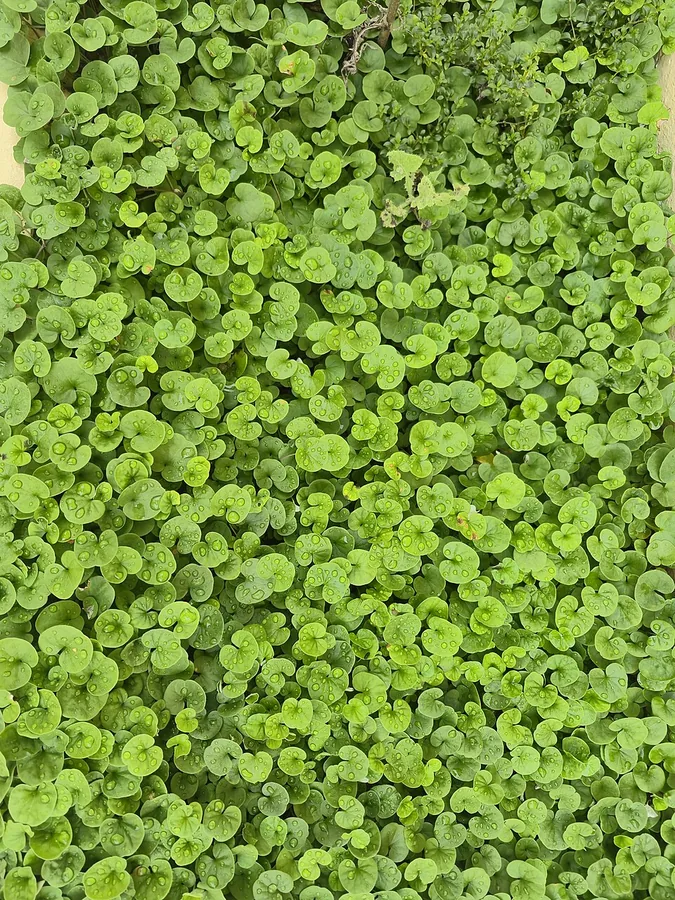
Dichondra spreads as a low, mat-forming groundcover in the morning glory family, and it earns names like ponysfoot and kidney-weed from its small kidney-shaped leaves. Rising barely an inch or two above the soil, it travels sideways on stems that root as they creep, so just a handful of plants can stitch a broad carpet together. Across warm regions, gardeners turn to it when a soft green mat outshines a thirsty lawn that needs constant mowing.
Two wildly different plants hide under one name. The green lawn forms, D. repens and D. micrantha, deliver a tidy low-mow turf substitute that wants steady moisture. The silver-leaved 'Silver Falls' trails for show, prized for the way its felted stems spill over a container or basket, and it shrugs off drought. A wild cousin, D. carolinensis, also turns up uninvited in struggling turf.
Sun and sharp drainage are about all any of it wants. It thrives in full sun through partial shade and rides out a broad swing of temperatures, though it rots in waterlogged ground and resents steady foot traffic. Hand it a well-drained spot and a stretch of patience while it fills in, and after that it largely takes care of itself.
Care
The short version: plant in full sun to partial shade with well-drained soil, hold steady moisture for the green lawn forms but go far drier with silver 'Silver Falls', and put sharp drainage first in every case.
Light
Dichondra hits its stride in full sun yet handles partial sun and partial shade with barely a grumble. Good light keeps the green lawn forms thick and tight, and it brings out the brightest silver in 'Silver Falls' wherever the rays land.
Water
This is where the two types split. Green lawn dichondra craves steady moisture and runs high water needs, while silver 'Silver Falls' turns very drought tolerant once established and leans toward dry to medium soil. Sharp drainage is non-negotiable for both, so water on roughly a 3 to 7 day cycle and never let the ground sit soggy.
Soil
Set it into well-drained sandy loam or a solid garden loam, since drainage outranks everything for groundcover work. Any pH from 6.0 to 7.5 keeps it happy, which puts most everyday garden soil squarely in range.
Temperature
Dichondra rides a broad range, roughly 30°F to 100°F (-1°C to 38°C), which explains why warm-climate gardens suit it so well. Cold is its Achilles heel, and 'Silver Falls' especially runs frost tender, dropping fast in a freeze.
Humidity
Ordinary outdoor humidity covers it, so skip chasing any target number. The lone hazard is damp, crowded foliage, because leaves left wet too long open the door to leaf spot.
Feeding
Feed once a month right through the spring and summer growing season. Push the green lawn forms with a higher-nitrogen feed for thick, even fill, and keep 'Silver Falls' on a far leaner ration so it trails instead of bulking up.
Pruning
Snip the trailing stems to shape the plant and rein in its spread, which counts because it travels by rooting at the nodes. The green lawn form takes this easily, so mow it or leave it shaggy to taste.
Repotting
Container plants ask for a fresh pot seasonally, fast-charging 'Silver Falls' most of all. Step them up the moment roots start to circle the pot, the rootball drains dry quickly after watering, or stems spill well past the rim with thin new growth.
Size & spacing
Every plant keeps low, just 1 to 3 inches (2 to 8 cm) tall, then ranges wide to 2 to 4 feet (60 to 120 cm) across. Space plants with enough room for the rooting stems to bridge the gaps and lock into one unbroken mat.
When to plant
Dichondra runs on warm-season momentum and has little patience for hard cold. Sow seed indoors in early spring, around 6 to 8 weeks before your last frost, then move plants out or sow directly from April to May once the soil has warmed. Look for inconspicuous greenish-yellow to white flowers across May and June.
Northern hemisphere
Southern hemisphere
Typical months for a temperate climate: start earlier in warm zones, later where spring frosts linger.
- Sow: early spring, about 6-8 weeks before last frost
- Plant: after last frost when soil has warmed, April to May
- Harvest: inconspicuous greenish-yellow to white flowers May to June
Hardiness
USDA hardiness zones: 8–12
Temperature: down to -12°C
Troubleshooting
Nearly every dichondra hiccup points back to the site, not the plant itself. Thin patches, rot, and pest damage tend to chase heavy traffic, poor drainage, or a stand that never knit together. Match your symptom below and put the conditions right first.
Off-color, collapsing plants in cold or wet ground
Wet, badly drained ground triggers root and stem rot, and the cold takes out frost-tender 'Silver Falls' for good. Sharpen the drainage, pull back on watering, and tuck container 'Silver Falls' somewhere protected ahead of the first frost. Plants growing in well-drained sandy loam bounce back with a fresh spring planting once the soil warms.
Fix:
- Improve drainage and reduce irrigation frequency
- Move container 'Silver Falls' under cover or indoors before frost
- Plant in well-drained sandy loam
- Replant in spring once soil warms
Thin, bare stretches where feet land most
Give dichondra time, because it is slow to establish and resents being trodden on, so the most-used lanes stay patchy while quiet corners weave together nicely. Plant it in small, sheltered spots and keep off the mat until it fills in. Drop seed into the thin areas, hold the moisture steady, and push dense growth with a nitrogen feed.
Fix:
- Limit dichondra lawns to small, low-traffic areas
- Keep foot traffic off until the mat is fully established
- Overseed or plug thin areas and keep evenly moist
- Fertilize with nitrogen to encourage dense growth
Nibbled foliage and dark blotches on the leaves
Watch for flea beetles and cutworms, which gnaw the leaves and slice through young seedlings, plus leaf-spot diseases like Alternaria that stain the foliage when the air stays damp. A thick, thriving stand fends off most of this without help. Water at dawn so leaves dry quickly, strip out any heavily spotted growth, and check with your local extension if the trouble keeps spreading.
Fix:
- Maintain vigorous, dense growth to outgrow minor damage
- Reduce leaf wetness by watering early in the day
- Remove and dispose of severely spotted foliage
- Consult local extension for control options
Toxicity
Pet owners and parents can relax: dichondra is not toxic. It stays off the ASPCA's poison lists, and cats, dogs, and the rest of the garden's animals can mingle with it safely. A pet that gulps a big helping of foliage might pick up a quick, mild stomach gripe, but the same goes for nearly any plant.
Safe for
People · Cats · Dogs · Horses · Rabbits · Livestock · Birds
Cats None
Cats are clear to share space with it. A cat that munches through a lot of leaves could feel a quick, mild tummy gripe, just like with any greens, and nothing worse.
Dogs None
Dogs can snuffle through the patch with zero concern. Gulping down a big wad of foliage might trigger a short run of loose stool, yet no genuine toxin is involved.
Horses Safe
Horses face no threat from it. Those creeping stems and little kidney-shaped leaves hold nothing harmful, even when a horse grazes right across the mat.
Rabbits Safe
Rabbits get to graze the soft leaves at will, and plenty tuck into a patch much like any leafy green with no fuss.
Livestock Safe
Browsing cattle, goats, and sheep have nothing to worry about. It carries no toxin that would trouble a grazing animal.
Birds Safe
Garden and pet birds stay perfectly fine near dichondra. Pecking at the leaves does them no harm at all.
People Safe
Keep it around kids with confidence. People do not grow it for the table, but a leaf reaching a curious mouth brings no real danger.
Not poisonous, but pets that nibble foliage may experience at most mild, self-limiting GI upset, as with any plant.
Varieties
Dichondra is really a small cluster of plants rather than one, and your pick depends on whether you are after a lawn, a trailer for a pot, or just naming the weed. Here are the three worth knowing apart.
Dichondra repens / Dichondra micrantha
Coin-shaped green kidney leaves creep along rooting stems to weave a fine, low-mow stand-in for turf and a sweeping groundcover across warm regions.
Dichondra argentea 'Silver Falls'
Felted silver leaves tumble down quick cascading stems for a tender, drought-tolerant trailing accent in pots and hanging baskets, run as an annual wherever winters bite.
Dichondra carolinensis
The wild Carolina ponysfoot creeps in as a lawn weed, popping up wherever Southern turf grows thin and weak.
How to propagate
Multiplying dichondra is a breeze, since its stems root wherever they brush the ground. Kick off a fresh stand from seed, dig up rooted pieces, or strike cuttings, whichever fits the type in your hands.
SeedModerate
Spring, April to May after soil warms · Several weeks to months to form a dense mat
Most green dichondra lawns get their start from seed. Scatter it in spring, somewhere from April to May once the ground warms, and hold the soil evenly moist all through germination. Settle in for a wait, because knitting into a thick mat runs several weeks to months.
DivisionEasy
Spring to early summer · A few weeks
Since the stems strike roots as they creep over the ground, you can dig up rooted sections and shift them in spring or early summer. They move across willingly and find their feet within a few weeks.
Stem cuttingsEasy
Spring to summer · 2 to 4 weeks
Those trailing stems root readily at the nodes, so cuttings give you the easiest path to more 'Silver Falls'. Snip them anytime from spring through summer and watch roots form in 2 to 4 weeks.
Myths
Dichondra is nothing but a lawn weed, or else it is always a prized lawn.
Both ring true, and it hinges on which plant you have in mind. Cultivated lawn forms (D. repens/micrantha) and trailing 'Silver Falls' rank as treasured ornamentals, yet wild types such as D. carolinensis creep in as weeds across thin, weak Southern turf. No single label fits the plant; the species plus the setting call it.