Houseplant · Cactaceae
Easter Cactus
Rhipsalidopsis gaertneri
Hand it a cool winter rest and a spot it can lock into, and the Easter cactus bursts out with scarlet, star-shaped spring blooms.
Bright indirect
Every 7–14 days
50–77°F · 10–25°C
USDA 10–12
Overview
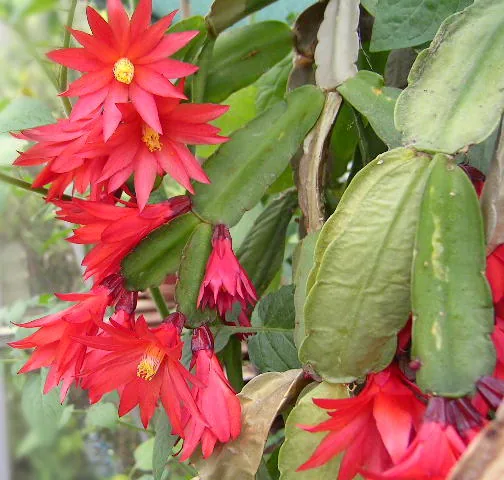
The Easter cactus throws its color in spring, right around the holiday it is named for, firing scarlet stars from the tips of its flat, jointed segments. It rides in the cactus family, but it grew up as a forest epiphyte, gripping tree branches high in the Brazilian rainforest instead of toughing it out in desert sand. That backstory drives the whole game plan: it craves shade, steady moisture, and humidity, and it flatly rejects the dry heat that the word cactus tends to promise.
Plenty of people lump it in with the Thanksgiving and Christmas cacti, but it stands on its own. Its segment edges curve into rounded and scalloped lobes rather than claws, and it flowers in spring instead of the dead of winter. It also grows slower and asks for more than its cousins, which is exactly what makes a plant in full bloom feel like a victory worth chasing.
The one thing it truly demands is a cool, short-day rest through late autumn and winter, with cooler temperatures and less water. That quiet stretch is the trigger that loads the buds. Skip it, or start dragging the plant around once buds appear, and the flowers vanish into a pile of dropped buds before they ever open.
Care
The short version: bright indirect light, never direct sun, and let the top few cm of mix dry between drinks. Drive a cool, drier rest from autumn through winter to load the buds, and once they form, lock the plant in place and leave it.
Light
Park it in bright, indirect light and steer it clear of direct sun, which scorches the segments and flushes them red. It pulls through in medium light or light shade, but the brightest perch short of a sunbeam pushes the flowering into high gear.
Water
Wait for the top few cm of mix to dry, then soak it through and let it drain, landing around every 7 to 14 days. This forest cactus laughs at the desert myth, so never let it bake bone dry, and never trap it in soggy soil that rots the roots in a hurry. Throttle back through the autumn-to-winter rest, then hold the watering rock-steady once buds set, because a sudden swing sends them tumbling.
Soil
Plant it in a well-drained, organic-rich mix that grips a little moisture without turning into a swamp, and a cactus or epiphyte blend nails it. It runs best in slightly acidic soil, right around a pH of 5.5 to 6.5.
Temperature
Keep it in everyday room warmth of 50°F to 77°F (10°C to 25°C) all year. Push it toward the cool end of that range in autumn and winter, stack on shorter days, and watch the buds fire up.
Humidity
Average household humidity does the trick, with no target to obsess over. This rainforest plant perks up with a bit more moisture in the air, so cluster it in a pack of plants or set a pebble tray nearby to beat the dry winter air.
Feeding
Hit it with a balanced, diluted liquid houseplant fertilizer about once a month, starting once the flowers wrap and rolling through the summer growth. Then cut the feeding off in autumn so the plant can drop into its rest.
Pruning
Once the blooms fade, twist or pinch off a few terminal segments to fire up branching and a fuller, bushier shape. Those clipped pieces are pure gold, so root them as cuttings and grow your stock.
Repotting
Hold off and repot only every 3 to 4 years, after flowering, and only when it is truly jammed in, since it blooms best a little pot-bound. Roots shoving out the drainage holes, mix that dries out fast, and stalled growth all wave the flag that it is time.
Size & spacing
It stays compact, climbing to about 6 to 12 inches (15 to 30 cm) tall and fanning out 12 to 16 inches (30 to 40 cm) wide, arching hard as the segments stretch. That trailing habit makes it a knockout in a hanging pot or spilling off a shelf edge.
Troubleshooting
Nearly every Easter cactus setback chases back to two roots: watering that lurches too wet or too dry, and a plant jostled while it is budding. Catch the early tells below and you can knock out the cause before it sheds its flowers or its roots give way.
Segments going limp, soft, or red at the base
Soft, reddish segments usually scream root rot from soil stuck too wet, though the very same droop strikes when the mix bakes bone dry. Tug a segment and dig into the roots: mushy brown means rot, firm and white in dust-dry mix means drought. Slice off the dead roots and repot into fresh, fast-draining mix for rot, or drench it well and let it drain for drought.
Fix:
- If rotted, unpot, cut away mushy roots, repot into fresh well-drained mix, and water sparingly
- If drought-stressed, water thoroughly and let excess drain
- Salvage healthy segments as cuttings if the base is lost
Flower buds bailing before they open
Bud drop is the classic Easter cactus gut-punch, and it springs from change, not neglect. The second buds form, the plant balks at being moved, turned, drafted, or watered on a fresh schedule, and it fights back by ditching the buds. Lock it into one steady spot, keep the top few cm just moist, and leave it alone until it blooms.
Fix:
- Leave the plant in one spot once buds appear and avoid turning it
- Keep watering even and the top few cm just moist while budded
- Shield from heat vents, cold drafts, and doorways
White cottony tufts or sticky film at the joints
Those cottony flecks wedged in the segment joints are mealybugs, while small bumps slicked with sticky honeydew flag scale. Both rip through houseplants indoors, so yank the plant into isolation the instant they show. Swipe the pests off with a cotton swab dipped in 70 percent alcohol, then keep hammering them with insecticidal soap until they clear out.
Fix:
- Dab pests with a cotton swab dipped in 70 percent isopropyl alcohol
- Treat with insecticidal soap, repeating per label
- Isolate the plant until clear
Toxicity
Pet owners can dive in without a second thought, because the Easter cactus is not toxic. The ASPCA tags the whole holiday cactus group as safe for cats and dogs, and nothing in the plant poisons people, horses, or any other animal. The wildest outcome is a pet that wolfs a big mouthful of the fibrous segments feeling briefly queasy, and that clears on its own.
Safe for
People · Cats · Dogs · Horses · Rabbits · Livestock · Birds
Cats Safe
The ASPCA tags the holiday cactus group as non-toxic to cats, so a nibble will not poison one. A cat that gulps a big mouthful of the fibrous stems might drool or feel briefly sick, and that is the whole story.
Dogs Safe
Dogs run no real risk from this plant. If one chews off and swallows a big piece, the rough tissue can kick off some short-lived vomiting that clears on its own.
Horses Safe
Nothing in the plant poisons horses, though a small indoor cactus rarely lands anywhere near one.
Rabbits Safe
It is safe around rabbits. The fleshy segments pack no toxin, so a curious nibble does no harm.
Livestock Safe
There are no toxic compounds in it, so grazing animals face no danger from it.
Birds Safe
Pet birds can perch and peck nearby without a worry, since the segments carry nothing harmful.
People Safe
It is harmless to people, kids included. It is not grown to eat, but a tasted segment poses no poisoning risk.
Fibrous plant material can still cause mild stomach upset or vomiting if a pet eats a large amount.
Varieties
Track nearly every plant sold as Easter cactus back to two species and the hybrids they throw, and these are the names worth grabbing onto.
Rhipsalidopsis gaertneri (type)
The original species blasts out scarlet, star-shaped spring flowers on flat segments rimmed with rounded, scalloped, faintly bristled teeth.
Rhipsalidopsis rosea and its hybrids
This smaller pink-flowered species crosses freely with R. gaertneri to crank out the pink, salmon, and white-flowered Easter cactus cultivars selling today.
How to propagate
It copies itself straight from its own segments with almost no effort, so one plant can spin off a whole batch of new ones while the cuttings dig in their roots.
Stem cuttingsEasy
After flowering in late spring or early summer · Roots in about 2 to 4 weeks; flowering-size plant in 1 to 2 years
Grab cuttings right after flowering, in late spring or early summer. Twist off a piece of 2 to 3 jointed segments, let the cut end callus over for a day or two, then stand it in barely moist, well-drained mix under bright indirect light. Roots punch through in 2 to 4 weeks, though a young plant still needs a year or two of growing before it blooms.
Myths
Easter, Thanksgiving, and Christmas cactus are one plant sold at different times.
They are three different plants. Easter cactus fires off spring blooms with rounded, scalloped segment edges and star-shaped flowers, while the Thanksgiving and Christmas cacti are Schlumbergera that bloom in late autumn and winter on segments with pointed or toothed edges. The Easter cactus is also the fussier, slower grower of the bunch.
Holiday cacti are poisonous to pets.
The ASPCA tags holiday cactus as non-toxic to cats and dogs, so the panic is unfounded. The worst a pet runs into is a brief upset stomach from the fibrous tissue, not real poisoning.
The Easter cactus has always carried one settled scientific name.
Its classification has ricocheted for years, bouncing through Rhipsalidopsis, Hatiora, and Schlumbergera in turn. That is why you will spot it sold under all three names, with gaertneri hitched onto each.