Houseplant · Cactaceae
Old Lady Cactus
Mammillaria hahniana
Give it bright sun, gritty soil, and a dry winter rest, and this woolly little cactus crowns itself with pink flowers.
Full sun
45–84°F · 7–29°C
USDA 9–11
4–12 in · 10–30 cm
Overview
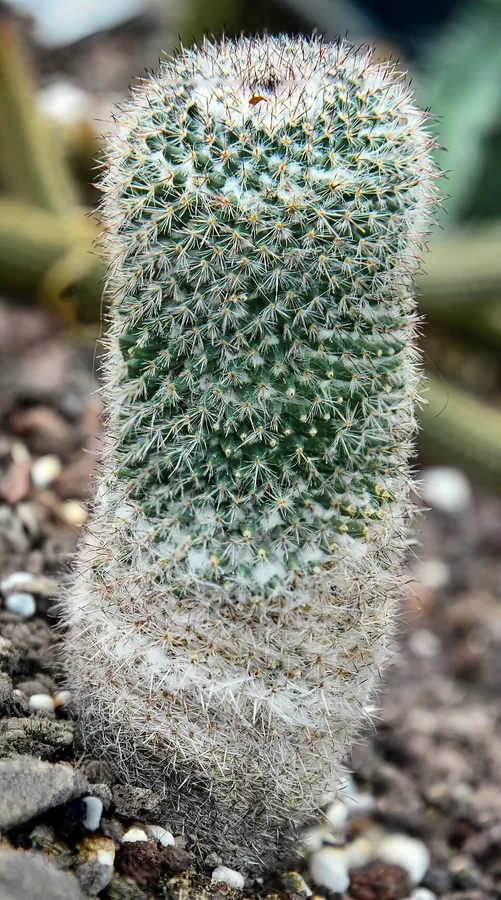
The old lady cactus packs a lot of charm into a tiny footprint, a round desert plant bundled in soft white hairs that give it the look of a powdered head. It springs from the dry hills of northeastern Mexico and holds a compact form, topping out at just 4 to 12 inches (10 to 30 cm) tall before it starts pushing out a clump of offsets. That slow, tidy pace makes it one of the most rewarding cacti to grow on a sunny windowsill.
Dig past the wool and fine spines and bristles come into play, and every spring a mature plant fires off a ring of pink to purplish-red flowers around its crown. That burst of bloom is exactly why growers call it the birthday cake cactus. Load it with light and hand it a proper cool winter rest, and those flowers come roaring back year after year.
This is a forgiving grower with one line drawn in the sand: it will not stand wet feet. Overwatering topples more of them than anything else, so the whole play is sharp drainage and holding off between drinks. Lock that in and the rest of its care all but runs itself.
Care
The short version: load it with bright direct light, plant it in a gritty fast-draining mix, and water only once the soil has dried out completely. Pull way back in winter for a cool, dry rest, and the plant fires off spring flowers to thank you.
Light
Load this cactus up with full, direct sun, ideally at a south- or west-facing window that pours on several hours a day. It scrapes by in bright indirect light, but shortchange the sun and it stretches tall, fades pale, and shuts off the flowers.
Water
Let the soil dry out completely between waterings, then drench it through and dump whatever pools in the saucer. Water sparingly in summer and next to never through the cool winter rest. Water lingering at the roots is the single fastest way to lose the plant.
Soil
Plant it in a gritty, sharply drained cactus mix so water rushes straight through. Any pH from 6.0 to 7.5 suits it just fine. Texture beats the exact number every time, since loose, fast-draining grit is what keeps the roots clear of rot.
Temperature
It rolls along happily from 45°F to 84°F (7°C to 29°C) through the year. A cooler stretch in winter, down toward the low end, is the trigger that fires up the spring flowers, so skip the warm-and-cozy routine all year round.
Humidity
Low household humidity is exactly what this desert plant craves, so there is no number to chase down. Dry air is a win here, not a problem, while damp, stagnant air just rolls out the welcome mat for rot and pests.
Feeding
Feed it once a month across the spring and summer growing season with a dilute low-nitrogen cactus fertilizer such as 5-10-5. Then cut it off cold in winter while the plant rests, since a dormant cactus has zero use for it.
Pruning
This cactus asks for no routine pruning. Just clip off spent flowers and pop out offsets when you want to propagate or thin a crowded clump. Always pull on thick gloves or grab folded paper, because the spines and bristles bite.
Repotting
Repot it every 2 to 3 years in spring, or the moment the clump outgrows its pot. Keep an eye peeled for roots shoving out the drainage holes, offsets jammed against the rim, or soil that dries almost the second you water it.
Size & spacing
Count on a compact plant just 4 to 12 inches (10 to 30 cm) tall that slowly fans out into a clump up to 20 inches (50 cm) wide as offsets stack up around the base. Its slow, tidy habit slots it right onto a crowded windowsill.
Troubleshooting
Nearly every hiccup with this cactus starts at the roots or breaks out as stretched, flowerless growth. Catch the early signs and you can leap in before rot digs in. Match what you spot below, then act fast while your fix still counts.
A soft, browning base and a plant that starts to keel over
A soft, discolored base spells root and basal rot, and it traces straight back to too much water or a mix that clings to moisture down at the roots. Jump on it fast: cut off the watering, lift the plant, and pare away every soft, blackened part with a clean blade. Let the good tissue or offsets callus over a few days, plant it into dry gritty mix, and keep the water light until fresh roots grab hold. Move quickly and the plant often bounces right back.
Fix:
- Stop watering immediately
- Unpot and cut away all soft, rotted tissue with a clean blade
- Let healthy tissue or offsets callus for several days, then repot in dry gritty cactus mix
- Resume watering only sparingly once re-established
White cottony tufts or fine webbing turning up on the plant
Cottony white blobs tucked into the wool flag mealybugs, and fine webbing over dull, speckled growth calls out red spider mites cashing in on hot, dry air. Spring into action: pull the plant away from its neighbors, then hit the mealybugs with a cotton swab dipped in 70 percent isopropyl alcohol. Blast the mites off with a rinse, follow up with insecticidal soap or horticultural oil, and keep at it every week until the plant is spotless again.
Fix:
- Isolate the plant from others
- Dab mealybugs with a cotton swab dipped in 70 percent isopropyl alcohol
- Rinse off mites and treat with insecticidal soap or horticultural oil
- Repeat weekly until the infestation clears
No flowers, or pale, stretched growth losing its round shape
A plant stretching toward the window and shooting up tall and thin is crying out for light, a stumble called etiolation. And a spring that skips its flower ring almost always traces to a winter kept too warm and wet instead of cool and dry. Turn it around fast: park it at a bright south- or west-facing window, hand it a cool, dry stretch around 45°F to 55°F (7°C to 13°C) with barely any water through winter, then fire up normal care again in spring.
Fix:
- Move to a bright south- or west-facing window with several hours of direct sun
- Give a cool, dry winter rest around 7 to 13°C with minimal water
- Resume normal watering and feeding in spring
Toxicity
Great news for a home full of pets and kids: this cactus carries no toxin, and the ASPCA lists its close relatives as non-toxic to cats, dogs, and horses. The catch is purely physical. Those soft-looking white hairs stash fine spines and bristles that lodge in skin, paws, and mouths, so keep it up out of easy reach and handle it with care.
Safe for
People · Cats · Dogs · Horses · Rabbits · Livestock · Birds
Cats None
A cat that bites one will not be poisoned, full stop. What does bite back is the fine spines and bristles, which snag in the mouth, tongue, or paws and sting for real, so park the pot well clear of pouncing range.
Dogs None
A curious dog runs into zero toxins here. The catch is a nose or mouth loaded with those fine bristles, which leaves sore, prickled skin you may have to pick out with tweezers.
Horses None
A horse shares its space safely, soaking up no toxic effect at all. Should it mouth the plant, bristles jab into the muzzle and lips, which stings for a while but never poisons.
Rabbits None
A rabbit hits no chemical danger with this cactus. The dense spines turn it into a lousy chew anyway, and the only headache is any that snag in the mouth or fur.
Livestock None
Cattle, goats, and sheep pick up no poisoning from this cactus. The bristles and spines jab and irritate the mouth if an animal grazes it, so it earns its keep behind glass rather than out in a paddock.
Birds None
Nothing here is toxic to birds in any way. A pet bird can still snag a fine spine while poking around, so stash it where beaks and feet cannot reach.
People None
Handle it, even taste it, and no poison comes your way. The one snag is the fine hairs and spines, which break off in skin in a heartbeat, so pull on thick gloves or grab folded paper whenever you move it.
The main hazard is physical rather than chemical: the dense white hairs, bristles, and fine spines can lodge in skin, paws, and mouths. Handle with thick gloves or folded paper and keep the plant out of reach of pets and children.
Varieties
The species breaks into two accepted subspecies that split mostly on their hair and spines. These are the two you are most likely to run across by name.
Mammillaria hahniana subsp. hahniana
This is the classic form that steals the show, packed in long white hairs and crowned each spring by a ring of pink to purplish-red flowers.
Mammillaria hahniana subsp. woodsii
Once ranked as its own species, this accepted subspecies stands out through its spination and a thinner coat of hair.
How to propagate
Cranking out more of this cactus is half the fun, and you have got two ways to run at it: snap off the offsets it throws on its own, or take the slow, satisfying route from seed.
Offsets & pupsEasy
Spring to summer during active growth · About 4 to 8 weeks to root after callusing
Here is where the fun kicks in: a mature plant pumps out offsets on its own, so just twist or cut one free in spring or summer while it is charging through active growth. Let the cut callus for a few days, drop it into dry gritty mix, and watch it root in about 4 to 8 weeks.
SeedModerate
Early spring, sown warm at about 19 to 24°C · Several months to a year or more to reach a handleable size
Seed is the long game, and it pays off for the patient grower. Scatter it across a gritty surface in early spring, hold the warmth at around 66°F to 75°F (19°C to 24°C) and keep it humid, then let it run several months to a year before the seedlings bulk up enough to handle.
Myths
Cacti thrive on neglect and need almost no water.
Not a chance. Through the growing season this plant charges ahead on a thorough soak each time the soil dries out completely. Starve it of water too long and it shrivels, but let water pool at the roots and it rots. Deep drinks chased by a full dry-out are what keep it powering along.
Old lady cactus is poisonous to pets.
Forget it. Mammillaria cacti pack no toxin at all, and the ASPCA lists close relatives as non-toxic to cats, dogs, and horses. The one thing that truly bites is the spines and bristles, which can lodge in skin, paws, and mouths.