Bulb · Liliaceae
Crown Imperial
Fritillaria imperialis
Towering spring bulbs topped with nodding bells and a bold skunky scent that sends voles packing.
Full sun
Every 7–14 days
USDA 5–8
3–4 ft · 0.9–1.2 m
Overview
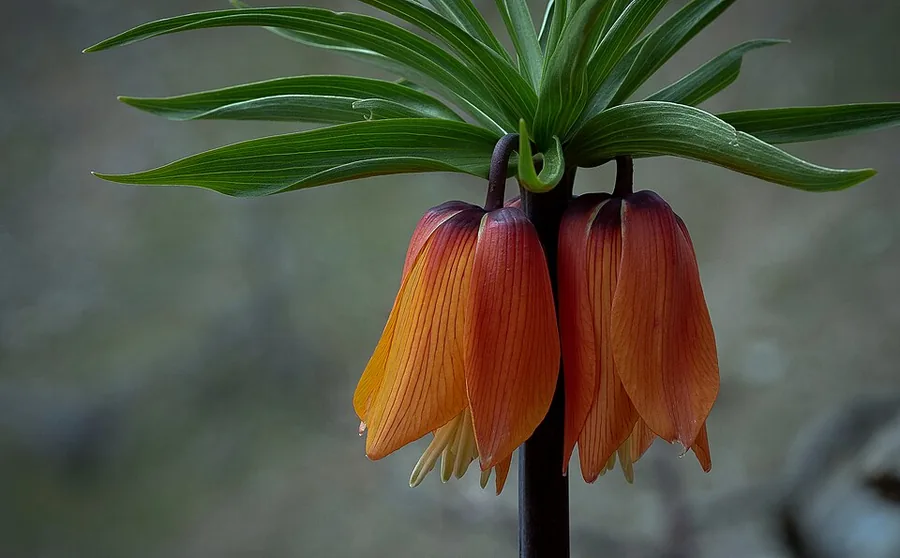
Crown imperial rockets past the rest of the spring bulbs, driving up a sturdy stalk 3 to 4 feet (91 to 122 cm) tall and crowning it with a ring of nodding bells under a leafy topknot that reads like a pineapple. A member of the lily family, it comes originally from the stony hillsides of the Middle East and the Himalayas. Tuck it toward the rear of a border, where that early color truly pulls its weight.
Every bit of the plant puts out a strong, skunky, musky odor, and that scent lands squarely in your favor. It drives voles, mice, and the other burrowers off before they ever reach the bulbs. The catch is that you'll want it planted a stride back from any walkway or entrance you squeeze past day after day.
This bulb thrives on being left in peace. It roots in slowly, flowers year after year once it takes hold, and hates being dug up, so choose the spot deliberately. Nail the drainage, seat the bulb the right way, and crown imperial turns into one of those plants that comes surging back every spring without a shred of fuss.
Care
The short version: give it blazing sun and deep, rich, fast-draining ground. Water it steadily while it grows in spring, ease right off as the leaves fade, and leave the bulb undisturbed where you set it.
Light
Crown imperial pumps out its finest flowers in full sun, though it will take a little afternoon shade in regions where spring turns hot. Bury it in heavy shade, though, and the stalks stretch, lean, and carry fewer bells.
Water
Keep steady, even moisture on it while it grows in spring, reaching for the hose every 7 to 14 days whenever rain falls short. As the leaves fade in early summer, cut off the water and let the bulb bake dry, because wet ground is exactly what rots it.
Soil
Set it into deep, rich, well-drained loam or clay loam loaded with organic matter. A pH between 6.0 and 7.5 suits it fine, and sharp drainage counts above everything else, since standing water finishes the bulb off.
Temperature
This is a hardy, cold-loving bulb that sails through -20°F to 75°F (-29°C to 24°C). A proper winter chill is what triggers flowering, and it shrugs at hard frost, yet a hot, muggy summer wears it right down.
Humidity
Plain outdoor air does the job, so chase no target number here. Moving air around the leaves counts for more, since packed, damp foliage rolls out the welcome mat for leaf spot and rust.
Feeding
Mix a balanced bulb feed or compost into the hole at fall planting, then top it up in early spring the moment the shoots crack through. That twice-a-season boost is all it asks for to flower strongly.
Pruning
Snip off the finished flower stalk as soon as the bloom is done, but let the leaves stand until they turn yellow and collapse in their own time. That slow fade is what recharges the bulb for next spring's flower.
Repotting
Crown imperial asks for nothing but to be left in peace. Lift and split a clump at most once every 3 to 5 years, and then only if the blooms begin to thin or the bulbs pack in too tight.
Size & spacing
Each stalk shoots up 3 to 4 feet (91 to 122 cm) tall and spreads roughly 12 to 18 inches (30 to 46 cm) across. Space the bulbs 9 to 12 inches apart to give the clumps elbow room and let air track between them.
When to plant
Crown imperial keeps to a schedule set by the bulb itself. Get the bulbs planted in fall while the ground still turns easily, watch the shoots surge up early, then enjoy those bells right through mid to late spring, at which point the top growth fades and the plant rests below ground all summer.
Northern hemisphere
Southern hemisphere
Typical months for a temperate climate: start earlier in warm zones, later where spring frosts linger.
- Plant: Plant bulbs in fall, 6 inches deep and 9-12 inches apart, positioned sideways to prevent water collecting in the stem cavity
- Harvest: Mid to late spring, April to June
Hardiness
USDA hardiness zones: 5–8
Temperature: down to -29°C
Troubleshooting
Most crown imperial troubles brew down at the bulb or surface across the leaves once the plant gets rolling. Spot the first signs and you can jump in before a small snag runs away with the whole plant. Pair the symptom below with your own, then act while your move still counts.
A mushy bulb that never sends up a shoot
You are looking at bulb rot, and the culprit is nearly always soggy ground or a bulb sat the wrong way up so moisture settles in the stem hollow. Dig up a suspect one and browned, foul tissue rings the central hole. Bin anything far gone, tuck the firm ones back sideways into sharply draining ground, and fork in grit so the water keeps flowing.
Fix:
- Discard severely rotted bulbs
- Replant healthy bulbs on their side in sharply drained, raised soil
- Improve drainage with grit or organic matter
Streaky, mottled leaves on a plant running out of steam
Blotchy pale-and-dark mottling that stays put no matter how you rub it flags mosaic virus, and aphids usually deliver it. Once a plant catches it, nothing cures it. Pull the sick ones and destroy them, stay on top of sap-suckers, and swab your blades as you move plant to plant so you never carry it around the bed.
Fix:
- Remove and destroy infected plants to limit spread
- Control aphid vectors
- Disinfect tools between plants
Rusty pustules and spots creeping across the foliage
Here you have leaf spot and rust, fungal problems that grab hold where leaves stay wet and packed together. Flip the foliage over and hunt for raised rusty bumps, then strip off every marked leaf. Open up the spacing, keep the water off the leaves, and the spread grinds to a halt.
Fix:
- Remove and destroy affected foliage
- Improve air circulation
- Avoid overhead watering
Toxicity
Give this one real respect. The whole of crown imperial holds steroidal alkaloids, and the bulb hits hardest of all, loaded with imperialine and its relatives. Eat any and you'll be hit with retching and belly pain, while a heavy dose can knock the heartbeat off track, so keep the bulbs clear of pets, grazing stock, and youngsters. That strong skunky odor turns most animals away, though it is no guarantee.
Toxic to
Cats · Dogs · Horses · Rabbits · Livestock · Birds · People
Cats Toxic
Bite into a bulb and a cat will start drooling first, then move on to vomiting and diarrhea. A heavier dose of the alkaloids leaves it weak and dragging.
Dogs Toxic
Dogs love to dig at the bulbs. Swallow one and you get drooling, a churning stomach, and vomiting, while a big mouthful can knock the heartbeat off its rhythm.
Horses Toxic
The alkaloids in the bulb sour a horse's digestion and, taken in bulk, disturb the heart. Site crown imperial well away from any grazing.
Rabbits Toxic
Never let a rabbit nibble it. Even a light taste of bulb or leaf sets off drooling, puts it off its food, and brings on diarrhea.
Livestock Toxic
Cattle, goats, and sheep that raid the bulbs end up with digestive upset, and a big enough helping of the alkaloids can trigger heart-rhythm trouble.
Birds Toxic
Count the bulbs and foliage as strictly off-limits, because the same alkaloids that hit mammals can sicken any bird that pecks at them.
People Caution
None of this plant belongs on a plate. Swallow a fresh bulb and retching and belly pain follow, while a heavy dose of the alkaloids can strain the heart, so keep the bulbs well out of children's reach.
All parts of the plant have a strong skunky or musky odor, which usually discourages tasting; wash hands after handling bulbs.
Helpline numbers

United States
ASPCA Animal Poison Control: (888) 426-4435 (fee applies)
Poison Control: (800) 222-1222



Canada
Poison Centres: 1-844-764-7669
Varieties
A handful of named crown imperials turn up again and again, plus one much smaller relative that earns a spot in any spring bed. These are the ones to chase down.
Rubra
The original crown imperial, wearing a ring of nodding bells in fiery burnt orange through deep vermilion red.
Lutea
The yellow form, lighting the spring bed with clear gold bells while Rubra glows orange.
Fritillaria meleagris (Checkered Lily)
A far daintier relative at 8 to 12 inches, dangling nodding bells checkered in purple, red-brown, and white like the plumage of a guinea hen.
How to propagate
Crown imperial adds to its numbers at a leisurely pace, and the slower, steadier routes repay you far better than seed. Below, each method gets its own walkthrough alongside the timeline you should plan for.
Offsets & pupsModerate
Lift and separate offset bulblets in late summer to fall when foliage has died back · 1-3 years to reach flowering size
The dependable route to a bigger stand is lifting the clump toward fall's end, after the leaves have withered, and coaxing away the little offset bulblets. Handle them softly, since they bruise fast and a bruised bulb rots, and reckon on 1 to 3 years before one of them reaches flowering size. That skunky, musky smell clinging to bulbs and leaves is simply part of the deal.
DivisionModerate
Divide established clumps in fall every few years · 1-2 seasons
Once a clump grows congested, hoist it out come fall and divide it every few years. Reset each piece straight away at the correct depth, resting it sideways so no water can gather in the hollow, and it returns to flowering inside 1 to 2 seasons.
SeedDemanding
Sow fresh seed in fall · Slow; 4-6 years or more from seed to first bloom
Seed rewards a long fuse. Sow it fresh in fall and the first bloom holds off for 4 to 6 years, sometimes more, which is exactly why most growers reach for offsets or division instead.
Myths
You can eat crown imperial bulbs once they are cooked, or so the story goes.
Fresh bulbs run with steroidal alkaloids and stay poisonous, even though extension sources peg the poison severity as low. Grow it for the flowers, never the plate, and handle the bulbs as toxic while keeping them clear of pets and children.