Vegetable · Cucurbitaceae
Honeydew Melon
Cucumis melo
Give it full sun, warm soil, and a long season, and honeydew pays off big with sweet, cooling fruit by late summer.
Full sun
Every 7–10 days
70–90°F · 21–32°C
80–110 days
Overview
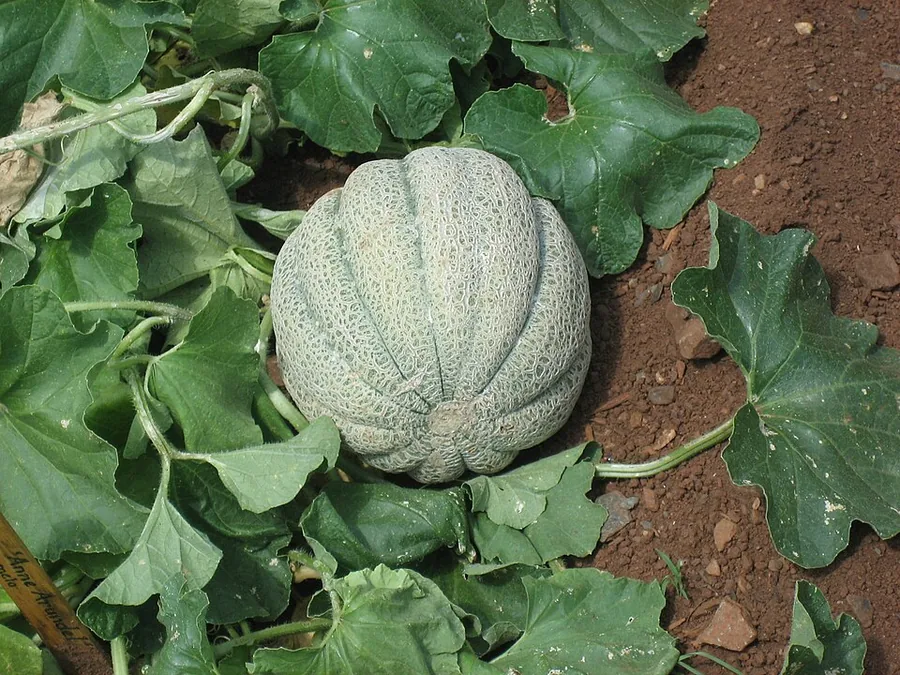
Honeydew is the smooth, pale melon that caps off summer, all creamy skin and sweet green flesh. It rambles as a warm-season vine in the gourd family, the very same species as cantaloupe yet a completely different treat to bite into. Where cantaloupe shows up netted and musky, honeydew stays waxy-smooth and clean on the tongue.
Two quirks make honeydew a fun one to grow. It craves a long, warm season of 80 to 110 days to sweeten all the way, and it never lets go of the vine the way a cantaloupe does. That second quirk trips up plenty of new growers, who keep waiting for the fruit to drop and end up harvesting way too late. Instead, watch the rind turn creamy and feel the blossom end give a touch under your thumb.
None of this makes honeydew tough, but it does reward patience and steady conditions. Turn the vines loose to sprawl, water them deep but not too often, and park them in a bright, open spot where the air keeps moving. Crowd them or leave the leaves wet and you roll out the welcome mat for the mildews and wilts that cut a melon crop short.
Care
The short version: full sun and warm, fertile, well-drained soil, with deep watering of about 1 to 2 inches a week that you throttle back the final week so the sugars pack in. Turn each plant loose with plenty of room and a long, warm season to ripen.
Light
Honeydew soaks up full sun, and the more direct hours it grabs, the better. Sun is what packs in the sugars, so a shaded plant hands you watery, flavorless fruit even when everything else clicks.
Water
Water deep but not often, around 1 to 2 inches a week, and let the soil dry a bit between drinks rather than sitting soggy. Here's the move that counts most: cut the water in the last week before harvest, because a late soaking dilutes the sugars and flattens the flavor.
Soil
Plant into fertile, well-drained sandy loam loaded with organic matter. A slightly acidic pH of 6.0 to 6.5 suits honeydew, and sharp drainage keeps the roots and crown clear of the rots that thrive in heavy, wet ground.
Temperature
Honeydew hits its stride in real warmth, between 70°F and 90°F (21°C to 32°C). It won't stand frost at either end of the season, and cool, cloudy stretches stall ripening and leave the fruit bland.
Humidity
Ordinary outdoor humidity works fine, so there's no figure to chase. What matters way more is airflow, since still, damp air around crowded leaves is exactly what powdery and downy mildew need to grab hold.
Feeding
Work a balanced fertilizer such as 5-10-10 into the bed before planting, then side-dress with a nitrogen feed like 21-0-0 once the vines take off running. Steady feeding through that vining push builds a strong plant ready to carry the fruit.
Pruning
Honeydew barely needs pruning. You can pinch back the vine tips to keep a sprawling plant inside its bed, and in a short season it pays to strip the very late blossoms so the plant hurls its energy into ripening the melons already set.
Repotting
No repotting here, since honeydew runs as an annual that's direct-sown or transplanted just once. Start seeds early in biodegradable pots and plant the whole pot out, since the roots resent any disturbance.
Size & spacing
Vines sprawl 6 to 9 feet (183 to 274 cm) long, so turn them loose with room to run. Set plants 18 to 24 inches (45 to 60 cm) apart and leave wide aisles between rows for the runners and for air to move through.
When to plant
Honeydew has zero patience for cold and demands a long run of warmth to sweeten. Fire up seeds indoors a few weeks before the last frost, move the plants out only once the soil has warmed, and harvest from late summer into early fall as the rinds turn creamy.
Northern hemisphere
Southern hemisphere
Typical months for a temperate climate: start earlier in warm zones, later where spring frosts linger.
- Sow: start in biodegradable pots 2 to 4 weeks before the last frost; melons resent root disturbance
- Plant: transplant or direct-sow after frost once soil is 60 to 70°F (16 to 21°C)
- Harvest: harvested late summer into early fall when the rind turns creamy and the blossom end softens
Hardiness
USDA hardiness zones: 3–11
Temperature: down to -40°C
Troubleshooting
Most honeydew trouble breaks out on the leaves and vines first, with the odd letdown lurking in the fruit at harvest. Catch the early signs and you can charge in before a fungus or a beetle claims the whole crop. Match what you see below, then act while it still counts.
Vines crashing down on still-wet soil
A vine crashing while the soil sits wet almost always means bacterial wilt, which cucumber beetles carry straight from one plant to the next. Nail the diagnosis fast: cut a wilted stem, press the ends together, then pull them apart and watch sticky white strands string out. A sick vine won't bounce back, so yank it, destroy it, and go after the beetles before they hand the disease along.
Fix:
- Remove and destroy infected vines
- Control cucumber beetles promptly
Runners yellowing, wilting, and dying back on one flank
A vine crashing one lopsided side at a time flags Fusarium wilt, a soil fungus that chokes the plant from the inside out. Slice a wilting stem and brown streaks in the tissue give it away instantly. No cure exists, so pull the plant and keep it far from the compost, then come back next season swinging with resistant cultivars and a 3 to 4 year rotation.
Fix:
- Remove affected plants; there is no cure
- Do not compost diseased vines
Sunken stem cankers weeping amber gum
Reddish, gummy ooze bleeding from the stems flags gummy stem blight, a warm, wet-weather fungus that barrels into the fruit as rot too. Hunt for tan leaf spots and tiny black specks in the tissue to lock it down. Cut out and destroy the infected vines, hit them with a labeled fungicide, and shift the bed well clear of cucumbers and squash.
Fix:
- Remove and destroy infected vines and debris
- Apply a labeled fungicide
- Rotate away from cucurbits
A white, powdery crust building on the leaves
Spot a chalky white dusting on the leaves and you've caught powdery mildew, a fungus that pounces when warm air stalls around packed foliage. Open the vines up so a breeze can rush through, snap off the worst leaves, and bring in a labeled fungicide only if it keeps charging ahead.
Fix:
- Improve spacing and air flow
- Remove badly infected leaves
- Apply a labeled fungicide if severe
Yellow blotches pinned back by the veins
Those crisp-edged yellow patches that stop cold at the veins are downy mildew, which surges in cool, wet, muggy spells. Flip a leaf and you'll usually catch gray to purple fuzz on the underside. Water early so the leaves dry fast, open the planting up for airflow, and hit it with a labeled fungicide if it starts to run.
Fix:
- Improve airflow and drainage
- Water early so leaves dry fast
- Apply a labeled fungicide if severe
Beetles riddling the leaves and blossoms with holes
Those little yellow beetles sporting black stripes or spots are cucumber beetles, and the chewing is the least of it, the bacterial wilt they carry packs the real punch. Tuck young plants under floating row covers until bloom, pick off every beetle you catch, and unleash a labeled insecticide only when they swarm in force.
Fix:
- Cover young plants with floating row covers until bloom
- Hand-pick beetles
- Apply a labeled insecticide if numerous
Sticky curled leaves darkening with sooty mold
Leaves curling and going sticky under a black film? Check the undersides for melon aphids, which pile up there, suck sap, and leave a sugary mess that sooty mold moves right into. Blast them off with a strong jet of water first, follow with insecticidal soap if any dig in, and cheer on the lady beetles and lacewings that hunt them. Keep the ants down too, since they'll guard aphids just to farm their honeydew.
Fix:
- Spray plants with a strong jet of water
- Apply insecticidal soap
- Encourage lady beetles and lacewings
Melon finishing flat with no sweetness
A flat, watery honeydew nearly always means it came off the vine too soon. Hold out until the rind turns creamy and the blossom end gives a little under your thumb, since honeydews cling on rather than slipping free like cantaloupes. Back off the water that last week before harvest as well, because a big late drink washes the sugars right out.
Fix:
- Leave fruit on the vine until the rind turns creamy and the blossom end gives slightly
- Reduce watering during the last week before harvest
Toxicity
Great news for pet-owning households: every part of the honeydew plant is non-toxic, and the ripe flesh makes a safe, refreshing treat to pass around. The only real cautions are the common-sense kind, since the tough rind and seeds are hard to digest and are best kept off an animal's plate.
Safe for
People · Cats · Dogs · Horses · Rabbits · Livestock · Birds
Cats None
A small bite of ripe flesh does a cat no harm at all. Push past that and the worst you'll get is a bit of loose stool, since cats run short on the tools for fruit sugar.
Dogs None
Ripe honeydew lands as a fun occasional treat for a dog. Just keep the pieces small, because a big scoop of sweet flesh can spark a mild stomach upset.
Horses None
A slice of the flesh goes down easy for a horse. Skip the rind, though, since it's tough and quick to choke on.
Rabbits None
The flesh is safe in the tiniest amounts, even if it runs rich and sugary for a rabbit. A thumbnail-sized piece now and then is all it takes.
Livestock None
Goats, sheep, and cattle dive into melon scraps without harm and often love them. The vines and leaves carry nothing toxic either.
Birds None
Chickens and other backyard birds happily peck at ripe honeydew and the seeds. Not one part of the plant hides a toxin to worry about.
People None
Ripe honeydew is a sweet, refreshing fruit enjoyed the world over and safe for everyone, kids included.
Offer only small amounts of ripe, seeded flesh; rind and seeds are tough to digest and can cause stomach upset or choking.
Varieties
Honeydew varieties sort out mostly by how fast they ripen and what color the flesh flashes inside. These are the ones worth grabbing when you pick seed.
Honey Dew (Green Flesh)
This is the classic winter melon, its smooth, waxy rind ripening from cream to pale green over sweet, pale green flesh, and it grips the vine tight rather than slipping free.
Earlidew
A green-fleshed honeydew that races to ripen, which makes it a winning pick where the growing season runs short.
Temptation
An early hybrid bred to sweeten in a hurry across cooler, shorter-season gardens that would otherwise turn out a bland honeydew.
Orange-fleshed honeydew
It wears the same smooth pale rind as a green honeydew, then springs a surprise of salmon-orange flesh inside.
How to propagate
Honeydew springs from seed and little else, so the whole job comes down to sowing at the right moment and treating those tender roots with care.
SeedEasy
Start indoors 2 to 4 weeks before the last frost, or direct-sow after soil reaches 60 to 70°F (16 to 21°C) · Germinates in about 4 to 10 days at 70 to 90°F (21 to 32°C)
Seed is the whole game with honeydew, and it kicks off fast. Start it indoors 2 to 4 weeks before your last frost, or direct-sow the moment the soil holds at 60°F to 70°F (16°C to 21°C), and in warm ground the seeds burst up in 4 to 10 days. Sow into biodegradable pots and drop the whole pot in the ground, since melons can't stand having their roots disturbed.
Myths
A ripe honeydew pulls free of the vine, same as a cantaloupe.
Not a chance, honeydews just don't slip. The fruit grips on and has to be cut from the vine, so waiting for it to drop only saddles you with an overripe melon. Read the real cues instead: it's ready when the rind turns creamy and the blossom end softens.
Drenching the vines close to harvest makes a sweeter melon.
It backfires. A flood of water in the last week of ripening dilutes the fruit and washes out the sweetness. All that sugar comes from full ripening and sun, so you throttle back the water as harvest closes in.
A honeydew is essentially a cantaloupe.
They share the species Cucumis melo, sure, but they split into different groups. Honeydew charges in as a smooth-skinned winter melon in the Inodorus group, while cantaloupe and muskmelon carry the netted rind of the Reticulatus group, and each one ripens and parts from the vine in its own way.