Vegetable · Cucurbitaceae
Cucumber
Cucumis sativus
Give it full sun, warm soil, and steady water, and the vine sprints, pumping out fruit faster than anyone can pick it.
Full sun
Every 2–4 days
59–95°F · 15–35°C
50–70 days
Overview
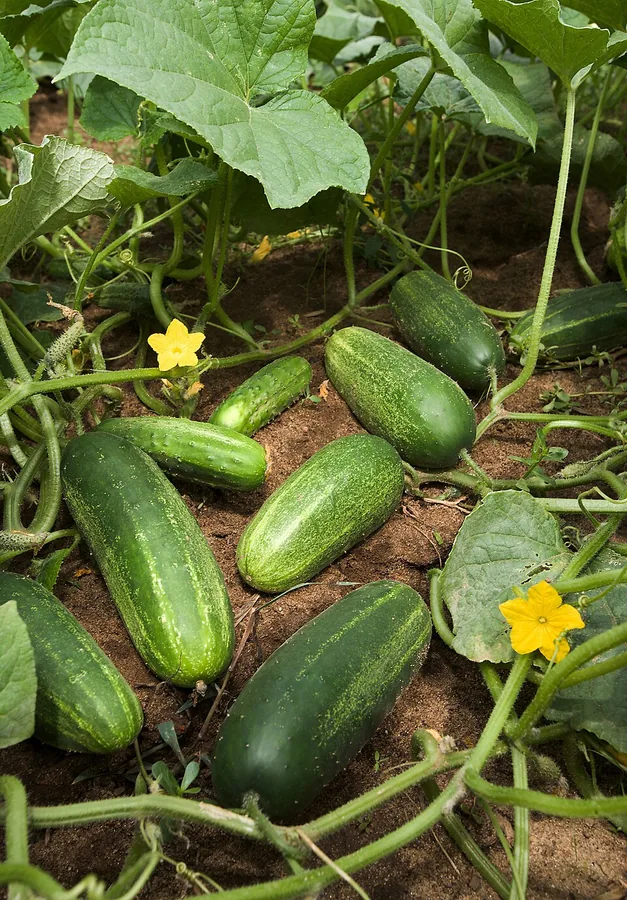
Cucumbers are a warm-season vine in the gourd family, running with melons and squash, and they take off the moment the weather settles. Give the seed warm soil and full sun and a handful of plants will flood a kitchen with slicers all summer. Most sprawl across the ground, but they scramble up a trellis just as eagerly, which saves space and keeps the fruit clean.
Two camps are worth knowing cold. Slicing types stretch long and smooth for fresh eating, while pickling types stay short and bumpy and pack the best jars. A few newer varieties set fruit with no bees at all, a real ace under row covers or through a cool, wet season when pollinators thin out.
They ask for next to nothing past warmth, sun, and even water. Let the soil bounce from bone dry to soaked, though, and you invite bitter, misshapen fruit, so steady moisture carries the day. Pick fast, every day or two at the peak, and the vines fire off more right up to the first frost.
Care
The short version: full sun, warm and fertile soil rich in organic matter, even moisture of about an inch a week, and constant picking to keep the vines charging out fruit.
Light
Cucumbers demand full sun, six to eight hours a day, the fuel behind their breakneck growth and heavy fruiting. Park them in partial sun and the count drops while disease moves in wherever the leaves stay shaded and damp.
Water
Keep the soil evenly moist, about an inch of water a week from rain or the hose. Soak deep at the base, then crank it up once the plants flower and fruit. Let the soil dry out and then drown it and you all but guarantee bitter, crooked fruit.
Soil
Dig in fertile, well-drained loam packed with organic matter at a pH of 6.0 to 6.5. These vines run hot for warmth, so a raised bed or a sheet of plastic mulch to heat the soil early gives them a flying start.
Temperature
Cucumbers thrive as a warm-season crop between 59°F and 95°F (15°C to 35°C). The seed flat-out refuses to sprout in soil colder than 50°F (10°C), so a cold spring is a wall, not a hurdle to push.
Humidity
Plain outdoor humidity suits them, so chase no number here. Airflow beats moisture in the air every time, because crowded, damp leaves hand powdery mildew an open door.
Feeding
Mix a balanced fertilizer like 10-10-10 into the bed before planting. Then, once the vines start to run, hit them with a nitrogen side-dress to power the plant through a long fruiting stretch.
Pruning
Cucumbers barely need pruning. On a trellis, pinch the side shoots to steer growth, and strip off diseased or damaged leaves the second they appear to slam the brakes on any foliar disease.
Size & spacing
The vines top out at just 8 to 18 inches (20 to 46 cm) but throw 3 to 8 feet (91 to 244 cm) of spread across the ground. Hand them that room to run, or a trellis to climb, so air rips through and the fruit hangs clean off the soil.
When to plant
Cucumbers chase heat and shrug off nothing faster than frost and cold soil. Hold the line until frost clears and the ground climbs to at least 60°F (16°C), usually mid to late May, then get seed in or set out transplants. The payoff rolls in from midsummer and keeps coming right up to the first frost.
Northern hemisphere
Southern hemisphere
Typical months for a temperate climate: start earlier in warm zones, later where spring frosts linger.
- Sow: 2-4 weeks before the last frost (late April in northern regions); use peat or paper pots because seedlings resent root disturbance
- Plant: After all danger of frost when soil has warmed to at least 16-21°C (60-70°F), typically mid to late May; seeds will not germinate in soil below 10°C (50°F)
- Harvest: Flowers in early-to-mid summer; harvest fruit from midsummer until first frost, picking every 1-2 days to keep vines productive
Hardiness
USDA hardiness zones: 2–11
Temperature: down to -46°C
Troubleshooting
Cucumber trouble almost always breaks out on the leaves or the fruit, and heat, water, or a pest is usually pulling the strings. Spot what matches below and jump on it early, before a small snag races down the vine.
Sudden midday droop and stems crashing down
When vines flag through the day and never bounce back, point straight at bacterial wilt, which cucumber beetles drive into the plant as they chew the leaves. Run the quick test: cut a wilted stem, press the cut ends together, then peel them apart slowly and hunt for sticky strings of ooze. No cure exists, so yank and destroy any infected plant, and scan the stem bases for the frass and entry holes that finger a squash vine borer instead.
Fix:
- Remove and destroy infected plants; bacterial wilt cannot be cured
- Control cucumber beetles early in the season
- Use floating row covers on young plants, removing them at flowering for pollination
Powdery white spots spreading fast over drying leaves
That dusty white coating is powdery mildew, a fungus that pounces once warm days, cool nights, and crowded vines line up. It breaks out first on the older, shaded leaves and smudges a little under a finger. Cut out the worst leaves, throw the planting open with wider spacing or a trellis, and keep the cucumbers in full sun, where the fungus loses its grip.
Fix:
- Remove heavily infected leaves
- Improve air circulation by spacing or trellising
- Apply a labeled fungicide at first sign if pressure is high
Bitterness building at the skin, then the stem end
Bitterness fires up from cucurbitacins, compounds the plant cranks out when heat or drought stresses it. The taste piles into the skin and the stem end, so peeling the fruit and trimming that end strips most of it away. Head it off by watering steadily through hot spells, mulching to even out the soil, and growing a burpless or bitter-free variety.
Fix:
- Peel fruit and trim the stem end before eating
- Water consistently and mulch to even out soil moisture
Curled, nipped fruit twisting at the tip
Crooked, pinched fruit calls out poor pollination, usually right after cool, rainy weather grounds the bees. Each cucumber needs a flurry of bee visits to fill out evenly, so a flower shorted on them sets a lopsided fruit. Pull the misshapen ones to free up the vine, hold the insecticides while the plants flower, and plant flowers nearby to pull pollinators back in.
Fix:
- Remove misshapen fruit so the vine redirects energy
- Avoid spraying insecticides while plants are flowering
- Maintain even watering
Toxicity
Cucumbers earn a clean bill across the board. Nothing in the fruit threatens people, pets, livestock, or birds, so a slice that drops in the garden is a non-event. The lone footnote: the stems and leaves wear fine prickly hairs that can scratch sensitive skin while you harvest.
Safe for
People · Cats · Dogs · Horses · Rabbits · Livestock · Birds
Cats None
Cucumber is safe for cats, and plenty will nibble a slice with zero trouble. The flesh runs mostly water, so dish out small pieces as a light treat.
Dogs None
Dogs can crunch cucumber risk-free, and the low-calorie slices make a snappy snack. Cut bite-sized pieces so a fast eater does not bolt a whole chunk.
Horses Safe
Horses handle cucumber well, and a few sliced pieces make a refreshing summer treat. Keep the helping small alongside their normal forage.
Rabbits Safe
Rabbits can grab cucumber in moderation, though it carries little fiber and loads of water. A thin slice or two here and there is plenty next to their hay.
Livestock Safe
Cattle, goats, and sheep can all eat cucumbers and the trimmed vines safely. Roll surplus fruit in gradually so a sudden pile does not upset their digestion.
Birds Safe
Both pet birds and backyard hens peck happily at cucumber, flesh and seeds alike. It is a hydrating snack to pass along, with no part of the plant off limits.
People Safe
Cucumber is a kitchen staple eaten raw, pickled, or sliced into salads, and every part of the fruit is safe. The skin and stem end of a stressed fruit can taste bitter, but that is flavor, not danger.
Stems and leaves bear slightly prickly hairs that can irritate sensitive skin; gloves are optional when harvesting spiny-fruited varieties.
Varieties
Cucumbers split into slicers and picklers, with a handful of compact and seedless types ready to jump in. These are the names that turn up again and again.
Marketmore 76
A classic slicer built to last, riding strong resistance to scab and cucumber mosaic virus.
Straight Eight
An heirloom slicer that cranks out straight, dark green fruit about 8 inches long.
Boston Pickling
A high-yielding heirloom pickler that fires off short, blocky fruit with bumpy skin.
Spacemaster
A compact bush type that slots neatly into small gardens and containers.
Diva
A parthenocarpic, seedless variety that sets fruit without pollination and serves up thin, non-bitter skin.
Companions
Cucumbers do well beside beans, corn, and quick radishes, and poorly next to potatoes or strongly aromatic sage that extension guides flag as bad neighbors.
Plant near
beans: Extension companion-planting guides list beans as a traditional cucumber companion; legumes fix nitrogen that benefits neighboring crops.
corn: Listed as a compatible companion in extension guides; tall corn can also serve as a windbreak and partial support.
radish: Traditional extension-listed companion; quick-maturing radishes use space efficiently between young cucumber plants.
How to propagate
Cucumbers rocket up from seed, and that is very nearly the only way gardeners launch them. Hand them warm soil, keep the roots undisturbed, and they take it from there.
SeedEasy
Direct sow after the last frost once soil reaches at least 16°C (60°F), or start indoors 2-4 weeks before transplanting · Seeds germinate in 3-10 days in warm soil; transplants establish within 1-2 weeks
Most gardeners launch cucumbers straight from seed, and it stays the easy, reliable play. Once the last frost clears and the soil warms to at least 60°F (16°C), drive the seed 0.5 to 1 inch (1.5 to 2.5 cm) deep in hills or rows, and watch it break ground in 3 to 10 days. Chasing a head start? Sow indoors 2 to 4 weeks before transplanting, but stick with peat or paper pots, since the roots resent disturbance and transplants need a week or two to settle in.
Myths
Cucumbers planted by squash or melons cross-pollinate and their flavor gets wrecked.
Plant them shoulder to shoulder with melons or squash and the flavor holds, because cucumbers cannot cross with separate species, so a neighbor gets no vote on taste. Off-flavors trace straight to cucurbitacins the plant makes under heat and drought stress. Even a cross between cucumber varieties touches only the seeds, never this season's fruit.
Bitter cucumbers have spoiled and pose a real danger to eat.
Keep that cucumber, because the bitterness is just cucurbitacins stacked up in the skin and stem end of a stressed fruit, not a hint of spoilage. Peel it, trim that stem end, and the bitter taste walks off with the scraps.