Vegetable · Cucurbitaceae
Watermelon
Citrullus lanatus
Give it full sun, warm soil, and room to sprawl, and watermelon rewards you with sweet, heavy fruit come late summer.
Full sun
Every 7–14 days
68–95°F · 20–35°C
70–90 days
Overview
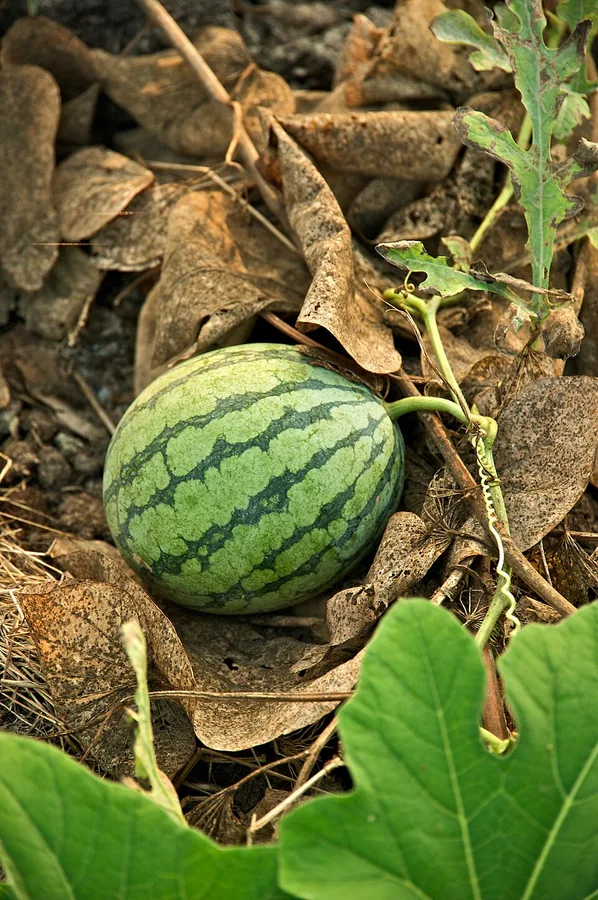
Watermelon charges across the summer garden as a fast, sprawling annual from the gourd family, right alongside cucumbers and squash. It skips the trellis and runs flat instead, so one plant races out to cover 5 to 10 feet (1.5 to 3 m) while staying barely ankle high. Feed that ambition with real heat and a long warm stretch, and it swells fruit loaded with sugar.
Here is where it gets fun: each plant sets separate male and female flowers, and bees shuttle the pollen between them to kick off every melon. That teamwork counts double with the seedless types, which stay sterile and set nothing unless a seeded variety grows close by to pollinate them. Nail the pollination and the fruit comes on fast.
This is a heat chaser with zero appetite for cold. Hand it full sun, deep well-drained sandy loam, and steady moisture while the vines run and the fruit fills, then dial back the water as the melons close in on ripe. That final stretch concentrates the flavor into something a supermarket melon rarely touches.
Care
The short version: watermelon craves full sun, warm well-drained soil, and 1 to 2 inches of water a week while the vines grow and set fruit, then a bit less as the melons ripen. Feed it lightly with a low-nitrogen mix, turn it loose with room to sprawl, and watch it run.
Light
Watermelon soaks up full sun, eight or more hours of it, and turns its back on shade. The vines convert every ray into sugar, so the brighter the spot, the sweeter and heavier the melons roll in.
Water
Pour on about 1 to 2 inches (2.5 to 5 cm) of water a week in deep soaks every 7 to 14 days, keeping the soil evenly moist while the vines grow and set fruit. Then back off as the melons ripen so the sugars concentrate, and aim the water at the base to shut disease out.
Soil
Turn watermelon loose in deep, well-drained sandy loam packed with organic matter. A pH of 6.0 to 6.8 hits the mark, and that loose, warm ground lets the long roots race out and drains fast after a downpour.
Temperature
This crop lives for heat, roughly 68°F to 95°F (20°C to 35°C), and folds at the first frost. Cold soil stalls the seed and chilly spells stall the fruit, so hold out for real warmth before planting.
Humidity
Average outdoor humidity of 40% to 70% suits it fine, with no number to chase. Airflow is the real prize, since a damp, crowded canopy is exactly where mildew and blight get their start.
Feeding
Dig a low-nitrogen balanced fertilizer like 5-10-10 into the bed before planting, then side-dress before the vines run and again after bloom. Keep the nitrogen light, or you will pump out leafy vines instead of melons.
Pruning
Watermelon barely needs pruning, so turn the vines loose to run. Trim off any dead or diseased leaves, and hold each vine to a few fruit if you want the keepers to bulk up fast.
Repotting
This one belongs in the ground, not a pot, so repotting rarely enters the game. Grow one in a container and you only move it up under real crowding, with roots matting at the base and vines wilting between waterings.
Size & spacing
The vines hug the ground at just 4 to 8 inches (10 to 20 cm) tall, then sprawl out 5 to 10 feet (1.5 to 3 m) wide. Hand each plant that room so the runners can charge ahead and air keeps moving to hold disease off.
When to plant
Watermelon runs on warmth, so chase the heat. Start seed indoors a few weeks before the last frost, or sow straight into warm soil once the cold clears out, and you will be pulling ripe fruit from summer into early fall.
Northern hemisphere
Southern hemisphere
Typical months for a temperate climate: start earlier in warm zones, later where spring frosts linger.
- Sow: 2 to 4 weeks before the last spring frost in biodegradable pots
- Plant: After all danger of frost has passed and soil is at least 65°F (18°C)
- Harvest: Summer to early fall
Hardiness
USDA hardiness zones: 3–11
Temperature: down to -40°C
Troubleshooting
Most watermelon hiccups pop up on the leaves or the swelling fruit, and water, weather, or pollination is usually behind them. Spot the match below and jump in early, while there is still time to turn the whole thing around.
Vines yellowing and wilting one runner at a time
This is Fusarium wilt, a soil fungus that jams the plant's plumbing from the inside, and once it lands there is no cure. Split a lower stem and brown streaking shows up, and warm soil only feeds it. Pull and destroy the infected plants, keep them clear of the compost, and next round load up on resistant or grafted varieties and rotate well away from other cucurbits.
Fix:
- Remove and destroy infected plants
- Do not compost diseased vines
Sunken brown rot showing up at the fruit's bottom
That sunken, leathery patch is blossom end rot, and it fires up when the soil swings between wet and dry, not when calcium runs short in the ground. Let the soil dry hard and then flood, and the plant loses its grip on moving calcium into the fruit. Water deep on a steady schedule, mulch to hold the moisture even, and yank the marked melons so the vine throws its energy at the rest.
Fix:
- Keep soil evenly moist with deep, regular watering
- Mulch to buffer soil moisture
- Avoid heavy nitrogen fertilizer that outpaces calcium uptake
- Remove affected fruit so the plant redirects energy
Striped or spotted beetles chewing through leaves and flowers
Those are cucumber beetles, and past the holes they punch, they can hand off bacterial wilt, though watermelon brushes it off better than cucumber or muskmelon. Pick them off by hand, or throw a floating row cover over young plants until they flower. Slice a wilted stem, press it, and if a stringy thread oozes out, pull that vine fast, because the wilt has it.
Fix:
- Handpick beetles or use floating row covers until flowering
- Apply an approved insecticide if populations are high
- Remove and destroy any plant confirmed to have bacterial wilt
White powdery patches racing across the leaves
That talc-like dust is powdery mildew, a fungus that pounces when warm days meet a crowded, humid canopy. It refuses to rub away and tears through the oldest leaves first. Open the planting for airflow, keep water off the foliage, and strip the worst leaves before it runs the length of the vine.
Fix:
- Improve air flow and avoid overhead watering
- Remove badly infected leaves
- Apply a labeled fungicide if needed
Melons that refuse to set or turn out small and lopsided
Chalk this up to poor pollination. Watermelon keeps its male and female flowers on one plant and leans on bees to ferry the pollen, so loads of bloom with little fruit means too few visits. Seedless types need a seeded variety within about 10 feet (3 m) to pollinate them. Cut the insecticide sprays during bloom and pack in flowers nearby to pull the bees in.
Fix:
- Plant a seeded pollenizer within about 10 feet of seedless types
- Avoid spraying insecticides during bloom and while bees are active
- Add nearby flowers to attract pollinators
Dark sunken spots erupting on leaves, stems, and fruit
This is anthracnose or gummy stem blight, a duo of fungi that splash leaf to leaf whenever the weather turns warm and wet. Hunt for tan to dark leaf spots ringed in yellow, sunken patches on the fruit, and a gummy ooze on the stems where gummy stem blight has moved in. Switch to drip watering, stay off the wet vines, sweep out infected debris, and get ahead of it with a labeled fungicide while the damp holds.
Fix:
- Remove infected debris
- Use drip irrigation and avoid handling plants when wet
- Apply a labeled fungicide on a preventive schedule
Toxicity
Pet owners get to relax here, because watermelon lands as safe all round. The sweet flesh is a non-toxic treat for people and animals alike, and the only catch is that a big helping of tough rind or a mouthful of seeds might hand a pet a brief, mild stomach upset. Serve ripe, deseeded flesh in moderation and dig in with zero worry.
Safe for
People · Cats · Dogs · Horses · Rabbits · Livestock · Birds
Cats Safe
The flesh is safe, and most cats just give it a sniff and move on. Only a big helping of rind or seeds might spark a quick bout of loose stool, and even that clears on its own.
Dogs Safe
Seedless or deseeded flesh makes a stellar treat in moderation. Let a dog tear into the tough rind or a mouthful of seeds, though, and a day of mild stomach upset can follow.
Horses Safe
Horses take small pieces of flesh with no trouble at all. Keep the portions modest, like any sweet treat, so a sudden hit of sugar does not unsettle the gut.
Rabbits Safe
A thin sliver of flesh now and then goes down well with a rabbit. Skip the rind and keep it light, since the watery, sugary fruit can loosen the droppings if it overdoes it.
Livestock Safe
Cattle, goats, and sheep polish off surplus melons without harm, and growers often toss them the culls. Bring it on gradually so a sudden change of feed does not upset digestion.
Birds Safe
Backyard hens and pet birds dive at the flesh and even the seeds, and it doubles as a cooling summer snack. Nothing in it does them any harm.
People Safe
Watermelon is a refreshing fruit devoured the world over, seeds and all. The flesh is safe for everyone, kids included.
Offer only ripe, rind-free flesh in moderation and remove seeds and rind before sharing with pets.
Varieties
Hundreds of watermelons are out there for the growing, from pint-sized icebox melons to hulking giants. Start with these, the ones worth knowing by name.
Crimson Sweet
Crimson Sweet is a go-to open-pollinated melon wrapped in a striped rind, packing sweet, crisp red flesh that keeps gardeners planting it again and again.
Sugar Baby
Sugar Baby is a compact icebox type whose small, round, dark green melons ripen early enough to power through a short season.
Charleston Gray
Charleston Gray is an old standard that pumps out large, oblong fruit behind a pale gray green rind.
Jubilee
Jubilee is a big, oblong striped melon bred for heavy yields, with open-pollinated forms like Jubilee II going strong in Texas.
Seedless (triploid)
Seedless triploids are sterile hybrids that only set fruit when a seeded diploid variety grows close by to pollinate them.
How to propagate
Watermelon takes off from seed, and seed is the only practical way to launch it. Raise transplants indoors for a jump on the season, or sow straight into the bed the moment the weather warms.
SeedEasy
Start indoors about 2 to 4 weeks before the last spring frost in peat or paper pots to limit root disturbance · Seeds sprout in about 7 to 10 days at 70 to 90°F (21 to 32°C); transplant after frost once soil is at least 65°F (18°C)
Watermelon hates a disturbed root, so launch seed in biodegradable peat or paper pots about 2 to 4 weeks before your last frost and drop the whole pot in later. Hold them at 70°F to 90°F (21°C to 32°C) and they punch through in about 7 to 10 days. Harden the seedlings off, then send them out once frost clears and the soil holds at least 65°F (18°C).
SeedEasy
Direct sow outdoors after all danger of frost has passed and the soil seed zone is at least 65 to 70°F (18 to 21°C) · Emerges in about 7 to 10 days in warm soil, then thin to the strongest plants
You can also fire seed straight into the bed once frost has passed and the seed zone hits 65°F to 70°F (18°C to 21°C). Warm soil brings the seedlings charging up in about 7 to 10 days, and then you thin to the strongest plants. Direct sowing skips transplant shock, but count on the crop ripening up to two weeks later than transplants.
Myths
A picked watermelon keeps ripening on the counter.
Cut it from the vine and the sweetness locks in right there. What you pick is what you get, so harvest at peak ripeness instead of banking on the counter to finish the job.
A hollow thump is the one reliable way to call a ripe melon.
The thump is a rough guide and nothing more. The dried, brown tendril nearest the fruit and a ground spot that has turned from white to creamy yellow tell you far more, and a dull rather than glossy rind seals the call.
Watermelon fruit poisons dogs and cats.
The flesh is perfectly safe for pets, and only a big helping of rind or seeds might spark a brief stomach upset. The ASPCA even lists the closely related honeydew melon as non-toxic to dogs, cats, and horses.