Herb · Lamiaceae
Garden Sage
Salvia officinalis
Plant this hardy Mediterranean herb in full sun with dry roots and watch it hand over armfuls of savory leaves season after season.
Full sun
Every 7–14 days
75 days
USDA 4–8
Overview
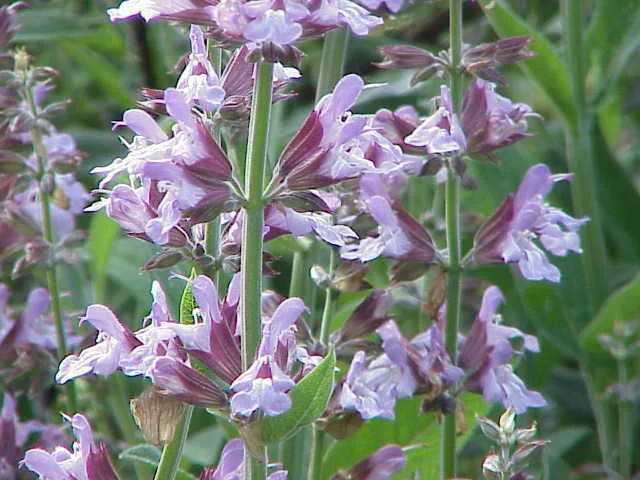
Garden sage is a joy to grow, and it earns its spot fast. This woody Mediterranean perennial belongs to the mint family, pushing out soft gray-green leaves loaded with a warm, savory scent that greets every gardener who brushes past. Early summer sends up spikes of bluish-lavender flowers that bring the bees buzzing right in. Once it settles, it practically runs itself.
Two things get sage roaring: plenty of sun and soil that drains fast. It powers through heat and dry spells without blinking, yet it sulks and rots in heavy, wet ground, so nail the drainage and you are winning. Tough down to zone 4, an established plant charges back every spring and only eases off once real age arrives.
Harvesting is where the fun really kicks in. Pick leaves all through spring and summer, and grab them before the flowers open to catch peak flavor. A quick spring prune keeps it bushy and productive, and even when a plant finally goes woody, rooting a fresh one from a cutting takes almost no effort at all.
Care
The short version: plant sage in full sun and fast-draining soil, water only once the top half dries, feed lightly if at all, and give it a spring prune to keep it bushy and cranking.
Light
Sage craves full sun, at least six hours a day, and that light is what pumps up the oils behind its flavor. It will take a touch of afternoon shade, but pile on too much and the stems flop while the leaves turn bland, so give it the brightest spot you have.
Water
Let the top half of the soil dry before you water again, because sage powers through drought once established and thrives on the dry side. Water about every 7 to 14 days, stepping it up for pots, and steer well clear of soggy soil, which shuts the whole thing down fast.
Soil
Get sage into well-drained sandy or loamy soil, the grittier the better. A pH of 6.0 to 7.5 keeps it humming, but drainage beats the number every time, since standing water rots the roots in a hurry.
Temperature
Sage is a powerhouse in the cold and heat alike, taking temperatures from -20°F (-29°C) all the way up to about 95°F (35°C). That range is exactly why an established plant sails through winter outdoors across much of the country.
Humidity
Sage runs best on the dry side, around 30% to 50% humidity, so skip the misting entirely. Damp, stale air fuels powdery mildew, which means moving air does the plant far more good than any added moisture.
Feeding
Keep feeding light, because sage is a light feeder and overdoing it flattens the flavor. A quick dose of balanced fertilizer or compost in spring does the job, and in good soil you can skip it and still get great growth.
Pruning
Hit it with a light prune in spring as new growth fires up to keep it bushy instead of leggy, and harvest freely all season. Sage still turns woody in the end, so line up a replacement every 3 to 5 years to keep the leaves coming.
Repotting
For potted sage, repot every 1 to 2 years, or the moment roots start circling and water blasts straight through. Bump it up just one pot size, though, since an oversized pot traps the extra moisture sage flatly refuses to tolerate.
Size & spacing
A mature plant shoots up to 16 to 30 inches (40 to 75 cm) tall and spreads 18 to 35 inches (45 to 90 cm) wide. Give each one that much room so air rushes through and mildew never gets a foothold.
When to plant
Sage is a hardy perennial built to stick around, so dig in for the long game. Kick things off with seeds indoors in late winter, or set young plants out in spring once frost clears, then harvest hard through spring and summer. Snip the leaves just before those early-summer flowers pop for the biggest flavor.
Northern hemisphere
Southern hemisphere
Typical months for a temperate climate: start earlier in warm zones, later where spring frosts linger.
- Sow: 6-8 weeks before the last spring frost
- Plant: spring after danger of frost has passed
- Harvest: Spikes of bluish-lavender to pinkish-lavender flowers appear in early summer; harvest leaves anytime during spring and summer, best before flowering for peak flavor.
Hardiness
USDA hardiness zones: 4–8
Temperature: down to -34°C
Troubleshooting
Sage rarely gives trouble, and when it does, the culprit is almost always too much water or stale, humid air. Keep a keen eye on the leaves, roots, and older stems and you will catch problems while they are still easy to beat. Spot your symptom below, then jump on it.
A collapsing plant with dark, mushy roots in wet soil
Sage flat-out hates wet feet, and soil that stays soggy triggers root rot, turning the roots soft, brown, and mushy. A collapsed plant is a lost cause, so yank the worst ones and let the soil dry right out. The real win is drainage, whether you build a raised bed, switch to a pot with holes, or just ease off the water.
Fix:
- Reduce watering and allow soil to dry
- Improve drainage or move to a raised bed or container with drainage holes
- Remove severely affected plants
Woody, bare lower stems with all the leaves up top
This is nothing but age doing its thing. Over a few seasons the lower stems harden and strip bare while fresh leaves crowd the tips. A light spring prune stretches the bushy years, but every sage goes woody eventually, so keep a replacement rolling every 3 to 5 years.
Fix:
- Prune lightly in spring to encourage bushy growth
- Replace plants every 3-5 years as they become woody
White powder taking over the leaves
That white dust is powdery mildew, and it pounces when humid, still air settles over crowded plants. Fight back fast: thin and space the plants to get air moving, water low at the base instead of overhead, and rip off the worst leaves. Keep it in full sun with dry foliage and it will not dare return.
Fix:
- Improve air circulation by thinning and spacing plants
- Avoid overhead watering and water at the base
- Remove and discard affected foliage
Toxicity
Great news for pet-owning gardeners: garden sage is safe. The ASPCA lists Salvia officinalis as non-toxic to cats and dogs, and the culinary leaves stay harmless to people and other animals too. The one thing to stash out of reach is concentrated sage essential oil, which runs high in thujone and is nothing like the friendly herb in the bed.
Safe for
People · Cats · Dogs · Horses · Rabbits · Livestock · Birds
Cats None
Cats are in the clear around sage, which the ASPCA marks non-toxic. A nibble does nothing at all, though a cat that really loads up on any leafy plant might get a brief, passing stomach upset.
Dogs None
Dogs get a free pass with sage. The kitchen leaves are non-toxic, so a mouthful swiped from the herb bed causes zero trouble.
Horses Safe
Horses have nothing to fear from sage. The aromatic leaves carry nothing harmful, and most horses skip the strong-smelling foliage anyway.
Rabbits Safe
Rabbits can grab a few sage leaves safely. Serve it as an occasional treat rather than a daily green, but there is no toxin in play.
Livestock Safe
Grazers like goats, sheep, and cattle can browse sage with no worries, since the plant packs nothing that harms them.
Birds Safe
Backyard birds and poultry stay perfectly fine around sage. It is a safe herb to grow wherever they roam and forage.
People Safe
For people, sage is a kitchen champion, its leaves safe to cook with and eat. Only the concentrated essential oil, loaded with thujone, calls for a light touch.
Concentrated sage essential oil is high in thujone and should be kept away from pets and not confused with the edible herb; the plant and culinary leaves themselves are non-toxic. As with any plant, ingestion of large amounts of foliage may cause mild gastrointestinal upset.
Varieties
Once green sage has you hooked, a few ornamental forms turn up the color in the herb bed while still delivering in the kitchen. These are the standouts to seek out.
'Berggarten'
A compact powerhouse with large, rounded gray-green leaves that barely flowers, pouring everything into lush foliage.
'Icterina'
Golden sage lit up with leaves edged in green and yellow, a standout pick for the front of a bed.
'Purpurascens'
Purple sage that opens its young foliage in a rich reddish-purple before it settles into maturity.
'Tricolor'
A knockout variegated sage splashed with green, white, and purple-pink across every leaf.
How to propagate
Multiplying sage is a genuine thrill, and three solid methods put the choice in your hands, whatever the season and whatever the parent plant is doing.
Stem cuttingsEasy
Late spring to summer from softwood cuttings · 3 to 6 weeks to root
Cuttings are the fastest, most satisfying way to clone a sage you love. Snip a softwood cutting from a non-flowering shoot in late spring or summer, plant it in moist, well-drained mix, and in about 3 to 6 weeks it roots into a spitting image of its parent.
SeedModerate
Start indoors 6-8 weeks before last frost or sow outdoors after frost · Germinates in about 2-3 weeks; plants reach maturity around 75 days
Seed takes grit, since sage sprouts slowly and unevenly, but the payoff is worth it. Start it indoors 6 to 8 weeks before the last frost or sow outdoors after frost, watch for sprouts in about 2 to 3 weeks, and count on roughly 75 days to a plant you can harvest.
LayeringEasy
Spring to summer · Several weeks to a few months to root
Layering lets a low branch grow its own roots while it stays plugged into the parent. Pin a trailing stem to the soil in spring or summer, give it several weeks to a few months to root, then cut the new plant loose.
Myths
Garden sage will poison cats and dogs.
Not a chance. The ASPCA lists Salvia officinalis as non-toxic to both cats and dogs, so the sage thriving in your garden is completely safe around pets. The warning people toss around actually points to the concentrated essential oil, which is high in thujone, not the leaves you cook with.