Herb · Lamiaceae
Basil
Ocimum basilicum
Hand it sun, warmth, and a steady pinch, and basil pumps out fresh kitchen leaves all summer long.
Full sun
Every 7–10 days
50–86°F · 10–30°C
60–90 days
Overview
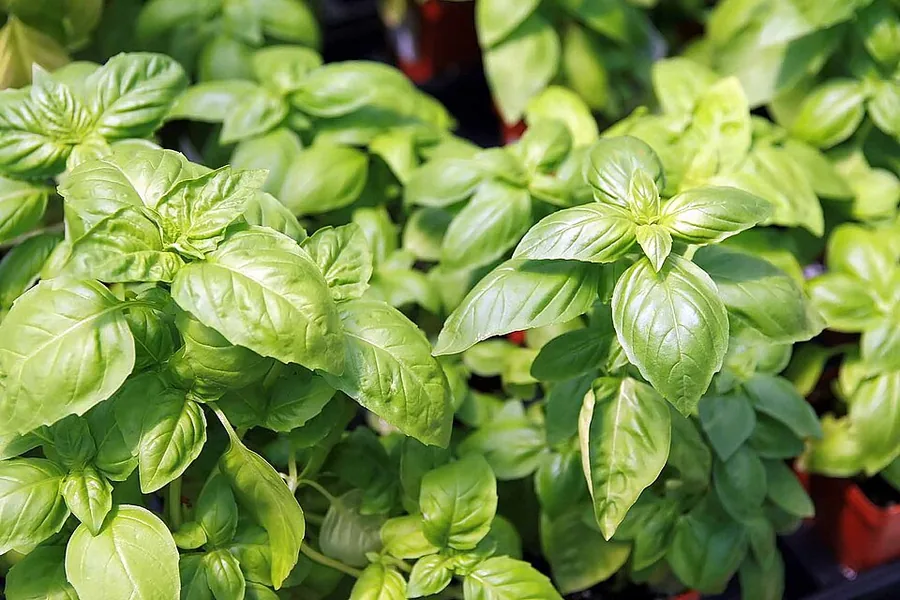
Basil tops the herb list for most cooks, a frost-tender annual in the mint clan with roots in the warm stretches of Asia and Africa. It shoots up fast and soaks up heat, thriving just as happily in a garden bed as in a pot perched on a sunny windowsill. Hand it warmth and bright light, and it pays you back with armfuls of fragrant leaves.
This is a one-season plant that stretches from 12 to 24 inches (30 to 60 cm) tall depending on the variety. Leave it be and it shoots up, blooms, and runs to seed, but a grower who keeps pinching the tips funnels every bit of that drive straight into leaves. That single habit swings your harvest more than anything else you do.
Basil cuts a beginner plenty of slack, yet it draws two hard lines. Frost and cold ground will flatten it, and it goes downhill quick in stuffy, packed air where downy mildew moves in. Keep it toasty, leave gaps for air to flow, water down at the base, and everything else falls into place.
Care
The short version: chase full sun and warmth, hold the soil evenly moist, and water at the base so the leaves stay dry. Feed with a light hand, pinch the tips often, and keep it well clear of cold ground.
Light
Aim basil at full sun and give it six or more hours, since that is what stokes the oils behind its flavor. Where summers turn punishing it puts up with a little afternoon shade, but skimp on light and you wind up with thin, leggy, floppy plants.
Water
Hold the soil evenly moist and soak it through every 7 to 10 days, dialing that to the rain. Potted plants run dry quicker and want a closer eye. Always send the water to the base, because soggy leaves throw open the gate to downy mildew.
Soil
Set basil into rich, well drained loam dug through with compost. A pH sitting between 6.0 and 7.5 suits it just right, so most decent garden ground does the job without any drama.
Temperature
Warmth is where basil takes off, around 50°F to 86°F (10°C to 30°C), and it powers along fastest near the top end. Frost will not fly, and chilly ground stalls young plants cold, so warmth leads every time.
Humidity
Plain old humidity of 40% to 60% does the trick, so skip chasing any number. The thing that truly counts is airflow, because still, muggy air pressed around crowded plants is what kicks off downy mildew.
Feeding
Keep a light hand on this one. A balanced fertilizer like 5-10-5 once or twice over the season covers everything basil asks for, and feeding sparingly locks in the flavor, since pushing too much soft growth waters down the oils.
Pruning
Pinch those growing tips often to drive the plant into bushy side shoots, and snap off every flower bud the instant it pops up. Keeping at that pinch is what keeps fresh leaves rolling in and the flavor running full.
Repotting
Run as an annual, basil hardly ever calls for real repotting. Just bump seedlings up into bigger pots as they outgrow the old ones, well before the roots wind around and the soil starts draining off too fast.
Size & spacing
Expect plants to hit 12 to 24 inches (30 to 60 cm) tall and fan out 12 to 18 inches (30 to 45 cm) across. Hand each one that much elbow room so air keeps moving freely and disease has nowhere to gain a foothold.
When to plant
Warmth runs the whole show with basil, and frost flat-out destroys it. Get seeds going indoors in late winter, hold transplants back until the cold has cleared off entirely and the ground warms up, then pick leaves all summer long right up to the first frost that closes things out.
Northern hemisphere
Southern hemisphere
Typical months for a temperate climate: start earlier in warm zones, later where spring frosts linger.
- Sow: 6-8 weeks before the last spring frost; germinates best at media temperatures of at least 70°F
- Plant: After all danger of frost when soil is warm and nighttime temperatures stay above 50°F
- Harvest: Harvest leaves continually once plants have several sets of leaves; pinch off flower buds to delay bolting and prolong leaf production
Hardiness
USDA hardiness zones: 2–11
Temperature: down to -46°C
Troubleshooting
Trouble on basil almost always lands on the leaves first, be it a disease, a chewing pest, or the plant gearing up to bloom. Catch the early tells and you can jump in before things snowball. Pin down what you are seeing below, then move while your move still counts.
Leaves yellowing above while gray-purple fuzz creeps across the undersides
Spot this and you are looking at basil downy mildew, a disease that races through damp foliage and stagnant air. Once the fuzz arrives the plant is finished, so yank and bin infected ones right away. Open up the spacing on the survivors, aim your watering at the soil, and reach for tough cultivars such as 'Prospera' for your next round.
Fix:
- Remove and destroy affected plants immediately
- Increase plant spacing and prune for airflow
- Water at the base to keep foliage dry
Whole plant collapsing fast as brown streaks climb the stems
Fusarium wilt is a soil fungus that clogs the stem from within, and nothing brings the plant back once it strikes. Lift it, throw it in the trash rather than the compost, and replant on fresh, clean media somewhere new. Resistant cultivars paired with disease-free seed give you the best shot at locking it out for good.
Fix:
- Remove and destroy infected plants
- Do not compost affected material
- Replant in a different location or use fresh sterile media
Soft, browned roots and stalled growth in chilly, soggy ground
Root rot takes over when the soil stays sodden or runs too cold for the roots to handle. A thriving root system stays firm and white, while a rotted one goes soft, brown, and downright smelly. Step up the drainage, back off the watering, and hold transplants until the ground warms past 50°F (10°C).
Fix:
- Improve drainage and reduce watering frequency
- Remove severely affected plants
- Allow soil to dry between waterings
Bloom spikes shooting skyward while the leaf flavor fades away
What you are watching is bolting, the plant racing to set seed once it matures or the days stretch long and hot. The moment flower spikes climb, fresh leaves shrink and the taste falls flat. Nip those buds off the second they show, keep harvesting hard, and the plant pours its energy right back into leafy, flavorful growth.
Fix:
- Pinch off flower buds as soon as they appear
- Harvest and prune leaves regularly to delay flowering
Ragged holes chewed through the leaves
Blame one of two raiders. Japanese beetles work in daylight and reduce leaves to nothing but a skeleton of veins, while slugs and snails punch holes after dark and leave glistening tracks behind. Drop the beetles into soapy water, ring the bed with slug traps or barriers, and stay on top of both before their ranks swell.
Fix:
- Hand-pick beetles into soapy water
- Apply insecticidal soap for soft-bodied pests
- Set out slug traps or barriers
Toxicity
Here is the easy part. Basil is non-toxic and grown to be eaten, so it sits well around cats, dogs, horses, rabbits, livestock, birds, and kids without fuss. The most a nosy pet picks up from a big mouthful is a quick, mild tummy upset that clears on its own.
Safe for
People · Cats · Dogs · Horses · Rabbits · Livestock · Birds
Cats None
Cats come to no harm from a taste of basil. Should one really pile in on any plant, it may bring the lot back up, but that sorts itself out quickly.
Dogs None
A dog can tuck into basil with no bother. About the most a hearty mouthful brings on is a passing, mild bout of stomach upset that soon settles.
Horses Safe
Horses stay perfectly well around basil, since not a thing in the plant can do them any damage.
Rabbits Safe
Rabbits get to nibble basil all they like, and plenty of them pounce on the fresh leaves as a real treat.
Livestock Safe
Goats, sheep, and cattle can munch their way through basil and feel none the worse for it.
Birds Safe
Basil holds no danger for birds, and backyard hens will gladly set to work pecking the leaves.
People Safe
People grow basil precisely to eat it, fresh or cooked, with not a single concern for grown-ups or kids.
No special handling precautions are needed; basil is non-toxic and edible.
Varieties
Basils run into the dozens, from sweet Italian kinds through spicy and ornamental ones, yet only a handful crop up in most gardens. Get to know these by name and you are off to a strong start.
Genovese
The big-leaved Italian sweet basil that pesto was practically built for, though all that rich flavor rides alongside the heaviest downy mildew susceptibility of the bunch.
Thai basil
A purple-stemmed type bursting with anise and licorice notes that shoots up to 24 to 36 inches and powers a huge share of Southeast Asian dishes.
Purple Ruffles
An eye-catching pick prized for its deep purple, ruffled foliage every bit as much as for cooking.
Spicy Globe
A neat, mound-forming basil topping out at just 8 to 10 inches that slots perfectly into containers and bed edging.
Prospera
A Genovese-style selection bred to brush off downy mildew, with a compact habit that takes to pot culture beautifully.
Companions
Basil earns its old reputation as a tomato's best neighbor, sharing the same warm, sunny, well-drained ground the two crops both want.
Plant near
Tomato: Basil is a traditional interplanting companion for tomatoes in the vegetable garden, sharing similar warm-season, full-sun, well-drained growing conditions.
How to propagate
Few plants multiply as readily as basil, whether you crack open a seed packet or pull free copies straight off a plant already in your care.
SeedEasy
Sow indoors 6-8 weeks before last frost or direct sow after frost when soil is warm · Germinates in 5-10 days at about 70°F; transplant-ready in roughly 3-4 weeks
Seed is where most growers kick basil off. Tuck it roughly a quarter inch down, 6 to 8 weeks ahead of your last frost, and hold the media at a toasty 70°F (21°C) or more so it sprouts on cue. Look for seedlings to push up in 5 to 10 days and reach transplant size in about 3 to 4 weeks, or skip ahead and direct sow as soon as the soil warms.
Stem cuttingsEasy
Any time during the growing season from healthy non-flowering shoots · Roots form in water in about 1-2 weeks
Cloning basil could not be simpler. Snip a 4-inch piece off a healthy, non-flowering shoot at any point in the growing season, peel the lower leaves away, and prop it in water, where roots push out in a week or two and the cutting is ready to pot up as a fresh copy of its parent.
Myths
The moment a basil plant blooms, its foliage becomes poisonous and belongs straight in the bin.
Basil in bloom is still completely fine to eat. The leaves only trade away a bit of their zing as the plant pours its strength into seed, which is exactly why growers nip the buds, never because the leaves spoil.
Strong basil only comes from pouring on fertilizer again and again.
A light touch wins every time. Pile on the fertilizer and you dilute the oils that carry the flavor, so one or two feedings across the whole season hits the mark.