Vegetable · Solanaceae
Potato
Solanum tuberosum
Drop in a few cut tubers, hill high and water well, and dig a bumper crop when fall rolls around.
Full sun
Every 3–7 days
50–77°F · 10–25°C
70–120 days
Overview
The potato powers up as a cool-season crop and joins the nightshade family right alongside the tomato and pepper. It got its start in the Andes, where growers shaped it into food thousands of years before it spread across the globe. The reward you dig up is the tuber, a swollen underground stem the plant packs full of starch, and no, it is not a root.
The best part of growing potatoes plays out underground, hidden until harvest day. Plant cut pieces of seed potato, each carrying an eye, and leafy stems shoot up while short underground runners swell into tubers. The move that makes or breaks the crop is hilling, piling soil up the stems to keep those young tubers buried and dark. Let one catch the light and it greens and turns bitter, so keep the soil coming.
Hand them loose, fertile, slightly acidic ground and steady water once the tubers set, and even a small patch cranks out food for months. They store like champions too, so one fall dig can keep the kitchen going deep into winter. Few crops give back this much for so little effort.
Care
The short version: potatoes crave full sun, loose slightly acidic soil loaded with organic matter, and even moisture once the tubers form. Feed at planting, ease off the nitrogen, and keep hilling soil up the stems as the plants take off.
Light
Potatoes chase full sun, ideally 6 or more hours of direct light a day, and they turn that light straight into bigger tubers. Partial sun will do in a pinch, but the tops come out weaker and the crop shrinks, so hand them the brightest, most open spot around. Give them light and they run with it.
Water
Keep the soil evenly moist, about 1 to 2 inches of water a week, and stay right on top of it once the tubers start to swell. Just steer clear of waterlogged ground, since soggy soil kicks off rot and disease. A steady rhythm beats a drought-then-deluge cycle every time.
Soil
Plant into loose, well-drained sandy loam worked full of organic matter. Potatoes want it acidic, a pH of 5.0 to 6.0, which doubles as a check on scab. That loose, crumbly texture lets the tubers swell fast and free, so break up the bed and let them go.
Temperature
These plants hit their stride in cool weather, right between 50°F and 77°F (10°C to 25°C). Once the heat climbs, tuber growth downshifts, which is exactly why an early start pays off and gets the plants cruising before summer lands. A hot stretch just puts them on pause, and they bounce right back.
Humidity
Skip the humidity worries, since ordinary outdoor air suits potatoes just fine. What really moves the needle is airflow, because damp, crowded foliage hands late blight the opening it wants. Space the plants out and let the breeze roll through.
Feeding
Mix a balanced fertilizer into the bed at planting, then side-dress a little nitrogen as the plants push up and you hill them. Go light, though, because too much nitrogen pumps out leafy tops and shortchanges the tubers you are after. Restraint here sends all that energy straight underground.
Pruning
There is no real pruning to bother with, so that frees you up. Just strip off any diseased leaves the second you see them, and keep hilling soil up the stems to bury the tubers and stop them greening in the light. That mounding is the one hands-on move that keeps paying off.
Size & spacing
Plants rocket up to 1 to 3 feet (30 to 100 cm) tall and spread 12 to 24 inches (30 to 60 cm) across. Give each one room and pile the soil on generously, because that buried zone is exactly where the whole crop takes shape.
When to plant
Potatoes love an early start, going in while the ground is still cool and the season is just getting rolling. Get the seed pieces down 2 to 4 weeks before your last frost, once the soil warms to around 45°F to 50°F (7°C to 10°C). Then the fun begins: sneak out new potatoes by midsummer and haul in the main storage crop in fall once the tops die back.
Northern hemisphere
Southern hemisphere
Typical months for a temperate climate: start earlier in warm zones, later where spring frosts linger.
- Plant: Early spring, about 2-4 weeks before the last expected frost once soil reaches roughly 45-50°F
- Harvest: Harvest new potatoes about 60-70 days after planting; harvest mature storage potatoes about 90-120 days after planting once tops die back
Hardiness
USDA hardiness zones: 3–9
Temperature: down to -40°C
Troubleshooting
Potato troubles show up in two places, and once you know them you can jump on them fast: on the leaves as the plants grow, and on the tubers when you dig. Only a handful truly count, so learn those and act before they spread. Match what you spot below, then tackle it head-on while it still matters.
Dark greasy lesions and foliage crashing down in wet weather
This one is late blight, driven by the same Phytophthora that flattens tomatoes, and it can tear through a bed after a cool, damp run. On humid mornings, flip the leaves and hunt for brown-black lesions with pale edges and white fuzz underneath. Move fast: pull and destroy infected plants on the spot, keep them out of the compost, and cull any rotted tubers before they hit storage.
Fix:
- Remove and destroy infected plants immediately
- Do not compost infected material
- Apply an approved fungicide preventively where blight is present
- Harvest carefully and cull infected tubers before storage
Striped beetles and red grubs tearing into the foliage
Meet the Colorado potato beetle, the crop's top pest, and a big run can strip a plant clean. Scout the leaf undersides for orange egg clusters, soft red larvae, and adults sporting ten black stripes. Hit back hard: handpick every stage into soapy water, throw row cover over the young plants, and rotate the planting to fresh ground each year.
Fix:
- Handpick adults, larvae, and egg masses into soapy water
- Use row covers early in the season
- Apply an approved insecticide if infestation is heavy
- Rotate planting location yearly
Green skin creeping across the tubers, sometimes turning bitter
A tuber greens up wherever light sneaks in near the surface, and that green tissue loads up on solanine, the toxin that turns a potato bitter and unsafe. Nine times out of ten it traces back to skimpy hilling that left the tubers exposed. Fix it fast: mound soil right over them as the plants grow, chuck any heavily greened potatoes, and stash the harvest somewhere cool and dark.
Fix:
- Hill soil up over exposed tubers as plants grow
- Discard heavily greened tubers
- Store harvested potatoes in cool, dark conditions
- Cut away minor green areas before cooking
Rough, corky, scabbed patches roughening the tuber skins
Those corky patches are common scab, a soil bacterium that flares up when the ground dries out during tuber set or the pH climbs too high. Peel one tuber and relax: the marks stay shallow and the flesh underneath is sound, so the crop eats just fine. Keep the soil evenly moist as the tubers form, hold the pH down around 5.0 to 5.5, and leave the fresh manure out of it.
Fix:
- Maintain even soil moisture during tuber formation
- Keep soil pH slightly acidic (around 5.0-5.5)
- Plant scab-resistant cultivars
- Avoid fresh manure and alkaline amendments
Toxicity
Here is the one thing to keep straight while you grow this crop: the cooked tuber is a safe, everyday food, but the rest of the plant is off the menu. The foliage, stems, sprouts, and any green or raw potato pack a natural toxin called solanine that can sicken people and animals. Slice off green spots, toss badly greened tubers, and keep the vines and sprouts clear of pets, livestock, and children.
Toxic to
Cats · Dogs · Horses · Rabbits · Livestock · Birds
Safe for
People
Cats Caution
A cat that chews the leaves, stems, or a green sprouted tuber takes in solanine, and drooling and vomiting usually kick in first, with diarrhea and low energy right behind. A big dose can start hitting the heart and nervous system, so call the vet the moment a cat swallows more than a nibble.
Dogs Caution
Dogs that dig up and gnaw raw or green tubers, or browse the foliage, usually end up with an upset stomach, loose stools, and a flat, sluggish mood. Watch them closely, since heavier amounts of glycoalkaloid can throw the heart rhythm off.
Horses Caution
Keep the vines and any green or sprouted potatoes far from horses. Solanine sparks colic, drooling, and a dull, wobbly stance, and a horse grazing fallen foliage can take in enough to land a vet call.
Rabbits Caution
Never let rabbits reach the leaves, stems, or green tubers, since their small size means even a little solanine hits hard. Expect a poor appetite, a bloated belly, and weakness if any goes down.
Livestock Caution
Cattle, sheep, pigs, and goats can poison themselves on tossed vines or piles of green and cull potatoes left in the field. The solanine sets off digestive upset, then piles on staggering and trembling once enough builds up.
Birds Caution
Keep chickens and other birds clear of the foliage, sprouts, and any greened scraps, all loaded with solanine. A little plain cooked potato is fine, but the green, raw parts are strictly off limits.
People Cooked tuber safe
A cooked, properly stored potato is a safe everyday staple, so dig in. The danger rides in the green skin, the sprouts and eyes, and every bit of the foliage and stems, all carrying solanine that turns a potato bitter and can sicken you, so cut away green spots, ditch any badly greened tuber, and keep the vines off the plate.
Cooked, properly stored potato tubers are a safe food. The hazard is the foliage and any green, raw, or sprouted tubers, which contain solanine.
Helpline numbers

United States
ASPCA Animal Poison Control: (888) 426-4435 (fee applies)
Poison Control: (800) 222-1222



Canada
Poison Centres: 1-844-764-7669
Varieties
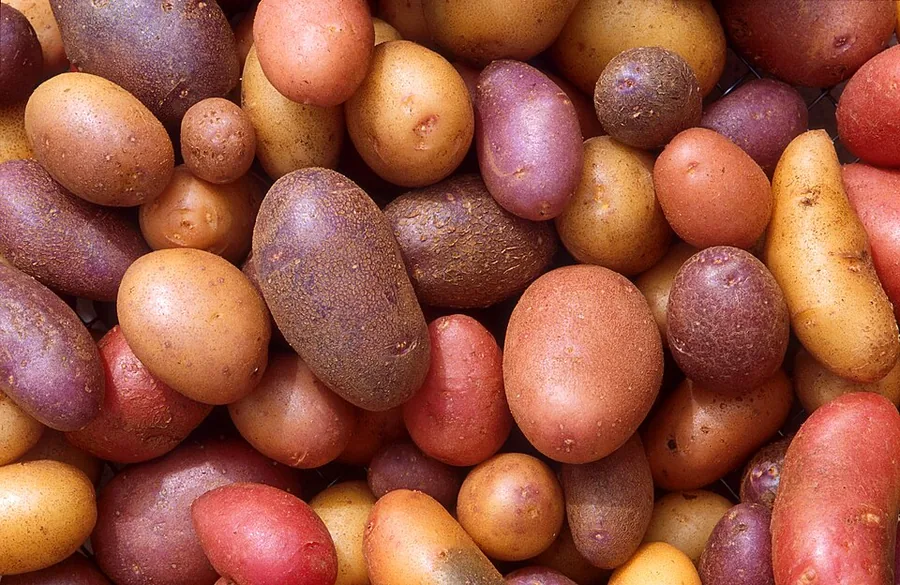
Hundreds of potato varieties are out there, sorted mostly by skin color, flesh texture, and what they cook up best for. These four show up in gardens and shops everywhere, and they make a great place to jump in.
Yukon Gold
Yukon Gold is the thin-skinned yellow potato with buttery, go-anywhere flesh that has shot up to become the standard kitchen pick.
Russet Burbank
Russet Burbank is the big, oblong, brown-skinned heavyweight, so packed with starch that it owns the baking and frying game.
Red Pontiac
Red Pontiac is a red-skinned, white-fleshed favorite that pumps out steady yields and holds strong in storage.
Kennebec
Kennebec is a powerhouse white potato that crops heavy and brushes off more disease than most.
Companions
Potatoes do well beside nitrogen-fixing beans and a few traditional partners, and badly beside their nightshade relatives and sprawling vines that crowd them and trade diseases.
Plant near
Bush beans: Legumes fix nitrogen and are reported to help repel some potato pests.
Corn: Traditional companion that does not compete heavily and shares no major potato diseases.
Cabbage-family crops: Generally compatible bed companions that do not share potato's key diseases.
Horseradish: Often planted near potatoes and is said to improve overall plant vigor and pest resistance.
Keep apart
Tomato: Another solanaceous crop that shares late blight and other diseases, increasing risk to both.
Cucumbers and squash: Sprawling cucurbits crowd potatoes and can increase disease pressure.
How to propagate
Two routes get potatoes growing, but for nearly every gardener one of them wins hands down.
Bulbs & cormsEasy
Early spring, 2-4 weeks before the last frost · Sprouts emerge in about 2-4 weeks after planting
Nearly everyone gets potatoes going from certified seed-potato pieces, each cut to carry one or two eyes and left to cure for a day or two before it drops in the ground. Plant them in early spring, 2 to 4 weeks before the last frost, about 4 inches deep, and watch the sprouts break through in roughly 2 to 4 weeks. Then just keep piling soil up the stems as the plants climb.
SeedDemanding
Indoors in late winter · Several weeks to germinate and grow on before transplanting
Starting from true botanical seed is a whole other challenge, sown indoors in late winter and grown on for several weeks before it can go out. The offspring come out all over the map, so home growers rarely chase it and the method stays parked with the breeders. For a fast, sure crop, seed potatoes win every time.
Myths
The whole potato plant is fair game to eat, since the tubers are everywhere on our plates.
Not so fast. Only cooked tubers that were stored right and never greened are safe to eat. The foliage, stems, sprouts, and any green or raw tuber carry solanine, which is truly toxic, so the plant as a whole is off limits. Load up on the tubers and leave everything green well alone.
Potatoes have to be raised from true seed, the same as other vegetables.
Nope. Nearly every home grower plants certified seed-potato pieces, each cut to carry an eye or two. True botanical seed barely gets a look-in outside breeding, since it throws a wild, unpredictable mix of offspring. So skip the seed hunt and grab a few seed potatoes to get rolling.