Vegetable · Brassicaceae
Horseradish
Armoracia rusticana
Drop one root into deep, loose soil and this powerhouse perennial fires up fresh, fiery roots every fall.
Full sun
Every 7–10 days
140–180 days
USDA 3–9
Overview
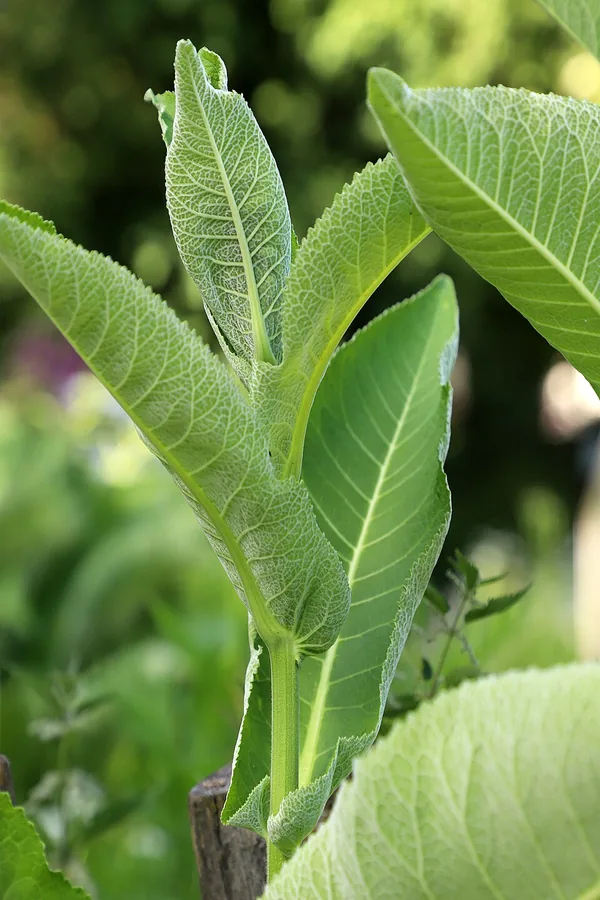
Horseradish earns its patch for one standout prize: the pungent root you grate into sauces and dressings. It runs in the mustard family alongside cabbage and kale, so it packs the same sharp mustard oils. Leave it in the ground and it charges back year after year as a hardy perennial, powering through cold that would flatten most crops.
Growing it is about as rewarding as easy gets. Push a piece of root into good soil in spring, hand it sun and water, and it takes off fast with barely any effort. The real game is not keeping it alive but keeping it where you plant it, because horseradish loves to roam.
Bite the raw root and it hits you with almost nothing, then a rush of heat storms in and clears the sinuses. That fire sleeps in the cells until you grate or chew the root, which is exactly why a fresh-made sauce blows any jar out of the water.
Care
The short version: full sun and deep, loose, fertile soil, with about an inch of water a week for the smoothest roots. Go light on the nitrogen, snap off the flower stalks, and pen the plant into its own bed so it can't run wild.
Light
Horseradish thrives in full sun, the fuel behind the strongest root growth. It will take a little afternoon shade and keep producing, but expect a milder, smaller root when it does.
Water
Hand it about 1 inch of water a week and the roots come up bigger and smoother. Once it settles in it powers through dry spells, so steady moisture is your ticket to a standout crop rather than a chore.
Soil
The root drives straightest through deep, loose, fertile loam loaded with organic matter. Aim for a pH between 6.0 and 7.5, and dig the bed deep before planting so the taproot has a clear shot down.
Temperature
This one is built for cold, taking winter lows down to about -31°F (-35°C) and laughing off frost. It grows on through the warm months up to roughly 86°F (30°C), and a hard fall freeze just cranks the flavor sharper.
Humidity
Plain outdoor air is all it wants, somewhere around 40% to 70% humidity, with nothing to fiddle with. Horseradish is far too tough to sweat the moisture in the air.
Feeding
Work a balanced fertilizer or a scoop of compost into the bed at planting and that usually does it. Keep a light touch, because too much nitrogen sends up leafy top growth and leaves you with forked, branchy roots.
Pruning
Snap off the flower stalks the moment they appear so the plant pumps its energy into the root instead of blooming. In late spring some growers also rub off the upper side shoots, a slick trick called suckering that drives one fat taproot instead of a bunch of thin ones.
Repotting
Horseradish isn't a pot plant, so skip the containers. Growing it in a confined bed? Lift and replant fresh root sets each year to keep the crop charging and within bounds.
Size & spacing
Plants shoot up to 24 to 35 inches (60 to 90 cm) tall with a leafy spread of 12 to 24 inches (30 to 60 cm). Hand each one room and a bed of its own so it can grow flat out without smothering its neighbors.
When to plant
Horseradish runs on cold, so play to it. Drive the root sets in during early spring the moment the ground can be worked, let them bulk up all season, and dig the roots in late fall after the first frosts, when the flavor cranks up to its sharpest.
Northern hemisphere
Southern hemisphere
Typical months for a temperate climate: start earlier in warm zones, later where spring frosts linger.
- Plant: Plant root cuttings (sets) at a 45-degree angle in early spring, 4 to 6 weeks before the last frost as soon as soil can be worked.
- Harvest: Harvest roots in late fall after the first frosts; flavor is sharpest after cold weather. Roots can also be dug in early spring before new growth.
Hardiness
USDA hardiness zones: 3–9
Temperature: down to -40°C
Troubleshooting
Horseradish throws very few curveballs, and what does come up lands in the root or in where the plant decides to sprawl. Match what you spot below and jump on it early. A little effort at planting knocks out most of it before it starts.
Fresh shoots charging up from ground you already dug
Horseradish bounces back from the tiniest sliver of root, so one harvest can rocket into a bed-wide comeback. Dig out every piece you can chase down, then keep ripping off the regrowth until the buried root finally taps out. The cleanest move is to plant it inside a buried barrier from day one and stay a step ahead.
Fix:
- Dig out as much root as possible
- Repeatedly remove regrowth to exhaust the root reserves
- Confine plantings to a contained bed or buried barrier
Roots forking and knobbing instead of running straight
A forked root almost always points back to a bed that was compacted, rocky, or shallow, because the taproot bends and splits every time it hits resistance. Pile on too much nitrogen and you get the same tangle, and so does skipping the mid-season pass of rubbing off side shoots. Dig deep to open the bed, dial back the nitrogen, and clear those upper side roots once in early summer to steer growth into one clean root.
Fix:
- Loosen and deeply till soil before planting
- Remove side shoots from the upper portion of the root in early summer
- Reduce high-nitrogen feeding
Tiny holes stippling the foliage
Those pinprick shot-holes shout flea beetles, while cabbageworms and diamondback caterpillars tear off the bigger patches. Throw a floating row cover over young plants, pick off every caterpillar you catch, and bring in Bt if they start winning. Best part: the leaves can take a real beating and the roots still power through underground.
Fix:
- Use floating row covers on young plants
- Handpick caterpillars
- Apply Bacillus thuringiensis for caterpillars if needed
Toxicity
People tuck into the grated root with zero trouble, and that fiery bite is the whole reason to grow it. Animals get a different deal though: the same sharp mustard oils that give horseradish its kick fire up the mouth and gut of cats, dogs, horses, and other pets. It won't poison them, but a mouthful brings real discomfort, so keep those roots and trimmings out of their reach.
Toxic to
Cats · Dogs · Horses · Rabbits · Livestock · Birds
Safe for
People
Cats Mild
A cat that chomps the pungent root will likely drool, paw at its mouth, and skip a meal or two. The sharp mustard oils sting the mouth and leave the stomach churning for a bit.
Dogs Mild
Dogs top the list for digging up a root and crunching into it, and the mustard-oil burn kicks off drooling, vomiting, or loose stools. It clears on its own, but a big mouthful earns a quick call to the vet.
Horses Mild
Horses almost always steer clear of the harsh leaves, but one curious bite fires up the mouth and gut and can knock a horse off its feed. Keep the plant well beyond a grazing animal's reach.
Rabbits Mild
The fiery isothiocyanates hit a rabbit's delicate gut far too hard, so even a tiny nibble sets off an upset. Skip this green for them entirely.
Livestock Mild
Cattle, sheep, and goats nearly always graze right past the peppery foliage, but any that dig in may flare up with mouth and stomach irritation. Fence horseradish off from pasture and stay clear of the problem.
Birds Mild
Backyard poultry usually breeze past the sharp leaves, and a stray peck mostly just irritates the crop and gut. Keep the trimmings out of spots where birds forage.
People Edible root safe
For people the grated root is a kitchen hero, safe to eat and loved for its punch. The fumes can sting the eyes and nose while you grate, so work somewhere airy and keep it away from your face.
Grating or processing the fresh root releases sharp volatile mustard oils that irritate the eyes, skin, nose, and mouth; work in a ventilated area and avoid touching the face. The plant is not on ASPCA headline toxic lists but is an irritant.
Helpline numbers

United States
ASPCA Animal Poison Control: (888) 426-4435 (fee applies)

United Kingdom
Animal PoisonLine: 01202 509000 (fee applies)

Australia
Animal Poisons Helpline: 1300 869 738
Varieties
The horseradish lineup is short and sweet, split between the ones grown for the kitchen and one grown just to show off its leaves. These are the names worth chasing down.
Common (Bohemian)
This narrow, smooth-leaved workhorse powers through most disease, trading just a little yield against the broad-leaved kinds for that toughness.
Maliner Kren (Big Top)
Broad, dark, crinkled leaves top vigorous, high-quality roots, and this one really stands up to disease.
Variegata
Grown for pure show with its white-marbled, variegated foliage, this one earns its keep in the border rather than the kitchen.
How to propagate
Forget the seed tray for horseradish. It multiplies straight from pieces of its own root, which is a big part of why a single planting keeps delivering for years.
DivisionEasy
Early spring (or fall lifting for spring planting) · One growing season; roots are usually harvestable the first autumn after spring planting.
Skip the seed packet, because horseradish takes off straight from root cuttings. Cut pencil-thick sets 8 to 14 inches long and drive them into the ground in early spring at a 45-degree angle, wide crown end up, or just split an existing crown. Plant in spring and you dig your very first roots that same autumn.
Myths
Horseradish is just a milder relative of the radish.
The sharp bite is where the family resemblance ends. Horseradish is a perennial in the mustard family, and its heat only fires up as isothiocyanates when the cells get crushed. It is a completely different plant from the radish.
Once you plant horseradish you can easily pull it out later.
Pulling it out is the real workout. Any scrap of root left behind springs right back, so the plant digs in and spreads for years. Plant it inside a buried barrier if you ever plan to win that bed back.